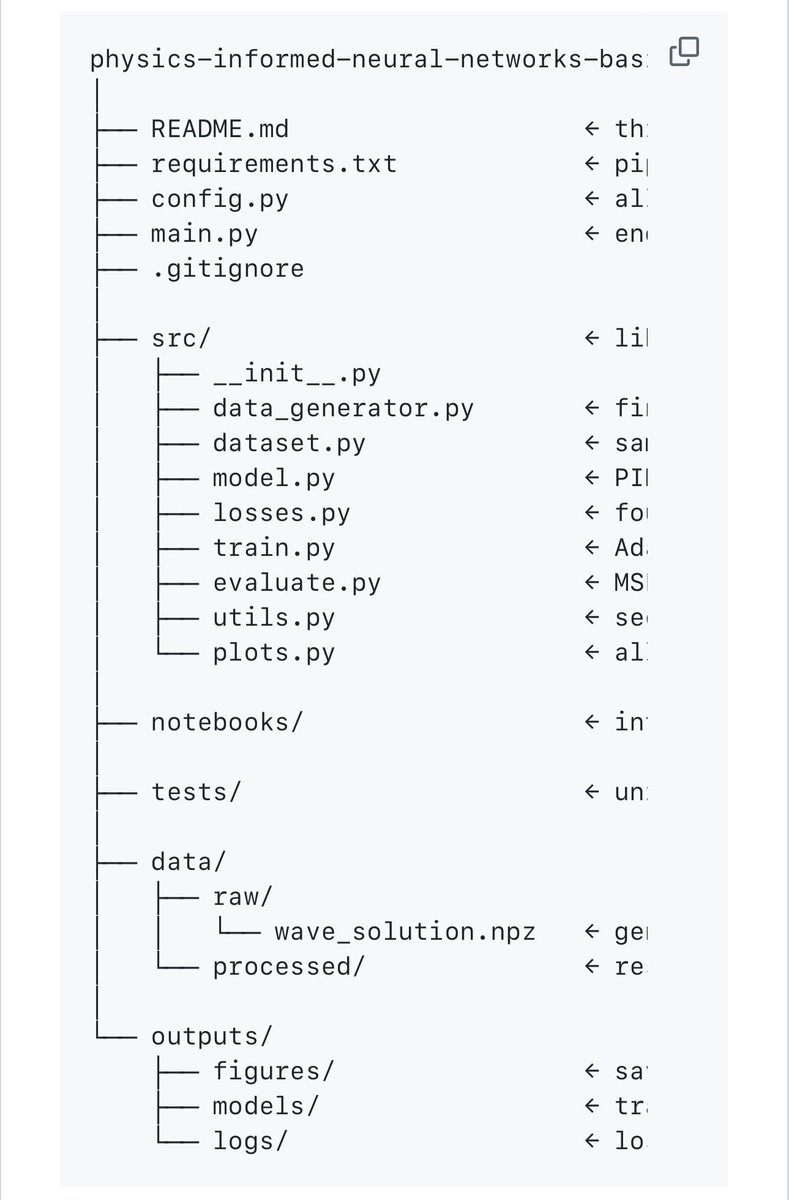
LLMs + Digital Twins + Industry 5.0 = Cognitive Industrial Intelligence 🚀
From physical assets to AI-driven decision systems, the future of industry is human-centric, physics-aware, and autonomous.
#LLM#DigitalTwin#Industry5_0#IndustrialAI#PINNs#AI#automation
Just launched my new AI app: 🎙️🧠 “Speech Emotion Support” on @huggingface.
• K10 psychological distress screening
• Voice biomarker research support
Exploring how multimodal AI can support future mental health technologies.
#AI#MentalHealth#SpeechAI#LLM#MachineLearning
Naive RAG vs. Agentic RAG, explained visually:
Naive RAG breaks in 3 ways:
↳ It retrieves once and generates once. If the context isn't relevant, the system can't search again.
↳ It treats every query the same. A simple lookup and a multi-hop reasoning task go through the identical retrieve-then-generate path.
↳ And there's no verification. Whatever the retriever returns gets blindly trusted.
Agentic RAG fixes this by introducing decision-making loops at each stage.
Steps 1-2) A query rewriting agent reformulates the raw query. This goes beyond fixing typos. It makes vague terms precise, decomposes complex queries into sub-queries, and expands abbreviations.
Steps 3-5) A routing agent decides if the query even needs external context. If not, retrieval is skipped. If yes, a source selector picks the best backend for this specific query type.
Steps 6-7) The source selector routes to the most appropriate source. Vector DB for semantic search, web search for real-time info, or structured APIs for tabular data. The retrieved context and rewritten query are combined into the prompt.
Steps 8-9) The LLM generates an initial response.
Steps 10-12) A validation agent (Corrective RAG) checks whether the response is relevant, grounded, and complete. If it passes, it's returned. If not, the system loops back to Step 1 with a reformulated query.
This continues for some iterations until we get a satisfactory response or the system admits it cannot answer.
The reason it works is that each agent acts as a quality gate. The rewriter ensures retrieval precision. The router ensures the right source is queried. The validator ensures the output is grounded.
Individual failures get caught and corrected rather than silently propagated.
That said, the diagram below shows one of many blueprints of an Agentic RAG system. Production systems increasingly combine Corrective RAG, Adaptive RAG, Self-RAG, and hybrid search (vector + lexical with reranking) based on latency budgets and accuracy requirements.
👉 Over to you: What does your Agentic RAG setup look like?
Exploring a conceptual MVP for digital health studies and radiology centres: using PINNs to simulate breathing. 🫁 This AI-driven approach could revolutionize capturing clear MRI and CT scans for patients unable to hold perfectly still. #DigitalHealth#radiography#ctscan
Most beginners think Git is just about saving code, but in reality, it is about managing changes with clarity and control.
A typical Git workflow moves through four key stages. You start in your working directory where changes are made. These changes are then prepared in the staging area using git add, allowing you to decide exactly what should be included. Once ready, git commit records a snapshot in your local repository with a meaningful message.
From there, your work can be shared with others using git push, sending commits to a remote repository. At the same time, collaboration happens through git pull and git fetch, which bring updates from the remote repository into your local environment.
Commands like git diff help you track what has changed at every step, while git merge allows you to combine work from different branches without losing history.
The real power of Git lies in this structured flow. It gives you confidence to experiment, revert mistakes, collaborate effectively, and maintain a clean version history across projects.
If you understand this flow well, you are no longer just writing code. You are managing it like a professional.
#git #programming #developer
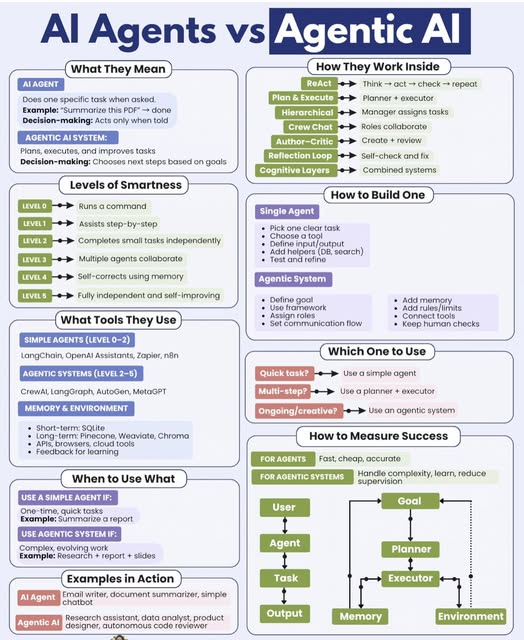
𝐀𝐈 𝐀𝐠𝐞𝐧𝐭𝐬 𝐯𝐬 𝐀𝐠𝐞𝐧𝐭𝐢𝐜 𝐀𝐈 𝐢𝐬 𝐰𝐡𝐞𝐫𝐞 𝐚 𝐥𝐨𝐭 𝐨𝐟 𝐩𝐞𝐨𝐩𝐥𝐞 𝐠𝐞𝐭 𝐜𝐨𝐧𝐟𝐮𝐬𝐞𝐝 𝐫𝐢𝐠𝐡𝐭 𝐧𝐨𝐰.
And that confusion is costing teams time, money, and clarity.
An AI agent is simple.
You give it a task. It gives you an output.
It doesn’t think ahead. It doesn’t plan. It just responds.
𝐄𝐱𝐚𝐦𝐩𝐥𝐞
↳ Summarize a document
↳ Write an email
↳ Generate code snippet
That’s useful. But limited.
Agentic AI is a different game.
↳ It doesn’t just respond.
↳ It decides what to do next.
It can plan → execute → review → improve
Sometimes with multiple agents working together
𝐓𝐡𝐢𝐧𝐤 𝐨𝐟 𝐢𝐭 𝐥𝐢𝐤𝐞 𝐭𝐡𝐢𝐬:
↳ Agent = Intern who does what you ask
↳ Agentic AI = Team that understands the goal and figures things out
This is why people struggle while building with AI.
They try to solve complex workflows using simple agents.
And then say
“AI doesn’t work”
It does. You’re just using the wrong layer.
If your use case is:
• One-time tasks → use a simple agent
• Multi-step workflows → use planner + executor
• Ongoing, evolving work → build an agentic system
The real shift is not tools.
It’s thinking in systems instead of prompts.
The people who understand this early will build faster
Automate better
And need less manual effort over time
The rest will keep writing better prompts for problems that need better architecture
If you’re building in AI right now
Start asking this before anything else:
Am I solving this with a tool or designing a system?
#LLM #AIEngineering #AgenticAI #RAG
Friends of Clawd Discord is now live!
A place to hang out, share your Clawdis setups, ask questions, and help each other build cool stuff with AI assistants.
Join the crustacean crew: https://t.co/y4u2EU3U0L
Most Agentic AI systems break in production.
Not because of models, but because of missing system design.
Everyone is building agents.
Few are building complete systems.
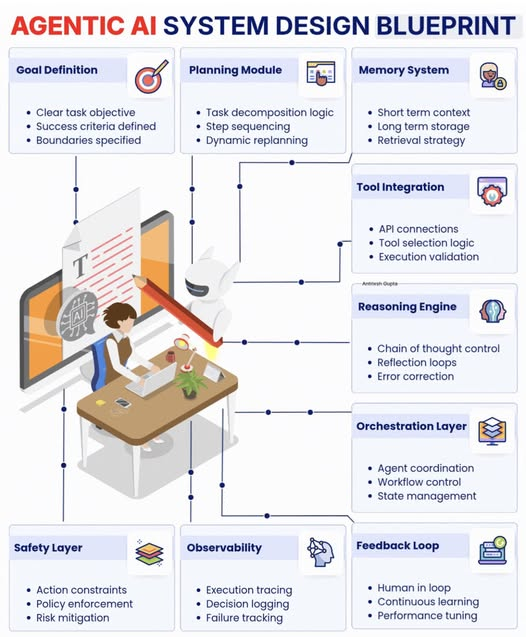
𝐈𝐧 𝐭𝐡𝐢𝐬 𝐢𝐧𝐟𝐨𝐠𝐫𝐚𝐩𝐡𝐢𝐜 𝐈 𝐛𝐫𝐞𝐚𝐤 𝐝𝐨𝐰𝐧 9 𝐜𝐨𝐫𝐞 𝐜𝐨𝐦𝐩𝐨𝐧𝐞𝐧𝐭𝐬:
• Goal Definition
• Planning Module
• Memory System
• Tool Integration
• Reasoning Engine
• Orchestration Layer
• Safety Layer
• Observability
• Feedback Loop
𝐄𝐚𝐜𝐡 𝐜𝐨𝐦𝐩𝐨𝐧𝐞𝐧𝐭 𝐬𝐨𝐥𝐯𝐞𝐬 𝐚 𝐝𝐢𝐟𝐟𝐞𝐫𝐞𝐧𝐭 𝐟𝐚𝐢𝐥𝐮𝐫𝐞 𝐦𝐨𝐝𝐞.
→ Without clear goals, agents drift.
→ Without planning, they stall.
→ Without memory, they repeat mistakes.
→ Without tools, they stay limited.
→ Without reasoning, they hallucinate.
→ Without orchestration, they break at scale.
→ Without safety, they create risk.
→ Without observability, you stay blind.
→ Without feedback, they never improve.
Agentic AI is not a prompt problem.
It is a systems engineering problem.
The teams that understand this will ship reliable AI.
The rest will keep debugging demos.
P.S. Which of these components is missing in your current AI system?
#RAG #AIEngineering #LLMSystems
"High agency people. It's people who aren't just going to be told what to do, but will actively go and find problems in the business, solve those problems."
Saaras Mehan, Jack&Jill cofounder, speaks to Forbes' Alex York about the ideal job candidates. https://t.co/t4GS60EnQy
I think about this a lot:
People spend 4 years and $100k getting a degree to make $60k a year.
I spent $2,000 and 9 months building a business that now clears $40k a month.
The ROI on entrepreneurship is insane if you pick the right model.