How well do treatments for chronic low back pain actually hold up over time?
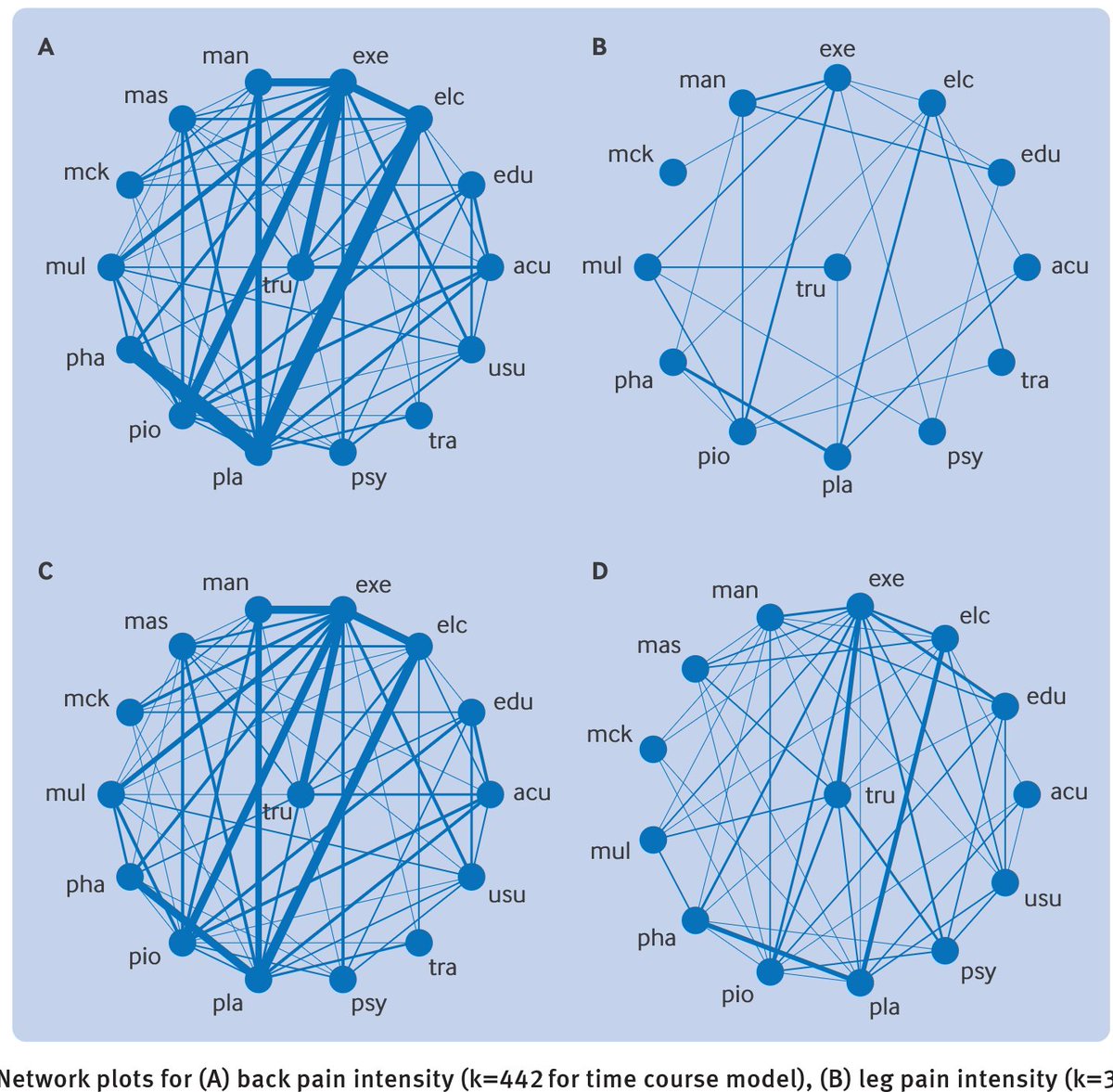
We just published a massive time-course network meta-analysis in @BMJMedicine analyzing 551 trials and 71,126 patients to find out. 🧵👇
🔗 https://t.co/D7WwMNw7Wq
The takeaway for health policy from our paper in @BMJMedicine : for chronic #backpain we need to pivot our focus toward long-term self-management, and sustainable lifestyle/behavioral modifications.
🔗 https://t.co/D7WwMNw7Wq
👇 90s video summary
Just published in @JOSPT Open
Two treatments for chronic neck pain: no clinically important difference between the two.
👇
Thank you @PhysioMeScience for sharing 🙏
Just published 🔥open access
The TAMERE RCT: Comparative Effectiveness of Topical Manual Pain Therapy Versus Exercise Therapy in Chronic Non-Specific Neck Pain
👇👇👇
https://t.co/71mohlrR0c
great lead by @tobi_saueressig@PhysioMeScience@PatrickOwenPhD@belavyprof
Final Takeaway
Once reporting and review standards improve, we can move beyond “some exercise is better than none” toward tailored, evidence-driven, safe, and clinically meaningful exercise prescriptions for each MSK pain presentation.
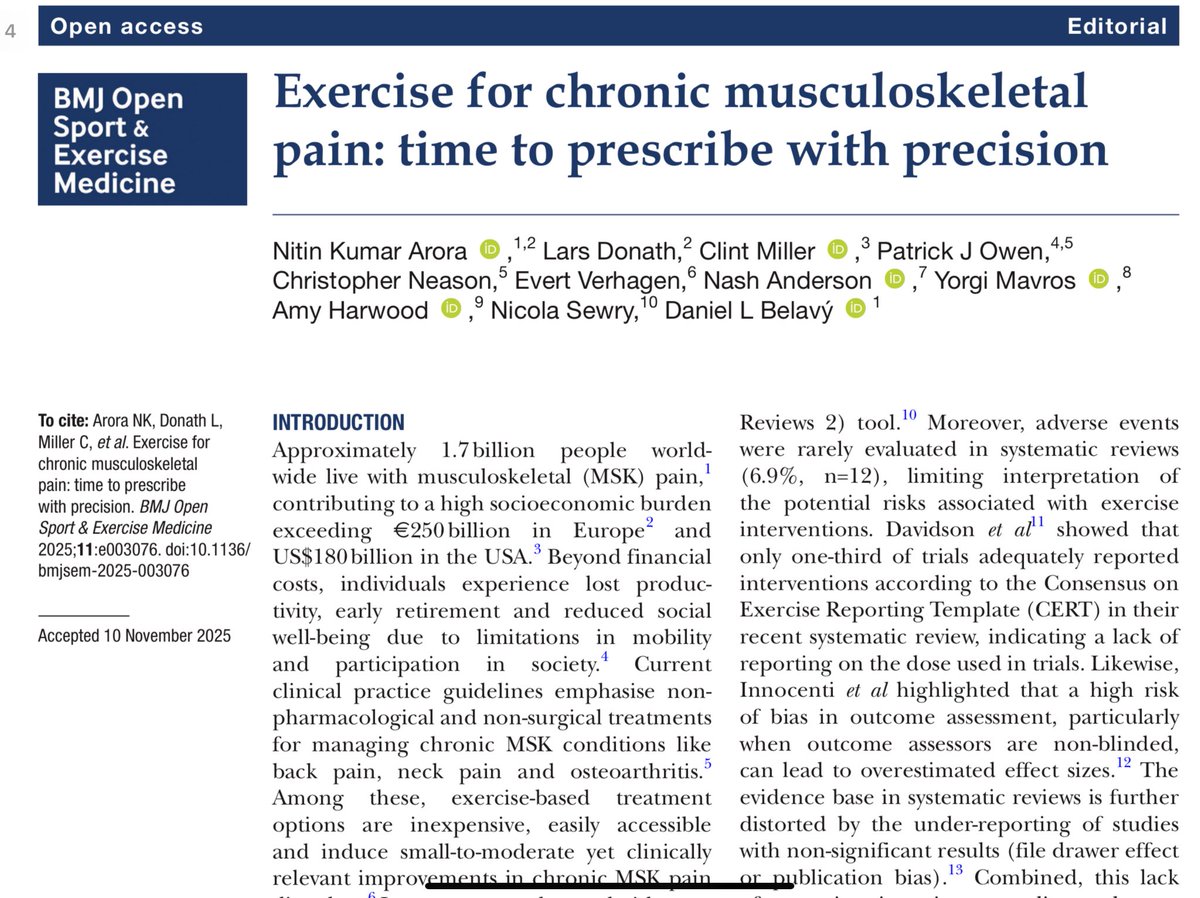
Chronic musculoskeletal (MSK) pain affects 1.7 billion people globally and costs hundreds of billions annually.
Exercise helps ✅
⚠️but: evidence base is too imprecise to implement it well
What do 🤔
➡️Editorial in @BMJOpenSEM
https://t.co/r8PaXK0a7h
By Nitin Arora 🙏👏
The Path Forward
A 3-step approach for a stronger evidence base:
1️⃣ Integrate reporting frameworks from design to publication
2️⃣ Strengthen systematic review methodology
3️⃣ Enforce reporting compliance across the ecosystem
Together, this enables precision exercise prescription