Manager : "You're more advanced in Excel, please share the secret with the team."
Low Intelligent Employee : Shares the secret ❌❌❌❌
High Intelligent Employee :
A guy bought a $1,500 Samsung TV 3 years ago.
He watched Netflix. He watched YouTube. He thought the picture looked fine. He assumed that's just what a TV looks like.
His friend, a home theater installer who calibrates TVs for a living, walked into his apartment and looked at the screen for 5 seconds.
"You're watching everything in demo mode. The motion smoothing is on. The eco dimmer is cutting your brightness by 40%. Your TV is taking a screenshot of your screen every 30 seconds and selling your viewing data to advertisers. And you're watching a $1,500 panel in the same picture mode Best Buy uses under fluorescent lights to make TVs pop on a showroom wall."
He changed 9 settings in 12 minutes.
The picture looked like a different television. The soap opera effect disappeared. The colors became natural. The TV stopped spying on him.
Here's every setting he changed 🧵
INSTEAD OF WATCHING NETFLIX TONIGHT.
Spend 2 hour with this. Claude AI FULL COURSE that teaches you how to BUILD and AUTOMATE anything. The people who watch this tonight will wake up tomorrow with a new skill. Watch it and bookmark it now.
Brick is one of the best building materials ever in the world. It usually needs little to no finishing in terms of plastering and painting when done right. It is ironical that materials that make bricks are abundant in Africa but aren’t used to the fullest potential.
Jalmanjar Farmhouse proves the point. A perforated gable wall of compressed earth blocks greets you at the entrance, unplastered, unpainted, left exactly as it came out of the ground.
Every gap in that wall is doing a job. It blocks solar radiation. It pulls air through the building. Windcatchers built into the same wall finish the work. Structural walls run nine inches thick, compressed stabilized earth blocks paired with steel and concrete, giving the house enough thermal mass to stay cool without a single air conditioner running.
The same jali pattern repeats through verandahs, balconies, corridors, even an open-to-sky shower. No plaster hiding it. No paint disguising it. The material was already finished.
We call this crude when we build it at home and call it design when someone else does it better.
Jalmanjar Farmhouse. Ahmedabad, India.
Architects: Areen Attari & Shahveer Irani, Put Your Hands Together – BioArchitects. Photography: Amalgamate
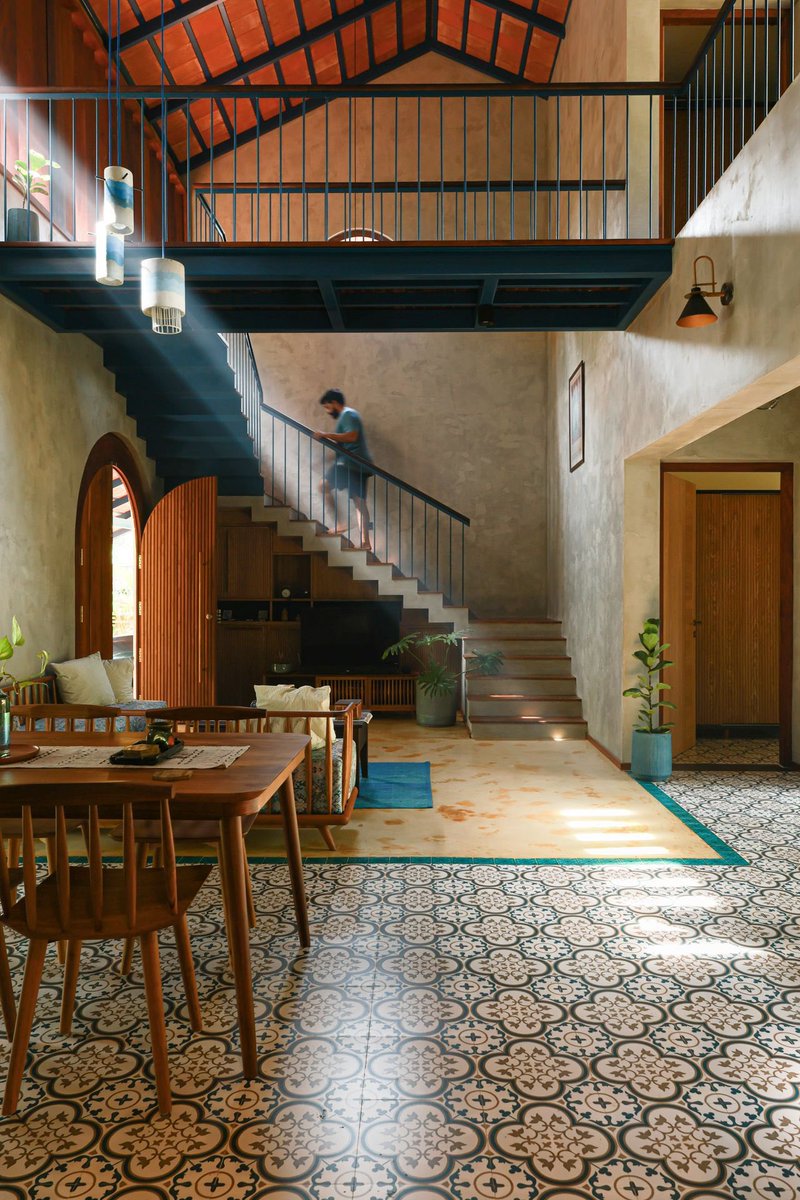
A civil engineer spent his childhood in a quiet Kerala home, moved away for work, and never stopped wanting to come back to that feeling. When the pandemic gave him a reason to work from home, he built one, this time in Elathur, Kozhikode, drawing from both Kerala and Goan vernacular he had come to love while traveling for work.
He called on Aslam Karadan and Sham Salim, longtime friends before they were ever his architects, and together they built a 4,700 square foot home around one belief, that imperfection is not something to hide.
Wood, laterite stone, and terracotta roof tiles came from a demolished public building nearby, material most of us would call waste sitting on a demolition site. Old shopfront planks became the floor, the facade, the door and window frames. Timber salvaged from old doors was rebuilt into a staircase, and the architects left the original bolt holes visible on purpose, proof of a former life instead of something sanded away.
The living room opens on one side to a courtyard, and on the other to a koi pond and garden, the exact kind of space where a family actually lives, eats, argues, and remembers each other. Lime plaster, mixed to recipes carried by specialist craftsmen, coats the walls, the counters, even the toilet floors, a finish that only grows more beautiful with age instead of cracking the way cement does.
None of this is imported knowledge. Courtyards, reclaimed material, lime finishes, our own continent carries the same inheritance. We walk past it every day and reach instead for tiled walls and sealed cement boxes, calling that progress.
Kerala home. Elathur, Kozhikode, India.
Architects: Aslam Karadan & Sham Salim, Aslam Sham Architects. Photography: Abhimanyu K.V
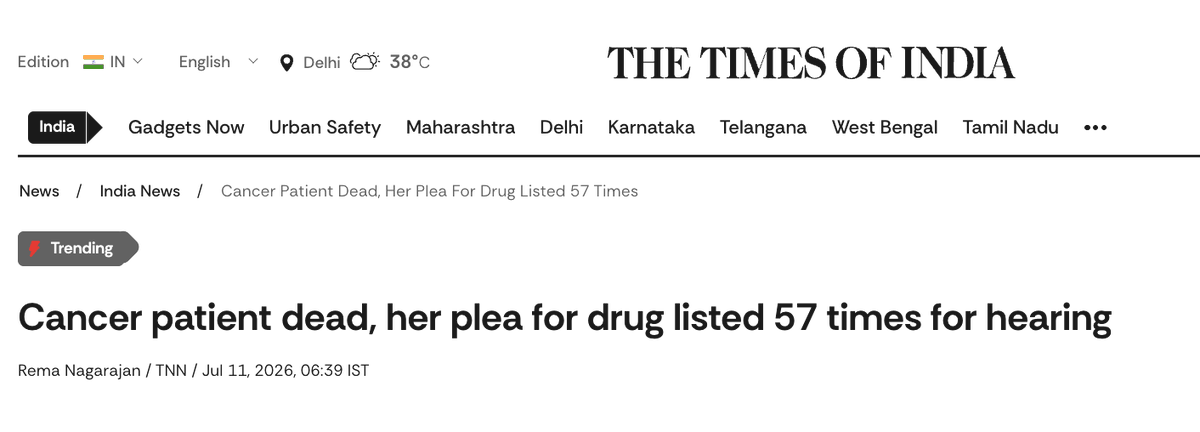
Cancer patient was about to die. She pleaded. Her plea has been listed 57 times. The court has still not heard it. Teesta Setalvad was about to be jailed. She pleaded. Her plea was listed out of turn. The court heard it at midnight.
Cancer patient is dead. Teesta is alive.
Can your investment generate regular income without running out too soon? 💰
Here's a data-backed comparison of the Top 15 Hybrid Mutual Funds based on 10-year SWP performance.
📊 Initial Investment: ₹10 Lakh
💸 Monthly SWP: ₹5,000
📅 Data as on: 24-Jun-2026
📚 Source: AdvisorKhoj
Past performance is not indicative of future results.
Infographic by Ankush Prajapati
#SWP #MutualFunds #HybridFunds #Investing #WealthManagement
Day 175: Rupee Cost Averaging 📈
Can you predict the perfect time to invest? Most investors can't and that's okay.
Rupee Cost Averaging (RCA) is one of the biggest advantages of investing through a Systematic Investment Plan (SIP). By investing a fixed amount at regular intervals, you automatically:
✅ Buy more units when markets fall
✅ Buy fewer units when markets rise
✅ Reduce the average cost per unit over time
✅ Remove the stress of market timing
✅ Build long-term wealth with discipline
Key Takeaway:
Time in the market beats timing the market.
Stay consistent, stay invested, and let market volatility work in your favour.
Infographic by Ankush Prajapati
Disclaimer: This content is for educational purposes only and should not be considered investment advice. Mutual Fund investments are subject to market risks. Read all scheme-related documents carefully before investing.
#RupeeCostAveraging #SIP #MutualFunds #Investing
Shipra Singhania builds houses the way people built before cement was invented, using mud, lime, sandstone and the specific clay content of whatever soil is underneath her feet, which is why the rammed earth walls of this house in Alwar are pink rather than the ochre you see in Kerala, because Rajasthan soil told her to make them pink.
Hybrid House. Alwar, Rajasthan, India. Sketch Design Studio. Three bedrooms. 2023.
The client grew up in Alwar, moved to Singapore, and came back wanting a house that remembered where he was from without pretending the journey hadn’t happened. The layout is U-shaped around a west-facing courtyard, which is optimal for a hot dry climate. A veranda wraps the southern facade to protect the earth walls from direct sun exposure, roofed with Mangalore tiles and carried on locally quarried sandstone pillars because the wood typically used in south Indian construction was not what this region offered. The interior walls are lime plastered using thappi on the exterior and kada on the interior, both traditional Rajasthani techniques that act as natural insulators against summer heat. The terracotta floors carry kolam inlays, a pattern made from rice flour. The cantilevered stair is one of the only concrete elements in the entire structure.
The farthest Singhania went for materials was Gujarat. Everything else was already in the ground, already in the hands of the artisans around her, already waiting to be used correctly.
We call this primitive in Africa while importing paint and plastic wall panels to finish buildings that crack in the first dry season and cook everyone inside them through the summer.
Sketch Design Studio | Shipra Singhania | Hybrid House | Alwar, Rajasthan | 2023 | Photography: Purnesh Dev
Manoj Madhusudhanan took a ₹1.86 crore home loan from ICICI Bank.
As collateral, he handed over his original property documents. Every homebuyer does this. You have no choice.
ICICI Bank sent those documents to their storage facility in Hyderabad via courier. Somewhere on that journey — Bangalore to Hyderabad — the documents vanished.
Gone. Originals. Irreplaceable.
When Manoj found out, ICICI Bank had one answer: it was the courier company's fault. Not ours.
He went to the Banking Ombudsman. They told ICICI to publish a public notice about the loss and pay him ₹25,000 for the trouble.
Twenty-five thousand rupees. For losing the original documents to a ₹1.86 crore property.
Manoj sent a legal notice. ICICI denied any mistake.
He went to the NCDRC.
The apex consumer court looked at the facts. The bank had taken custody of the documents. The bank had chosen the courier. The bank could not hand that liability to a third party and walk away.
ICICI Bank — India's second-largest private bank, ₹9 lakh crore in assets — was held liable. Ordered to obtain reconstructed certified copies, issue an indemnity bond, and pay ₹25 lakh in compensation.
One loan. One lost file. One bank that blamed the courier.
Save this — if your bank loses your original property documents, they cannot blame their courier agent. The documents were in their custody. The liability is theirs. File at your district consumer forum. The law is on your side.
(Source: Manoj Madhusudhanan vs. ICICI Bank Ltd. | NCDRC | LiveLaw, September 2023)
This is what it looks like when an architect refuses to apologize for where they are.
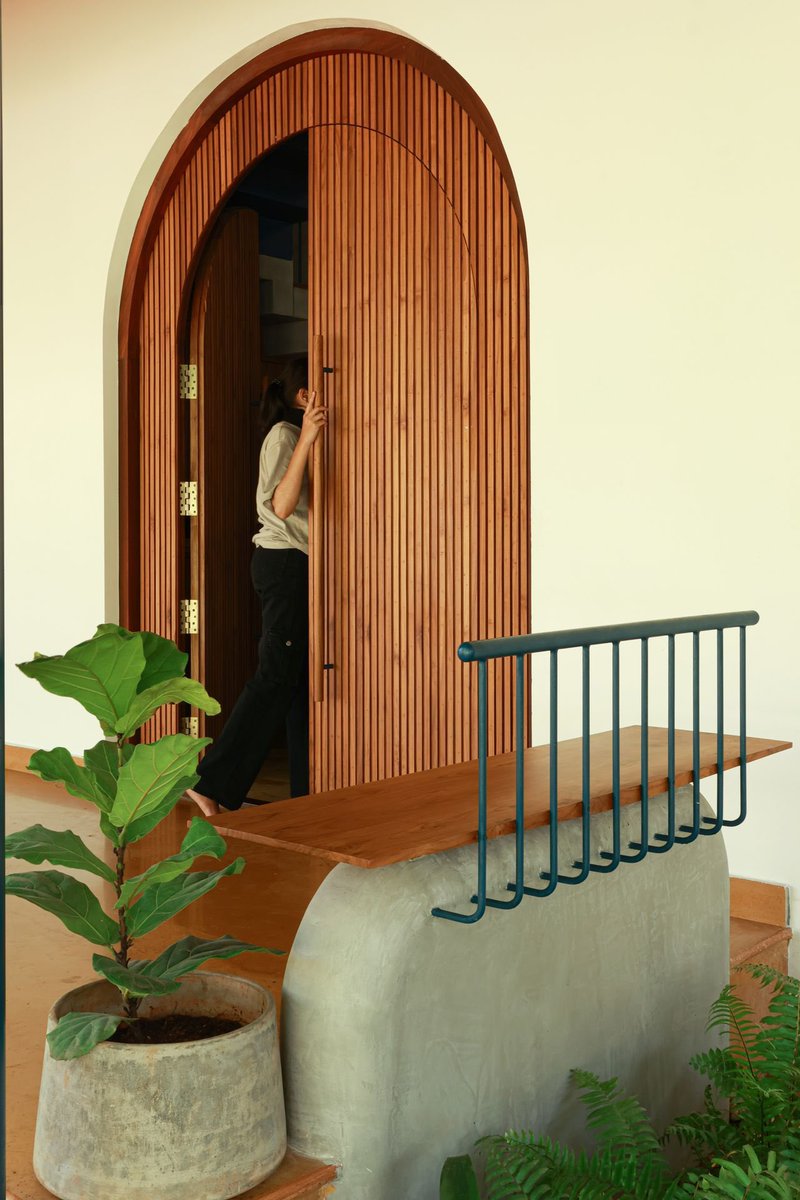
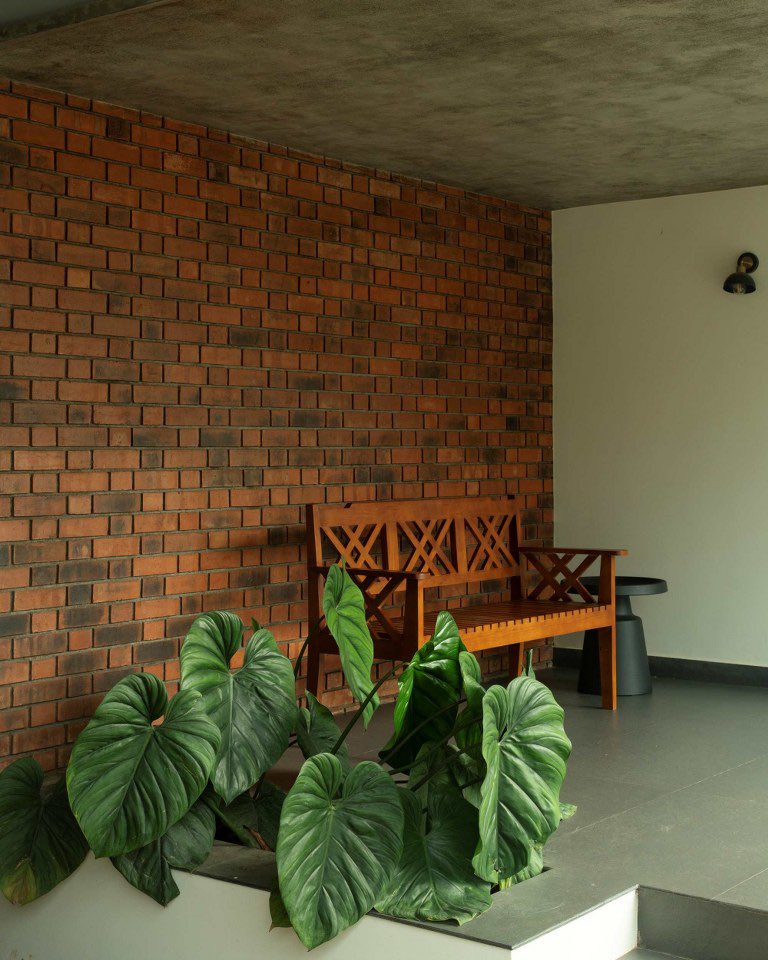
Beth Eden in Wayanad, Kerala sits on a linear plot surrounded by rubber trees and palms, and every material used to build it is left exactly as it arrived: exposed red brick, raw concrete ceilings, solid teak wood crafted by local carpenters into doors, shutters, wall panelling and furniture. The gabled roof projections mark the entrance and living zones without ornamentation. The generous overhangs handle the monsoon without asking anything extra from the structure.
The veranda has a bench and a plant. That’s the whole design decision. Brick wall behind it, concrete above it, teak in front of it. Nothing performing. Nothing pretending.
Inside, the vaulted ceiling follows the gable profile exactly as it was built. The living room teak was custom made. The windows were made by local carpenters. The house cost what it cost because the labor and materials were already there.
Africa has laterite in the ground, hardwood in the forest and craftsmen who know exactly what to do with all of it, and what we need is not another glass tower in a capital city but more brick kilns producing standard fired brick at scale so that our architects stop reaching for cement blocks every time they need a wall.
Design: Forge and Furnish | Ar. Liz Tomy | Sulthan Bathery, Wayanad
More images in the comments.
Every Indian over 30 has 5 things wrong with their body right now. They happened so slowly nobody noticed when they started.
→ Bloating after every meal you call "just heavy food"
→ A 3 PM crash you blame on lunch
→ Sleep that doesn't rest you, no matter how long you're in bed
→ Skin that looks dull in every photo since last Diwali
→ Mornings that start stiff, puffy, and foggy
You've spent ₹10,000 fixing them separately. None of it worked.
Here's what's actually happening, and how to fix all 5 free, today:
Most of us grow up with the stories of Mahabharata.
Yet, we never understand it well enough and know the true account of this incredible epic.
With this online course by @BhandarkarI, we seek to introduce you to the epic world of the greatest epic in the world.