A French engineer who lives quietly in Paris has spent 30 years writing software that the entire internet now runs on without knowing his name.
He wrote the code that streams every YouTube video, every Netflix show, every TikTok clip. He wrote the code that runs the virtual servers underneath AWS, Google Cloud, and Microsoft Azure. He calculated more digits of pi than anyone in history. He has no Twitter. He has no marketing. He just keeps shipping.
His name is Fabrice Bellard.
Here is the story, because almost nobody outside the systems programming world knows what one man has built.
Fabrice was born in 1972 in Grenoble, France. He studied at École Polytechnique, the top French engineering school. He never went to Silicon Valley. He never built a startup empire. He just wrote code.
In 2000 he started a project called FFmpeg, an open-source multimedia framework for encoding, decoding, and streaming video. He was 28. The project did one thing nobody else had done well. It handled every video and audio format that existed, in one library, on every operating system. He led it himself for years.
Today FFmpeg is the invisible engine of the internet. YouTube uses it. Netflix uses it. VLC uses it. Chrome and Firefox use parts of it. Every Android phone, every iPhone, every smart TV, every video editing tool you have ever touched runs FFmpeg somewhere underneath. If you have watched a video on a screen in the last 20 years, Fabrice's code processed it.
He was not done.
In 2003 he started QEMU, a machine emulator and virtualizer. He wrote it solo until version 0.7.1 in 2005. QEMU lets you run any operating system on any other operating system. It became the foundation of modern virtualization. KVM, the Linux kernel hypervisor, runs on top of QEMU. Every major cloud provider, AWS, Google Cloud, Microsoft Azure, IBM Cloud, runs virtual machines on infrastructure built around it. The Quick Emulator is the most cited piece of cloud infrastructure code on Earth.
He kept going.
In 2001 he won the International Obfuscated C Code Contest with a small C compiler that grew into TCC, the Tiny C Compiler. TCC can compile and boot a Linux kernel from source in under 15 seconds. In 2004 he calculated the most digits of pi ever computed at the time, using a personal desktop computer and an algorithm he derived himself called Bellard's formula. In 2011 he wrote a complete PC emulator in pure JavaScript that runs Linux in your browser, a project called JSLinux that engineers still cannot believe is real.
In 2019 he released QuickJS, a small but complete JavaScript engine that fits where V8 cannot. In 2021 he released NNCP, a neural network based lossless data compressor that immediately took the lead on the Large Text Compression Benchmark.
Then he turned his attention to large language models. He built TextSynth Server, a web server with a REST API for running LLMs locally. He released ts_zip and ts_sms, compression utilities that use language models to compress text and short messages at ratios traditional algorithms cannot reach. He released TSAC, a very low bitrate audio compression system. In December 2025 he released Micro QuickJS, a new JavaScript engine for microcontrollers, separate from QuickJS, designed for environments with almost no memory.
Fabrice co-founded a telecom company called Amarisoft in 2012, where he serves as CTO. Amarisoft builds 4G and 5G base station software used by carriers and labs around the world. He has been running it for over a decade while continuing to ship personal projects from his own home page at bellard dot org
He has no Twitter. He has no Instagram. He gives almost no interviews. His personal website is a flat list of projects with no styling, no fonts, no marketing copy. Just titles and links.
A quiet French engineer who never moved to Silicon Valley wrote the code that quietly runs the internet.
He is still shipping.
UK growth in 2026 is revised up to 1.0%, reflecting stronger-than-expected momentum before the Middle East war. Growth is set to slow as higher energy prices, tighter financial conditions, and global uncertainty weigh on activity, underscoring need for sound macro policies. https://t.co/C7LQYBfssp
Is Europe falling behind the US on productivity? The Krugman vs Aghion–Bergeaud–Garicano debate hinges on one choice: current vs constant PPPs. A new note maps the gap behind it — all 27 EU states, two data sources — and what it does and doesn't settle. 🧵
@IMFNews ... and you can also check out our paper for explanations without accent: "State Capacity, Institutions and Growth: Taxing for Takeoff" https://t.co/uw49dBZ5yf
Check out our latest Analytical Corner: State Capacity Growth & Institutions—Taxing for Takeoff, as IMF Fiscal Affairs experts Ross Warwick & Matthieu Bellon explore how surpassing a minimum level of tax revenue can trigger economic and institutional progress. Watch Now: https://t.co/kOZzltbh2N
Cities stand on the frontlines of #ClimateChange, but many lack the resources to invest in local adaptation.
How can smarter fiscal frameworks build climate resilience?
Join us on 3 Nov for the #OECDatCOP30 session on enabling subnational adaptation.
➡️https://t.co/GNXUlIiX7C
What happened when the U.S. sent 400,000 Mexican workers back to Mexico in the 1930s?
The employment rate of native workers went down noticeably as a direct result.
(Yes, you read that correctly.)
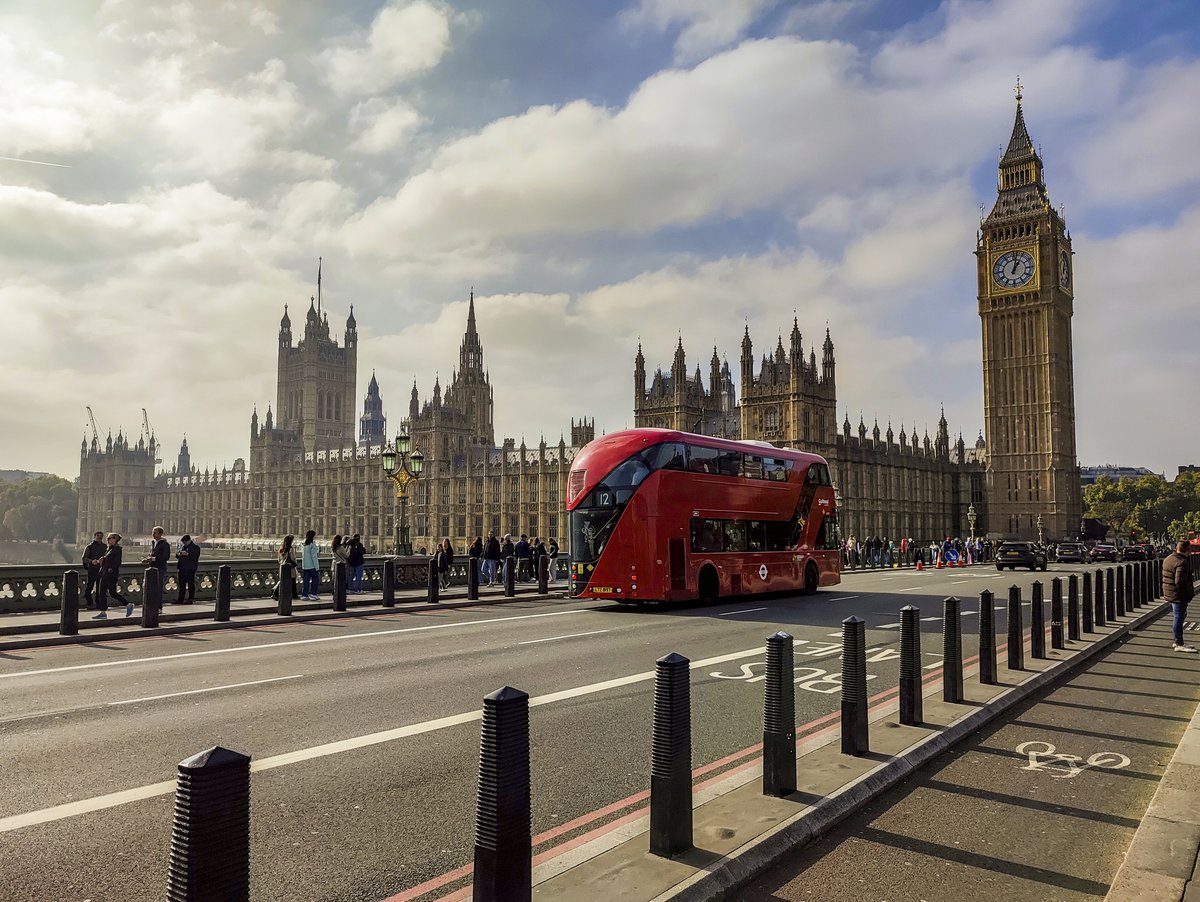
Je tweete ceci 👇car partout ailleurs en Europe en 2025 on prend le train/métro en flashant sa carte de crédit sans billet
A CDG on fait la queue 25 MINUTES pour tomber sur ce genre de connerie ! 👇
Chapeau l'accueil !
Vraiment ?
@IDFmobilites@SNCFVoyageurs@RERB
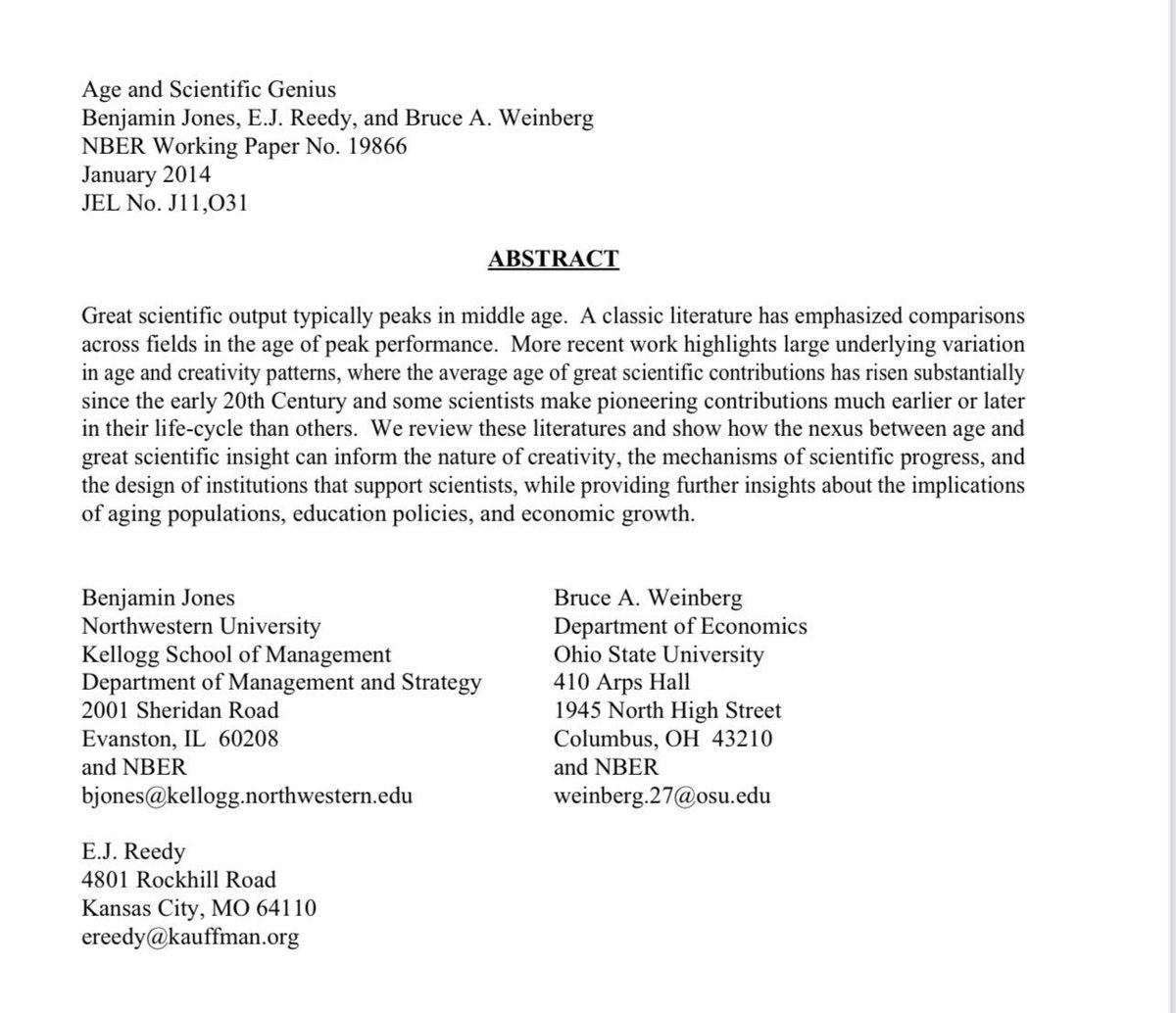
Similarly, the age at which scientists or innovators achieve their moment of genius has been increasing. Half of all pioneering experimental contributions in science happen after age 40. This is due in part to the increasing burden of knowledge to master: https://t.co/rhhjStdvbk
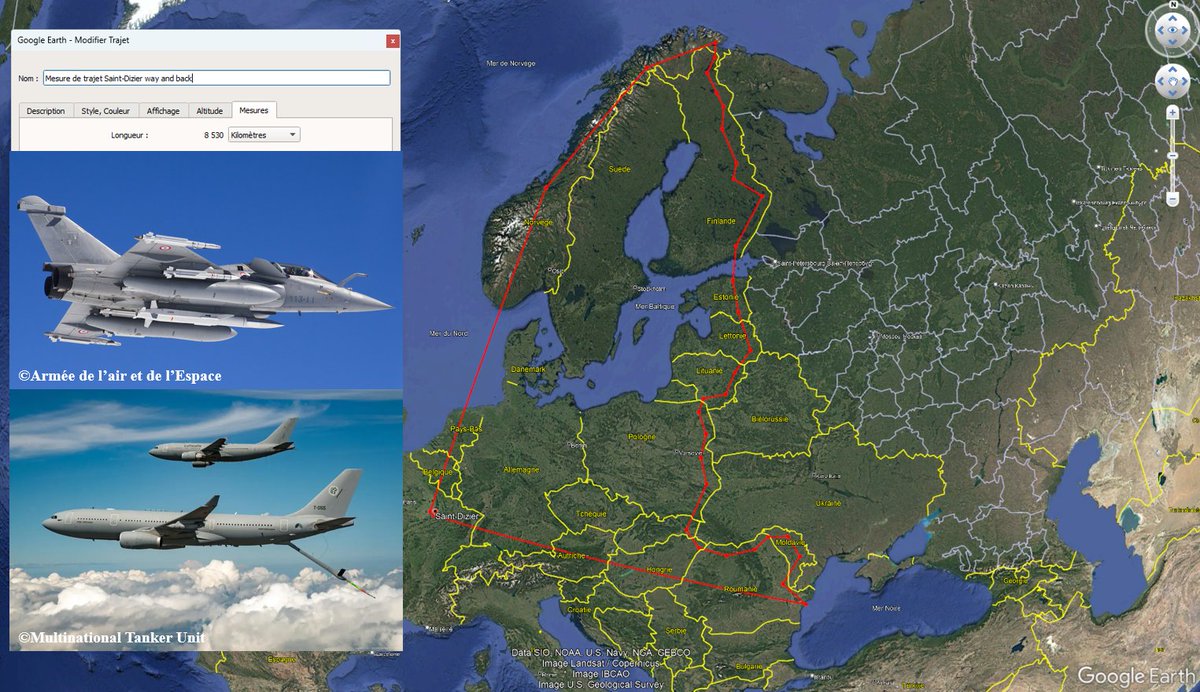
☢️🇫🇷A roadmap toward a French nuclear umbrella over Europe 🇪🇺☢️
Yesterday, President Macron announced his willingness to open discussions on deterrence in the benefit of Europe.
Let's see together what the different options are at a short, medium and long term.
A thread 🧵
8/👀 Check out "Estimating macro-fiscal effects of climate shocks from billions of geospatial weather observations." 📚 https://t.co/exgSqQr1k0
with B.Akyapi & E.Massetti
📖We make the data public!📖
Also here https://t.co/mXYEodM1Zi
without restrictions
What's the impact of climate on GDP? 🌡️🥵🥶🌪️
Do you expect weather fluctuations & climate disasters to explain lots of GDP variations?
A 🧵👇on our forthcoming @AEAjournals#AEJMacro paper that uses billions of geospatial weather obs + ML technique to answer this question.
1/8
7/ What does it mean for what we know about climate change?🤔
👀Weather averages don’t capture the weather shocks that hurt GDP the most
🧐Heterogeneity, non-linearity matter|
🫣 Scenarios about the future that are just based on average weather likely underestimate losses