Tweeting hyporheic zone & groundwater - surface water science, resource management, & policy. R/T if tagged or for #hyporheic (profile photo cr. S. Stonedahl)
Take a little walk with us at one of our @DRYvER_H2020 sampling site, and meet the #hyporheic_flow. Notice that both below and above the dry section (from 0:13 to 0:35) the stream is flowing. (The video is at 2x speed.)
Early #hyporheic work available in English for the first time thanks to @skuylerherzog's translation. Fully open access and citeable via @CUAHSI's HydroShare platform. Check out the origin of a discipline for the first time. https://t.co/5NADHc46Do
When was the #hyporheic zone discovered? Many point to the naming of the HZ by Orghidan (1955), but Chappuis first identified the new biotope in 1946. I translated the article from French, and it's available for free here: 10.4211/hs.d28c7b2d81a644bfba15762074230988
4 needed advances in transient storage modeling:
1 - Evaluation of Multiple Model Frameworks
2 - Assessment of Parameter Uncertainties and Interactions
3 - Data Model Integration
4 - Syntheses to Link Physical Setting and Transport Processes
#hyporheic
Here's a new commentary by @hydrochrista and @JLAKnapp about the future of transient storage modeling. Four specific advances for the future of transient storage modeling (next tweet) #OpenAccess
https://t.co/tQ8xBOo9rT
Now in @JGRBiogeo:
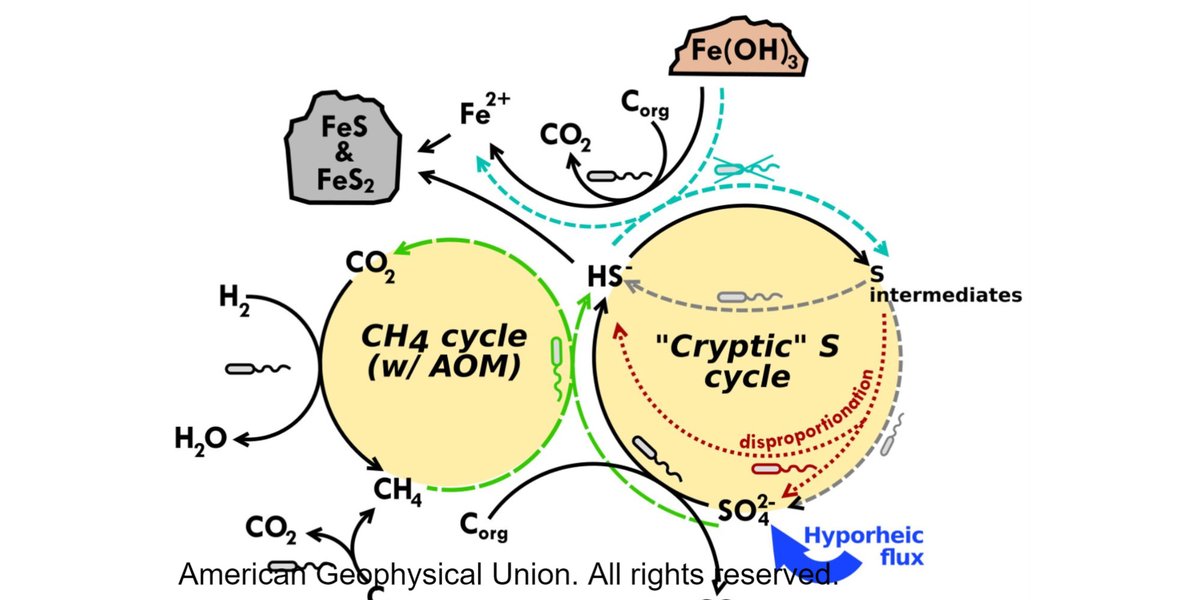
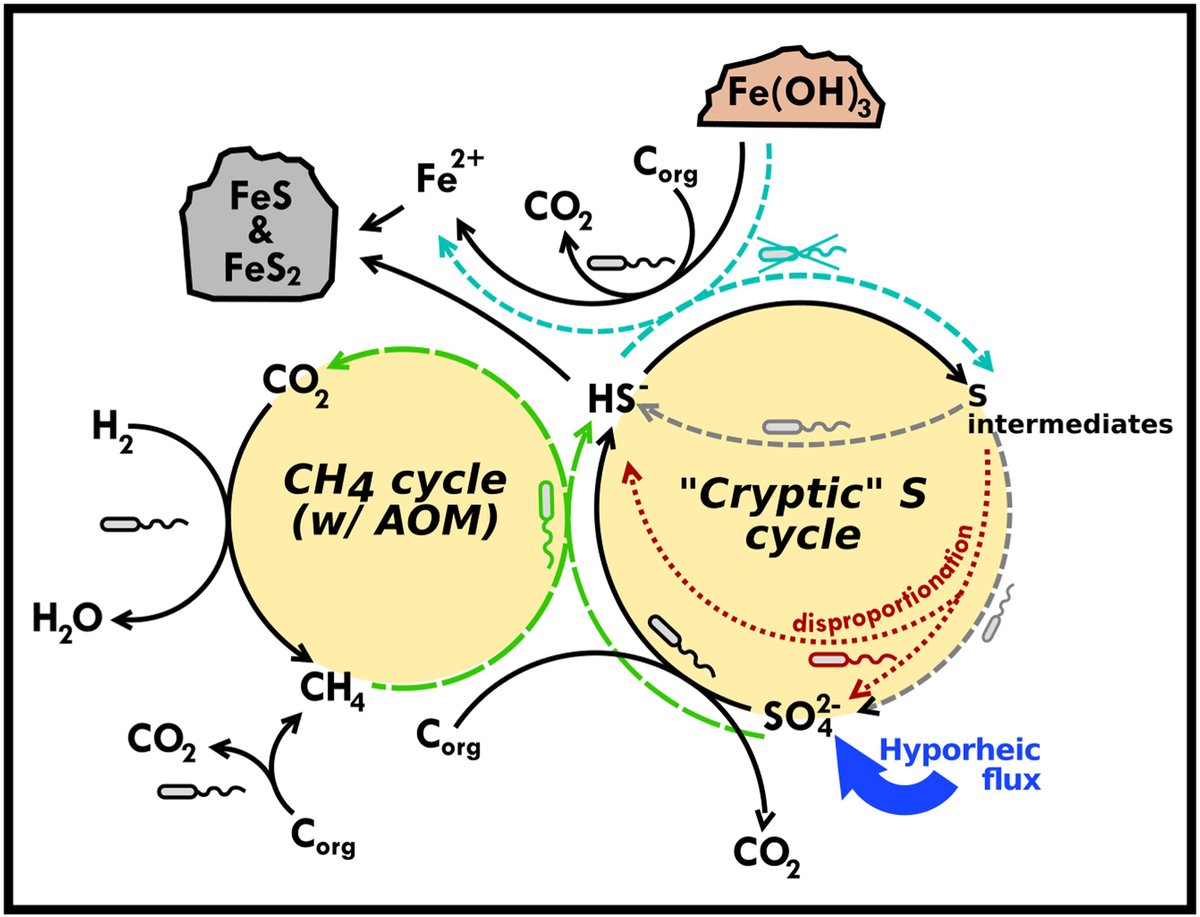
Microbial and Reactive Transport Modeling Evidence for Hyporheic Flux‐Driven Cryptic Sulfur Cycling and Anaerobic Methane Oxidation in a Sulfate‐Impacted Wetland‐Stream System--Ng et al. #AGUpubs
https://t.co/UNnjc6GUvW
Excited to share new paper out that links hyporheic fluxes to cryptic sulfur cycling and anaerobic methane oxidation in dynamic wetland-stream systems. Great collaboration led by Crystal Ng @UMNEarthScience with @crsoil, Nate Johnson, and terrific students (Yourd, Duhn, Lange).
Discussion open for comments: A multirate mass transfer model to represent the interaction of multicomponent biogeochemical processes between surface water and hyporheic zones (SWAT-MRMT-R 1.0) https://t.co/dKp9JMEgeI
#GMD https://t.co/AB200Igjic A multirate mass transfer model to represent the interaction of multicomponent biogeochemical processes between surface water and hyporheic zones (SWAT-MRMT-R 1.0)
Congrats to Galloway et al. on their new article measuring the impacts of unsteady discharge and groundwater up/downwelling on oxic zone size and O2 consumption. With the time difference this qualifies for #FlumeFreitag
https://t.co/VCO0yL20Ac
Only one week until the #EGU20 abstract submission deadline! Don't forget to submit your abstract to session HS10.7 on Groundwater-Surface Water Interactions https://t.co/4TKgS0aE9w We look forward to many great talks and posters! #hyporheic