This paper expands on our previous study https://t.co/m9CGZOl2X2. There is a need to monitor blood test use over time nationwide and explore potential between-GP variation to identify opportunities to improve the diagnostic process.
To sum (part 2), there may be opportunities to increase blood test use in certain populations of pre-referral cancer patients though this cannot be inferred by our study findings per se.
How much earlier could different diseases be diagnosed, as shown by patients' changing healthcare use at a population level? My colleague Emma Whitfield answers this in her literature review @BJGPjournal@GLyratzopoulos@SpirosDenaxas@UCL_BSH@UCL_IHI
Thanks @BGJP, and colleagues Matthew Thompson and Nikki Gentile for the editorial (link:https://t.co/KsLregiS4K) accompanying our original study on blood test use in primary care before diagnosis of cancer. @mmkoo12@Gregrubin4@garyabel@RuthSwann Sean McPhail @GLyratzopoulos
Blood tests for suspected cancer: this editorial discusses research on use of blood tests for suspected cancer, and gives insight into GP decision making
https://t.co/UGRdQC4anQ
5/ Although tiredness is rarely caused by a life-threatening condition, our findings can help doctors and patients decide together whether further tests should be done. This research can help doctors spot cancer in patients without obvious symptoms of the disease.
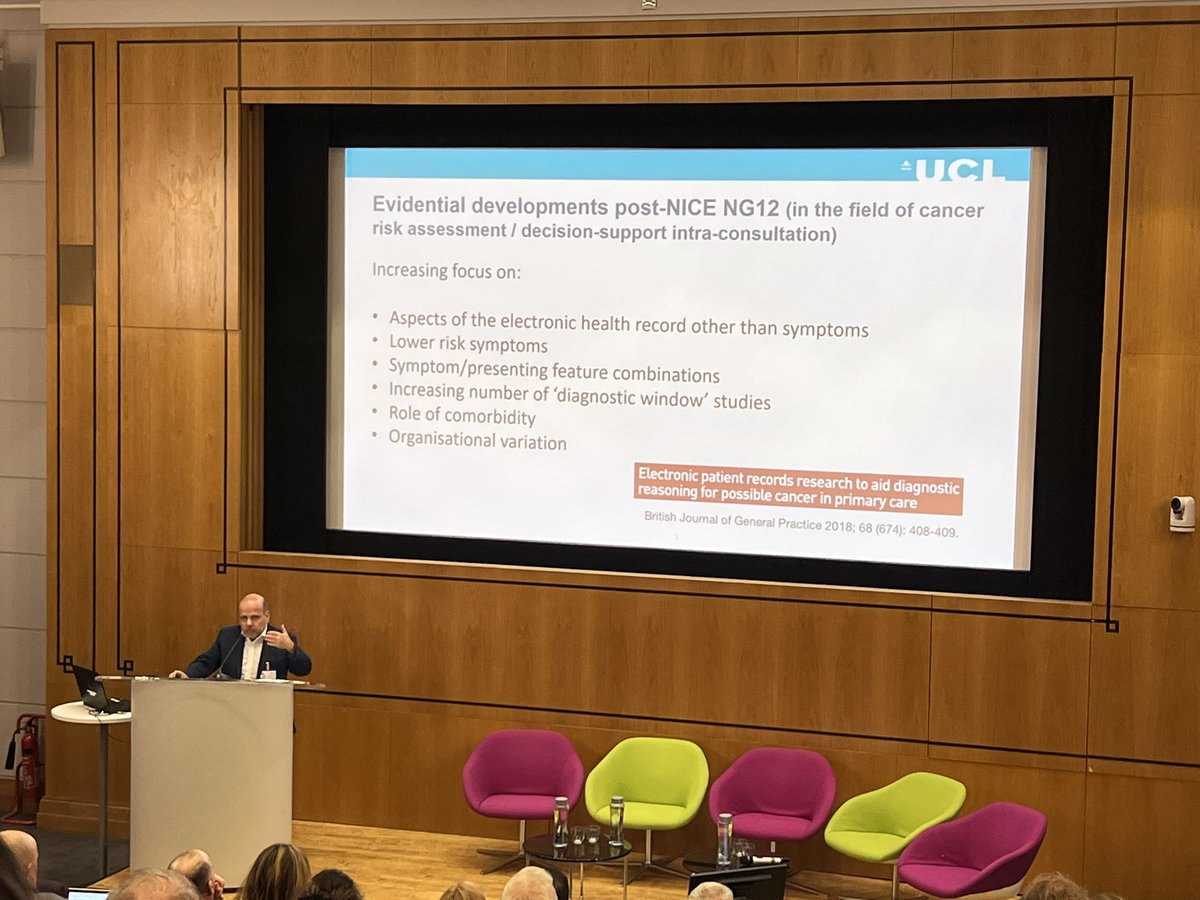
Eye opening talk by @GLyratzopoulos at the #CanTestSummit summarising research advances in cancer risk assessment since the 2015 NICE guidelines and where future research should be focusing! @CanTest_PC
We need to further explore blood test use in specific patient groups and to better understand the context in which these tests are being ordered to appreciate possible interventions to optimise their use.
Whether the findings denote unmet need in some patient groups subsequently diagnosed with cancer for increased (potential underuse) or decreased (potential overuse) use of common blood tests needs further investigation.