1/ We’re so glad to share this new study 💫
Does the brain learn like a Deep Net? 🧠⚙️
- 📄Misalignment Between Backpropagation and the Hierarchy of Brain Responses to Images
- 🔗https://t.co/yrb4otBEYk
Thread below 🧵
Our new paper is out in Neuron!
https://t.co/FhP19Jg3du
How does the brain decide how much of the past to use when making decisions? In rapidly changing environments, recent experiences matter more; in stable environments, longer histories are useful.
Our brains don’t think in a steady stream. They rhythmically “scan” different alternatives, using attention cycles to sample and compare choices.
Rhythmic sampling of multiple decision alternatives in the human brain
https://t.co/zqJ6r0TxhP
#neuroscience
I have released Augmenting Historians, an experimental research infrastructure for the critical analysis of historical writing using RAG architectures, argumentation analysis, rhetorical mapping, and large language models.
I’ve released an open-source post-OCR normalisation pipeline for historical French corpora from Gallica.
The project was developed on the Annuaire de l’Institut de droit international (1877) and is designed for reproducible historical text processing workflows.
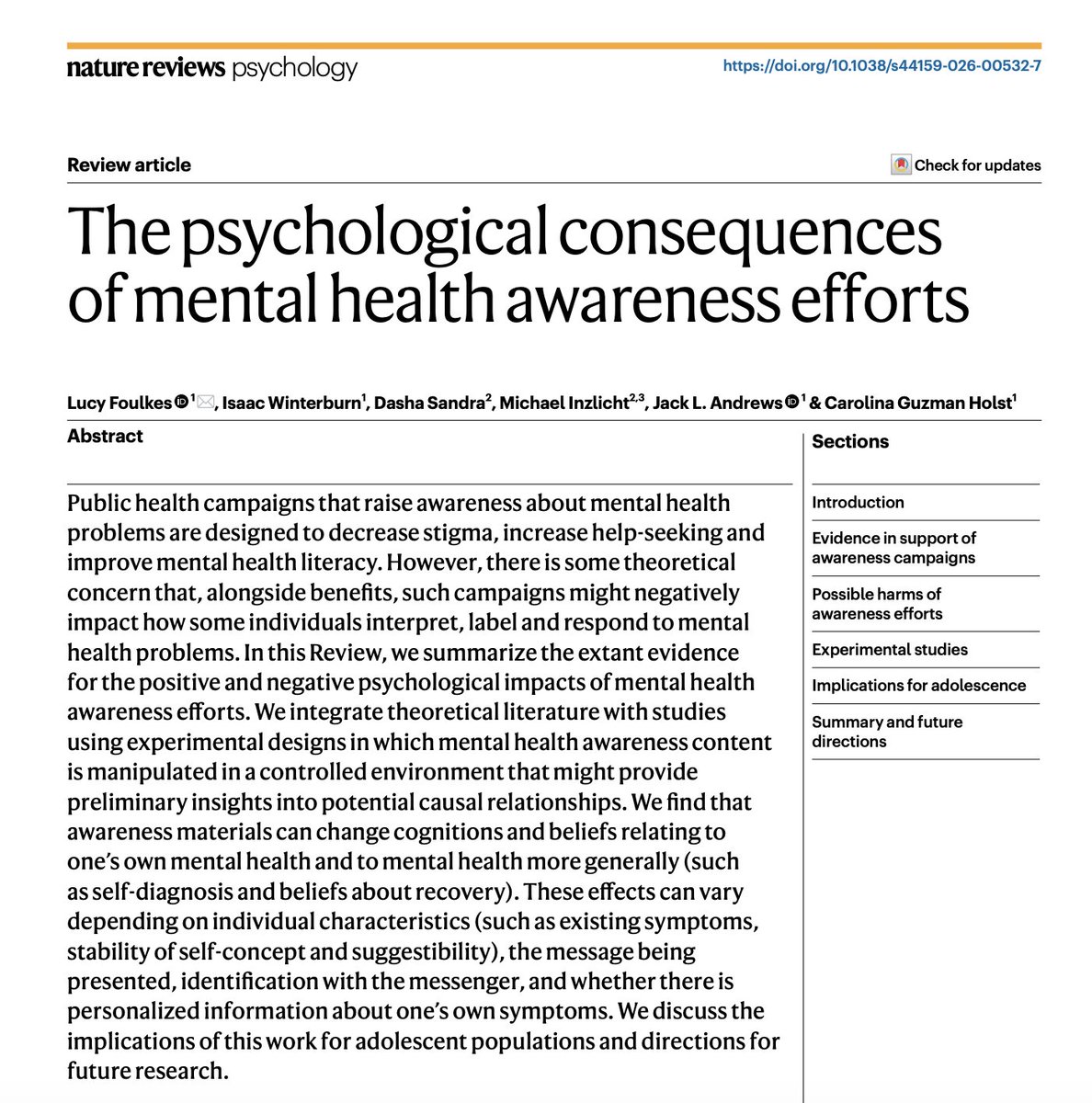
From the paper: "Several high-quality trials have shown that universal mental health interventions based on mindfulness, cognitive behavioural therapy, dialectical behavioural therapy and general mental health awareness can all have negative outcomes, including an increase in internalizing symptoms."
As critics have been arguing all along, individualised, medicalised and decontextualised models & narratives are not only net ineffective, but even contribute to and exacerbate social & psychological issues and distress.
We dont face a crisis of 'mental disorders' in need of medical or cognitive treatment, we face a socio-psychological crisis and a crisis of medicalisation in need of a societal rethink.
Distraction reduces whether memories are accessed but does not alter how precisely they are represented, according to a new study using a continuous report paradigm.
https://t.co/aoAo8UqubO
Spontaneous behavior in freely exploring mice is not random wandering but a succession of self-directed tasks where low-level actions are sequenced to achieve high-level goals.
https://t.co/uPabsd0VO9
Resting-state electroencephalogram patterns recorded in children as young as seven years old can accurately forecast distinct developmental trajectories toward anxiety and depression by age thirteen.
https://t.co/2RfM1QO69D
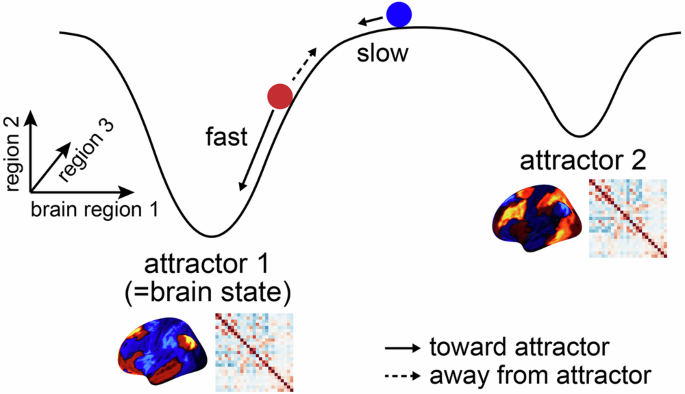
The geometry of neural dynamics along the cortical attractor landscape directly reflects changes in attention, as large-scale brain activity shifts across its hills and valleys depending on the state.
https://t.co/CG8zH3kx1V
The Brain May Have Been Critical Before It Became Predictive: Self-Organized Criticality and the Physical Basis of Action-Readiness
https://t.co/8PP8WguoKS
New paper in PNAS! When the mind wanders, it often drifts to the body. We call this "body-wandering". These thoughts are often negative, but are associated with reduced ADHD & depression symptoms, driven by a distinct interoceptive-allostatic brain signature. https://t.co/FYxdmh0RXH
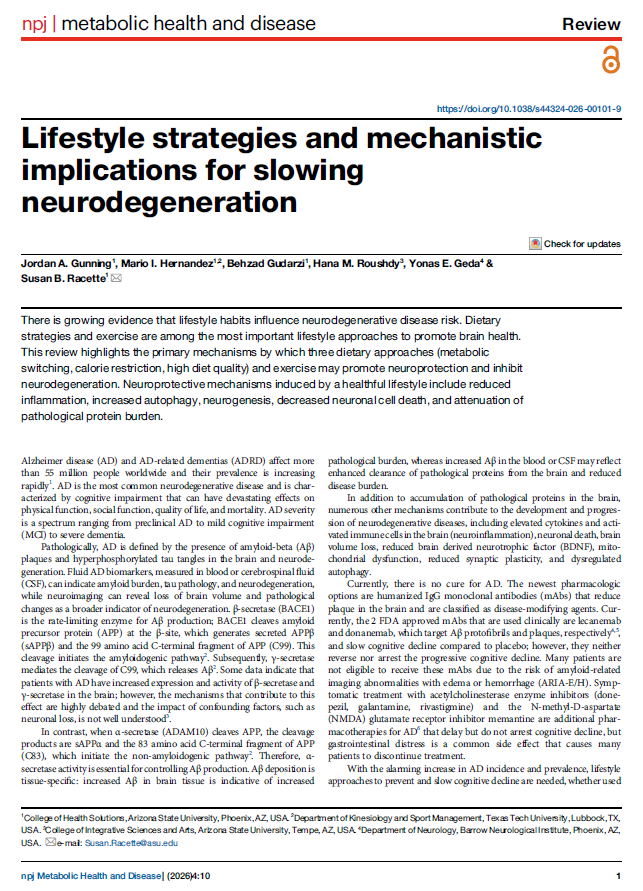
This review shows mechanistic data for intermittent fasting or ketogenic patterns, calorie restriction, high-quality diets (Mediterranean/MIND), and regular exercise to lower neuroinflammation, enhance autophagy, increase BDNF, and reduce amyloid/tau burden, slowing neurodegeneration and cognitive decline.
https://t.co/CLLPwJss4B