The archbishop of the U.S. military services has said he does not believe military action to take control of Greenland could be justified – and that U.S. troops in good conscience could refuse orders to do so.
https://t.co/Q4HxZBptg4
@FeserEdward What people don't like about this is that fraternity implies something more fundamental than national identity, making those identities arbitrary. It causes us to face the fact that what we think of as nations are recent constructions.
We’ve reached a point where any mix of solutions to our nation’s economic problems is going to involve the wealthiest Americans contributing more. https://t.co/m0zXuXeC43
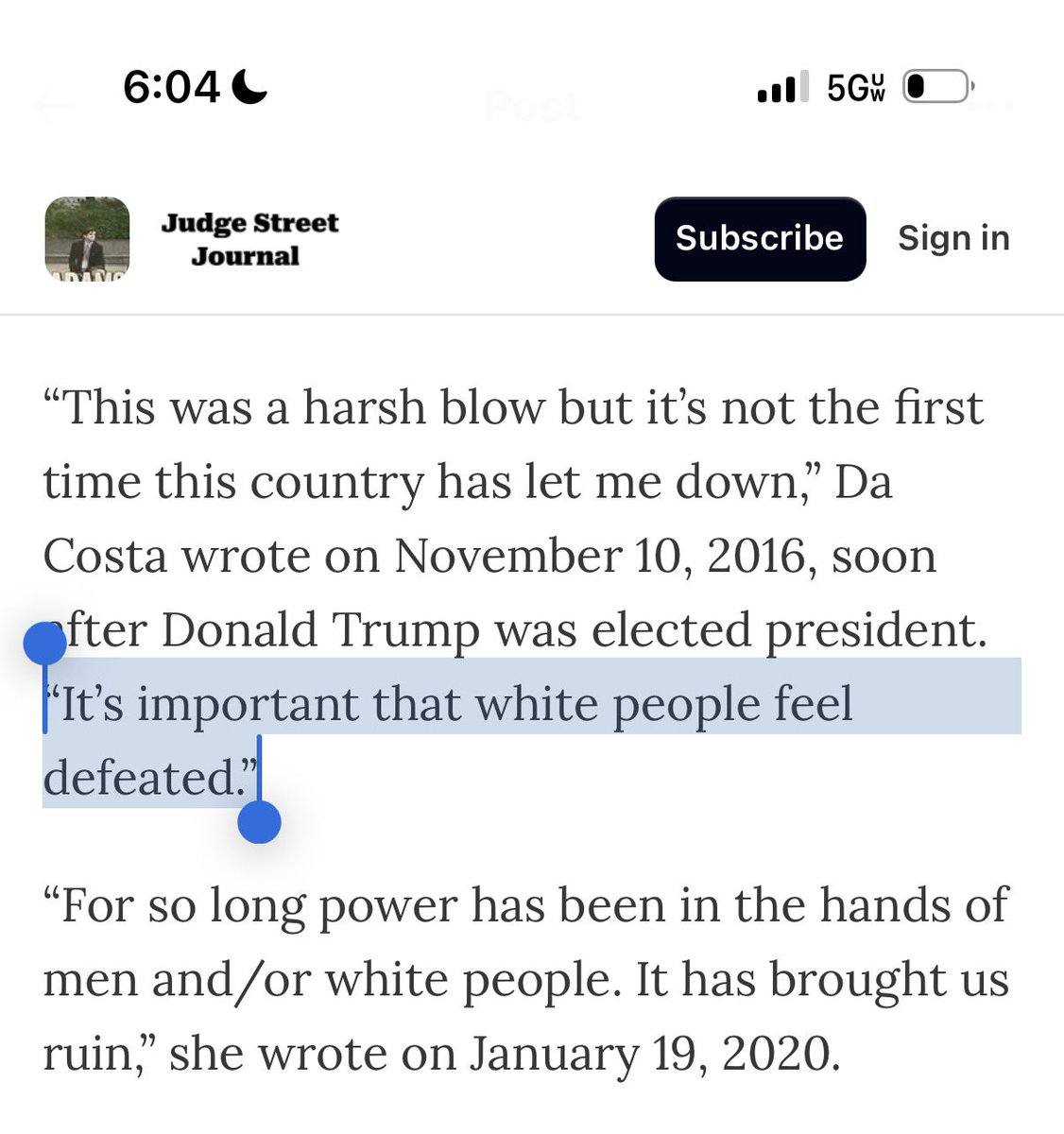
In so far as race is an empty category, statements like this mean materially nothing. Race talk is unicorn talk and the sentence “unicorns should be made to feel guilty” only mobilizes people who air brush them on their vans.
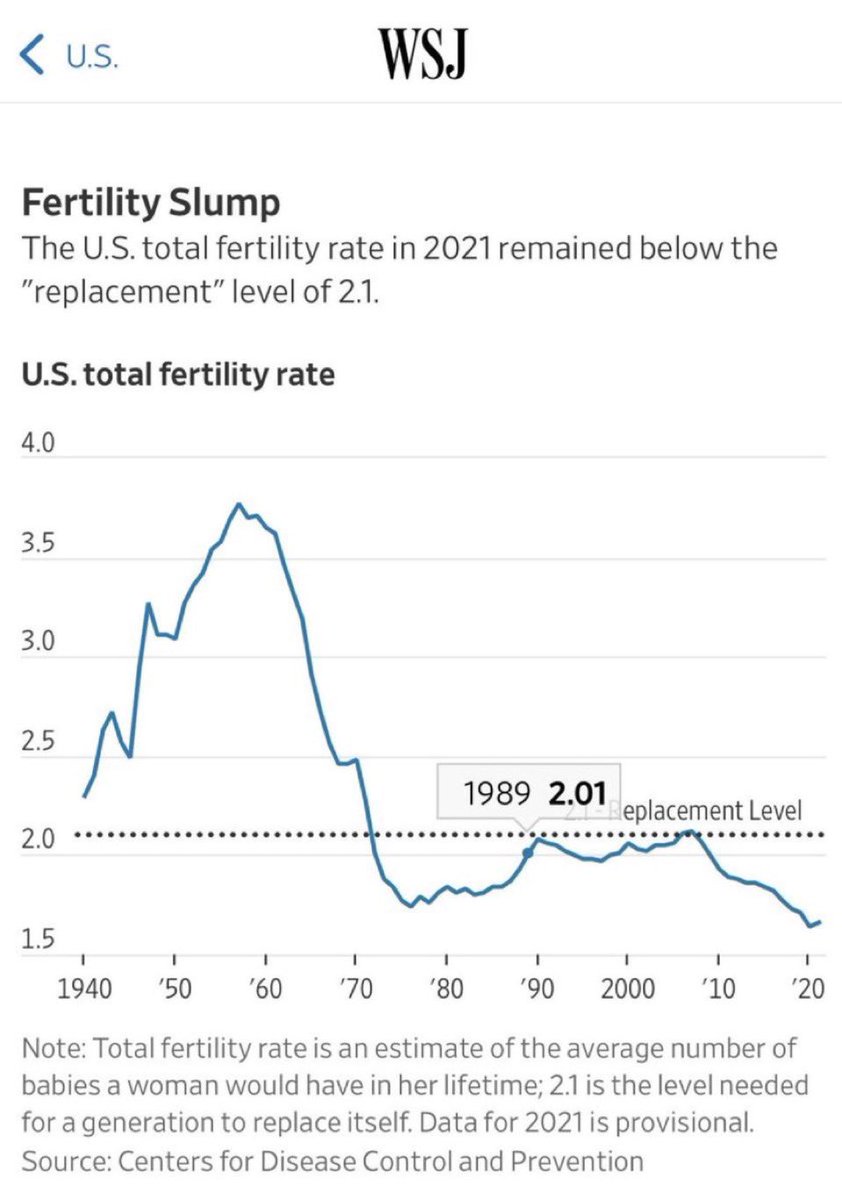
throughout history, when a civilization reaches a certain level of abundance, fertility rate falls below replacement
unless the US can reverse this trend, it will soon slide into decline
we must believe in a positive future, have many babies, and culturally prioritize family
Thinking about recent conservative infighting: disagreement about Charlie Kirk’s legacy seems to be, at some level, a disagreement about what MAGA is. His death feels like the first time the new right faces the past tense, the first time they get to look back wonder what they are. And for conservatism, the past is both the most sacred and the most contested subject. In this way, his death is MAGAs first reflexive moment.
A depressing fact: for undergrads, AI use is obvious because student writing is so poor. Bad writing is a mark of authenticity. If its good, the first thing I do is run it through an AI checker. Bummer.
Here's a little manifesto about politics and religion I've been stewing on—help me grind on it if you have the time.
The current religious turn among young men in the United States is, I want to say, a materially legible sign of a life-world that has become uninhabitable. Under neoliberalism the male subject is formed as a solitary entrepreneur of the self, precarious, lonely, and purposeless. From a Thomistic perspective that is simply an unnatural way for a dependent rational animal to live, and the recent rush toward “trad” forms of Christianity is, in that sense, nature’s protest.
Yet here Marx’s analysis in the Eighteenth Brumaire becomes uncomfortably diagnostic. “Men make their own history,” he writes, “but they do not make it as they please… The tradition of all dead generations weighs like a nightmare on the brains of the living”; in times of crisis they “anxiously conjure up the spirits of the past… borrowing from them names, battle slogans, and costumes” to stage a new scene in borrowed language.
Our present “Christian nationalist” (confusing term, I know. But I'm not saying they are Nazis et cetera. i'm thinking Fuentes here, and at times Doug Wilson) influencers repeat this pattern exactly. They offer a farce of Christendom—a stylized Catholic or Orthodox or evangelical identity that borrows the costumes of a lost Christian civilization in order to bless the very nation-state and market order that have dissolved the practices of common life. It is, in Marx’s sense, history as farce; because its borrowed imagery is Christian, it is also a farce of Christianity.
Against this, what I am calling Christendom as an ecology would not be another picture to be imposed on the social but a long work of re-learning: the slow regrowth of sacramental and economic practices capable of generating, from below, a grammar of the common good, justice, and mercy in which the Kingdom becomes thinkable again as the true horizon of social history.
Thus, I want to take what Marx calls “commodity fetishism” and connect it to what the New Testament calls idolatry; what Marx hopes to achieve by revolutionary praxis Jesus and Paul describe as discipleship, the reschooling of desire in the Body of Christ.
Marx’s critique of capital exposes how human powers become alienated and return as quasi-divine forces ruling us; the apostles say much the same thing about the powers and principalities. The difference is that Marx expects history, once demystified, to save itself. The gospel claims that history is judged and reordered by a crucified Lord who forms a people whose very life—its worship, its economic practices, its care for the weak—is already a training in another politics, the politics of the Kingdom.