🐋 New Research Alert!
Whales are majestic sentinels of ocean health. Here we uncover fin whale's exposure & response to legacy & emerging chemical contaminants
🤿 Dive into the full story:
https://t.co/6DCSk5f0fN
#ChemicalExposomics#MarinePollution@scilifelab@AcademicTox
PhD opportunity to work at @ISGLOBALorg and @IDAEA_CSIC on a metabolomics project investigating how environmental exposures to contaminants during pregnancy influence maternal and child health, under the supervision of @Lea_Maitre and myself. More info in the link below:
How will your choice of #HRMS acquisition strategy affect molecular coverage, structural annotation and MS2-based toxicity predictions with #MS2Tox in your #Nontarget analysis? Check out our recent publication in @EnvSciTech 🥳
#OpenAccess: https://t.co/Z1nvtokcdt
Our longitudinal #exposomics study is now available in @EnvSciTech. We show valuable cohort-scale data on the longitudinal stability of #exposome in blood, discuss unique coexposures and define longitudinal exposure types, useful for study design. https://t.co/AhEzW0Tw84
I'm glad to share that I will be leading the coming @NORMAN_network Trial on "Non-target screening of airborne organic substances in PDMS-foam passive samplers". Registration is currently open (https://t.co/v9jEFfvBAD) and the deadline is July 1st 2024. Don't miss it!
Please check our latest @ChemRxiv study: sensitivity for plasma chemical #exposomics was enhanced by lipid removal and large volume injection #GC-#HRMS, resulting high target detection, nontarget annotation and molecular confirmation rates.
https://t.co/NqIwYj2lew
Check our @biorxivpreprint for the first cohort-level longitudinal #exposomics application in blood. We show that #exposome longitudinal stability is lower than other biomolecular profiles and discuss novel co-exposures relevant to #PrecisionMedicine.
https://t.co/vGBH8roBT0
📢We’re hiring!📢 Assistant Professor position in environmental chemistry of organic contaminants with emphasis on data science tools. Come work with us in the Contaminant Chemistry Unit @AcesSthlmUni!
Closing date is June 3rd. For more info and to apply:
https://t.co/BFqknZDfrL
We are looking for a laboratory assistant in our group to provide analytical chemistry support for the trace analysis of organic chemicals in indoor and outdoor air samples within @INQUIRE_EU project at @AcesSthlmUni. Closing date: 13th March https://t.co/4bLC7EUc7J @AcademicTox
Few days left to submit your abstract! Deadline on 29 November 2023. We hope to see many of you in the beautiful Seville and discuss about #exposome! @SETAC_world
Come join us in Stockholm! We are searching for our next colleague to perform #postdoctoral studies on #lipid mediator #massspectrometry. Develop LC-MS/MS & SFC-MS/MS methods to probe the role of lipids in #asthma. Long-term career development options! https://t.co/LRXrUGeXDy
Here is more about the Assistant Professor position available here at ACES. Please alert any of your colleagues in #toxicology with interest in #computational and #machinelearning methods. Let me know if any questions...
Early career toxicologists take note. We are recruiting an assistant prof in data-driven life science ($1.6 M USD startup). We are looking for computational and AI approaches to study (eco)toxicology, ranging from molecular and cellular response to health. https://t.co/FNmg8P6p8i
The purpose of the new chemical hazard classes #PMT and #vPvM are to prevent persistent substances like #PFAS from entering and accummulating in #water resources
A recent paper criticized the #PMT criteria based on misconceptions.
We clarified:
https://t.co/z1GqDZxz4i
1/5
I struggle to find better evidence of the importance of full transparency and third-party review in chemical assessment. Axel Mie & @christina_ruden reveal recurring non-disclosure of studies by the pesticide industry resulting in a public hearing on July 18 at the @EUparliament.
To our knowledge the #herbicide#fenuron has never been reported in human biofluids but was detected in 56% of 34 swedish plasma samples, while never approved in #Sweden. It was detected along with other chemicals, e.g. personal care products, and endogenous steroids hormones 3/3
New work by @sdougkou and our group!
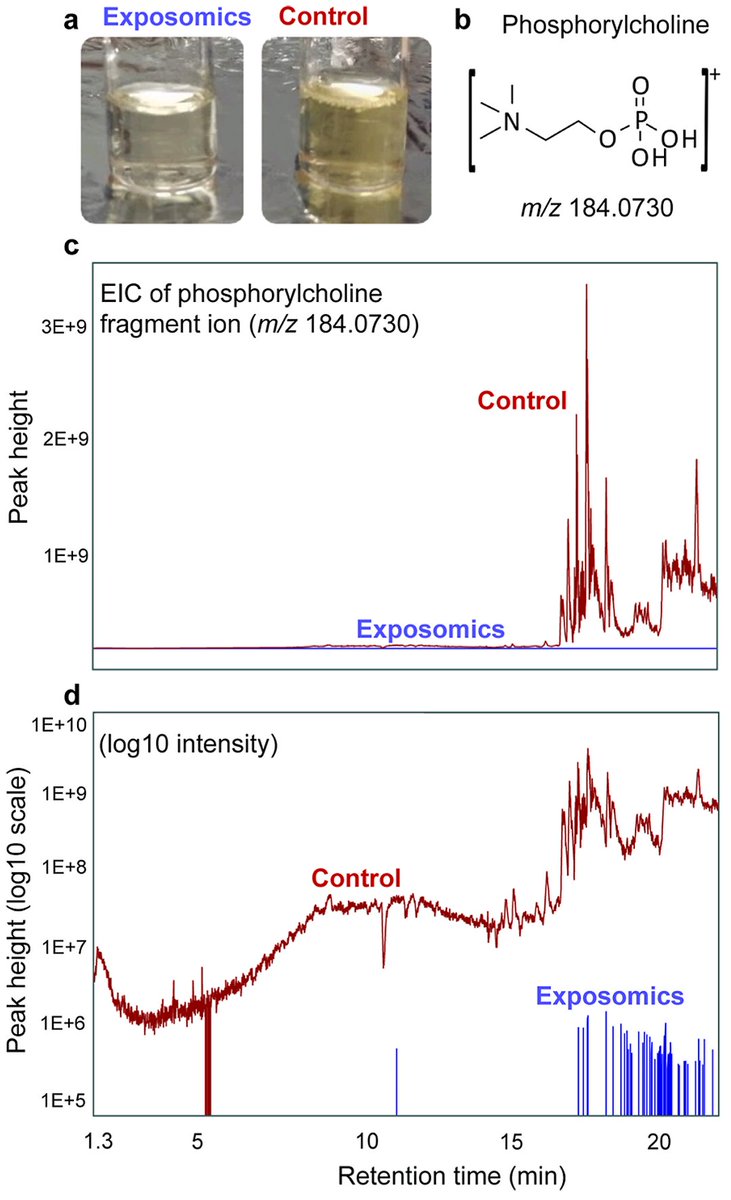
Removing #plasma#phospholipids allowed to increase the intensities of non-phosholipid features up to 58 times and the detection of up to 109% (!) more non-phosholipid features 1/3
@AcademicTox@PapazianStefano@HongyuXie9 & Ingvar A. Bergdahl
How to increase sensitivity for chemical #exposomics in the complex plasma matrix? Read on our new method in @EnvSciTech. Application in samples from #Sweden and more coming soon!
Phospholipid Removal for Enhanced Chemical Exposomics in Human Plasma
https://t.co/0jbIIYweu5
The phospholipid removal allowed a better detection and quantification of some #PFAS (PFDA and PFUnDA) compared to data already published on these samples. PFAS precursors were also detected and semi-quantified, as well as branched isomers 2/3