France is my birthplace, my heritage, and a part of who I am. Watching the country I love become increasingly unrecognizable is heartbreaking.
As the granddaughter of Holocaust survivors, I know that history teaches us to recognize the warning signs before it’s too late.
My latest piece for The Times of Israel:
https://t.co/104fDN0Bz9
Yesterday, we remembered October 7. Today, I want to talk about October 8.
Because sometimes, what happens in the aftermath of a tragedy changes us just as profoundly as the tragedy itself.
Three years later, I find myself reflecting not only on what we lost, but on what we have learned about memory, identity, antisemitism, and the responsibility we carry forward.
As the granddaughter of four Holocaust survivors, and through my work with The Last Ones, I have spent years preserving history. But October 7 and everything that followed have fundamentally changed how I think about the purpose of that work.
Remembering is not enough. We must learn to recognize hatred in our own time, not just in the pages of history.
I wrote this piece for The Times of Israel about grief, the dangerous misuse of historical memory, and perhaps the most important question we face three years later: Who do we choose to become the day after?
I hope you'll take a few minutes to read it.
https://t.co/msOEtyBURG
#October7 #TheLastOnes #HolocaustEducation #Remembrance #Antisemitism
Which Israeli stories are we allowed to tell?
Palestinian suffering deserves to be seen. But so does ours.
When films about Gaza are celebrated on the world’s biggest stages while films documenting October 7 survivors struggle to even get in the room, we should be asking why.
Whose testimony gets amplified matters. Whose gets excluded matters too.
https://t.co/e6B8qedGEJ
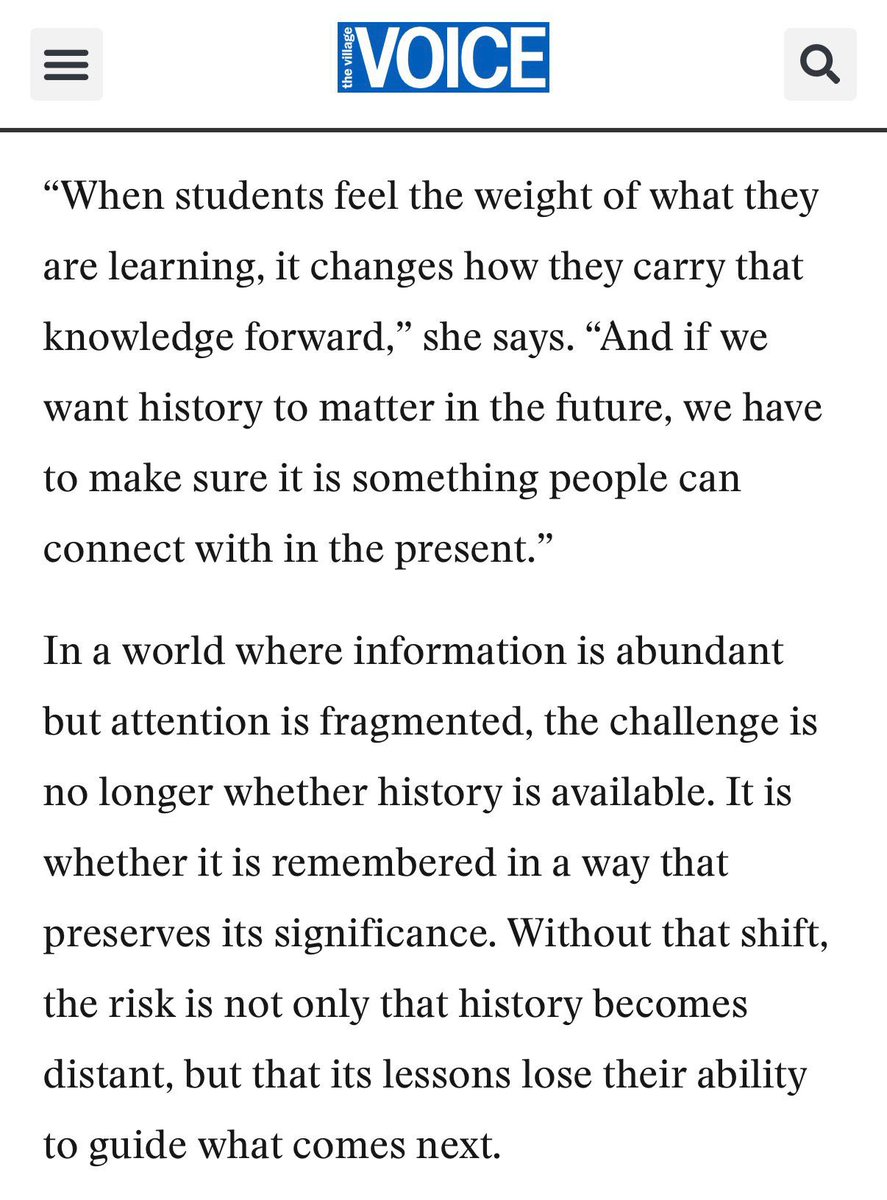
Holocaust education teaches us what antisemitism looked like once history had already rendered its verdict. The harder—and increasingly urgent—challenge is teaching the next generation to recognize it before history tells them what to call it.
In my latest op-ed, I make an important distinction: preserving memory and fighting antisemitism are deeply connected, but they are not the same thing.
Memory matters. Testimony matters. But memory alone is not a vaccine.
A powerful and timely read on why Holocaust education must not only teach what hatred did, but help young people understand how hatred works.
Read the full op-ed: https://t.co/gkSrt3rmfl
There are fewer Holocaust survivors alive today than at any other time in history.
Their testimonies are not simply videos.
They are eyewitness accounts.
They are historical evidence.
They are among the last opportunities future generations will have to learn directly from those who lived through the Holocaust.
When survivor testimony becomes unavailable—whether because of copyright disputes, platform processes, or other barriers—students, educators, researchers, and families lose access to voices that can never be replaced.
This campaign isn’t about one platform or one dispute.
It’s about something much bigger.
It’s about ensuring that the voices of Holocaust survivors remain accessible to educate, inspire, and bear witness long after they are gone.
History cannot defend itself.
We must.
If you believe Holocaust testimony should remain available for future generations, help us amplify these voices by sharing this post.
There comes a moment when memory is no longer simply inherited—it becomes entrusted.
The stories of Holocaust survivors belong first to those who lived them. As their voices grow fewer, our role is not one of ownership, but of stewardship—honoring their truth, preserving their testimony, and carrying it forward with integrity.
This piece is a reflection on memory—not as something we own, but as something we are privileged to protect.
I hope you’ll take a few minutes to read.
https://t.co/wyrI4kOvWx
@yadvashem@HolocaustMuseum@MOTLorg
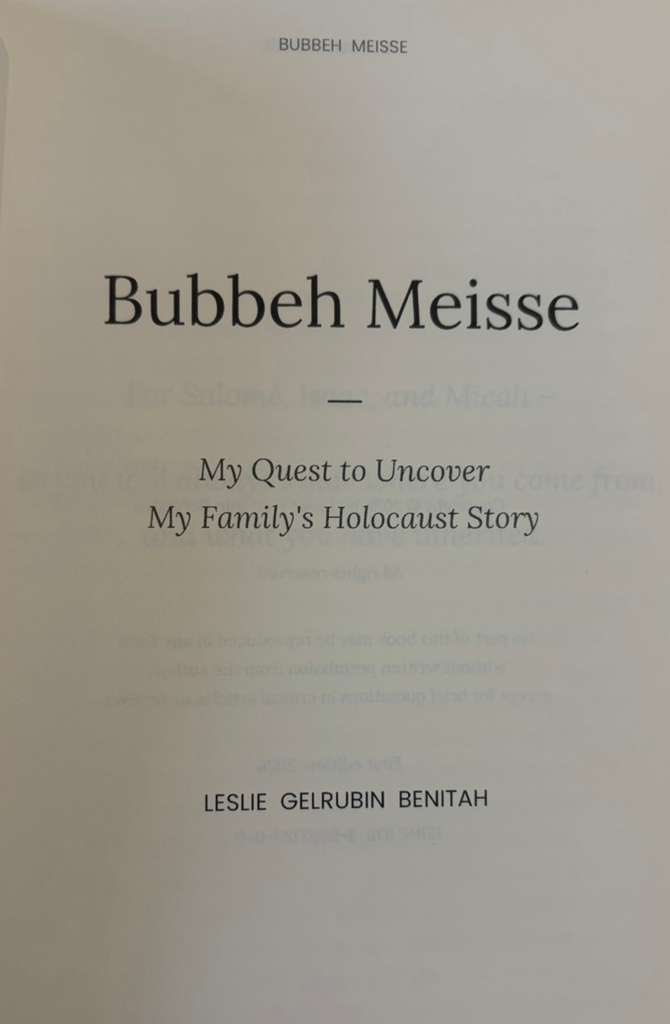
371 pages of honesty, unraveling, family history, questions, and truths I wasn't always ready to face.
"Excited" is an understatement. Nervous as well.
I'm in the final stretch before the release of my second book...
even though this was actually the first one I started writing!
Where do I come from?
What have I inherited?
And what was hidden from me?
I can't wait to share this with you all..
Bubbeh Meisse: Yiddish for, "A Grandmother's Story."
On this day, we sat down and listened.
We heard Ruth’s testimony and it’s stayed with us ever since.
Her story continues to shape how we remember, how we teach, and how we carry the past forward.
These words are not just history. They are a reminder. A responsibility. A promise to never forget, and a promise that never again is now.
The end was days away.
Allied forces were closing in.
Nazi Germany was collapsing.
But inside the camps—
and on the roads—
the killing didn’t stop.
April 27, 1945
A reminder that even as the world moved forward,
thousands were still being marched, starved, and lost.
Freedom was coming.
For many, it came too late.
#TheLastOnes #HolocaustRemembrance #NeverForget
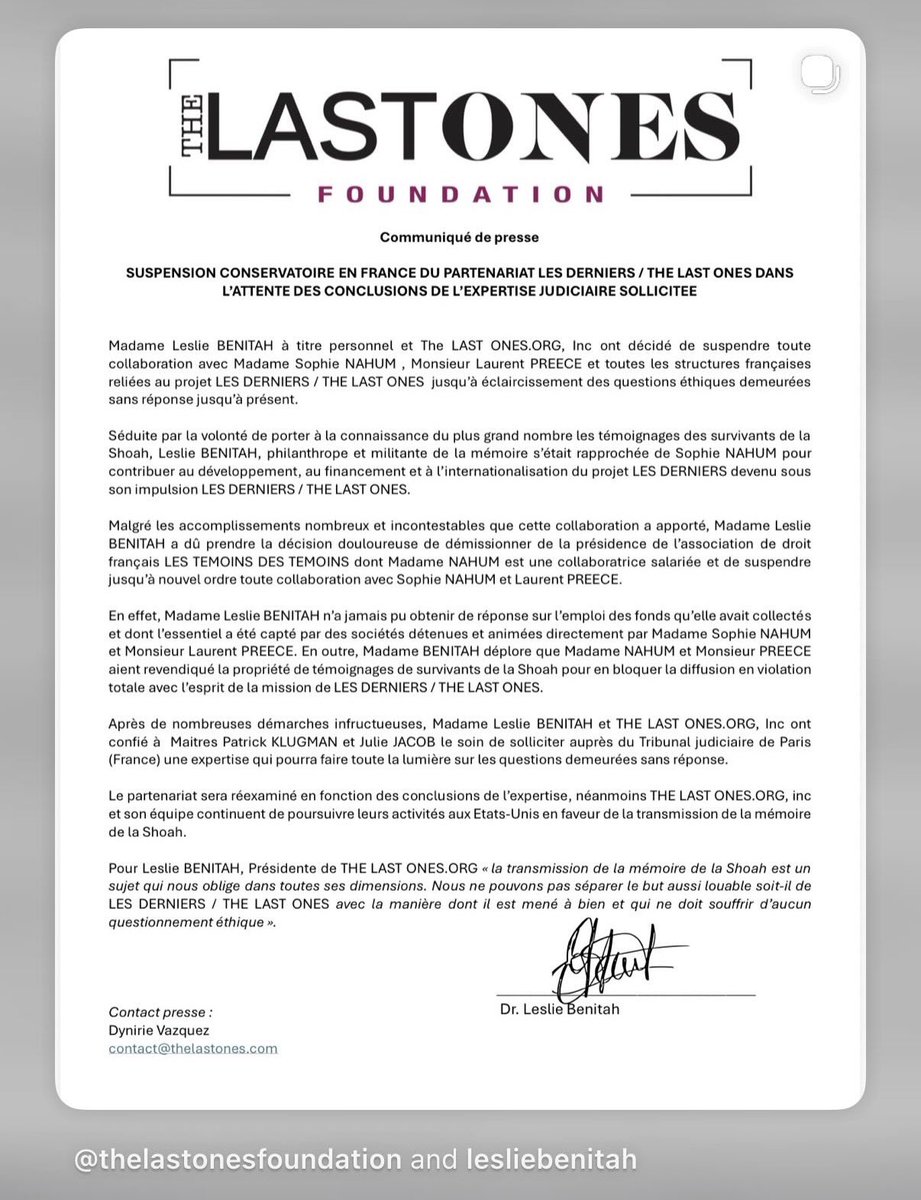
According to Ms. Leslie Benitah, President of
The LAST https://t.co/10FyFhHQzi:
“The transmission of Holocaust memory is a responsibility that binds us in every respect. We cannot separate the nobility of the mission of Les Derniers / The Last Ones from the way it is carried out, which must be beyond any ethical question.”
Pour Leslie BENITAH, Présidente de
THE LAST https://t.co/10FyFhHQzi
“la transmission de la mémoire de la Shoah est un
sujet qui nous oblige dans toutes ses dimensions. Nous ne pouvons pas séparer le but aussi louable soit-il de
LES DERNIERS / THE LAST ONES avec la manière dont il est mené à bien et qui ne doit souffrir d’aucun
questionnement éthique”
« La transmission de la mémoire de la Shoah est un sujet qui nous oblige dans toutes ses dimensions. Nous ne pouvons pas séparer le but aussi louable soit-il de LES DERNIERS / THE LAST ONES avec la manière dont il est mené à bien et qui ne doit souffrir d'aucun questionnement éthique ».
On April 20, a dictator was celebrated.
At the same time, millions were being persecuted, imprisoned, and murdered.
History doesn’t just ask us to remember—
it demands we recognize how easily truth can be distorted.
#holocausteducation#claimsconference_partner#bmf_partner
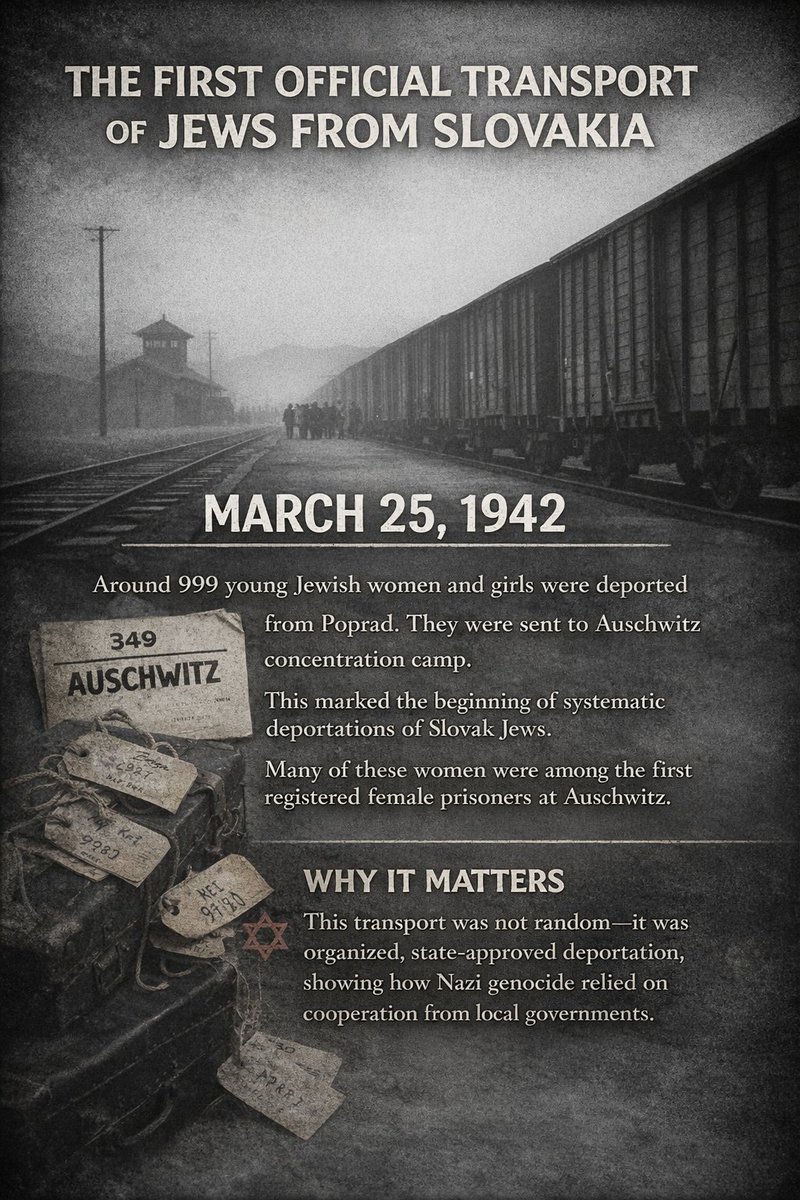
March 25, 1942.
999 young women and girls.
One train. One destination.
They were told they were going to work.
Instead, they became some of the first women imprisoned in Auschwitz.
This was not chaos.
This was not random.
This was organized. Approved. Systematic.
The beginning of deportations from Slovakia—and a blueprint for what would follow across Europe.
Genocide does not begin with violence alone.
It begins with policy.
With coordination.
With permission.
They were the first—
but not the last.
https://t.co/hr5p9g3arc