Associate Professor of OT and Hebrew at @DiscoverCIU. Interest in all things OT and ANE. Author of Advances in the Study of Biblical Hebrew and Aramaic.
@JoALandeta Also check out Chee-Chiew Lee's article in JSOT 36 no. 3 (2011-2012): 467-482. We came to the same conclusion independently and have complementary discussions of the topic. Hope it helps!
Back home after a great Hebrew Discourse Conference (https://t.co/7JnEbYbWA9) at Dallas International University! Shout out especially to @scacewater and @JoAnnaMHoyt for organizing such an excellent conference. Thanks also to all the presenters for their interesting papers.
Yesterday's Hebrew Discourse Conference was a rousing success! 125 participants (1/2 in person), 18 papers, a plenary on the history and future of the field by @BenjaminJNoonan, and a panel discussion.
Today we're resting.
Tomorrow we start planning for the next one. :)
@dougsmith1977 is presenting today at the Southeast Meeting of ETS: “Teaching with the Te’amim: How the Masoretic Accents Can Foster Fluency for Reading Biblical Hebrew.” Come attend Doug’s paper and learn how to practically apply the Masoretic accents to Hebrew pedagogy!
@ColumbiaBiblic1 Looking forward to having Dr. John Meade on campus next week to present on the canon and textual transmission of Scripture! @drjohnmeade
@cjfresch@michaelgaubrey@drchiphardy In addition to what's found in Advances in the Study of Biblical Hebrew and Aramaic, I have a forthcoming chapter on "Hebrew Linguistic Schools" I could share.
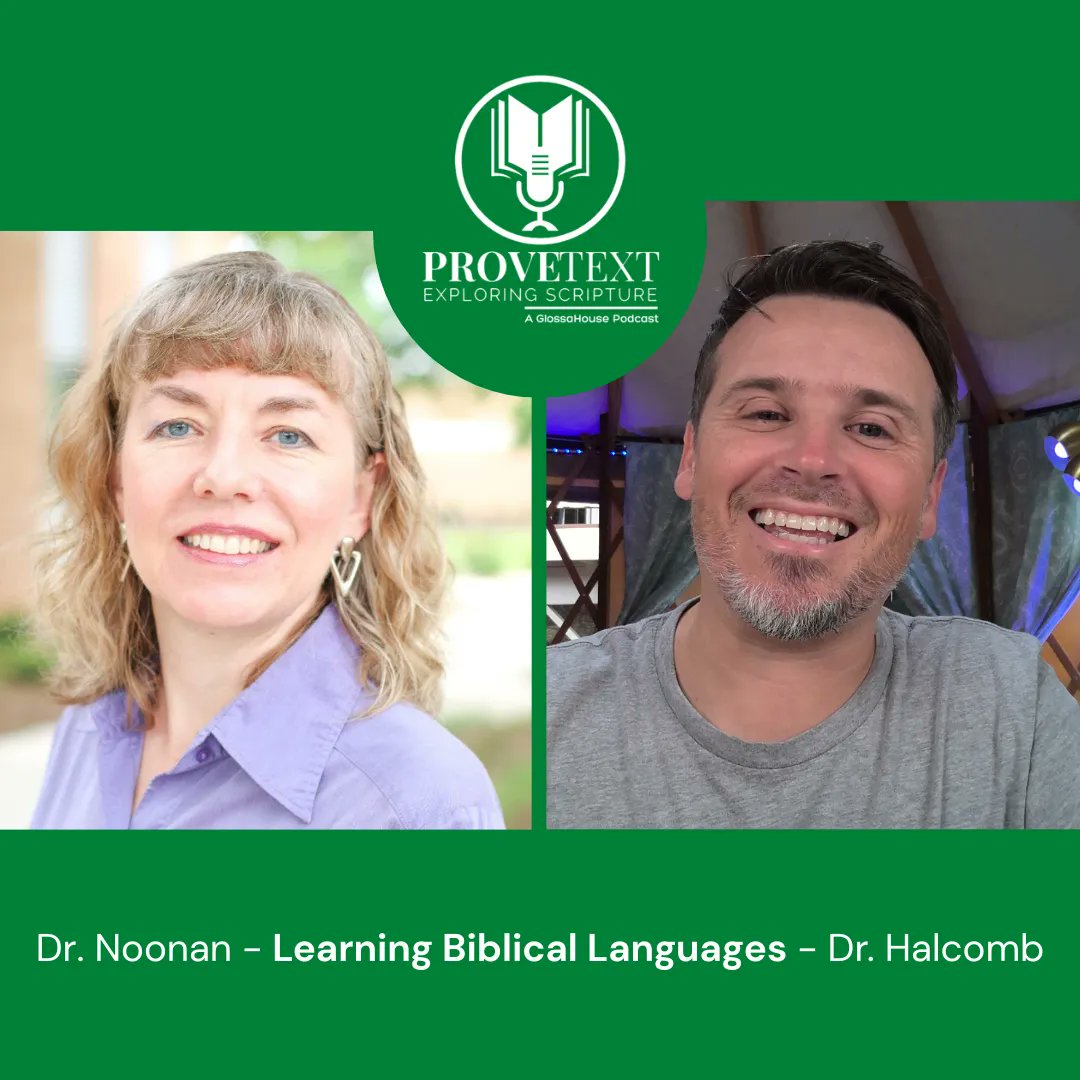
In this episode of ProveText, Dr. T. Michael W. Halcomb interviews Dr. Jennifer E. Noonan on learning Biblical languages and annouces a special SALE! Check it out at https://t.co/8zVWCa6rRc
#biblicallanguages#ancientlanguages#glossahouse
My wife, Dr. Jennifer Noonan, recently talked with Dr. Michael Halcomb of @GlossaHouse about biblical language learning and her new book, which is on sale through January 31. Give it a listen and get the book!
https://t.co/P7HxyBlD8o
@JamesBejon@EphraimAyil Thanks for your thoughts. I ask because the pattern is one other consideration in determining whether this word is native to Semitic or possibly a loan.
@JamesBejon@EphraimAyil James, what do you think about the vocalic/morphological pattern of חלמישׁ? I'd be interested to hear what you think, especially in light of what you've found in Arabic.