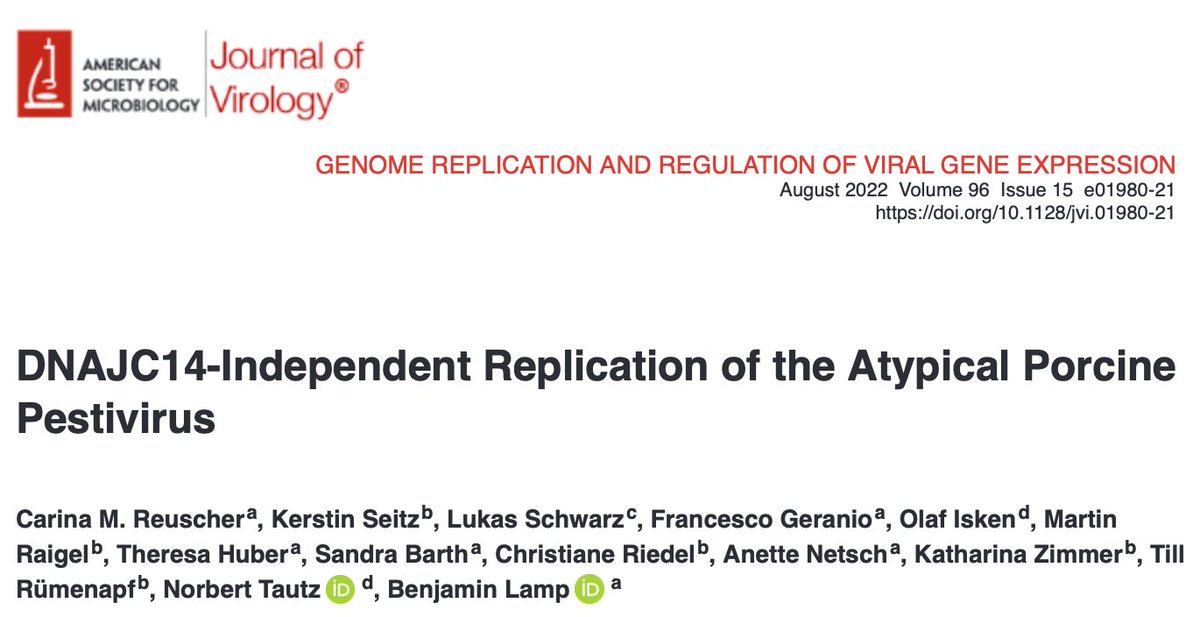
Finally found: We identified the missing S-segment of Teschoviruses. With it, we established infectious clones, replicons, and reporter viruses for PTVs.
Now published in Journal of Virology!
https://t.co/Yrj1Lf0ku5
#Teschovirus#ReverseGenetics#Picornavirus
Finally found: We identified the missing S-segment of Teschoviruses. With it, we established infectious clones, replicons, and reporter viruses for PTVs.
Now published in Journal of Virology!
https://t.co/Yrj1Lf0ku5
#Teschovirus#ReverseGenetics#Picornavirus
@ChristophCanne Keine Smokings mehr an Weihnachten? Das muss als Beispiel für Verwahrlosung genügen. Nur schlecht gekleidete Migranten auf den Boulevards?
Können Sie bitte eine schlecht isolierte, alte Stadtwohnungen für viel Geld mieten und ihr Landhaus den Flüchtlingen überlassen? 😉
Exciting news! Our new paper on the exclusion of superinfections in pestiviruses has been published. We have shown that APPV infects independently of ADAM17. Congratulations to Francesco on this great work!
https://t.co/Cae2lXcMMn
Dear Colleagues,
In response to the growing interest in viral infections in honey bees, we are editing a special issue of the MDPI journal Viruses. If you have exciting research in this area, we warmly invite you to submit your manuscript.
Best regards,
Kerstin and Benjamin
Carina and Sandra published their study on cleavage sites and active site residues of the 3C-like protease of deformed wing virus (DWV) in Viruses. Beautiful images, informative western blots with new antibodies and clear analyses. Just have a look for yourself: 10.3390/v15122344
⚡️Special Issue open for submissions⚡️
👉Special Issue: #Pestivirus 2023
🗓️Deadline: 1 December 2023
👥GEs: Prof. Dr. Benjamin J. Lamp, Prof. Dr. Till Rümenapf, Prof. Dr. Christiane M. Riedel
📌https://t.co/HuThlVAlLZ
Our new study on APPV replication has been published. My thanks go to Carina for unlocking one of the secrets of the difficult virus that does not want to grow in cell culture. I can't wait to see what else she finds out!
I have discussed most of these findings in the podcast. All of this corresponds to our viral load observations. The destructive discussion is only stopping us from being pro-active while opening schools. We need to establish school surveillance now, or we will see outbreaks.
News from honey bee viruses: Our CBPV clone also kills bee pupae! CBPV is one of the most interesting pathogens in honey bees, with a bipartite +strand RNA genome, so far uncharacterized particles and an obvious disease in adults. Watch the videos! https://t.co/WFmS0piUTx
Our new paper about the Linda virus has been published. Linda does not cause a clinically relevant disease in immunocompetent pigs, is very difficult to detect in serum after infection, but persists in lymphatic organs. A real pestivirus!
https://t.co/30JiuFNJfz
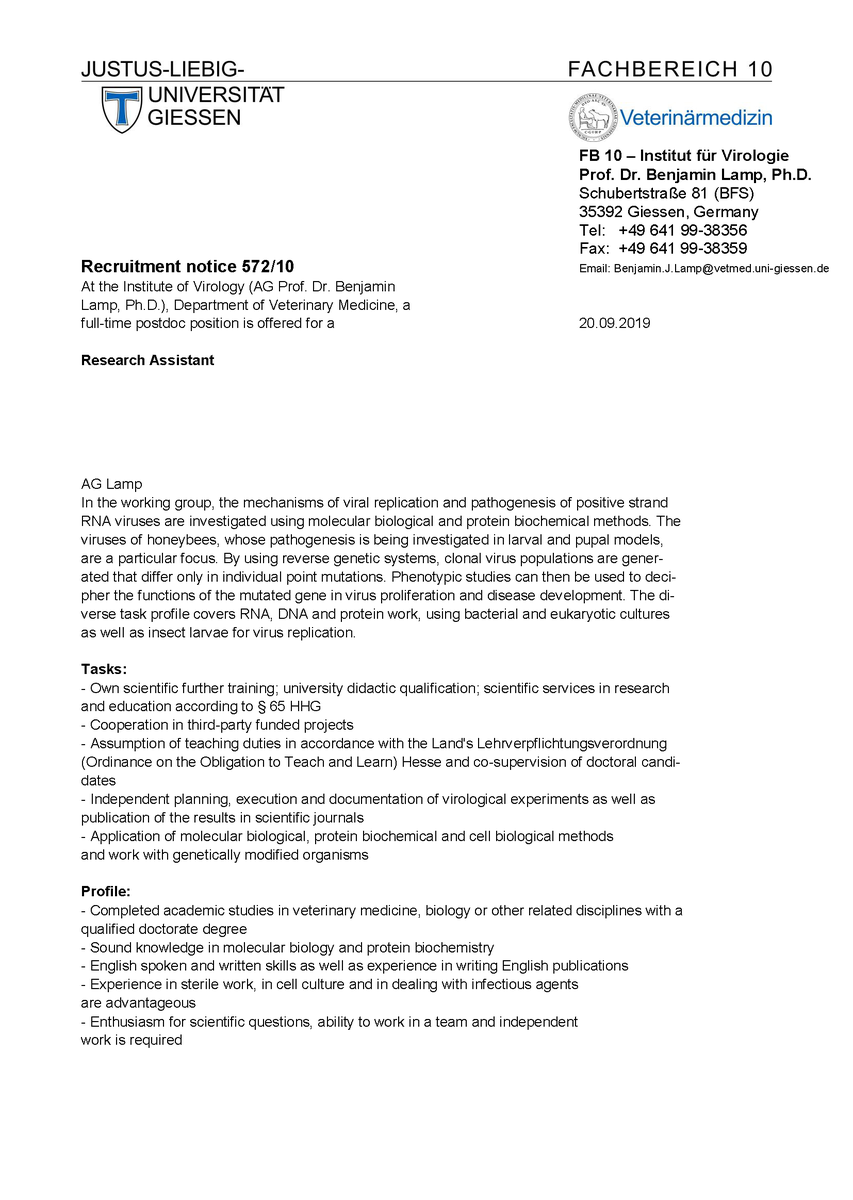
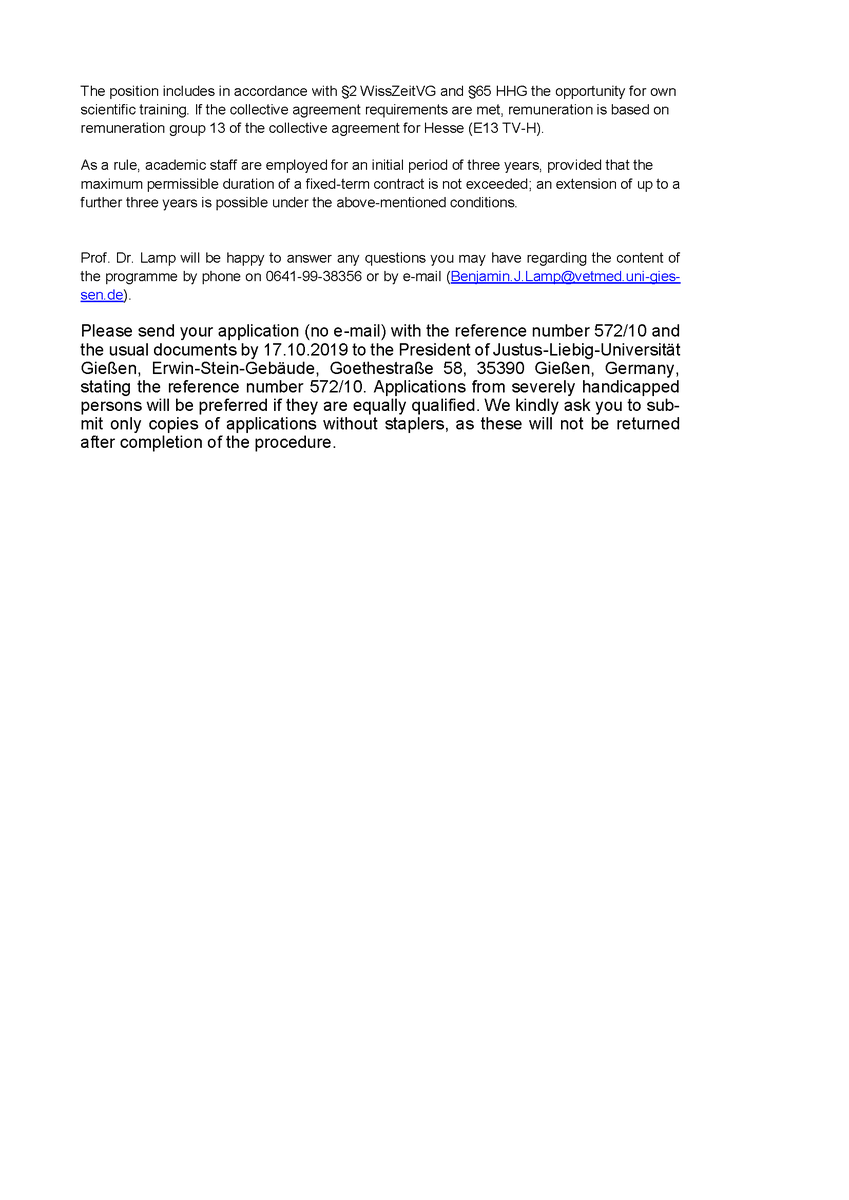
Our new professor in the institute, Benjamin Lamp, has an open postdoc position on molecular aspects of bee virus pathogenesis.
His email is [email protected]
Weblink (sorry, in German…): https://t.co/2D0lj3OSTD