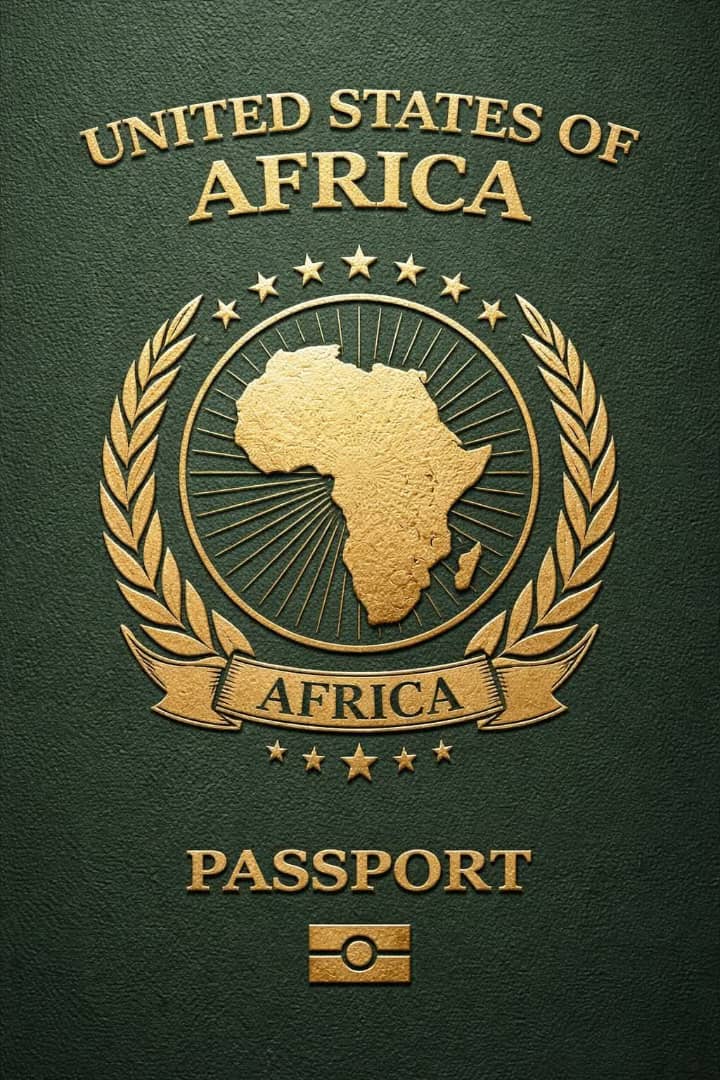
Nobody knows God and his ways. No one has truly scratched the surface of who he is. What humans know is Good and evil, we then assign good to God and evil to Demon. Religion is great, they are constitutions. The bible and Koran are laws but they are all man made.
If you sit down and extrapolate the news and information coming from @alexottiofr 's Abia, Wisdom should tell you that, Nigeria has everything it takes to WIN!
In light of what happened in Kwara yesterday, we expect His Excellency @officialABAT to declare a state of emergency. We don't want pseudosaviours on our soil.
Bishop Of Nsukka On Christian Persecution
A new video trending on social media shows an excerpt from a sermon by the Catholic Bishop of Nsukka, Bishop Godfrey Onah, speaking about how the violence on Christians in Nigeria is comparable to the crucifixion of Christ.
Bishop Onah also stated that the terrorist who perpetrate the crime, film themselves slaughtering and raping women even in the church, and post it online for the government to see.
Watch What’s Trending With @OjyOkpe
@ChineduNwosuu You know , like propaganda about WMD in Iraq, painting Gaddafi as an evil genius, just to enter the lands. Pls rule those and many more out first.
The Imperative of Diversifying Port Development in Nigeria
I have noted the Federal Government’s recent approval of $1 billion (₦1.5 trillion) for the modernisation of the Apapa and TinCan Island Ports in Lagos. While any effort to improve efficiency and embrace technology in our maritime sector is commendable, such an initiative must be guided by accountability, transparency, and equity for all Nigerians. However, this development once again exposes a longstanding concentration of our port development only in Lagos.
Nigeria’s infrastructure investment remains excessively concentrated in Lagos, often at the expense of other strategic ports such as Warri, Port Harcourt, Calabar, and Onne. If fully developed, these ports could enhance productivity, drive trade, create jobs, and open new economic corridors that would lift millions out of poverty across the federation.
Around the world, countries that have decentralised port development are reaping immense economic benefits. Vietnam operates over 300 ports — from Haiphong in the north to Da Nang in the centre and Ho Chi Minh City in the south — ensuring nationwide connectivity. Indonesia boasts about 111 commercial ports distributed across its territory to guarantee balanced access to trade. South Africa maintains eight major seaports — from Durban and Richards Bay on the Indian Ocean to Cape Town and Saldanha Bay on the Atlantic — reflecting a vision of maritime inclusion. Egypt runs about 15 commercial ports along both the Mediterranean and the Red Sea coasts; Morocco has about 14 ports open to international trade, including Casablanca, Tangier Med, and Agadir, distributed along its Atlantic and Mediterranean shorelines; and Algeria operates about 10 commercial ports spread across its extensive Mediterranean coast. Even Ghana, with only two major ports — Tema and Takoradi — ensured they are geographically decentralised on opposite ends of its coastline.
These nations have grasped a simple truth: no country seeking to maximise its blue economy concentrates all maritime activities in a single city. Decentralisation reduces congestion, improves logistics, enhances national security, and promotes balanced economic growth. In Nigeria, however, more than 70 per cent of port activities are still concentrated in Lagos, burdening the city with chronic congestion, high demurrage costs, environmental degradation, and delays that discourage investors and inflate the cost of goods nationwide. Developing other ports is, therefore, not merely an infrastructural necessity but a national imperative. Revitalising Warri, Port Harcourt, Calabar, and Onne would decongest Lagos, reduce shipping costs, attract investment, create employment, and stimulate regional economies.
As one who understands the critical link between infrastructure, trade, and national growth, I believe that a truly national blue economy must carry every region along. Beyond physical infrastructure, reform must also address corruption, reduce bureaucracy, and embrace technology to create a seamless, paperless port system that enhances turnaround time and global competitiveness. If prudently managed, the Lagos modernisation project could become a model for broader maritime transformation — a reference point from which similar development radiates across the nation.
Now more than ever, Nigeria must rebuild with fairness, guided by equity, integrity, and a clear vision to transform our nation from one of consumption to one of production and shared prosperity.
A New Nigeria is POssible - PO
Oyibo would always pursue power. Africans would rather pursue money. Guess who made paper money? Oyibo. They give you (via your greedy leaders) money , they take your power. Oya take! Sign! Give me your land! Give me wetin dey under the land. Take! Sign pelindaba! Akobo!
BREAKING: “Nasir El-Rufai was part of the team formed by Buhari to import bandits and arms from Libya in preparation to remove Goodluck Ebele Jonathan after the 2011 election.
They created the Bandits and the terrorism ravaging Arewa today.
The state that Buhari made about blood of Monkeys and Baboons will floor brought violence in Kaduna and soo many lives were destroyed”
~ Ahamed Datti Baba
Key anglophone west African countries are accepting deportee prisoners from the west. A major country is pardoning 1st degree prisoners. As though we don't have enough of boko haram and organic farm bandits. Kilo n se le gangan?