One of the only reason to hop back on X for a sec: promoting trainee work:)! Nice paper from @Fede_Bulgarelli taking a step towards mechanisms of early world learning!
New paper out in Developmental Science with @bergelsonlab! We asked whether the acoustic properties of language input for individual words also predict age of production. TLDR: Yes – variability in how words sound predicts when kids first say them. https://t.co/KxDcjV21uu (1/n)
If you like my work and think we could learn from each other and have fun doing research together, Marie Curie postdoctoral applications will soon open and my university has wonderful support for writing one. Write me a mail explaining your idea and why we'd match! 1/
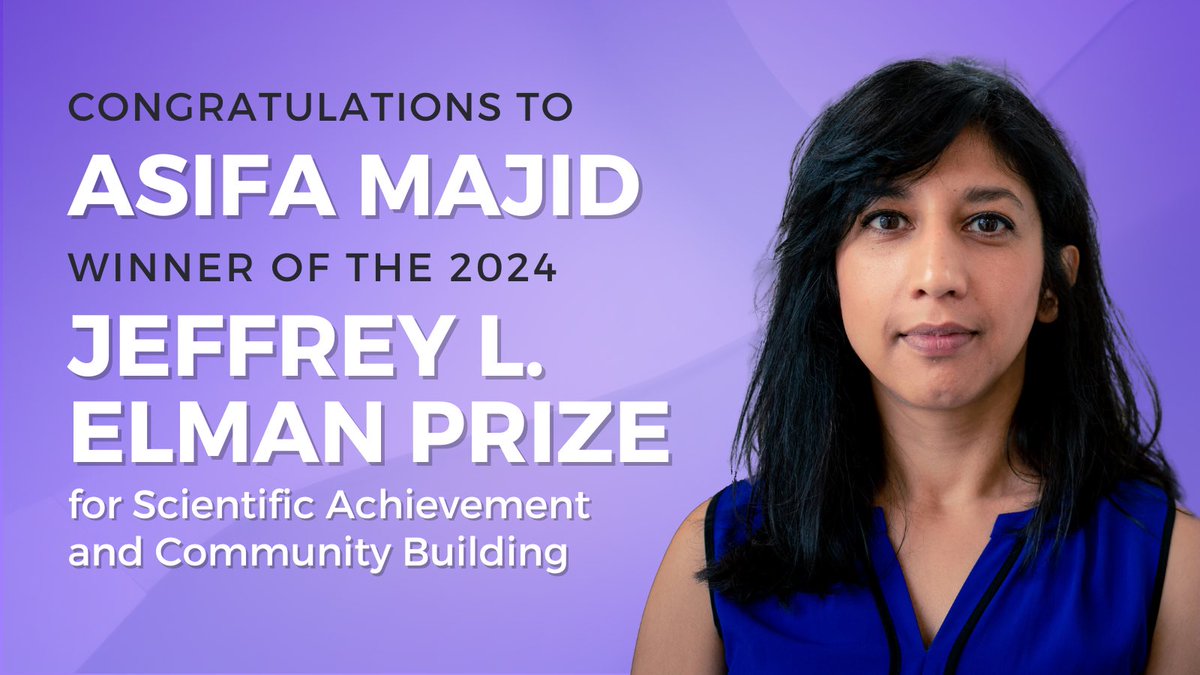
Huge congratulations to @asifa_majid, recipient of the 2024 Jeffrey L. Elman Prize for Scientific Achievement and Community Building!
This honor will be celebrated at #CogSci2024 with a prize and dedicated symposium.
Visit the #ElmanPrize page for more https://t.co/N1tXSLx4az
Why do some kids learn to talk earlier than others? — Profile of my colleague Ellika Bergelson and her new findings and methods on language acquisition. https://t.co/esgdveTvSq)
“One really important shift in the field recently has been a much more serious reckoning with the fact that we tend to study white, middle-class Americans.”
Important new insights into early childhood language learning, thanks to @bergelsonlab
https://t.co/YnUNt2HsA3
Mieux comprendre l'écoute et la production du langage chez l'enfant.
https://t.co/QSroHmeILH La quantité de paroles d'adultes entendues par un enfant aurait une influence significative sur le développement précoce du langage, l'effet augmentant avec l'âge.
@CNRSshs@CNRS
Language development in children. The amount of adult speech a child hears has a significant additional factor in children speech production - @ENS_ULM@CristiaAlex@bergelsonlab@HarvardU@CNRS
nice coverage of our work! fun for me & @CristiaAlex to chat w/ @cathleenogrady &thnx to @oedemir & @mcxfrank for weighing in🤓. Read the whole paper to get our in depth take if u wanna know more: there’s a lot of nuance in these big topics that’s hard to relay in short #scicomm
A new analysis suggests kids speak more when the adults around them are more talkative, which may also give them a larger vocabulary early in life. https://t.co/Yn1ENmq0G6
Roots! I "entered" social science as an anthropology major 35 years ago with an interest in how meanings were organized across cultures, and finally published a paper that provides new insight led by the amazing @mollyllewis in PNAS.
Preprint: https://t.co/hU1LZH4tSk
Coda: tagging coauth’s whose handles i know on this crumbling platform: @CristiaAlex@CaroRowland @MarinaKalashnik + huge thanks to super generous data stewards & again to rad coauthors!🙏
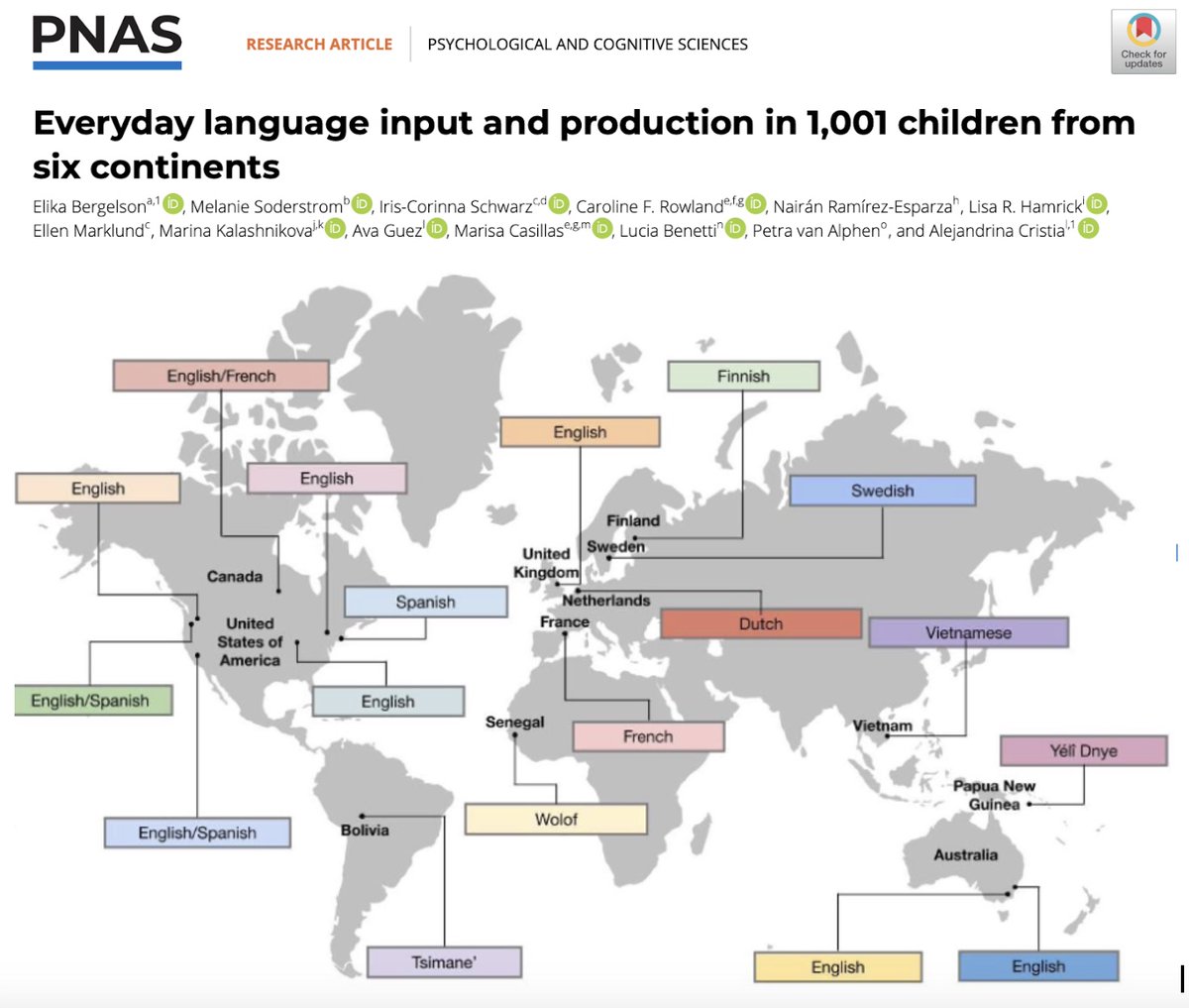
Very excited about this new paper @PNASNews:
https://t.co/x2qr9pG4pE
Key Q: what predicts how much young kids (👶)talk?
How much 🗣 kids heard predicted how much 👶talked, but other factors, e.g. mom’s education, didn’t. #PsychSci#DevPsy 🗣💬
INCOMING SUMMARY🧵ALERT 1/14
Best for last: the #OpenScience goods: preprint: https://t.co/g6nEm74vq4, all code & de-id data for all #s in paper: https://t.co/BGdFqsuHjh; process to request data access: https://t.co/hxkzU4mooh 14/14