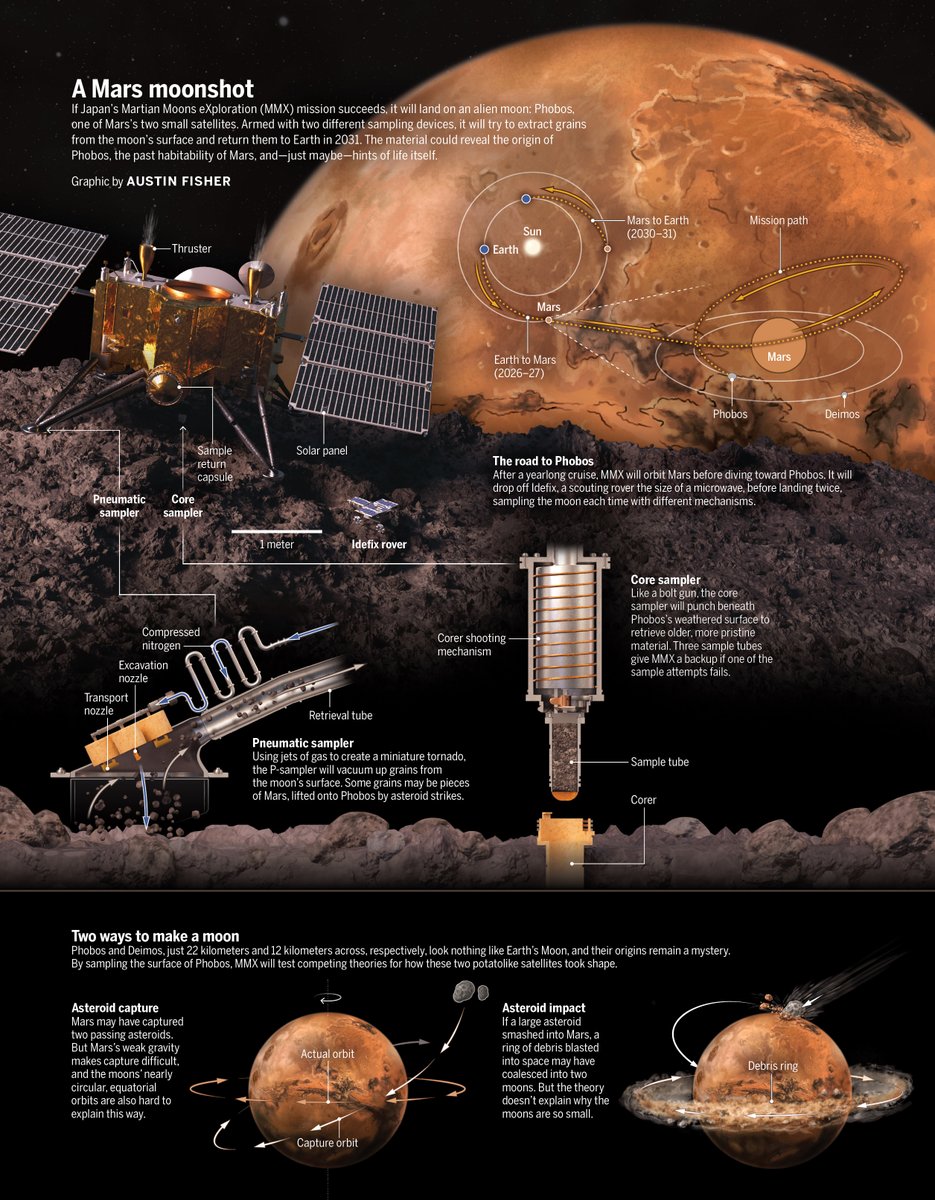
Japan’s MMX mission aims to retrieve samples from Mars’s mysterious moon. They could reveal how it formed—and hold pieces of Mars itself.
Learn more: https://t.co/7VFgq7CaZp
Exclusive: A physician-scientist recommended by NIH Director Jay Bhattacharya to lead the agency’s mental health institute is no longer in the running. Instead, HHS Secretary Robert F. Kennedy Jr. favors a researcher who studies treating mental illness with diet. https://t.co/AmoigDFbAd
The Rubin vase illusion demonstrates how some visual information escapes our awareness—a phenomenon researchers explored in monkey brains. https://t.co/Jdj6C9aLx6
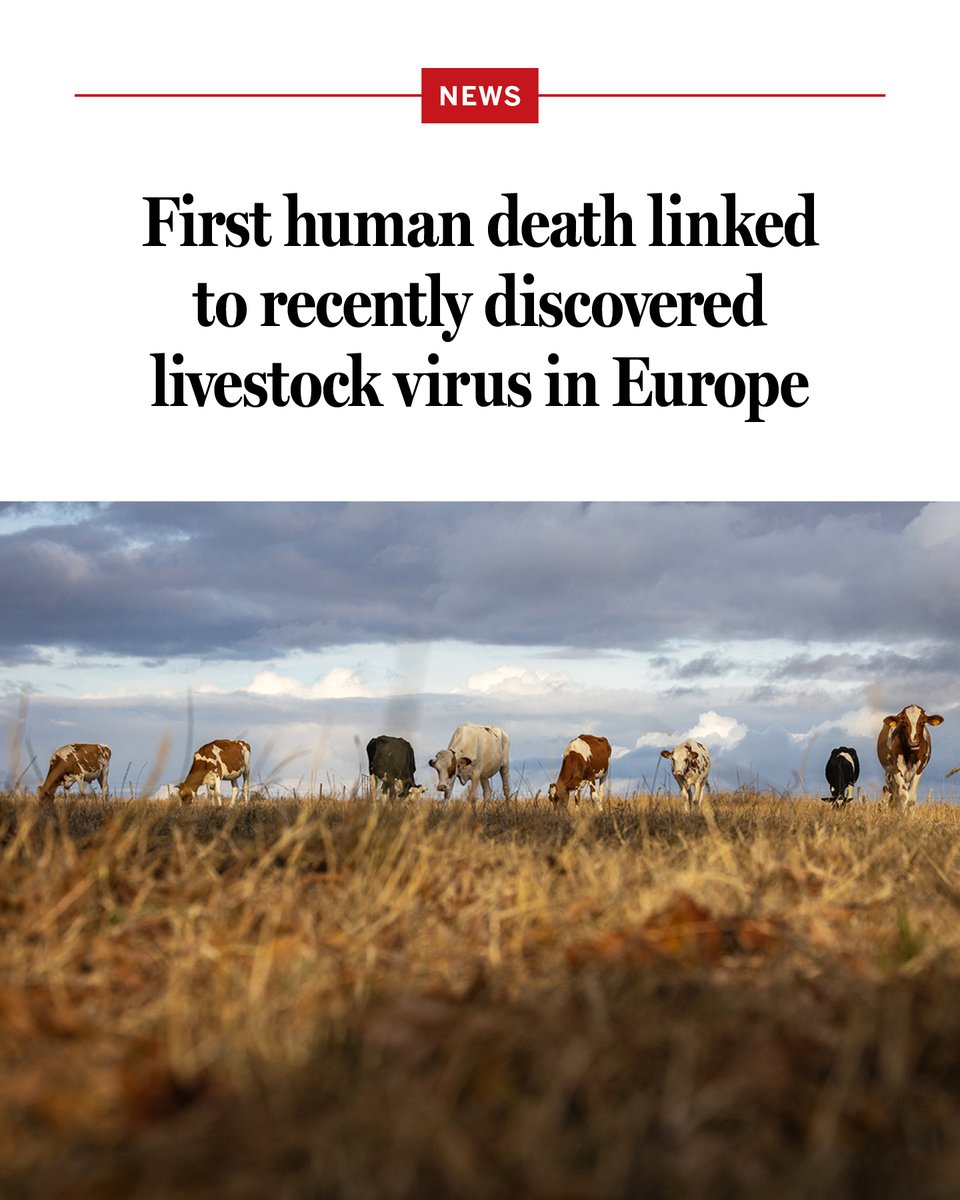
A livestock virus that was first detected in Europe this summer can infect humans as well, confounding scientists’ expectations. In a new paper, French researchers describe a cancer patient infected with the Shamonda virus who died earlier this month.
The man was an unusual case: His immune system was severely weakened, making him much more vulnerable to infections. Still, the European Centre for Disease Prevention and Control is working with French authorities and European partners “to investigate the potential public health implications of this first human infection,” the agency said in a statement.
This one case does not mean the virus, which is likely transmitted by midges, poses a broader threat to human health, says Martin Beer, a veterinary virologist at the Friedrich Loeffler Institute. “But it is definitely another sign that the risk the virus might pose to humans needs to be investigated.”
Read more: https://t.co/gKYbdTncRl
The Advanced Research Projects Agency for Health, whose mission is to fund bold, edgy biomedical research, is making a $41 million bet on repurposing drugs approved for other conditions and natural products such as supplements to stave off Alzheimer’s. https://t.co/bRRvXGwaeu
Do you have what it takes to win Science’s #DanceYour PhD competition? We want you to top last year’s winning entry from a scientist who translated physics’ piezoelectric effect into dance.
Submit your entry by 29 January 2027: https://t.co/zdqmTA7Byy
On 20 October, the U.S. Food and Drug Administration approved the use of bepirovirsen to treat chronic hepatitis B infection, although the agency required monitoring of a liver enzyme and platelet levels to forestall side effects.
Read more of our coverage: https://t.co/omdnBRWy6N
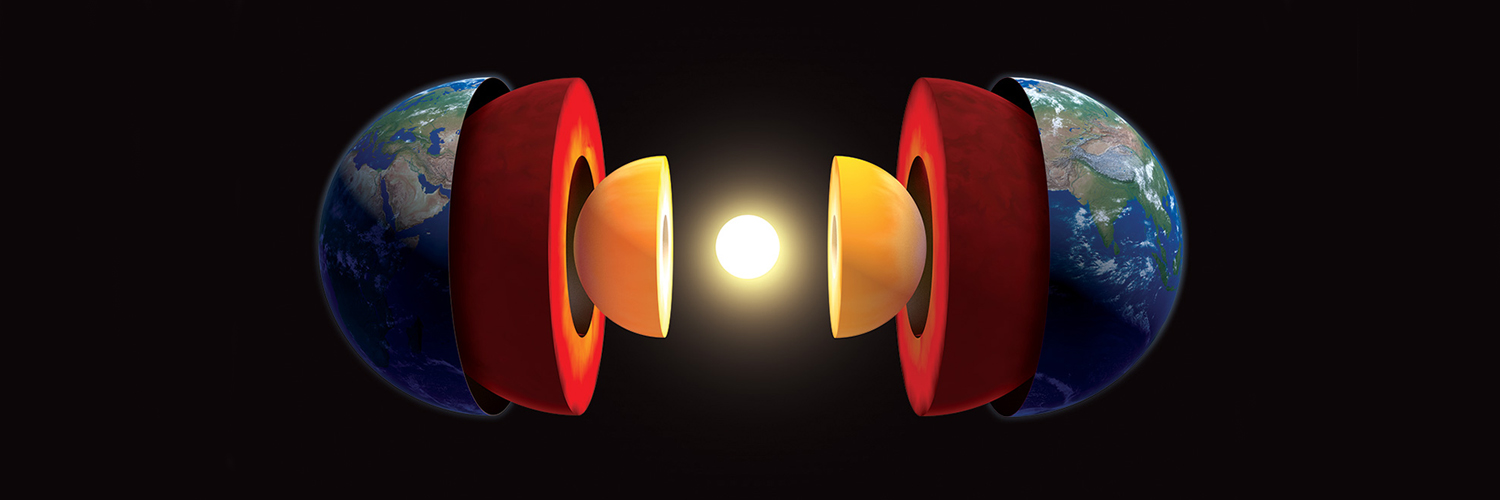
Four years ago, a dozen scientists packed into a control room at the European X-ray Free-Electron Laser (XFEL) Facility in Germany. A sliver of iron thinner than a human hair was squeezed to deep-Earth pressures between the tips of diamond anvils, then blasted to extreme temperatures by the x-ray laser. A surprising picture emerged on the consoles, says Sébastien Merkel, a geophysicist at the University of Lille who leads the $2.5 million project, called HotCores.
The crystal structure of the iron was cubic—the first time the arrangement had been seen at such high pressures and temperatures. The result seemed impossible, Merkel says. “It’s really the last thing we expected,” he says. “It reopens a topic that I thought was closed.”
For decades, experiments and computer simulations of Earth’s inner core, an alien world of solid iron some 5000 kilometers below the surface, suggested the iron atoms there form close-packed hexagons. But word of the new result has quietly roiled the small community of inner-core researchers. If the structure is instead what is commonly called body-centered cubic (BCC), it could change how heat is conducted, altering when in geological history the inner core began to solidify and how heat and elements were released into the molten outer core. Those processes affect how the outer core churns, powering the dynamo that generates Earth’s magnetic field. “If the structure is different, then the properties will be different,” says Shuai Zhang, a high-pressure researcher at the University of Rochester.
The finding was difficult to publish. It finally appeared in August in the journal Physical Review B, after several high-profile journals turned it down, Merkel says. The delays may reflect resistance to reopening a question many researchers thought was settled. Yet to Jon Eggert, a materials physicist at Lawrence Livermore National Laboratory, “The data is very clear. I’m convinced they see BCC.”
Learn more: https://t.co/zoryGK4qGm
With high-speed cameras and a “pitch cannon,” researchers are refining the automated ball-strike system about to call its first World Series. https://t.co/N80Xtdm6NR #LongReads
A lavish 1919 dinner party that ended up killing five people. An attempt to save the canning industry in the 1920s. A World War II biological weapons program and a CIA plot against Fidel Castro. A cosmetic product, best known as Botox, that erases facial wrinkles and exploded into a multibillion-dollar business.
A new analysis of more than 1000 bacterial genomes connects these disparate episodes in U.S. history in a piece of microbiological detective work. Detailed in a new paper, the study shows how scientists unwittingly triggered the evolution of a dangerous bacterium into one with major medical and commercial advantages.
Learn more: https://t.co/6xn3hUJnqF
There are glimmers of hope amid the relentless bad news about the explosive epidemic of the Ebola Bundibugyo virus in the Democratic Republic of the Congo. https://t.co/ebRm0iFwCT
After a deadly blowout on the Deepwater Horizon rig in 2010 sent oil gushing, an emergency response team gambled on an unprecedented tactic. It sent robotic submersibles to the wellhead, 1500 meters below the surface, to inject chemical dispersants to break up the oil into tiny droplets and dissolve it.
The hope was that by diluting the oil, the approach would minimize harm to wildlife. The move likely spared many seabirds, turtles, and shallow-water fish from oil that would otherwise have pooled at the surface. But it may have taken an unexpected toll in the deep sea.
A 13-year survey, begun the year after the spill, has discovered a steep, sustained decline in fish, crustaceans, and cephalopods in the deep waters of the gulf. The most likely cause is the oil spill, researchers report in a new study, although they don’t directly blame the dispersants.
Learn more: https://t.co/yEJZwtASXl
When you type an unpublished idea into a chatbot or coding agent, could it end up being used by the company that built the model—or a rival who asks the right question a year later? And what can you do to reduce the risk?
No setting makes a chatbot fully private, but experts suggest steps that can make leaks much less likely: https://t.co/knZzcmSD7x
Ninety-nine million years ago, this lizard tail parted ways from its owner—the first direct evidence of tail shedding in the fossil record.
Learn more: https://t.co/kHxfIQPNKn
On 6 October, James Maynard was nervously checking his phone under the table throughout dinner. He’d heard rumors of a tsunami heading for the shores of math. When he checked in one last time from bed, the swell struck: OpenAI had released more than 700 math papers, generated with an advanced version of its AI model. They appeared to topple hundreds of long-standing problems, forcing researchers to face the reality that no problem in math is off-limits for machines.
At first, Maynard, a mathematician at the University of Oxford and recipient of the Fields Medal, math’s most prestigious prize, feared for colleagues whose work would be upended. But then he spotted a paper that offered progress on one of his favorite pastimes: the Riemann hypothesis, a puzzle about prime numbers and one of seven famed Millennium Prize Problems, often considered the most formidable in all of math. “I was like a kid at Christmas,” Maynard says. “Even if it was some scary monster giving me a gift, I was just so excited.”
The release comes less than 1 month after OpenAI announced a solution to the Navier-Stokes equations, another Millennium Prize Problem. OpenAI’s latest proof solves only a weaker version of the Riemann hypothesis. But Maynard, who made the most recent notable Riemann advance in 2024, says it is “groundbreaking” and likely to have payoffs for other problems across math. “Within analytic number theory, it’s obviously the best headline result for the past 100 years in the field.”
Learn more: https://t.co/zq4l1m4of5
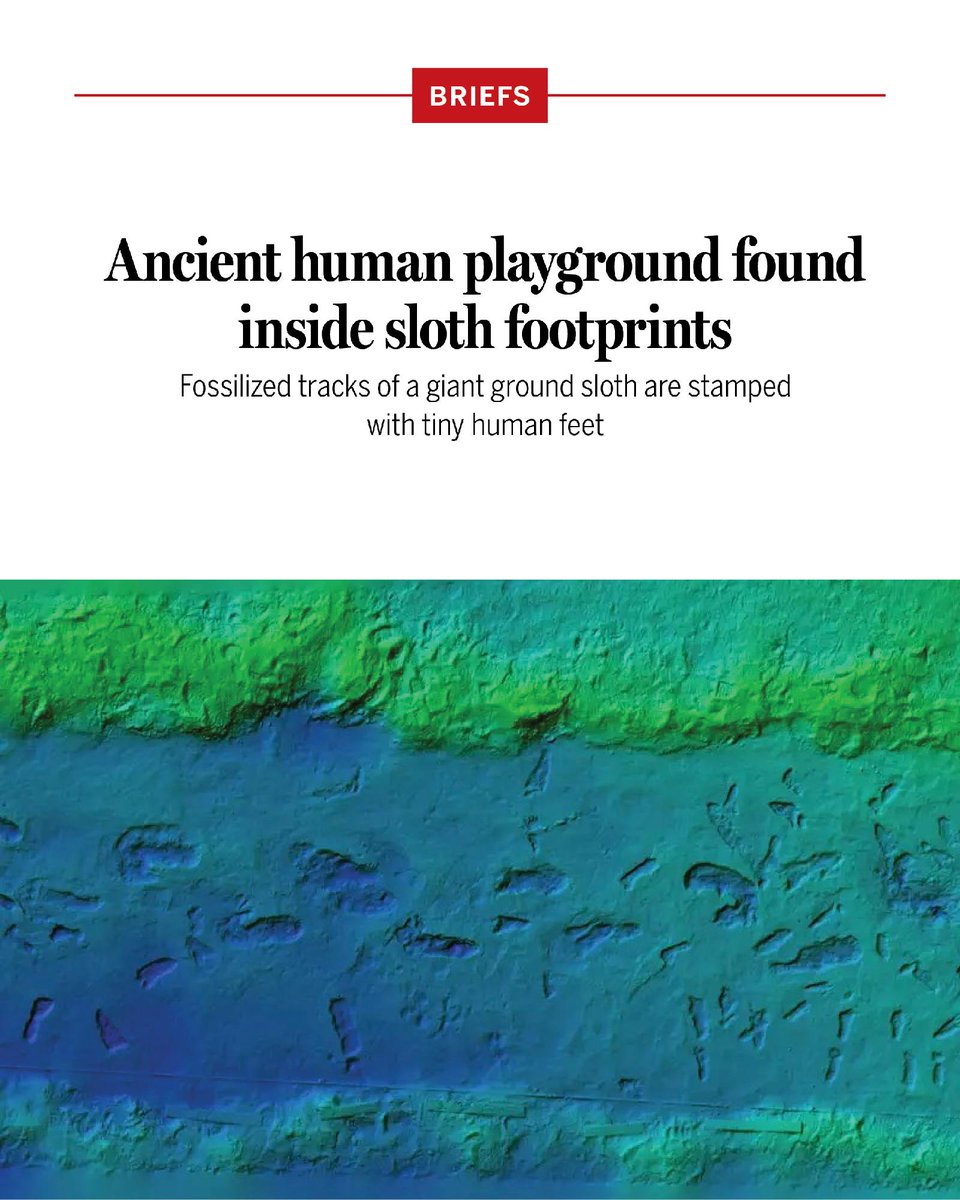
Atop the bleached dunes of White Sands National Park in New Mexico lie the 40-centimeter footprints of a now-extinct giant ground sloth that roamed more than 11,500 years ago.
Within those tracks, researchers noticed little human footprints—remnants of an ancient playground.
Learn more on #InternationalSlothDay: https://t.co/CZS1ircTPQ