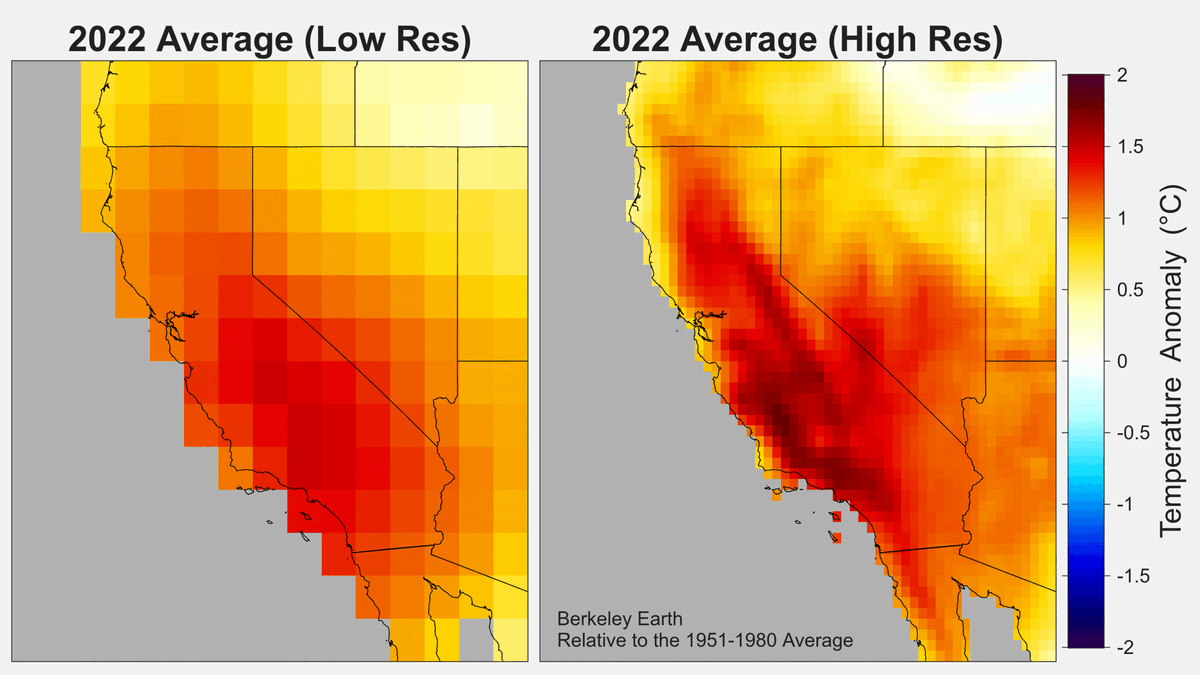
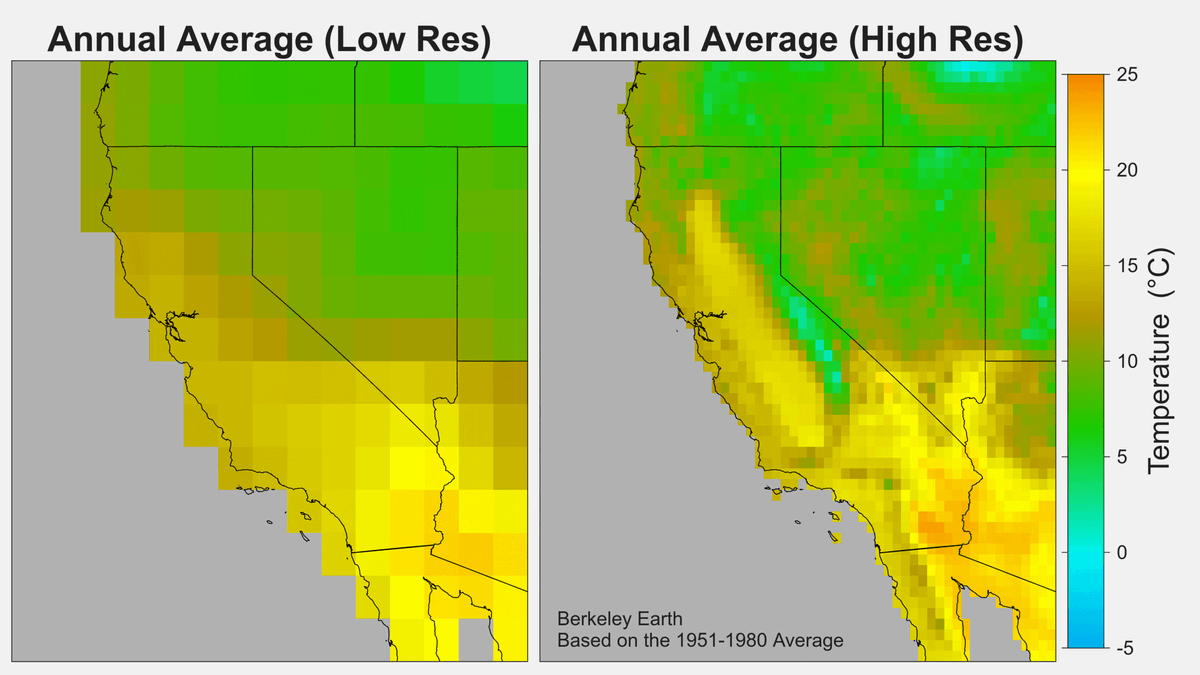
Berkeley Earth is releasing an early access edition of our new high-resolution temperature dataset.
This dataset promises unprecedented regional & local resolution for understanding past climate changes, with a 0.25° x 0.25° spatial resolution.
https://t.co/vTBbkJAEvQ
🧵
One frequently sees headlines that X is warming faster than the global average.
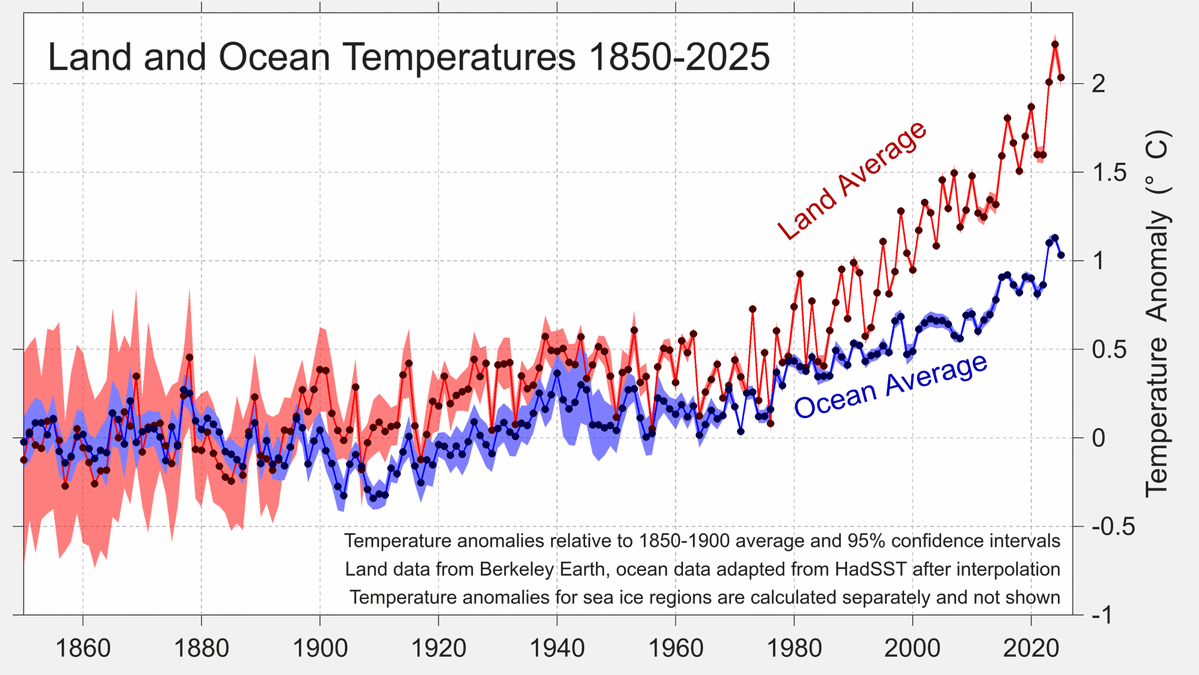
That's true of nearly everywhere that humans live, but only because humans nearly all live on land.
The process of global warming will generally warm land faster than the oceans.
The transition last year from the old @BerkeleyEarth temperature analysis to the new high-resolution version doesn't make much difference for the global averages, but it is really useful when it comes to capturing local and regional details that would otherwise be missed.
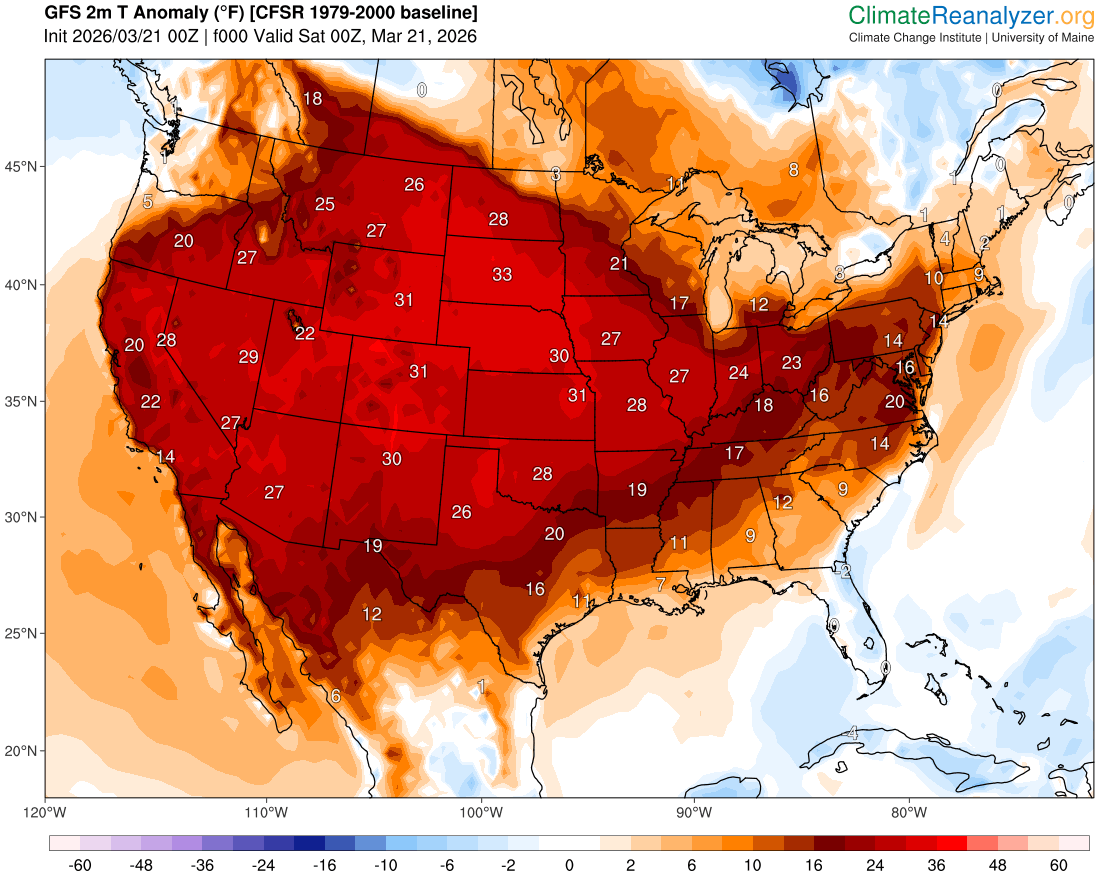
We need to talk a bit about how utterly absurd the March heatwave was in the USA.
This heatwave would have been impossible without a boost from climate change, but even with climate change it remains a deeply unlikely event.
A thread looking at some of the numbers.
🧵
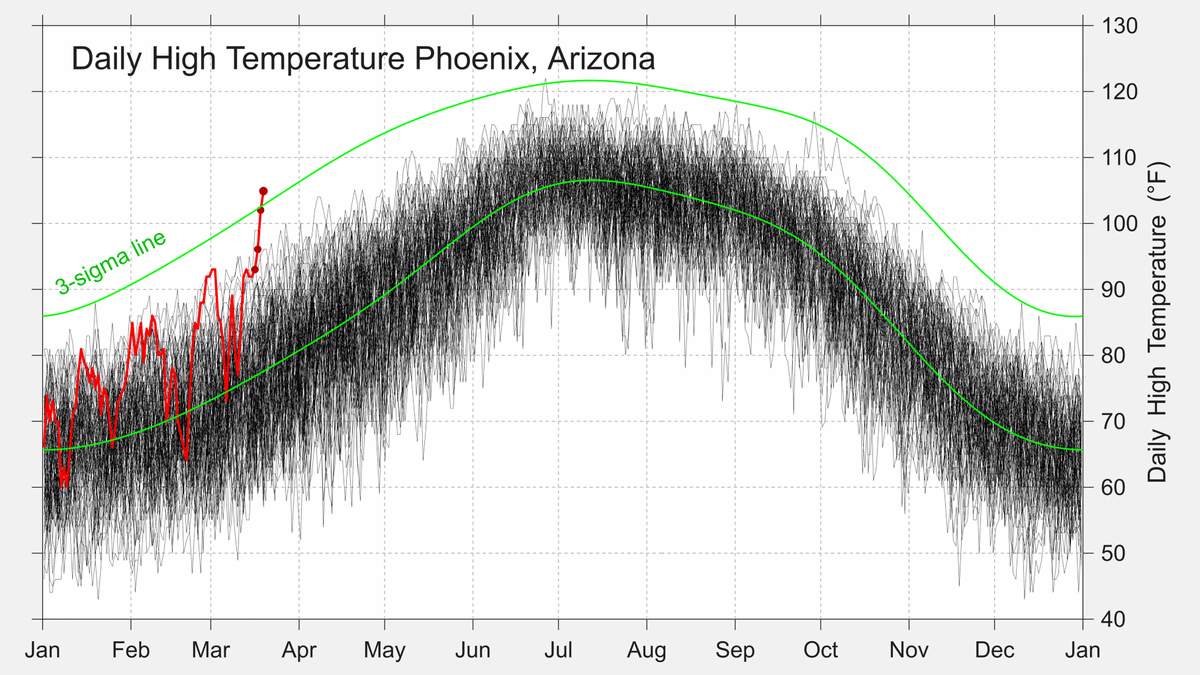
The current heatwave in the US Southwest is utterly destroying many records for this time of year.
Phoenix, Arizona has ~90 years of daily temperature data, and yet recent temperatures beat the previous March record by 5 °F (2.8 °C), and would actually tie the record for April.
Upcoming Monthly Temperature Update
Today, Thursday March 19th at 8am PDT / 11am EDT / 4pm CET, the Berkeley Earth team will share updates from the February 2026 Temperature Report and discuss the latest global climate signals.
Register:
https://t.co/v9WuebOpmf
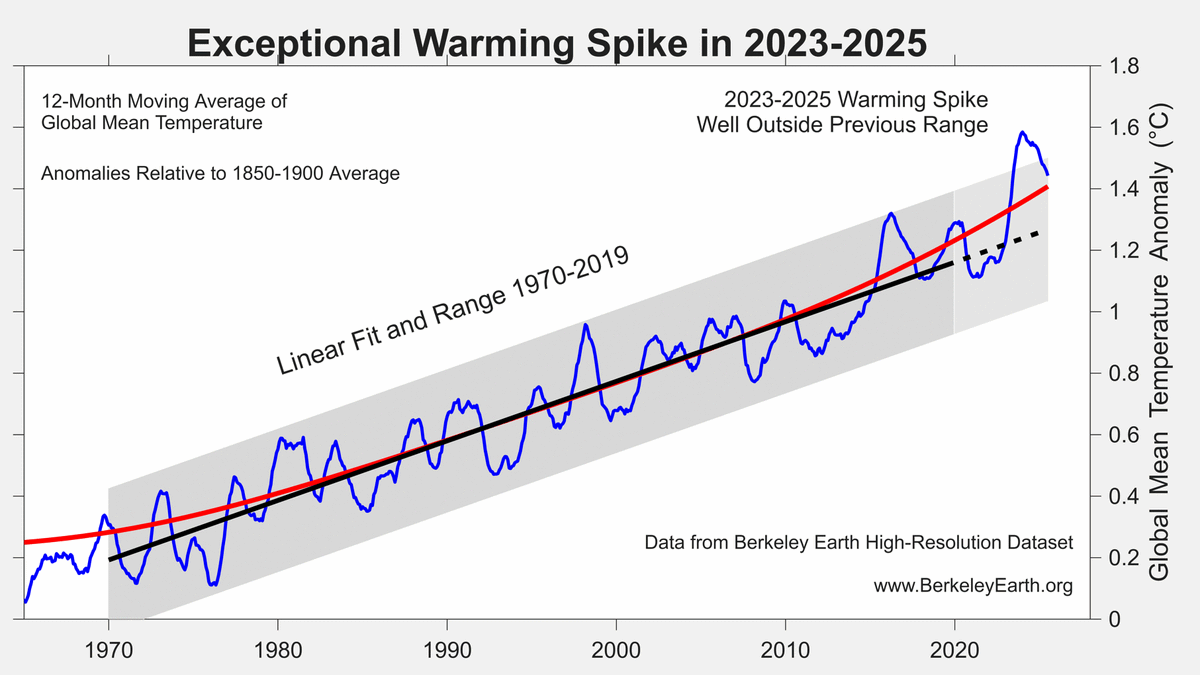
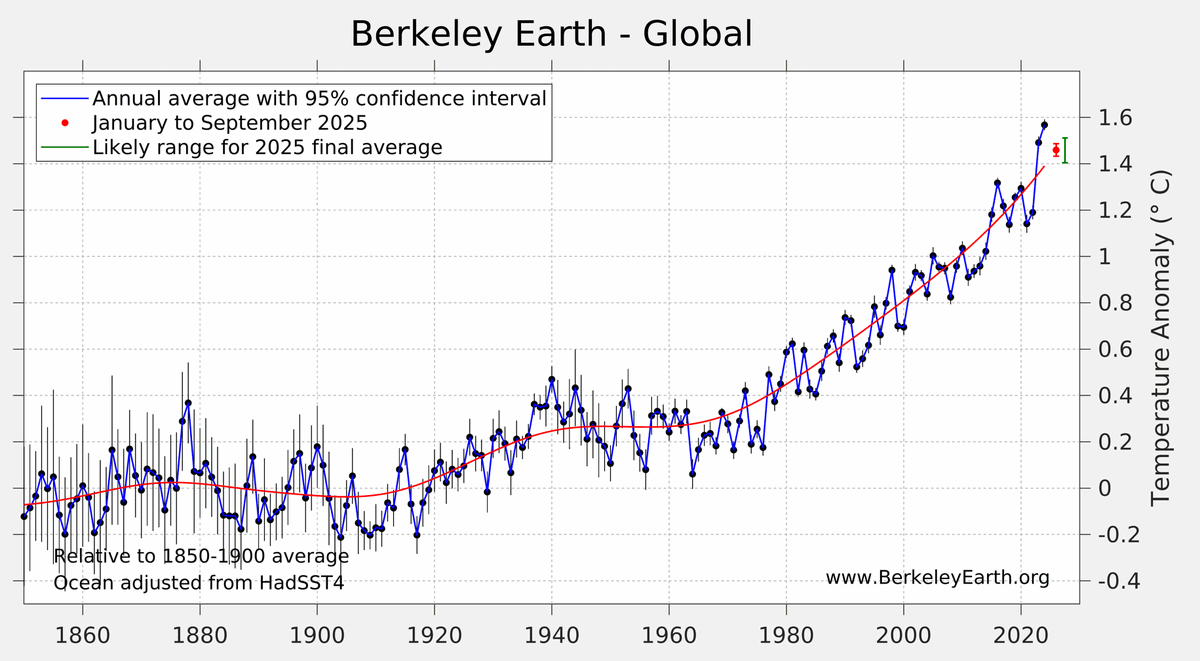
For 50 years, global warming had a very consistent trend (+0.19 °C/decade) with a boring, predictable range of natural variations around it.
During the last three years, we've broken out above that range, suggesting the pace of change has quickened.
While the world sometimes seems metaphorically on fire right now, global warming is still progressing as well.
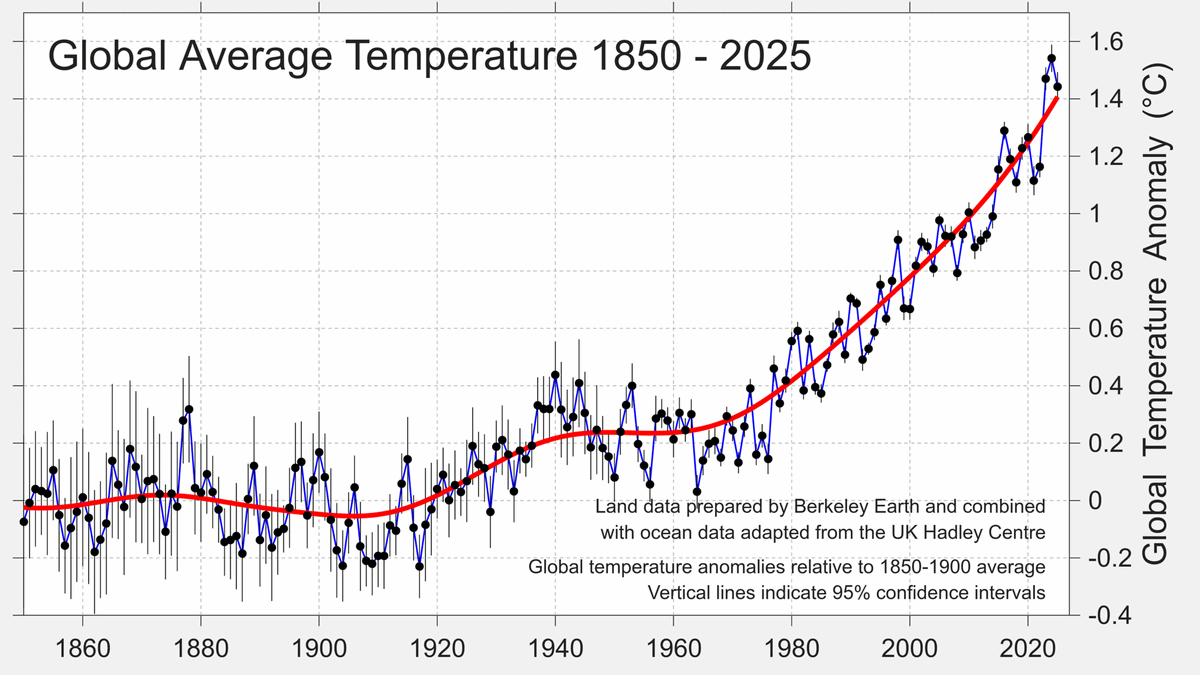
In 2025, global warming delivered the 3rd warmest year since measurements began. A modest step down from 2024's records, but still well above 20th century norms.
Berkeley Earth 2025 Annual Temperature Report
Jan 14 4am CET | Jan 13 10pm ET
Embargoed Materials: Jan 13 (TBD)
Media Sign up: https://t.co/IY3JJo2M7y
Press briefing + Q&A: Jan 14 at 8am PST | 5pm CET. Register: https://t.co/rt0jcWMSkC
Inquiries: [email protected]
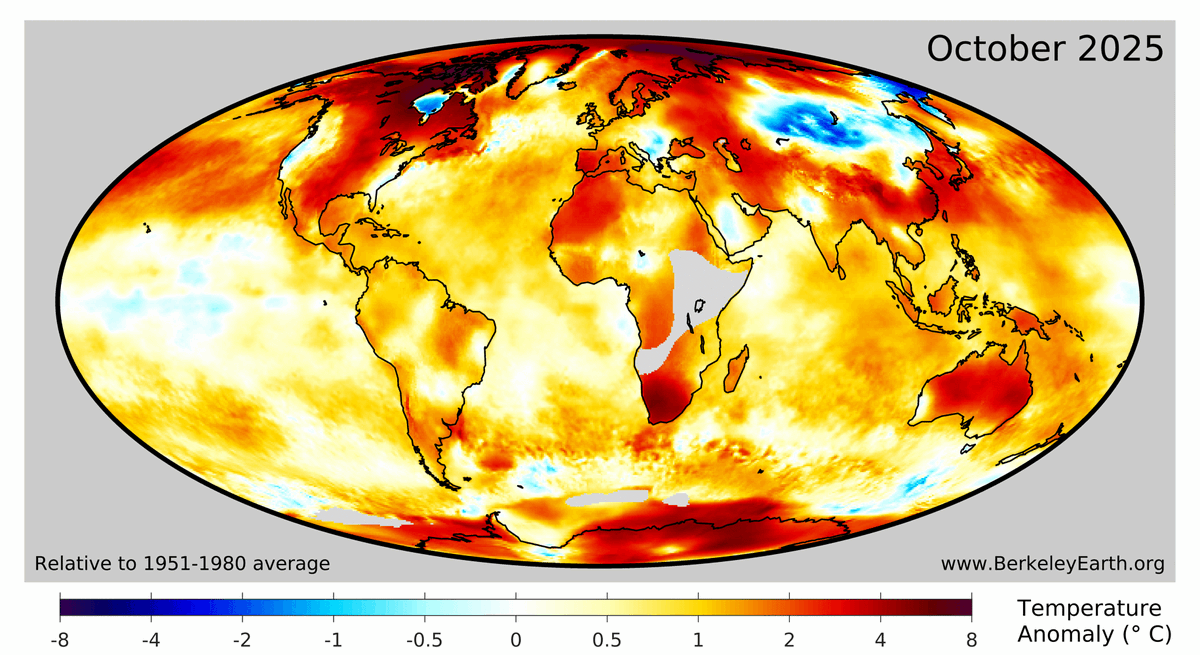
Temperature Update for October 2025
Third warmest October in the instrumental record.
Similar conditions to September.
A weak La Niña returns in the Pacific.
2025 is very likely to be the 3rd warmest year.
🧵
The current year is expected to conclude as the 3rd warmest in the instrumental record (94% chance), behind 2023 and 2024 and slightly above the long-term trend.
Further, it is unlikely that 2025 will exceed the 1.5 °C threshold.
11/