🚨🇺🇦🇷🇺 BREAKING: UKRAINE LAUNCHES LARGE-SCALE DRONE ATTACKS DEEP INSIDE RUSSIAN TERRITORY.
Ukraine has reportedly carried out extensive drone strikes targeting key Russian infrastructure, including an oil refinery and pipeline hub in Rostov Oblast, energy and industrial facilities in Tula Oblast, and a drone unit base in Russian-occupied Zaporizhzhia Oblast.
Meanwhile, Russia claims its air defence systems intercepted more than 1,300 to 1,400 Ukrainian drones over consecutive days in mid-November.
The reported attacks highlight the continuing escalation of long-range drone warfare, with both sides targeting military, energy and industrial infrastructure as the war between Russia and Ukraine continues.
The conflict shows no sign of slowing down.
Germany and Ukraine are significantly expanding military cooperation, WELT reports, citing internal German government documents. Plans include jointly developing a seeker for the Neptune cruise missile, integrating Ukrainian interceptor missiles into a German air defense system, financing over 2,000 Bars long-range weapons for €330 million, acquiring Flamingo cruise missiles for testing and participating in the development of Ukraine's Freyja missile defense system. #Ukraine
Die GenZ ist nicht ganz verloren 🙏solange es solche jungen Frauen gibt. Alles, was man zum erbärmlichen ÖRR-Publikum vom noch erbärmlicheren Florian Schröder nach seinem Take gegen @ulfposh und Elon Musk sagen muss.
BIG | 🇺🇦🇷🇺‼️‼️ Ukraine is intensifying its deep-strike campaign against Russia, hitting around 40 strategic facilities in just 50 days as Russian oil refinery output reportedly falls to its lowest level in two decades.
According to The New York Times, Ukrainian forces have struck approximately 40 facilities belonging to Russia’s oil and military-industrial sectors over the past 50 days. Targets include a fuel terminal on the White Sea and a solid rocket fuel production plant in Siberia. On certain days, Ukraine reportedly launches more than 1,000 drones against Russian territory. The newspaper reports that the sustained campaign has pushed Russian refinery output to its lowest level in 20 years.
The expanding Ukrainian strike campaign is putting increasing pressure on two critical pillars of Russia’s war economy, its energy sector and military-industrial infrastructure. Sustained disruptions could strain Moscow’s fuel supplies, military production and ability to finance the war.
See the latest updates with us: @visionergeo
BIG | 🇺🇦🇷🇺🇺🇸‼️‼️ Ukrainian General Andriy Biletsky says his forces reversed months of Russian territorial gains, captured thousands of Russian soldiers and destroyed the 144th Motor Rifle Division, while warning that surrendering Donbas would be a catastrophe for Ukraine.
In an interview with The Washington Post, the commander of Ukraine’s 3rd Army Corps said Donald Trump’s rapprochement with Moscow had weakened Kyiv’s negotiating position. Biletsky believes that Russia’s failure to capture Donbas, combined with further territorial losses over the next five to six months, could create conditions for ceasefire negotiations along the front line. During Operation Vivaldi, conducted between May and October, his corps reportedly liberated around 275 square kilometers and at least 16 settlements, reversing months of Russian advances. Despite Russia’s superiority in artillery and manpower, the operation was conducted under strict information secrecy. The corps’ achievements were even acknowledged by Russian military bloggers, including Sergey Kotenok, while former separatist commander Alexander Khodakovsky called Biletsky a national hero. The Ukrainian general also revealed that he had declined an offer to command Ukraine’s Ground Forces because he had no solution to the mobilization crisis. He advocates decentralized decision-making, reducing Soviet-style military bureaucracy, improving soldiers’ welfare and expanding unmanned systems to address manpower shortages. Biletsky intends to continue military reforms after the war, arguing that the armed forces will remain the cornerstone of Ukrainian statehood for the next 50 years.
Biletsky’s account challenges the assumption that Russia’s numerical superiority guarantees continued territorial gains. Ukraine’s ability to regain territory and stabilize the front could strengthen Kyiv’s negotiating position and reduce pressure to accept territorial concessions.
See the latest updates with us: @visionergeo
#Jugendstrafrecht ist - und das sage ich ausdrücklich auch als Jurist und langjähriger Strafverteidiger - so verstörend, dass das gesunde Rechtsempfinden jedes Anständigen tangiert ist.
Seit Jahrzehnten fordern Experten, Richter und Opfer eine grundsätzliche Reform des gescheiterten 70er-Jahre-Schwachsinns.
Zwecklos. Keine Regierung traut sich, den Wahnsinn zu beseitigen.
The Guardian: In the space of a 70-minute interview, Jared Kushner – Donald Trump’s son-in-law and a prominent US negotiator in Russia, Gaza and Iran – probably did more to reveal why the world is mired in entrenched conflicts than a thousand geopolitical tomes or seminars.
During the conversation this week with Mathias Döpfner, the chief executive of the Axel Springer media publisher, Kushner gave a rare insight into his diplomatic technique, offering a string of homilies that veered close to banalities: “You have nothing until you have something”, “diplomacy is like untying knots on a fishing line for his son”, and “you play the ball from where it lands”.
There were also many happy admissions of historical ignorance. Since taking on the Ukraine brief a year ago, Kushner said, he had to learn “the algorithm of Europe and how complicated that is”, and he had to get abreast of “the local issues with Ukraine”.
As a businessman he brought a special expertise, he claimed. “Look at what’s happening in the Middle East with sanctions, with Russia, with Iran. I think that you have to understand economics in order to understand geopolitics because the two go together very, very closely,” he said.
But the main revelation was how much he believes the Ukraine conflict is not a case of an aggressor and a victim – but is simply a series of misunderstandings and miscommunication.
Indeed, he treated Vladimir Putin as if he were a masterful corporate executive quite willing to close the deal if he were only given the right economic incentives – instead of a man ready to sacrifice hundreds of thousands of Russians to reclaim part of a historical empire.
In the process, Kushner revealed – often inadvertently – that he had largely bought into the Russian narrative of a string of postwar missteps by Europe and the US coming to a head in Nato’s expansion eastwards after 9/11.
That, in turn, has led him to adopt Moscow’s central demand to reshape the European security order to allow Russia, without opprobrium, to retain land it has gained by force. Shining through his answers was a naive bias towards the aggressor, presented as a mediator’s desire to understand both parties.
Praise veering on awe for the Russian leader flowed. “Putin – people can like what he has done, they can not like what he has done – [but] he is a grand master of politics. He is a historic figure,” he said. Any sense that Putin may have blundered escaped him.
As to the rights and wrongs of invading another country, Kushner was blasé. “After all, most lines in Europe have changed over time and they are decided through war or peace, or concessions. It’s not about fairness or who is right or wrong. It’s about ending the killing,” he said.
He understood, too, why Putin could not offer a ceasefire: “He has very little confidence that if he stops the war, that he [will] be able to get to a postwar settlement that leads to not having a future war.”
To stop the killing, the killing has to go on.
What is more, Kushner was struck by the Russian leader’s self-control. “So far Putin has shown restraint and he has agreed not to use nuclear weapons and he has reassured us that is his intention.”
Kushner denied Trump had put any pressure on Volodymyr Zelenskyy, defying his interviewer to provide evidence – at which point Döpfner recited a list of examples, including only last month when the US president suggested that Ukraine should get a new leader.
Trump was “a strong counter-puncher”, argued Kushner, implying that Zelenskyy had thrown the first punch in a conflict that began with a Russian invasion. Relations with Ukraine were cooperative, he said before pointedly saying Kyiv needed things from the US, without which “Ukraine will not be safe in the future”.
After noting that “the territorial issue is now a little bit of a deadlock”, his strategic insight was that if a future security architecture for Europe could be agreed, the answer to the land question in Donbas would eventually follow.
In essence, he proposed a revival of the Russia-Nato council, one of the bodies eviscerated by Putin’s war.
He also envisioned Ukraine inside the European Union with security guarantees akin to those offered by Nato’s article five. Though it was impossible at this stage to give “more specificity” about these guarantees in the detailed way Ukraine sought, he admitted.
So far, neither Moscow nor Kyiv have bought this plan, let alone a wary Europe.
Kushner tried to be polite about Europe, insisting it had to be at the negotiating table, but he could not stop himself characterising European military assistance to Ukraine as a “proxy war” against Russia.
As an analysis of why the Ukraine war had not ended inside the 24 hours Trump had promised when he took office again, Kushner showed an alarming belief that the answer lay in granting more concessions to Putin, and that the misunderstandings and misperceptions would then evaporate.
https://t.co/zWA9x9eSvN
BREAKING | 🇺🇦🇷🇺‼️‼️ Russia reportedly suffers its heaviest monthly military losses since World War II, with 60,716 soldiers killed or severely wounded in just 27 days of November.
According to the reported Ukrainian figures, Russian forces lost 60,716 personnel between November 1 and 27, including soldiers killed or suffering severe injuries that could prevent their return to combat. In the latest 24-hour reporting period, another 2,825 Russian soldiers were reportedly killed or severely wounded. Ukrainian military units use drone footage and specialized monitoring teams to assess battlefield losses, with video evidence reviewed through the DELTA battlefield management system. Ukraine also operates financial incentives and the Army of Drones Bonus program, under which units can exchange earned points for drones, electronic warfare systems and other military equipment through the Brave1 Marketplace. The reported casualty figures and the historical comparison have not been independently verified.
Losses on this scale would place enormous pressure on Russia’s recruitment, personnel replacement and military training systems. Sustaining offensive operations while suffering such heavy attrition could increasingly undermine the combat effectiveness of Russian formations, regardless of Moscow’s ability to recruit additional personnel.
See the latest updates with us: @visionergeo
JD Vance's cousin Nate Vance: Putin is a psychopath, but he isn't suicidal.
European and US air forces could secure Ukraine's airspace in a few days. It's a stain on Europe's history that they haven't.
0/
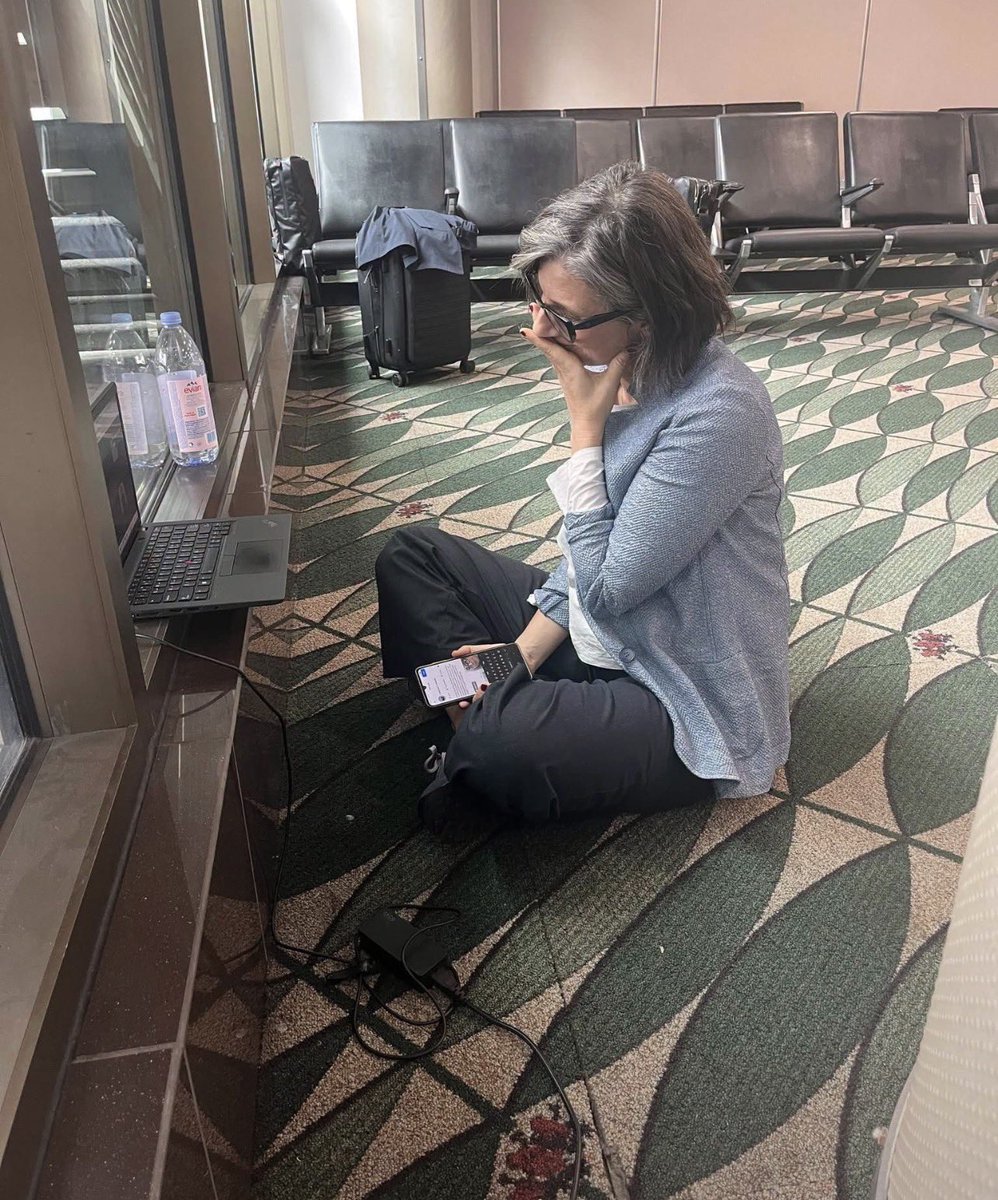
Nur leere Sitze auf dem Foto, aber leidend sitzt sie auf dem Boden.
Früher gab es Spaghetti Western, heute gibt es italienische Pallywood Filme.
Damals hatten wir Claudia Cardinale; heute Francesca Albanese.
Hallo Union! Ist da noch jemand. Hallo! SPD ruft den Sozialismus aus! Partei der Einheit, wo seid ihr? Voll Feuer! Irgendwo noch leben im bürgerlichen Lager? Hat irgendjemand einen Kompass für Freiheit und Marktwirtschaft? Ich bin völlig entsetzt! Irgendwer an Bord? SPD-Generalsekretär Klüssendorf wirbt für Enteignung von Wohnungskonzernen
https://t.co/Jp2tvuY0dh
🇺🇦 🇷🇺 L’AVIATION DE POUTINE PREND L’EAU : L’UKRAINE FRAPPE
MOSCOU ENCAISSE !
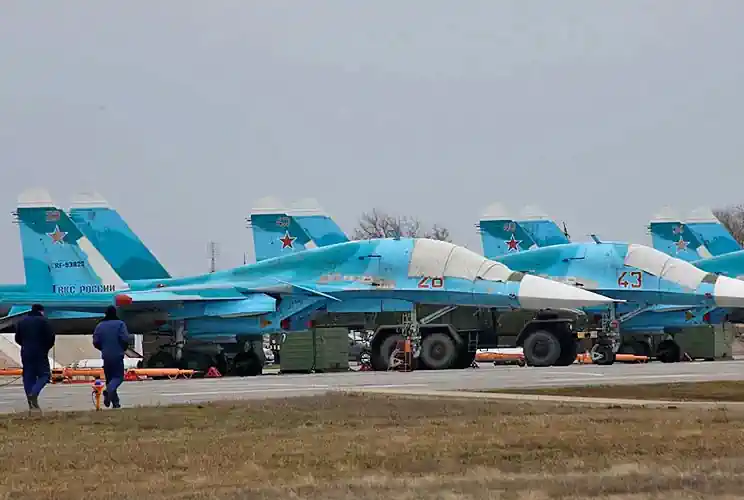
⚠️En seulement trois semaines, les forces ukrainiennes auraient détruit ou gravement endommagé une dizaine de bombardiers russes Su-34, soit l'équivalent d'environ 60 % de leur production annuelle.
Un sérieux revers pour le Kremlin, qui pensait pouvoir bombarder impunément les villes ukrainiennes sans que sa propre aviation en subisse les conséquences.
⚠️trois semaines de frappes, des mois de production anéantis
Selon Oleksandr Musienko, analyste militaire ukrainien interrogé le 26 novembre par Espreso, la Russie produit entre 16 et 18 Su-34 par an.
Or, une dizaine de ces appareils auraient été détruits ou sérieusement endommagés en seulement trois semaines.
Un bilan qui reste à confirmer de manière indépendante, mais qui représente un sérieux revers industriel et militaire pour Moscou.
⚠️la machine de guerre russe sous pression
Les Su-34 sont notamment utilisés pour larguer des bombes guidées sur les positions militaires et les villes ukrainiennes.
La réduction de cette flotte pourrait donc limiter les capacités de bombardement russes. Remplacer ces appareils coûteux et complexes à fabriquer représente également un véritable défi pour l'industrie aéronautique russe.
⚠️le mythe de la toute-puissance russe s'effrite
Le Kremlin voulait imposer sa domination militaire à l'Ukraine.
Près de cinq ans après le début de son invasion à grande échelle, il doit désormais faire face à des pertes considérables jusque sur son propre territoire.
Poutine voulait mettre l'Ukraine à genoux.
C'est aujourd'hui sa propre machine de guerre qui montre de sérieuses fissures. Voilà la réalité que la propagande du Kremlin tente de dissimuler !
🇺🇦 L'Ukraine démontre une nouvelle fois sa capacité de résistance.
https://t.co/bsji0wSvp5
https://t.co/rGBmRQwYwS
🚨🇺🇦 BREAKING: ZELENSKYY FIRES BACK AT PUTIN FOLLOWING RUSSIA’S NUCLEAR WARNING, DECLARING THAT UKRAINE WILL NOT BE INTIMIDATED BY NUCLEAR THREATS OR SURRENDER ITS SOVEREIGNTY!
Ukrainian President Volodymyr Zelenskyy has delivered a strong response to Vladimir Putin’s reported warning to Germany, the European Union and NATO, insisting that Russia cannot use nuclear threats to dictate the future of Ukraine or silence countries supporting its defence.
🗣️ VOLODYMYR ZELENSKYY:
“Vladimir Putin must understand one thing: Ukraine will not surrender its freedom because of threats. We did not choose this war, and we will not accept a future in which another country decides our borders, our security or our independence.
Russia continues to threaten the world with nuclear weapons because it wants other nations to be afraid. But nuclear blackmail must never become an instrument for controlling sovereign countries.
To our partners in Germany, Europe, the United States and NATO: Ukraine needs continued support, not fear. We are defending our land, our people and our right to exist as an independent nation.
We do not seek a nuclear confrontation with Russia. We seek peace, but peace cannot mean surrender, occupation or rewarding aggression. If Putin genuinely wants an end to this war, he must stop threatening the world and take meaningful steps towards peace.”
Zelenskyy’s message underscores Kyiv’s determination to resist Russian pressure while calling on Western allies to remain united. As tensions rise, the world faces a critical question: can diplomacy prevent this conflict from escalating into a direct confrontation between nuclear powers?
BBC: Are you struggling to protect Ukraine's skies right now?
ZELENSKYY: It's a huge challenge. We have big deficit of anti-ballistic.
BBC: How bad is the deficit?
ZELENSKYY: Very bad. Patriot missiles are the biggest problem.
BBC: Is US holding back on giving you missiles?
ZELENSKYY: Yes, we have huge questions about this.
BBC: Do you think that's some form of pressure on you?
ZELENSKYY: Maybe it wasn't US's intention, but it works out this way.
BBC: Does it leave you exposed?
ZELENSKYY: Yes. The deficit of Patriot missiles costs people's lives. The US, which can give us missiles, decided not to do it. Sometimes they help, sometimes not. It's their choice.
BBC: When you say to your allies in the US, “Where are the missiles? We need them,” what do they tell you?
ZELENSKYY: I think the best answer isn't words, it's deliveries. And we have huge challenges with these deliveries. I think that's the answer.