Empollona
Una alumna de 2° de ESO —unos 14 años— del @IesDrago en Cádiz escribió desde lo más hondo de la encrucijada de sus emociones esta redacción, que es una crónica y también una rebelión.
Yo levanto la mano contigo 🙋🏻♀️
Los padres y la hermana de Sergio Delgado piden justicia por la muerte del joven, que falleció en Burgos tras recibir un puñetazo en pleno rostro al identificarse como vallisoletano https://t.co/5woMAGsrym
Hoy no os voy a hablar desde el púlpito que me proporciona mi principal título, el ser “padre de Julia”. Hoy os quiero hablar como pediatra. Además como pediatra de urgencias.
Hoy desayuno con la noticia de que la OMS ha quitado a España el estatus de país libre de sarampión. Comencé en esto de la pediatría en el año 2004 y no ha sido hasta hace poco cuando tuvimos que dar parte a salud pública de un caso de sarampión. Es decir, tras más de 20 años de experiencia no había visto ninguno. Así pasa con muchas de las enfermedades que son prevenibles mediante vacunas (como la polio) o mediante cribados neonatales (como el hipotiroidismo).
Si algo ha mejorado los índices de mortalidad de la población, son aquellas tasas de mortalidad referidas a la población infantil.
No podemos retroceder a tiempos pretéritos mediante la negación de las enfermedades. El no verlas a diario nos ha hecho perderles el miedo y olvidarnos del coste en vidas (y lo que es peor, en calidad de vida por las secuelas) que suponen.
Es curioso que algunas de las enfermedades sobre las que existen vacunas no tienen cura, pero sí prevención. Es decir, nuestra única arma para combatirlas es eliminarlas. Podemos, pero no queremos.
Y ya no es solo el hecho de padecerlas sino que ante un niño no vacunado, la actitud en urgencias cambia, precisando de más exploraciones complementarias.
Tener un hijo sano es un lujo. Os lo dice un servidor.
https://t.co/8vYftzUj5y
En Valencia se ha quitado la vida un niño de 9 años:
⚠️No sufría acoso
⚠️No había habido conflicto familiar previo
⚠️No mostraba conducta autolítica
⚠️No parecía estar mal
La Policía Judicial tiene un claro sospechoso: va a revisar los chats de Roblox y Fortnite.
LA PARTE DE LA MENINGITIS QUE NADIE TE CUENTA: CUANDO SOBREVIVES
Una niña de 5 años muere en Huelva por meningitis meningocócica.
Y aquí es donde mi trabajo como traumatóloga entra en escena de la forma más chunga posible.
Cuando en 1884 el patólogo italiano Ettore Marchiafava describió la púrpura fulminante asociada a meningococo, lo que vio fue esto: extremidades necrosadas. Dedos negros. Piel que se muere porque las bacterias provocan microtrombos en todos los vasos sanguíneos. Es como si tu circulación decidiera hacer huelga general, pero solo en manos y pies.
¿Sabes qué hacemos los traumatólogos cuando un niño sobrevive a una meningitis meningocócica?
Amputamos.
A veces dedos. A veces manos completas. A veces las dos piernas por debajo de la rodilla. Porque si no lo hacemos, la necrosis se extiende y el niño muere igualmente, pero peor.
Y esta es la parte que nadie te cuenta cuando hablas de meningitis: que ganar no siempre es ganar del todo.
Que hay niños que sobreviven y pasan el resto de su vida adaptándose a prótesis. Aprendiendo a escribir de nuevo. Lidiando con el dolor fantasma.
Explicando en el colegio por qué tienen “esas manos raras”.
No te escribo esto para asustarte. Te lo escribo porque existe una vacuna que evita todo esto. Una vacuna que cuesta menos que tres cafés en Starbucks y que está en el calendario vacunal.
Pero claro, “es que he leído que las vacunas…”, “es que mi hijo tiene un sistema inmune fuerte…”, “es que no creo en la sobremedicación…”.
Pues vale.
Yo tampoco creo en amputar niños. Pero aquí estamos.
Me emociono recordando estos casos. El sistema inmune de esa niña perdió. Y no hay vuelta atrás.
#LaTraumatologaGeek
Los padres de un chaval vivieron el peor día de sus vidas cuando lo encontraron en su cuarto convulsionando y vomitando.
Cuando llegamos llevaba 15 minutos convulsionando, rígido, azul, echando vómito y espuma por la boca, con pupilas enormes.
Eso se llama "status epiléptico".
“But I will say this: the rule of no realm is mine, neither of Gondor nor any other, great or small. But all worthy things that are in peril as the world now stands, those are my care… For I also am a steward. Did you not know?”
- Gandalf, ROTK
Este 17 de octubre, coincidiendo con el 105 aniversario del nacimiento del escritor, abre sus puertas el Museo Casa Delibes en Valladolid.
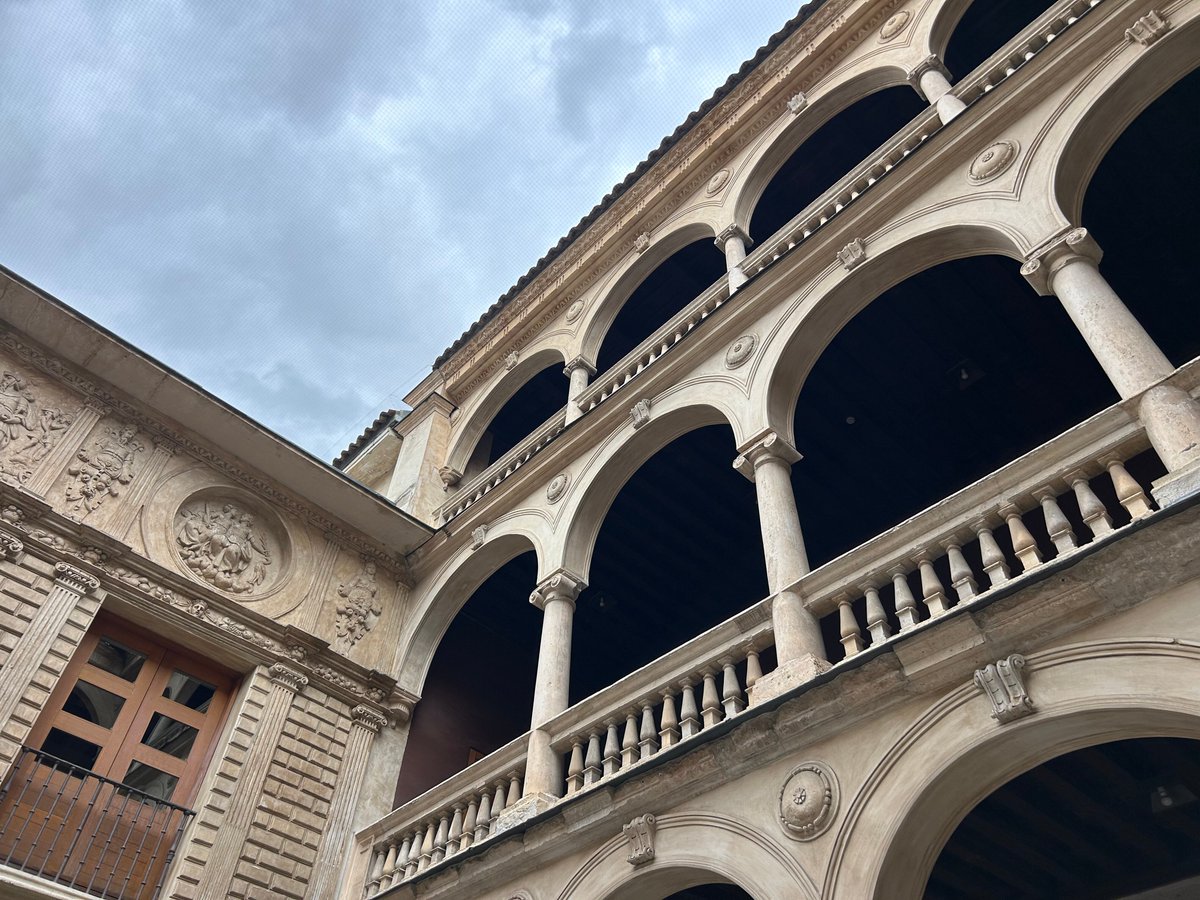
Un nuevo espacio cultural en el Palacio del Licenciado Butrón, palacio renacentista del año 1572.
📍 Palacio Licenciado Butrón, Valladolid.
A message from a Kindergarten teacher:
After forty years in the classroom, my career ended with one small sentence from a six-year-old:
“My dad says people like you don’t matter anymore.”
No sneer. No malice. Just quiet honesty — the kind that cuts deeper because it’s innocent. He blinked, then added, “You don’t even have a TikTok.”
My name is Mrs. Clara Holt, and for four decades, I taught kindergarten in a small Denver suburb. Today, I stacked the last box on my desk and locked the door behind me.
When I started teaching in the early 1980s, it felt like a promise — a shared belief that what we did mattered. We weren’t rich, but we were valued. Parents brought warm cookies to parent nights. Kids gave you handmade cards with hearts that didn’t quite line up. Watching a child sound out their first sentence felt like magic.
But that world slowly slipped away. The job I once knew has been replaced by exhaustion, red tape, and a kind of loneliness I can’t quite describe.
My evenings used to be filled with construction paper, glitter, and glue sticks. Now they’re spent filling out digital reports to protect myself from angry emails or lawsuits. I’ve been yelled at by parents in front of twenty-five children — one filming me with his phone while I tried to calm another child mid-meltdown.
And the kids… they’ve changed too. Not by choice.
They arrive tired, anxious, overstimulated. Their tiny fingers know how to swipe a screen before they can hold a crayon. Some can’t make eye contact or wait in line. We’re expected to fix all of it — to patch the gaps, heal the trauma, teach the curriculum, and document every move — in six hours a day, with resources that barely fill a drawer.
The little reading corner I once built, full of soft beanbags and paper stars, was replaced by data charts and “learning metrics.” A young principal once told me, “Clara, maybe you’re too nurturing. The district wants measurable results.”
As if kindness were a weakness.
Still, I stayed. Because of the small, holy moments that no spreadsheet could measure —
a whisper of, “You remind me of my grandma.”
a shaky note that read, “I feel safe here.”
a quiet boy finally meeting my eyes and saying, “I read the whole page.”
Those tiny sparks were my reason to keep showing up.
But this last year broke something in me.
The aggression grew sharper. The laughter in the staff room turned to silence. The light went out of so many eyes. I watched brilliant teachers — my friends — vanish under the weight of burnout, their joy replaced by survival.
I felt myself fading too, like chalk on a board that’s been wiped one too many times.
So today, I began my goodbye. I pulled faded art off the walls and tucked thirty years of handmade cards into a single box. In the back of a drawer, I found a letter from a student from 1998:
“Thank you for loving me when I was hard to love.”
I sat on the floor and cried.
No party. No applause. Just a handshake from a young principal who called me “Ma’am” while checking his notifications.
I left my rocking chair behind, and my sticker box too. What I carried with me were the memories — the faces of hundreds of children who once trusted me enough to reach out their hands and learn. That can’t be uploaded. It can’t be measured. It can’t be replaced.
I miss when teachers were partners, not targets. When parents and educators worked side by side, not in opposition. When schools cared more about wonder than numbers.
So if you know a teacher — any teacher — thank them. Not with a mug or a gift card, but with your words. With your respect. With your understanding that behind every test score is a heart that cared enough to try.
Because in a world that often overlooks them, teachers are the ones who never forget our children.
Flashmob como homenaje a #ConchaVelasco, con motivo del 60 aniversario del lanzamiento de 'La Chica Yeyé' . En el entorno maravilloso de la catedral. Todos los homenajes son pocos.
#Valladolid#5octubre#Flashmob
Abro hilo adolescencia,límites y alcohol: El año pasado en mi reunión de padres de 2º de ESO avisé que es un año donde quieren hacerse mayores muy rápido y hay que controlar muy bien amistades, salidas el fin de semana, tema alcohol y tabaco,etc. Las familias se sorprendieron