(1) Éduquer et former l'esprit critique (EC) est un (long) travail collectif.
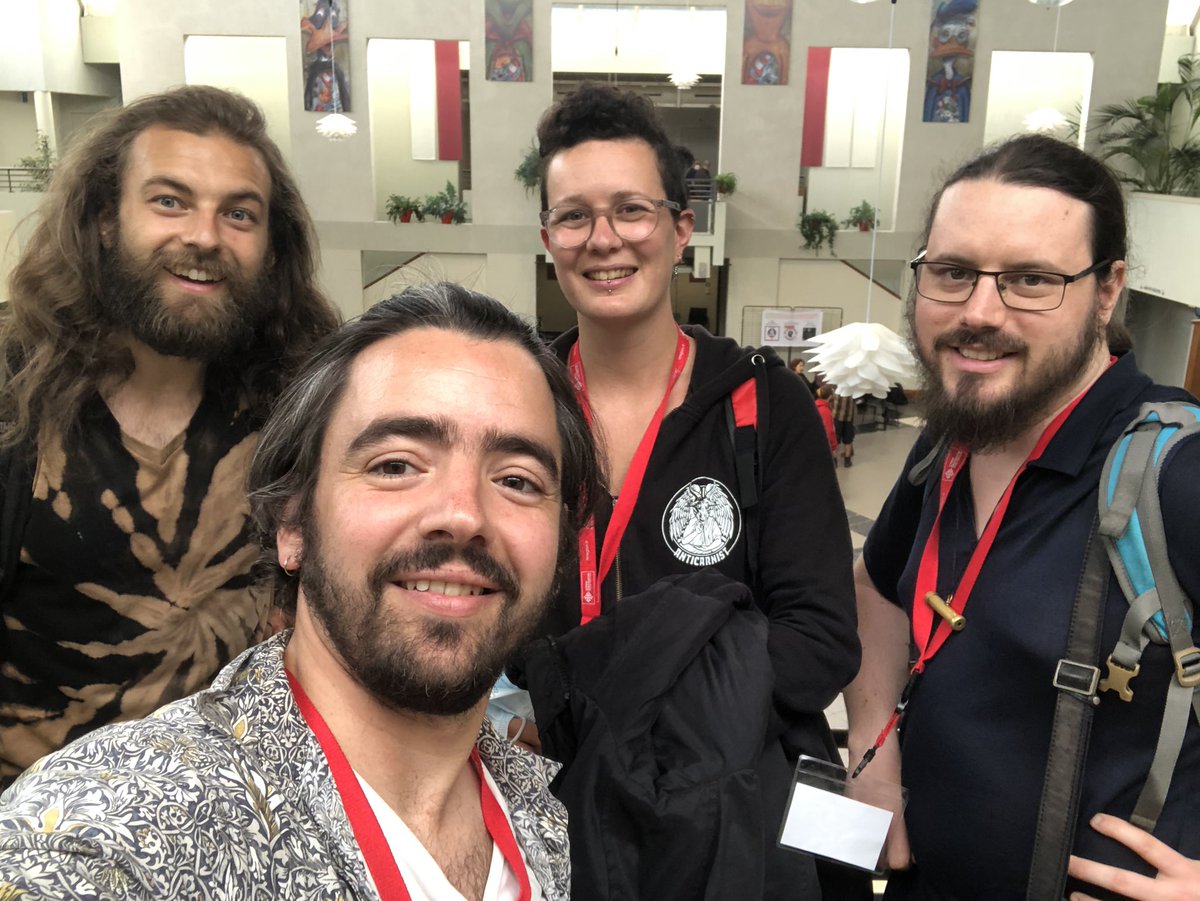
Il y a presque 20 ans je suis tombé dans la marmite de la zététique et de son enseignement. Aujourd'hui, c'est mon métier et j'ai envie de partager cetre histoire car on y rencontre des gens, un tas...
Out in Nature Human Behaviour 🔥
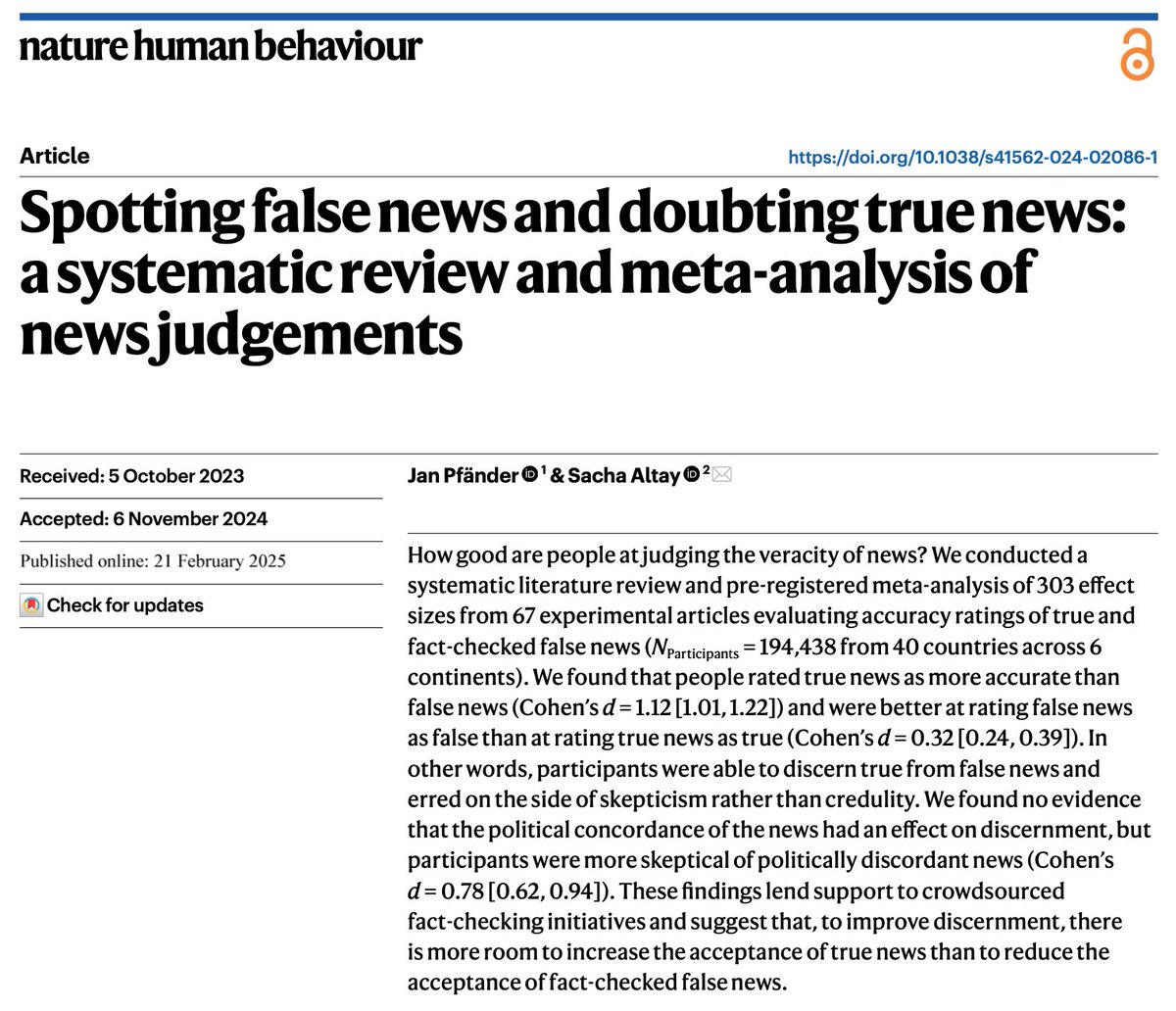
Can people tell true from false news?
Yes! Our meta-analysis shows that people rate true news as more accurate than false news (d = 1.12) and were better at spotting false news than at recognizing true news (d = 0.32).
Keeping an open mind is not about lacking moral conviction. It’s about maintaining intellectual humility.
The people who leave their echo chambers are the ones who know their knowledge is incomplete.
A key to lifelong learning is engaging with others who disagree with you.
Psychologists love asking people how they think about trolley dilemmas to study moral decision-making: "Should you kill a person to save five?".
But thinking about a dilemma is not the same thing as actually confronting one in real life.
We developed a lab-based real-life dilemma paradigm. Not with trolleys. But with electroshock machines, real people, and real shocks. A preprint: https://t.co/qGiaHtdvnD
1/18
One effective method for confronting science #misinformation: refute it.
The effectiveness of refutation text in confronting scientific misconceptions: A meta-analysis https://t.co/Ojbo9rVJZq
🚨 New pre-print 📢
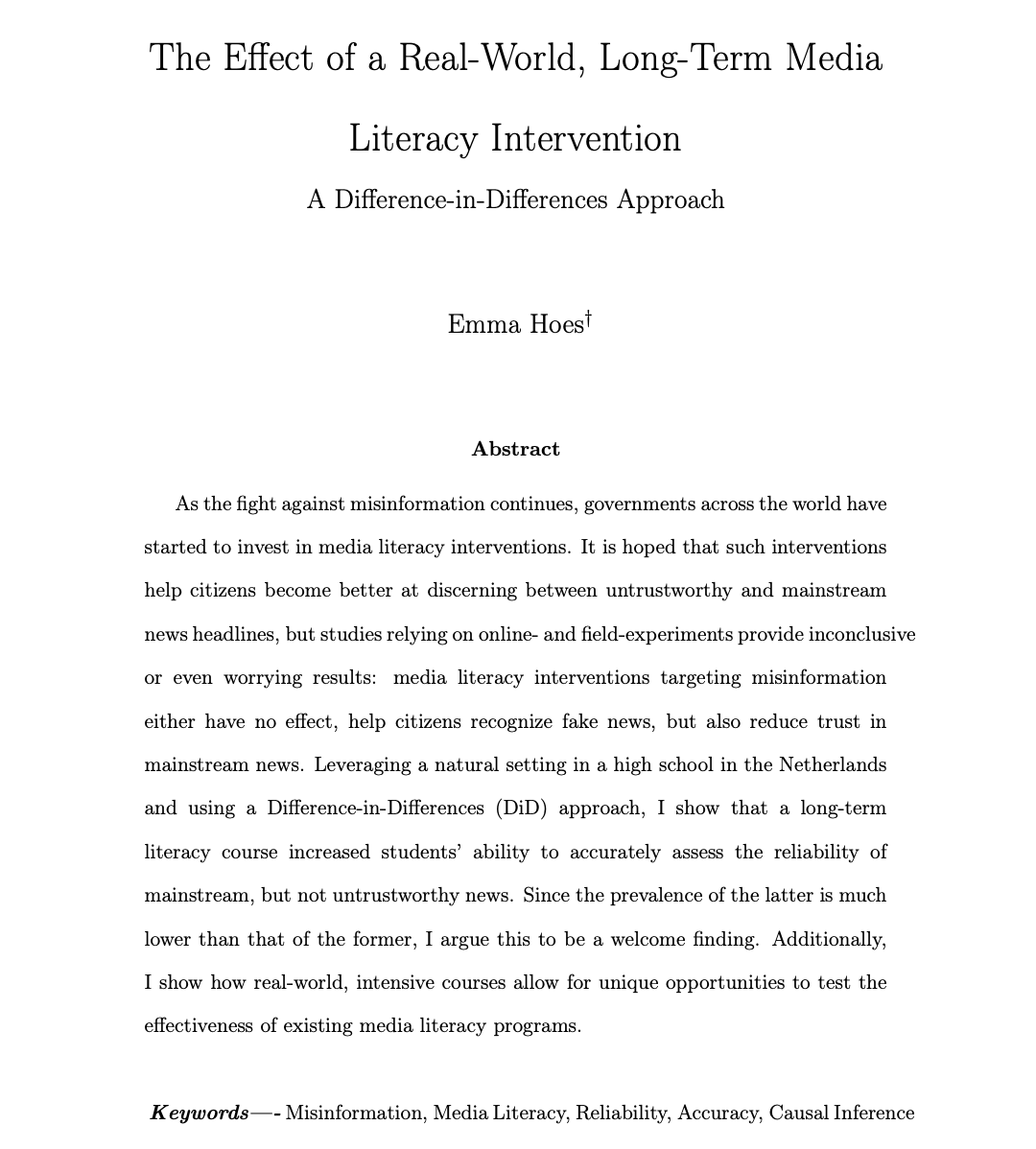
In this study, I used a difference-in-differences design to evaluate how a long-term media literacy course affects students' ability to judge news accuracy.
Unlike many short-term interventions, this course was integrated into the school curriculum. 🧑🎓🏫
Predictors of Conspiratorial Thinking
Positive correlations imply that higher scores on the predictor are associated with more conspiratorial thinking; negative correlations imply that higher scores are associated with less.
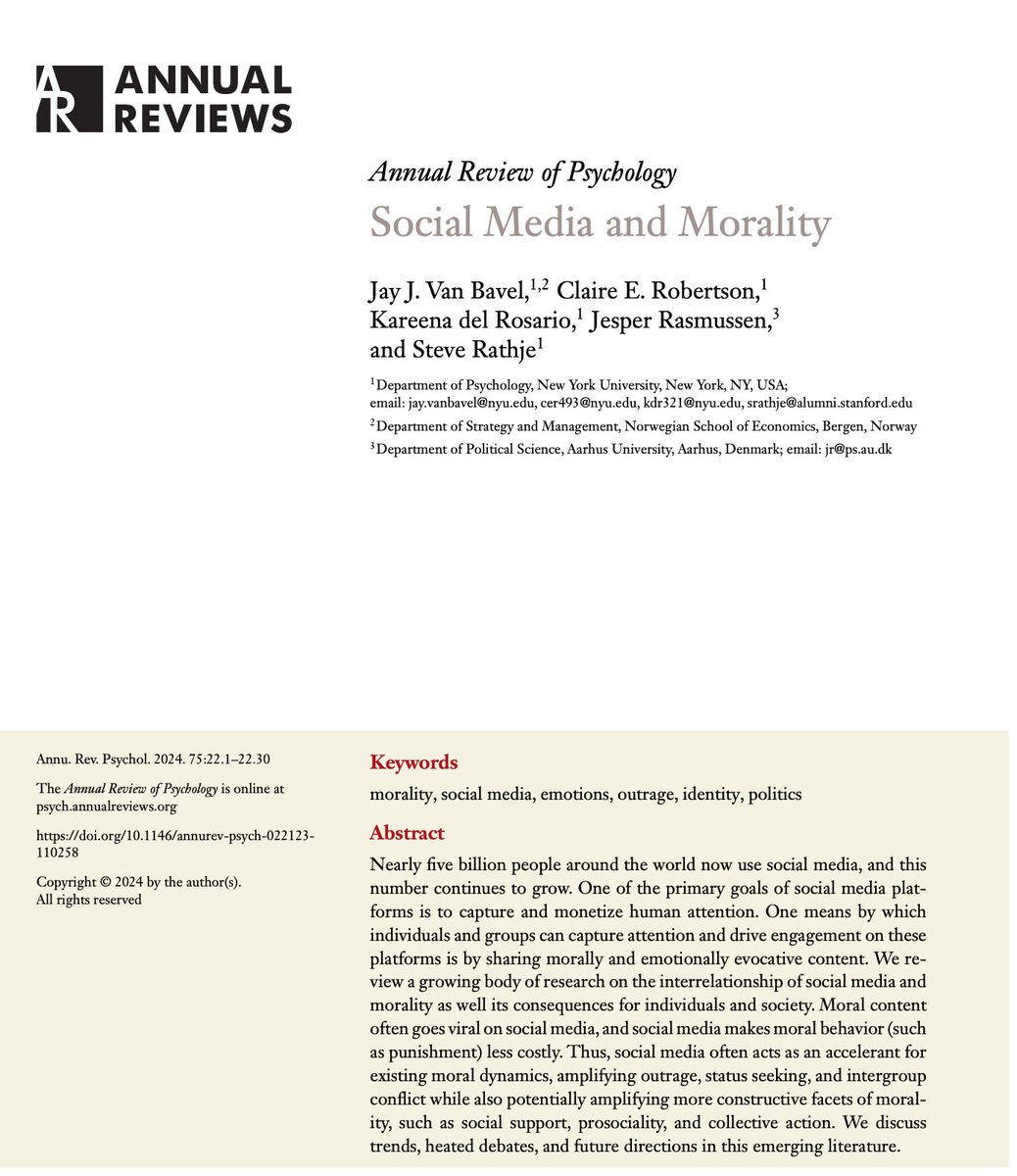
We have a new paper on "Social Media and Morality" in @AnnualReviews | https://t.co/JHsIMgZuTZ
Nearly five billion people around the world now use social media, and this number continues to grow. One of the primary goals of social media platforms is to capture and monetize human attention. One means by which individuals and groups can capture attention and drive engagement on these platforms is by sharing morally and emotionally evocative content.
We review a growing body of research on the interrelationship of social media and morality as well its consequences for individuals and society. Moral content often goes viral on social media, and social media makes moral behavior (such as punishment) less costly. Thus, social media often acts as an accelerant for existing moral dynamics, amplifying outrage, status seeking, and intergroup conflict while also potentially amplifying more constructive facets of morality, such as social support, prosociality, and collective action.
In this paper, we discuss trends, heated debates, and future directions in this emerging literature.
Thanks to my brilliant co-authors @CRobertson500 @KareenadelRosa @jrpsau@steverathje2
A better question is how anybody ever managed to form true beliefs about an unimaginably complex, counter-intuitive reality to which they mostly have no direct access and are forced to learn about via vast, opaque chains of testimony. And the answer is that they mostly didn’t.
Y a un concept dont le milieu "éducation aux média" et "esprit critique" s'est emparé, selon moi, un peu vite et sur lequel il raconte pas mal de merde, c'est l'idée de bulle de filtre sur internet. Et y a un papier intéressant qui vient de sortir dans Nature sur le sujet.⤵️
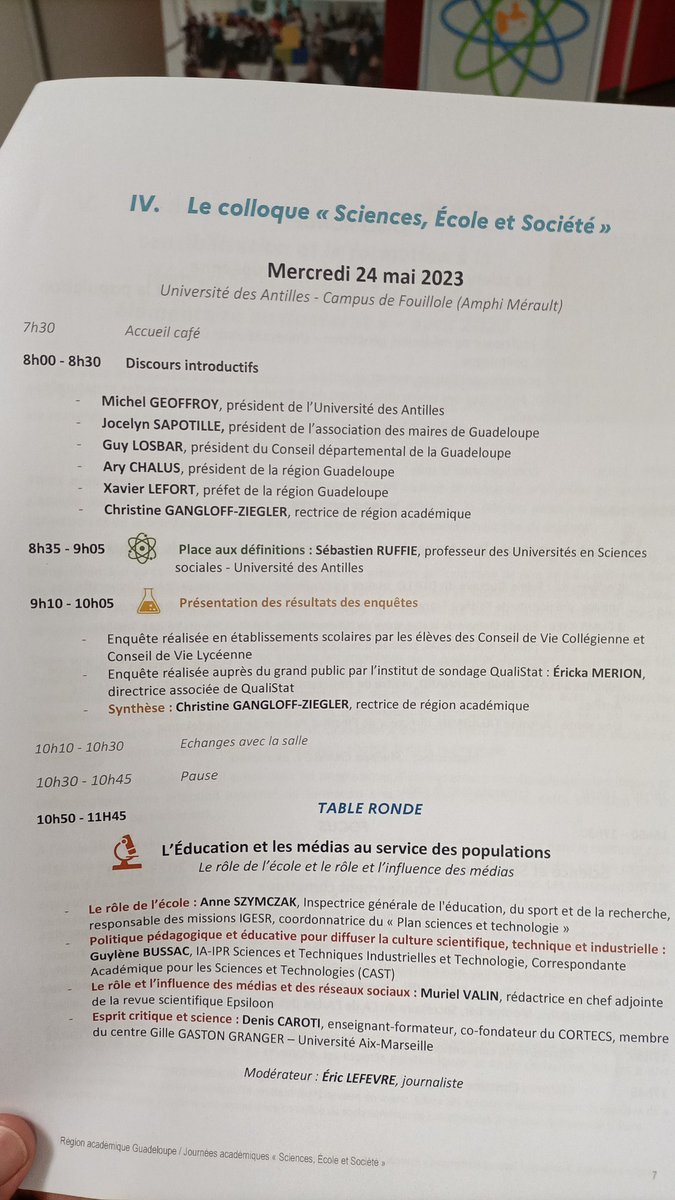
...entre science, société et esprit critique. Plusieurs tables rondes, des intervenants avec des approches variées... Grand merci et bravo à Patrick Pergent @ClemiGuadeloupe et au rectorat !
Une fois n'est pas coutume qqs infos sur un évènement auquel j'ai la chance de participer : colloque Sciences, école et société organisé par la région académique de Guadeloupe. Bravo pour cette belle journée qui met en valeur tout le travail sur le terrain et les liens à tisser
With false claims, debunking is less effective than prebunking.
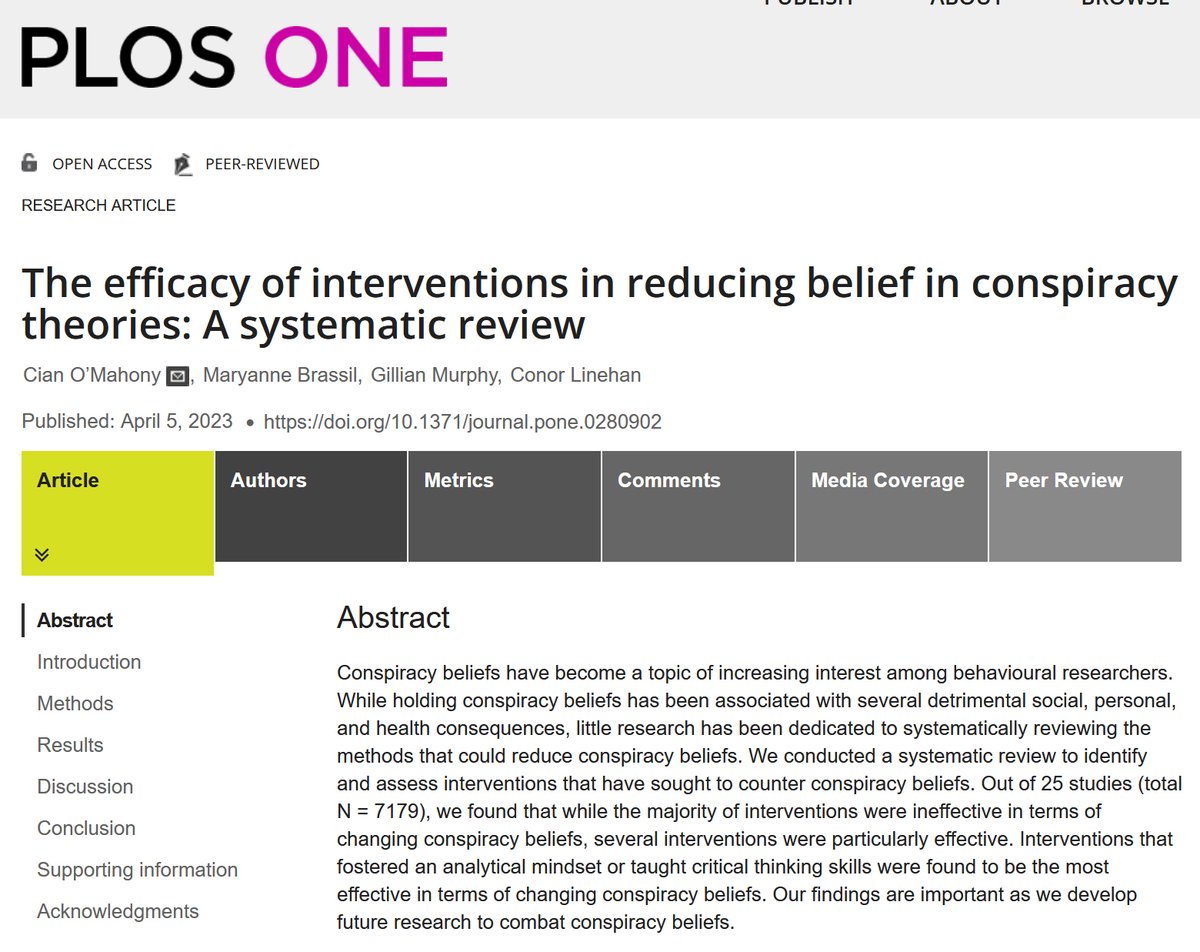
25 studies: rebuttals and fact checks don't do much to change minds. We're better off training people to spot flaws in logic and data.
The most important part of education is teaching critical thinking skills.
@CollectifCorteX Avec toute la neutralité politique dont je dispose, voici un article politiquement neutre sur la question du lien entre science et politique... Éclairant et questionnant à souhait !
En Avril, David et Nicolas, piqués par une étrange mouche, ont animé aux REC deux ateliers "science et politique". Retour sur ces ateliers
« La science est-elle politique ? » 1/2 - On pose des questions tabous aux REC, et ça se passe bien !
https://t.co/hpfLp4MrtS
M'enfin c'est un détail (que Rich m'a demandé de révéler au grand jour alors je m'exécute!), faut écouter tous ces podcasts c'est un régal, mais toujours avec une oreille attentive...😋
Excellent tous ces épisodes https://t.co/MjfM3M3l80 merci @RichMonvoisin et merci FQ ! Comme dans ses cours, il nous entraîne avec lui au rythme de ses exemples et contenus stimulants ! Mais il sème aussi quelques minicoquilles à découvrir et à lui faire remonter 🤩 D'ailleurs...
C'est la loi binomiale et on trouve que la proba d'avoir au moins 1 succès avec 1000 essais indépendants est P(X≥1)=0,6323.
Moins de 2 chances sur 3 que cela se produise, donc c'est loin d'être sûr ! Il faut au moins 3000 essais (3000 lampes allumées) pour atteindre p=0,95 😅