Spellow Library needs our help after the riots. Please donate, like, comment, and share to bring new books and a safe space back for the kids. Let's make a difference together! https://t.co/mKzUmhF5aX I’ve donated, hope everyone who is able to will join in. #BooksNotBigotry
Misleading reporting by @BBCNews@BBCWorldatOne. Public needs accurate reporting.
Khelif is not a female with unusually high testosterone levels. He failed a chromosome sex test by the Boxing federation.
And Carini didn’t ’withdraw’. She got punched in the face so hard she had to stop the fight.
Nothing complex about xx or xy. The @iocmedia has completely abandoned fairness for women athletes. This must change and it must change from the top down- none of this- oh, let’s let individuals federations and sports decide. It must be uniform!
Reeves: I've taken the tough decisions to fix the foundations of our economy and restore economic stability.
The tough decisions will come this winter for 2mn pensioners not on pension credit who relied on £500/£600 WFP in last 2 winters. That’s tough, not making policy in No.11
Morning all..
So given that only those pensioners on a very low
income will receive the
Winter payment, why can
MPS claim up to £3,400 towards their heating costs
on a £91,000 wage? 🤔
In the last 12 years
Non means tested Child Benefit - gone
Non means tested winter fuel payment - gone
Non means tested state pension - still here
I have always said it could never happen. But now…
Nearly a fifth of the £22bn hole Reeves needs to fill will be taken from pensioners. £2.6bn saved from scrapping their £300 cost of living payments and another £1.4bn by means-testing winter fuel payment by limiting it to those on pension credit or another means-tested benefit.
News. The Chancellor's just announced Winter Fuel Payments will no longer be universal to all pensioners, now only pensioners on benefits will get it - in my view that's too narrow a group. Here's my formal statement to @RachelReevesMP ...
--------------
The targeting of Winter Fuel Payments is too narrow with the winter we have coming. Pensioners were already due to get less as this will be the first time since winter 2022 they haven’t got the up to £300 extra winter fuel cost of living top-up.
The Energy Price Cap is likely to rise 10% this October and stay high across the winter, leaving most energy bills nearly double those pre-crisis, at levels unaffordable for millions.
Many pensioners eke out the £100 to £300 Winter Fuel Payments to allow them to keep some heating on through the cold months. While there's an argument for ending its universality due to tight national finances, it's being squeezed to too narrow a group – just those on benefits and Pension Credit.
Yet again, those just above the thresholds will be hardest hit. This is often justified as there's a 'lack of household income data' to allow other targeting. However, there's a usable precedent from the emergency energy crisis measures announced in April 2022, which I'd urge the Government to look at.
Then, a payment was made to homes in council tax bands A to D – as an imperfect but workable proxy for lower household incomes. That'd allow an additional group of lower to middle-income pensioners to keep the payments and mitigate bill shocks. Councils' discretionary funds could also be funded as in April 2022, for the limited numbers who still need help but don't qualify.
Plus, with this announcement, the Government has a huge moral imperative to ensure the 800,000 people eligible for Pension Credit who don't get it, are informed, educated and helped through the process. It is planning an awareness-raising campaign, but it needs to ensure that reaches every corner – and if possible proactively and personally contact people.
Pension Credit is a crucial gateway benefit, giving access to a host of other entitlements, and now with the link to the Winter Fuel Payment, it makes it even more important to ensure fewer miss out."
(1/13) We strongly oppose the means-testing of Winter Fuel Payment (WFP) because our initial estimate is that as many as two million pensioners who badly need the money to stay warm this winter will not receive it. Read our full statement:
(13/13) With winter now just over the horizon, the Government should halt their proposed change to WFP and think again, given the clear evidence of how it will hurt the older people who need it the most.
Do you have blood type o negative? Stocks are really, really short at the moment, so @NHSBT would love to you to arrange to give blood as soon as you can! I recommend the centre in Westfield, excellent chocolate biscuits afterwards. Other blood types gratefully accepted too!
Violence against women and girls is a national emergency. The alarming data are not even scratching the surface. We must change and start addressing the scale of male violence against women and do anything to prevent it.
I've had a great day at the Townswomen's Guild's AGM. Many thanks to @BerylHales1, the national chair, for inviting me to deliver my talk, 'Twenty Years to be an Overnight Success.' A fabulous audience and some lovely women to chat to - and I sold a heap of books. 🩷
Good morning, everyone. Yesterday was all about business and today is going to be all about writing. Tomorrow I'm speaking at the Townswomen's Guild's AGM. That's the plan. Have a fab day, everyone.
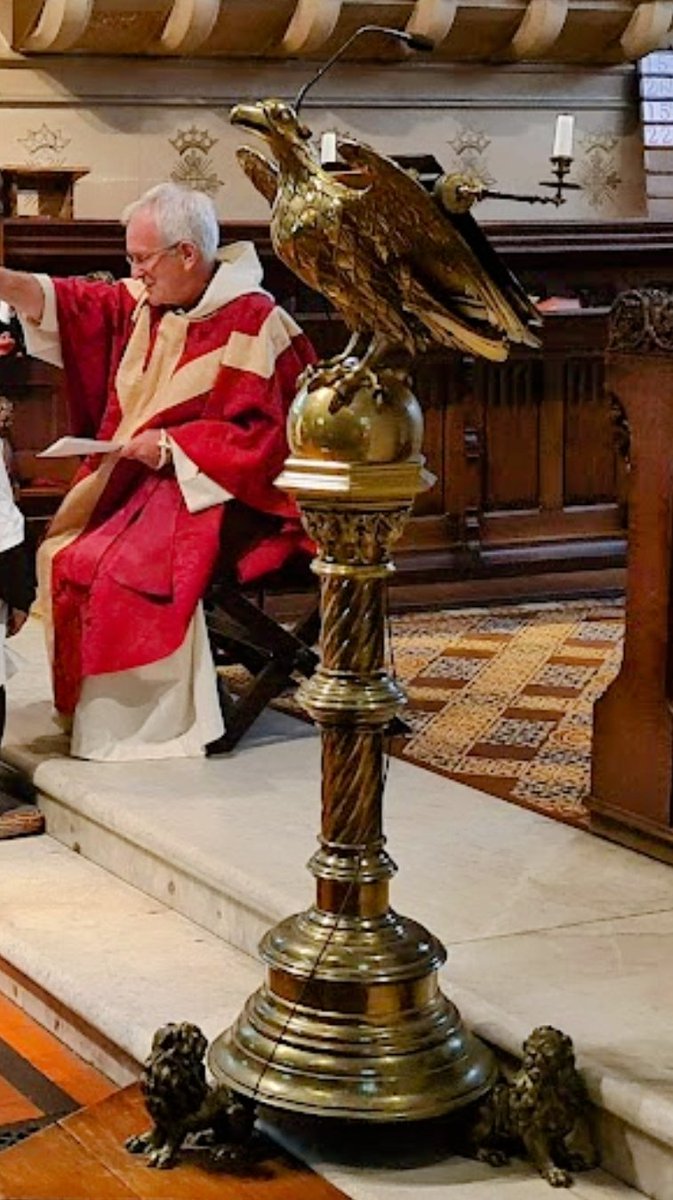
Notice to all dealers in scrap/metal/antiques : If anyone offers you this beauty, it's been stolen from St Augustine's church, Edgbaston and they would very much like it back...
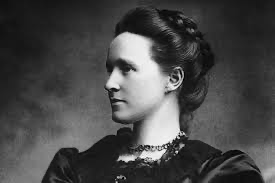
Woman of the Day Dame Millicent Garrett Fawcett born OTD 1847 in Aldeburgh, who made it her life's work to secure for women the right to vote on the same terms as men. It was Millicent who wrote the introduction to Mary Wollstonecraft’s Vindication of the Rights of Woman when it was republished in 1891.
It took 64 years of laborious letter writing, lobbying, organising, travelling the country and speaking at countless public meetings, but in 1928 Millicent watched as the House of Commons voted in favour of full suffrage for women from the same spot in which she had witnessed the very first parliamentary bid for female suffrage made by the radical MP John Stuart Mill in 1866.
Millicent was just 19 when, after hearing a speech by JS Mill, she became secretary of the London Society for Women’s Suffrage. Too young to sign it herself, she collected signatures for his famous 1866 petition. It was carried to the House of Commons by her elder sister Elizabeth Garrett Anderson and their friend Emily Davies.
"I cannot say I became a suffragist. I always was one, from the time I was old enough to think at all about the principles of Representative Government."
In 1868 and newly married, she undertook her first speaking tour aged just 22. You have no idea how scandalous this was. Women rarely spoke in public. It was “unladylike”. Her Liberal MP husband was criticised in Parliament for allowing her to speak in so “advanced” and “unsexing” a manner but their marriage was said to be based on "perfect intellectual sympathy" and he fully supported her. Another Liberal MP, Walter Morrison, wrote to admonish her that she “would do better to read the Bible than the writings of John Stuart Mill.”
By 1897, suffrage societies all over the UK had joined together to form the National Union of Women's Suffrage Societies and in 1907, Millicent - who built a reputation as a brilliant tactician and a clear and compelling speaker - became its President. Under her stewardship, the NUWSS became the largest women’s suffrage organisation with 50,000 members.
She believed in a "grand freemasonry between different classes of women" and actively included working class women, appointing them as organisers and working with trade unions to encourage them to focus on the rights of working women.
Although best known for her patient advocacy for women’s suffrage, Millicent campaigned for the age of consent to be raised, an end to child sex abuse and child labour, an end to the notorious Contagious Diseases Acts that inflicted double standards in the most brutal way possible on women suspected of prostitution while giving men a free pass (she supported Josephine Butler’s tireless efforts to repeal the Acts). She campaigned for the criminalisation of incest and argued strenuously for equal access for women to divorce, for access to education, for women to be admitted to the legal profession and civil service, and against the exclusion of women from courtrooms when sexual offences were tried.
“A large part of the present anxiety to improve the education of girls and women is also due to the conviction that the political disabilities of women will not be maintained.”
We take all of that for granted today but when Millicent first rolled up her sleeves and set to work, women had no access to higher education or the professions. Everything they owned belonged to a man. Including themselves. Women were chattels in law - mere property.
“However benevolent men may be in their intentions, they cannot know what women want and what suits the necessities of women's lives as well as women know these things themselves.”
Millicent supported the suffragettes of the Women’s Social and Political Union at first, viewing their hardline stance, their eye-catching exploits and their ability to grab the attention of the press as a welcome part of the same push for votes for women - sisters in arms. NUWSS members and WSPU members often marched together. However, when the WSPU turned to criminal acts, she distanced herself from them. The NUWSS slogan was ‘Law-Abiding Suffragists’.
"I can never feel that setting fire to houses and churches and letterboxes and destroying valuable pictures really helps to convince people that women ought to be enfranchised…I had no doubt whatever that what was right for me and the NUWSS was to keep strictly to our principle of supporting our movement only by argument, based on common sense and experience and not by personal violence or lawbreaking of any kind."
When WW1 began, the WSPU disbanded and the suffragettes never really resumed their activities but Millicent stuck with her campaign of logic and reason. She led a delegation to see Prime Minister Lloyd George in 1917 (he was more sympathetic than his predecessor HH Asquith) and negotiated an amendment to the Representation of the People Act 1918, winning the vote for women aged 30+ who met the property qualification. However, the Act simultaneously enacted universal male suffrage and she didn’t - couldn’t - stop there. It would have been a betrayal of her principles and her promise to working class women of full suffrage on equal terms with men.
“I believe it will one day be considered almost incredible that there ever was a time when the idea of giving votes to women who fulfill the conditions which enable men to vote was regarded as dangerous and revolutionary.”
Dame Millicent died in 1929, one year after delivering on her promise to the women of the UK. If ever a woman deserved to be commemorated with a statue in Parliament Square, it is she.
“Courage calls to courage everywhere, and its voice cannot be denied.”