The Bespoke Audio Collection
Join us as we unpack the choices, strategies, and structures behind generational wealth: why they matter, how we approach them, and what it takes to build something that outlasts you.
Listen on:
Bespoke Website: https://t.co/bUP5TKZexC
Spotify: https://t.co/VKqCQnKs6v
Apple: https://t.co/LzCeJO7I9v
Amazon: https://t.co/6IcueoBHlV
YouTube: https://t.co/PHTS7CiA6v
RSS Feed: https://t.co/2PQw6EghV8
#podcastlaunch #podcastsforgenerationalwealth #newpodcast #podcastcommunity #podcastseries #wealthstrategy #legacyplanning #estateplanning
Alla Futterman, who leads Philanthropy Operations at Bespoke Group, with an impressive group of women at BTC Prague.
Alla works closely with clients exploring how bitcoin can be used to support meaningful philanthropic initiatives around the world.
"Wealth should enrich your values. The most forward-thinking families are deploying their bitcoin as an expression of their values to fix the world - the same values that made them bitcoiners in the first place. Many of the next gen of philanthropists inheriting wealth are bitcoin-native, purpose-driven and care about sovereignty and that translates to their philanthropic identity and the impact they want to have."
– Alla Futterman, Client Relationship Manager, Philanthropy Operations
https://t.co/WHWy82Rxd7
Using Bitcoin to Change the World - a story of how Bespoke's clients are deploying Bitcoin in active philanthropy around the world.
Fix the Money. Fix the World.
#Bitcoin#Philanthropy
Matt McClintock on stage at @BTCPrague discussing how Bitcoiners are using their wealth to create positive change in the world, from landmine removal in war-torn countries to combatting human trafficking, protecting wildlife, and preserving cultural antiquities.
Fix the Money. Fix the World.
#Bitcoin #Philanthropy
Using Bitcoin to Change the World
Bitcoin has produced a distinctive kind of wealth. Its holders have endured skepticism and volatility, and were willing to be wrong for a long time. They did not stumble into those gains; they held their way into them. That experience changes how they see capital. At some point, ownership — “this is mine” — gives way to something quieter: “this has been entrusted to me.”
Stewardship is not a line in a values statement. It shows up in what money is asked to do. It is the turn from “How much do I have?” to “What will I build or protect with this?” The psychologist Abraham Maslow argued that human potential is realized not in comfort but in purpose. In the realm of wealth, that shift is visible when people stop treating capital as a tally and begin treating it as a means.
Bitcoin fits that shift. It cannot be inflated away. It is hard to seize without the owner’s cooperation. It rewards patience and conviction. Those who have held it through its wildest swings are already trained to think beyond the next headline.
People who have lost faith in large systems and have accumulated meaningful wealth begin to step into work those systems have failed to do. They become, in effect, private stewards of public goods. They are not elected, and they do not answer to voters. But they have a passion to "Fix the Money and Fix the World."
Changing how you understand money is one act of stewardship. Deciding what that money will mean, and for whom, is another.
This week at BTC Prague, Matt McClintock will be talking about how Bespoke's clients are deploying Bitcoin in active philanthropy around the world. @mcclintock_m
This week at @BTCPrague, Matt McClintock and Marc Friedrich will be discussing a topic that sits at the center of Bespoke's work: how generational Bitcoin wealth influences inheritance planning, ownership structures, family governance, long-term wealth stewardship, and philanthropy.
If you're attending BTC Prague, we hope you'll join the conversation.
#Bitcoin #Stewardship #WealthOS
Residency and citizenship by investment have moved from the fringe to the main table for wealthy families who want options if the world keeps shifting.
In this episode, Henley & Partner's Judi Galst and Bespoke’s Sune Hojgaard-Sorensen unpack how “plan B, C, and D” really work in practice for global families, and how those choices intersect with structures, tax residency and long term family strategy.
They explore why demand for alternative residency exploded after 2020, the practical differences between residency and citizenship, and how to think about these tools as part of an integrated operating system rather than a one‑off passport purchase.
@LibrariumViews@HenleyPartners
https://t.co/v5Dtq0YXIc
Families around the world are actively seeking greater optionality.
In this clip from the latest episode of the Bespoke Audio Collection, Judi Galst from @HenleyPartners, explains how wealthy families are responding to geopolitical uncertainty, changing tax policies, and shifting access to global markets by creating more choices for themselves and future generations.
From the UAE and the UK to regions near the Ukraine-Russia conflict, people are looking beyond their current circumstances and exploring new pathways for mobility, security, and opportunity. At the same time, many individuals continue to pursue access to the United States through programs such as EB-5 while evaluating emerging options like the proposed Trump Gold Card.
As Judi notes, one common thread connects families across borders: they want the freedom and flexibility to navigate an increasingly complex world.
Watch the clip and listen to the full conversation with Judi Galst and Sune Hojgaard Sorensen. @LibrariumViews
#GlobalOptionality #WealthProtection
Bespoke Group and CNote share a commitment to helping clients align personal values with impact investing.
Ali Marchand, Senior Client Relationship Manager at Bespoke Group, plays an important role in bringing that approach to life through her work with clients and impact-focused strategies.
#ImpactInvesting
Last week at the Conference on Charitable Giving, Matt McClintock gave a talk on incorporating Bitcoin into philanthropic giving.
If you're interested in learning more, visit our resource page to explore in-depth white papers, podcast discussions, and articles focused on integrating Bitcoin and other emerging assets into thoughtful, compliant, and impactful charitable strategies.
https://t.co/zZat48tuEv
#CharitableGiving #Bitcoin
Last week at the Conference on Charitable Giving, Matt McClintock discussed the structures, strategies, and long-term implications of Bitcoin-based philanthropy.
Thank you @Stanford University's Office of Planning Giving and Silicon Valley Community Foundation for hosting the event.
Learn more about Bitcoin-based philanthropy and how it can be incorporated into a broader wealth strategy below:
https://t.co/zZat48tuEv
#BitcoinPhilanthropy #CharitableGiving
@mcclintock_m
Great perspectives from Bespoke Group CIO Rob Larity in his recent article, “A World Without a Center: Rethinking Global Allocation,” featured in the latest edition of the Global Investment Risk and Resilience Index from @HenleyPartners .
"Against the backdrop of a global volatility spiral, this much is clear: the USA is not so special anymore. It is increasingly just another self-interested player, one ‘pole’ in a multipolar order.
We can see this multipolarity in the latest GIRRI rankings. Emerging nations with the space and sovereignty to exercise power independently of the key poles — India, Turkey, Brazil — are among the largest gainers. So too are emerging markets that are responding to multipolarity by integrating ever more deeply into one of the major poles via trade and capital flows — witness the improved rankings of Mexico (USA), Morocco (EU), and Thailand (China).
Meanwhile, the rankings of global ‘safe havens’ like Singapore and Switzerland have only been reaffirmed. These remain ports in an increasingly violent storm.
These changes are visible in financial markets. US dollar markets remain the deepest and most liquid in the world, but global investors are shifting away at the margin. Central banks have steadily accumulated physical gold over the past decade, and thanks to a spike in the gold price, in late 2025, physical gold reserves (as a % of total reserves) overtook US Treasuries for the first time since 1995.
The Iran war is accelerating this trend. Despite the spike in oil prices causing a reflexive, short-term scramble for USD liquidity, as I write this, the Swiss franc and Singapore dollar stand just a whisker off multi-decade highs, and the euro is testing five-year highs against the US dollar.
There is no obvious heir to the US dollar’s throne as a global reserve currency, so allocators are splitting their exposure across a variety of options. This is multipolarity showing its FX face."
Read the full article here:
https://t.co/uYaVMZ5KBm
Henley & Partners recently released an updated edition of the Global Investment Risk and Resilience Index, featuring an article by Rob Larity, CIO at Bespoke Group.
Excerpt from "A World Without a Center: Rethinking Global Allocation"
"Geopolitical multipolarity is accelerating. The USA, while still the strongest individual power in the world, is no longer the unipolar tentpole of global trade and liberal economic order. This trend has been in motion for over a decade, became un-ignorable when the Houthis started lobbing missiles into the Red Sea — without obvious consequences — in 2023, and now, with the USA electing to start a conflict in the Middle East, it has become obvious to everyone.
While foreign interventionism has long been part of the US playbook, it has always been decently cloaked in the narrative of protecting against threats to global law and order, whether in the form of international communism or just crackpot dictators with weapons of mass destruction (WMD). In 2003, we got ‘Operation Iraqi Freedom’ and Colin Powell. In 2026, we get ‘Epic Fury’ and SpongeBob SquarePants. Times have changed."
Read the full article here.
https://t.co/HfMtnm8FxF
@HenleyPartners
#Geopolitics #Macro #Resilience
"Reframing inheritance as stewardship rather than ownership shifts the relationship to capital from entitlement to responsibility. The inheritor receives not just assets, but a mandate to shape the arc of their impact across generations, whether the wealth sits in a business, a portfolio, or a pool of philanthropic capital.
For first generation builders, the work of creation often leaves little room for that question of why. The reckoning tends to arrive late and suddenly: a diagnosis, a rupture, a death. At that point, wealth is clearly going to outlive its maker, and the real issue becomes what travels with it.
This is where the next generation appears. They are not a problem set, but the family’s human capital. They bring skills and perspectives the founders cannot have. The task is to mentor them, let them make real but bounded mistakes, and invite them into decisions long before any transfer is formalized.
A better path treats stewardship as plural. One family member may run the operating company, another may lead the family’s philanthropy, a third may focus on values aligned investing. If the underlying principles are shared, each expression strengthens the whole."
– Alla Futterman
Excerpt from "Philanthropy as Wealth in Motion"
https://t.co/XqI1TF8R0K
@HenleyPartners recently released an updated edition of the Global Investment Risk and Resilience Index, featuring an article by Rob Larity, CIO at Bespoke Group.
Excerpt from "A World Without a Center: Rethinking Global Allocation"
"Geopolitical multipolarity is accelerating. The USA, while still the strongest individual power in the world, is no longer the unipolar tentpole of global trade and liberal economic order. This trend has been in motion for over a decade, became un-ignorable when the Houthis started lobbing missiles into the Red Sea — without obvious consequences — in 2023, and now, with the USA electing to start a conflict in the Middle East, it has become obvious to everyone.
While foreign interventionism has long been part of the US playbook, it has always been decently cloaked in the narrative of protecting against threats to global law and order, whether in the form of international communism or just crackpot dictators with weapons of mass destruction (WMD). In 2003, we got ‘Operation Iraqi Freedom’ and Colin Powell. In 2026, we get ‘Epic Fury’ and SpongeBob SquarePants. Times have changed."
Read the full article here.
https://t.co/sKC3B3jhql
#Geopolitics #Macro #Investing #Resilience
@HenleyPartners recently released an updated edition of the Global Investment Risk and Resilience Index, featuring an article by Rob Larity, CIO at Bespoke Group.
Excerpt from "A World Without a Center: Rethinking Global Allocation"
"Geopolitical multipolarity is accelerating. The USA, while still the strongest individual power in the world, is no longer the unipolar tentpole of global trade and liberal economic order. This trend has been in motion for over a decade, became un-ignorable when the Houthis started lobbing missiles into the Red Sea — without obvious consequences — in 2023, and now, with the USA electing to start a conflict in the Middle East, it has become obvious to everyone.
While foreign interventionism has long been part of the US playbook, it has always been decently cloaked in the narrative of protecting against threats to global law and order, whether in the form of international communism or just crackpot dictators with weapons of mass destruction (WMD). In 2003, we got ‘Operation Iraqi Freedom’ and Colin Powell. In 2026, we get ‘Epic Fury’ and SpongeBob SquarePants. Times have changed."
Read the full article here.
https://t.co/sKC3B3jhql
@HenleyPartners
#Geopolitics #Macro #Investing #Resilience
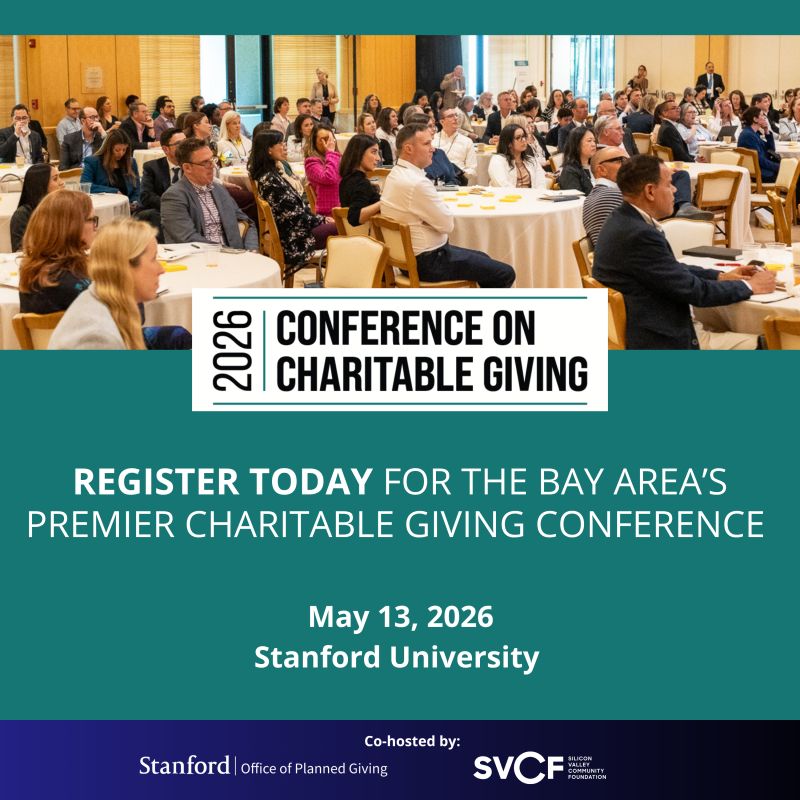
We're happy to announce that Matt McClintock will be presenting at the 2026 Conference on Charitable Giving, hosted by Silicon Valley Community Foundation and @Stanford University's Office of Planned Giving.
Matt’s talk, “A Framework for Bitcoin-Based Philanthropy,” will discuss how to integrate Bitcoin and other emerging assets into thoughtful, compliant, and impactful charitable strategies.
Learn more about the speakers and agenda below.
https://t.co/qU6dZW89HP