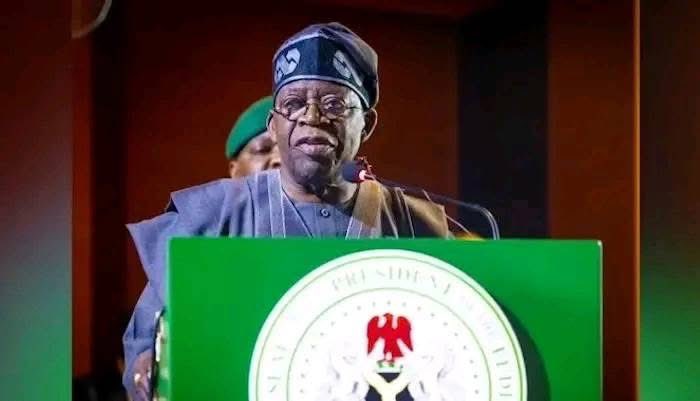
ICHEOKU says whenever some Nigerians accuse the president of “looting” borrowed loans, two things always floods my mind:
1. Do this people even know that international funds borrowed is usually attached to payments for projects, equipments, expertise, goods and services and is never given out to the borrower country in cash?
2. Do they even know how expensive power projects really are and that Nigeria is not rich enough to afford them in the volume that will actually end the power problem overnight.
Then will Nigerians actually agree to pay for the actual cost of having uninterrupted sufficient power? Power is not cheap. For an example, the Yangtze River Dam power project cost China over $22 billion USD to build.
Do the math and stop opining like a brainless cockroach that borrowed money are looted, because they are not. It is literally impossible to loot such money. The lender wants security for their money and they supervise such earmarked projects from start to finish to ensure that their return will be safely as agreed.
It is just like China borrowing Nigeria $3 billion for railway or some other projects. That money is not handed over to Abuja in cash. No, the Chinese lender will use the money to pay Chinese steel companies that will fabricate the rail tracks, Chinese companies that will manufacture the train engines and coaches, Chinese engineers that will come to Nigeria and build the railroads as well as logistics companies that will ship the equipments to Nigeria for installation.
That is how it works. So, please Nigerians, nobody is looting billions of dollars of borrowed money which they can’t even see nor touch. Which bank will they even stash the money?
This is very different from the Sani Abacha loot because he only directed companies purchasing crude oil from Nigeria where to make their deposit payments. Borrowing money is more secured than receipts on sold oil.
Nigerians are only keeping this belief that all money is looted, just to nurse their own greed so that they could justify their own actions when they eventually get an opportunity to lead at any capacity.
Nigeria has not over borrowed compared to countries like Egypt, South Africa and West African country of Senegal. Nigeria is credit worthy and can still take more loans to finance infrastructure. The unwarranted alarm against loans is symptomatic of economic and financial ignorance.
Some people ask, “What has Tinubu done?” and I honestly wonder whether they are ignoring reality or deliberately refusing to see the changes happening around them.
When this administration came in, Nigeria’s foreign reserves were around $3.9 billion. Today, they are close to $50 billion. That didn’t happen by magic. It took bold economic decisions, reforms, and leadership willing to make difficult choices for the future of the country.
For years, Nigerians suffered endless fuel queues. Spending hours, sometimes days, at filling stations became normal. Today, that ugly era is gradually disappearing. Our children may never experience the hardship many Nigerians faced just to buy petrol. That alone is a major achievement.
The floating of the naira created a more transparent system. Today, whether you are Dangote or an ordinary businessman, you access dollars based on the same market reality. That is a step toward fairness and economic stability, not backwardness.
Look around the country. Massive infrastructure projects are ongoing. Roads are being constructed with better quality and durability, unlike many of the poorly executed projects of the past that collapsed after a few years. These are long-term investments meant to outlive this administration.
No government is perfect, and challenges still exist, but refusing to acknowledge progress because of politics or hatred will not move Nigeria forward. Criticism is important, but honesty is also important.
Nigeria is bigger than political bitterness. We should support policies that strengthen the country, regardless of party affiliation.
Nigeria is working.
Tinubu will continue to fix Nigeria.
Senegal 2026 total budget: $13.2bn
Their fuel subsidy payment for 2026: $15.3bn
Fuel subsidy for Senegal is more than the total country’s budget by over $2bn
Senegal will totally collapse if they don’t stop fuel subsidy this week.
Thank you BAT for saving us!
Since Nigeria ended fuel subsidy, Senegal, Cameroon, Niger, & Chad saw financial crisis.
This is proof they were heavily benefiting from our cheap, smuggled fuel.
Nigeria was practically subsidizing the entire West African region.
The subsidy simply had to go.
You want the truth?
It has not. The reforms were not meant to improve the quality of life and living conditions of ordinary Nigerians in obvious ways yet.
According to IFC, reforms typically take between 2 and 10 years before ordinary citizens feel the effects in a broad and obvious way.
0–2 years: Citizens often feel the pain first:
-subsidy removal
-inflation
- currency devaluation
-layoffs/restructuring
- tax increases
2–5 years: If reforms are consistent, countries may start seeing:
-lower inflation
-currency stability
-improved investor confidence
-job creation in new sectors
-infrastructure improvements
5–10+ years: The deeper societal impacts usually emerge:
-higher incomes
-productivity growth
-stronger institutions
-better living standards
-more stable private sector growth
Everything listed above is according to the IMF, the OECD, and the WB. It is well researched especially during the reforms of the Asian tigers and Eastern Europe.
I can defend this further, but please tell me you rest this with honesty and you can't see that we are perfectly in line with the timelines.
I fear the mistake is that most media aides of the Presidency didn't communicate this well to people enough, and to be honest, I get it, nobody loves to hear that the next couple of years would be for suffering.
Curse out Asiwaju for the security issues all you want; I will totally support you. But you see this economy side: while more can certainly be done, the team has done the unprecedentals by African standards.
Egypt’s total debt is estimated at over $400 billion, with a GDP around $390 billion — debt-to-GDP above 100%.
South Africa’s debt is about $580 billion, with GDP around $420 billion — roughly 135% debt-to-GDP.
Nigeria’s total public debt is about $110 billion, with a GDP around $340 billion — roughly 35% debt-to-GDP.
Yet some people keep shouting that Nigeria is the “loan capital of the world.”
To them:
Loans are Haram.
Education is Haram.
Road construction is Haram.
Power projects are Haram.
Internet expansion is Haram.
Railway modernization is Haram.
Airport upgrades are Haram.
Seaport reforms are Haram.
Dams and agro-processing projects are Haram.
Solar energy expansion is Haram.
But the same people praise countries that borrowed far more aggressively to build infrastructure and grow their economies.
The difference between productive borrowing and reckless borrowing is simple: what the money is used for.
If loans are used to build roads, expand electricity, improve transport, increase internet access, modernize ports, support agriculture, and attract investment, those are long-term national assets.
President Bola Ahmed Tinubu says the focus is on infrastructure that can improve productivity and economic growth across Nigeria.
Criticism is normal in democracy, but opposing every single project simply because of politics helps nobody.
Development is not the enemy.
Underdevelopment is.
Some people are no longer in any coven.
They are simply online 24/7 wailing against everything.
Do you know where Indonesia was after the removal of subsidy? They were exactly where we are now!
In 2015, their inflation doubled to 8.3% and growth hit a 5-year low. The 'Obidients' of Indonesia were crying that the country was finished.
But they held the line. By 2016, inflation dropped to 3%, and today they are the 7th largest economy in the world.
Nigeria hit 34% in 2024(bcus of how heavily declined our economy was), and we’ve already dragged it to 15.69% in 2026. We are recovering FASTER than they did. Study history or stay silent! 🤫
Fun fact:
If Peter Obi makes sense to you, Tinubu will never make sense to you.
If Tinubu makes sense to you, Peter Obi cannot make sense to you.
These gentlemen operate on totally different IQ levels. If after watching Tinubu's outing yesterday, you still find it hard to understand him and you are clapping for "Mr I will run for a single term to bring stability", it speaks more about your IQ than anything else.
You had three (3) good years to strategically and systematically turn your renowned movement into a political party. But cluelessness and emotions fuels your passion to attack other thriving political structures and parties.
Peter Obi just happened to be their headache. The next amendment to the Constitution and the Electoral Act should allow for independent candidacy so we don't have to deal with all these unnecessary internal party disputes.
Section 221 of the 1999 Constitution states that no association other than a political party can canvass for votes for any candidate or contribute to election expenses. This effectively bars independent runs.
Court rulings (e.g., Amaechi v INEC) have consistently affirmed that there is no room for independent candidacy.
This is a bad law because it limits the ability of the masses to choose who will lead them. So, when people fault the Constitution, I truly understand their point. Peter Obi is undeniably disruptive to the status quo.
Mr. Morris Monye’s question is, with respect, a perfect illustration of why lawyers should not be engaging in legal arguments with non-lawyers. It is also why non-lawyers should avoid arguing points of law with lawyers. Law, especially procedural law, is not always intuitive; it is layered, technical, and structured. You cannot learn it by watching American movies or SUIT.
Now, to the substance.
Know that the Supreme Court is an appellate court. Its primary role is not to conduct trials or take evidence, but to review decisions of lower courts to determine whether they are legally sound. Trial courts ( like High Court or Federal High Court) are the courts of first instance. They are the ones constitutionally empowered to hear evidence, evaluate facts, and deliver judgment based on their findings.
This is how it works:
1. A matter begins at the trial court (e.g., Federal High Court). Upon final conclusion, we move to the next stage;
2. A dissatisfied party may appeal to the Court of Appeal.
3. A further dissatisfied party may approach the Supreme Court for a final review.
So what the Supreme Court does is to review. SC does not ordinarily originate or settle disputes, except in limited cases where it exercises original jurisdiction under Section 232 of the 1999 Constitution as amended.
In the instant case, the substantive dispute as to the legitimate leadership of the ADC was still pending before the Federal High Court. That is the court properly seized of the matter.
When Nafiu Bala approached the Federal High Court claiming he should become Acting National Chairman and alleged that his purported resignation letter was forged. He sought ex parte reliefs, but the court, in its wisdom, refused to grant them immediately and instead ordered that the affected parties (including David Mark) be put on notice.
Rather than respond to the substantive suit, counsel for the respondents appealed that interlocutory decision to the court of Appeal. Court of Appeal dismissed the appeal and, more importantly, granted a preservatory “status quo” order. At that point, the matter had still not been heard on its merits at the trial court.
When the case got to the Supreme Court, SC rightly observed that the appeal itself was incompetent because the appellants failed to obtain the required leave. Once an appeal is incompetent, everything built on it collapses. So the SC has no other choice than to order parties to go back to the Federal High Court where the main suit was pending.
So, the Supreme Court did not “refer” the case back in the sense of delegation. It simply did the needful by striking out an incompetent appeal and directing parties back to the only court that could validly determine the dispute.
Supreme Court cannot settle all disputes because it is the highest court in the land. The law requires that the right court handles the right issue at the right stage. It’s Federal High Court that will let us know ADC legitimate leadership. Till then, we anticipate!
Thank you.
I will support Peter Obi if you guys can show us one major infrastructure he built in 8 years that’s still standing today.
Just one.
This is a simple challenge.
When my late Grandfather was diagnosed with prostate, this food combination was part of his daily diet and it actually worked for him.
So if you have signs of prostate cancer try this out.
Thank you, Mr Gregory Peter Obi @PeterObi . If you notice, based on your tweet as a private citizen of Nigeria which you posted on 04/09/2022 regarding removing multiple exchange rates, President Tinubu heard you and others as a listening President and fixed it.
However, since you spoke your truth, that truth has been tested, but has now been twisted and flailed by you on various forums.
You once argued for discipline in markets, today you dance around the consequences of that very discipline. You once called for courage in policy, today you retreat into comfort in opposition and say it was wrong. What changed, sir? Was it the idea or the identity of the man who chose to act on it?
The current President, our President, Bola Ahmed Tinubu, did exactly what you prescribed. Not in theory, not in tweets, not in tidy sentences, but in the hard, grinding reality of governance. He allowed the market breathe. He removed the distortion. He faced the storm. You asked for demand and supply, you got demand and supply, yet now you resist the very medicine you prescribed.
May I call it what it is? What you have been doing is not economics and not policy. It is performance.
Why? Because leadership is not about saying what sounds right, it is about doing what is right. And doing is different from saying, just as courage is different from commentary.
You say let the market decide, yet when the market decides, you decide to disagree. You say it is simple, yet you complicate it with selective memory. You preach consistency, yet you practice convenience.
So we must ask, and we will keep asking. What changed?
Was it conviction or calculation?
Was it principle or politics?
Was it belief or benefit seeing that you are now in bed with those you said are the problems of Nigeria?
Policy without consistency is noise, and consistency without courage is nothing.
Or was that tweet, like too many things we have seen, a careful copy without commitment, a borrowed thought without ownership, a manifesto stitched together from the ideas of others without the discipline to defend them when it matters?
You cannot demand reform and then reject reform. You cannot call for fire and then complain about heat. You cannot stand on principle and then step off it when it becomes inconvenient.
Say what you mean, Mr Gregory Peter Obi and mean what you say. Also stand where you stood because in the end, the test of leadership is not what you once tweeted, it is what you are willing to defend when those tweets come alive.
President Bola Tinubu will continue to Listen and act in the overall best interest of Nigerians.
Otega Ogra
The truth is that for long market forces have not determined the exchange rate of the Naira. The two tier foreign exchange regime is a fluke. It has to end. Let the exchange rate be determined by the forces of demand and supply. It is that simple.
Let us reflect, sincerely and without sentiment.
In the past few days, the President has reportedly approved ₦3.3 trillion as a “full and final” payment for debts in the power sector. Yet, this is not the first time such approvals have been made.
On May 17, 2024, ₦3.3 trillion was approved for the same purpose. On July 25, 2024, another ₦4 trillion bond was approved to settle similar debts. There have also been other approvals in between, all targeted at addressing the same power sector liabilities.
This raises a fundamental question: were the previous approvals mere announcements without execution?
₦3.3 Trillion Again? Nigeria’s Power Crisis Without End
During the 2023 campaign, President Bola Ahmed Tinubu made a clear promise: that if he failed to deliver stable electricity, Nigerians should not re-elect him. Today, the reality is that power supply has worsened, to the extent that there are even discussions about disconnecting the Presidential Villa from the national grid.
Each time legitimate concerns are raised, what we see appears more like policy pronouncements than measurable progress.
Now, again, we are confronted with another ₦3.3 trillion approval to settle power sector debts.
These debts were largely accumulated under successive administrations of the All Progressives Congress between 2015 and 2025. This raises serious concerns about accountability, transparency, and effectiveness in public financial management.
It is important to note that government institutions and agencies, including the Presidential Villa owe a significant portion of these debts. Year after year, budgets were made and funds appropriated. Why then were these obligations not settled when due? And from what source will this new payment be made? Are we resorting once more to borrowing to service inefficiencies?
Key questions remain unanswered: How did the debt accrue? What is the actual total debt in the power sector? Which components of the debts are due to operators’ inefficiency and should be borne by them? Why have previous approvals not translated into tangible improvements? Who are the real beneficiaries of these repeated payments?
Is the ₦3.3 trillion approved on April 6, 2026, the same as the ₦3.3 trillion approved in May 2024, and how does it relate to the ₦4 trillion bond approved in July 2024?
Nigeria must move beyond recycled announcements and confront the power sector crisis with sincerity, transparency, and decisive reforms.
Until we do so, we will remain trapped in a cycle of debt and darkness.
But with discipline, accountability, and the right leadership, a new Nigeria is still possible. -PO
@osazenoo Subsidy funds. The way infrastructure development accelerated at all levels during Tinubu summarises the sad fact that we were eating infrastructure and our future in the past. States used to owe salaries on top of that.