An @ESRC funded project examining the social psychological processes underpinning the spread of emotion, ideas and behaviour within and across crowd events.
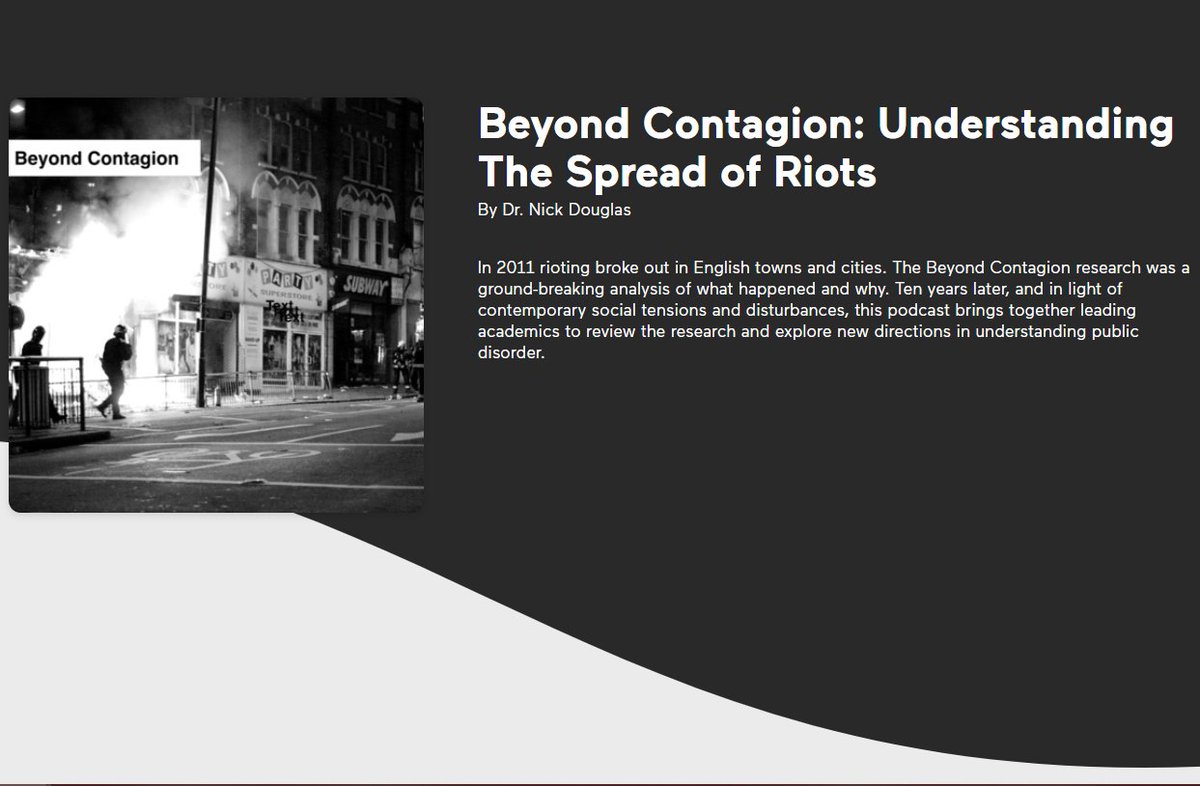
New - @ESRC@BeyondContagion - the podcasts. Ten years since the 2011 English riots, reflections on crowds, riots, identities, empowerment, history, and, more recent mobilizations:
Please share.
https://t.co/oqLI833MUC
Steve Reicher from the @BeyondContagion project explains the social processes underpinning the protests and riots in China in @guardian:
"What we have witnessed is not mindless copycatting. It is a process of empowered identification".
https://t.co/fmL4Cvhgsl
New - @ESRC@BeyondContagion - the podcasts. Ten years since the 2011 English riots, reflections on crowds, riots, identities, empowerment, history, and, more recent mobilizations:
Please share.
https://t.co/oqLI833MUC
Three short (20ish mins) podcasts explaining our work on the @BeyondContagion project featuring @ProfJohnDrury@cliffordstott @ReicherStephen @dodger1012 and myself.
Discusses the 2011 riots and how collective violence spreads.
Please listen and share!
https://t.co/B4q1pktTXk
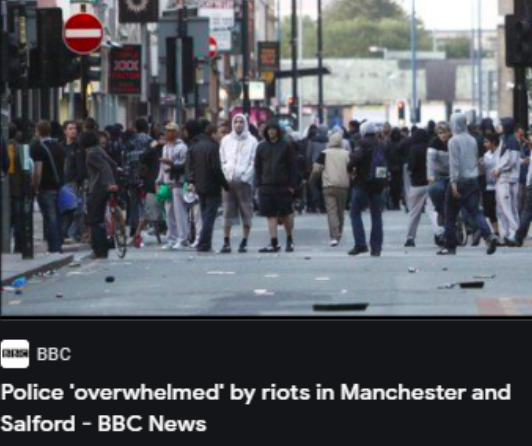
Our @ESRC@BeyondContagion paper on the role of police actions in spreading rioting to Salford in 2011 has just been accepted in @PolPsyISPP
Read the pre-print here.
10 years since the English riots
Waves of riots tell us about deep societal problems
& widespread alienation. This is why we have to
listen to them & engage with them with a new discourse.
Read our @ESRC@BeyondContagion report
https://t.co/JMy1UPxFjp
In sum, pre-emptive mobilization by police based on concerns about rioting in their local area operated as self-fulfilling prophesy by drawing & antagonizing a crowd.
@ESRC@BeyondContagion
Pre-print here - please share:
https://t.co/W81c4gY3ZA
'Compared to those places that didn’t see rioting, those London boroughs that saw rioting had significantly more deprivation, many more police ‘stop and searches’, and more negative public attitudes to the police', writes @ProfJohnDrury
https://t.co/3eLuLTvQe8
10 years since the #riots@BeyondContagion
10/N
For some (e.g. in Croydon), rioting in other cities was empowering; it showed the vulnerability of a common enemy (the police).
In all locations, meta-perception mediated links between initial perceptions &collective action.
A decade ago this week, fires raged across the country. In this week's issue, we talk to social psychologist @ProfJohnDrury, whose latest research finds that police expectations fuelled riots in Salford.
Available from your local vendor or online: https://t.co/4YiMHQqkgk
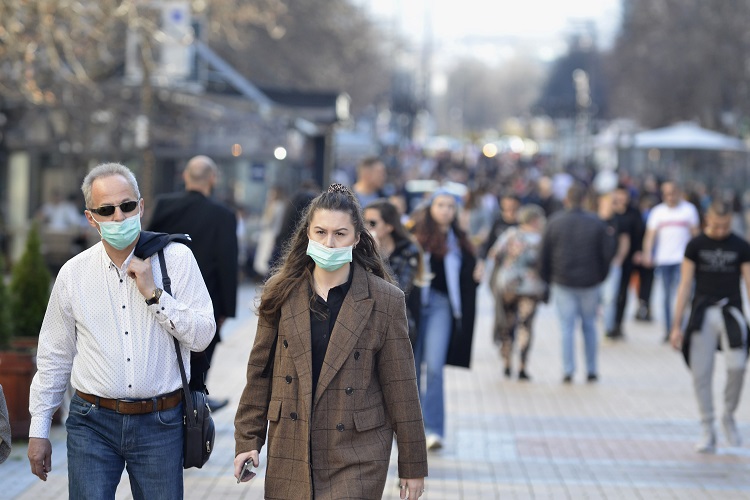
New research by @FergusNeville and @ReicherStephen with @SussexUni & @ucl sheds fresh light on how people in groups follow the behaviour of others - which can help understand human behaviour in relation to #Covid19 restrictions - @PLOSONE
https://t.co/EZLwnlDRTv
#evertoexcel
#COVID19 demonstrates the importance of the examples set by ingroup members. When they wear 😷 and keep their distance, it reminds us that we should too
@ProfJohnDrury of @Sussex_Psych on the significance of his new research with @univofstandrews@ucl
https://t.co/paBcfCKrft
Just published: 'Crowds & Collective Behaviour' our encyclopedia on the latest thinking on crowd psych. Available from your university library (& Researchgate in due course)
https://t.co/TGgGCNCFDo
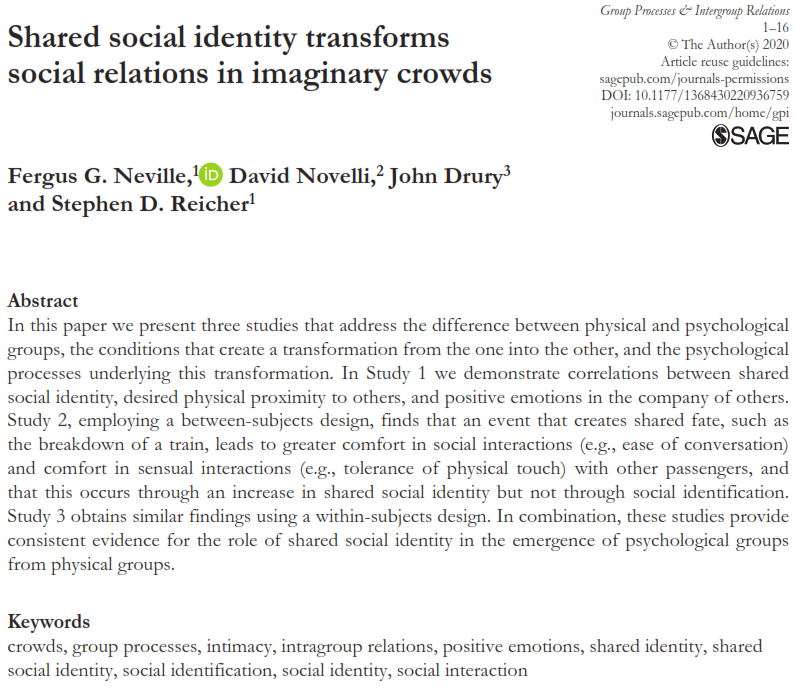
New paper in @GPIR_SAGE!
We show the role of shared social identity in the emergence of psychological groups from physical ones.
Shared fate manip→Shared identity→Comfort in social/ sensual interactions
https://t.co/LRWE6mrgEG
w/@novelli_david@ProfJohnDrury @ReicherStephen
Come and work with us!
TWO post-doc positions based @univofstandrews in the Schools of Management (@UStASoM) and Psychology (@st_psy) - see details below.
Please share widely!
After George Floyd: Why does civil unrest spread between cities?
New blogpost on the @ESRC@BeyondContagion research and what the 2011 English riots can tell us about current events
https://t.co/wimKOC1FqT
Thanks to @sanjeedah for web stuff