In the newest article on our website, Samuel Sadler reflects on some progressive hangovers in the classical education movement today.
How should we structure our school days?
https://t.co/LEFcgc66h5
A classical education will be the only one that matters in a technological future.
The biggest educational flex in 10 years will be a teenager who can recite Shakespearean sonnets, play Bach, and write beautiful letters by hand.
Education must furnish the mind with beauty.
"Christian education is: the deliberate formation of a person by guiding them towards truth, goodness, and beauty, through nurture and discipline."
Read Simon P. Kennedy's article, "Christian Education, Character, and Wisdom" at the Beza Institute Blog.
https://t.co/B1RjowYhLS
In his recent article for the Beza Institute, @DavidSeibel10 reviews Keith McCurdy's "Raising Sturdy Kids" published by Classical Academic Press.
"One of the strengths of Raising Sturdy Kids is that McCurdy begins with the transcendent (or absolute, or normative) instead of pragmatic techniques. Many parenting or classroom management books jump straight into techniques whereas McCurdy goes straight to the reality that good parenting flows out of right relationship with God and spouse."
https://t.co/gf8dnfw2fV
@IVMiles Reminder for everyone to go read @regressivewhig's article at American Reformer promoting a specifically America oriented classical education.
https://t.co/O2ogv57ImX
For many, the pagan classics can seem out of place in a Christian curriculum. In his latest for the Beza Institute Blog, Nate Weiland reflects on reading Homer as a Christian.
https://t.co/Pc9NS7xD9k
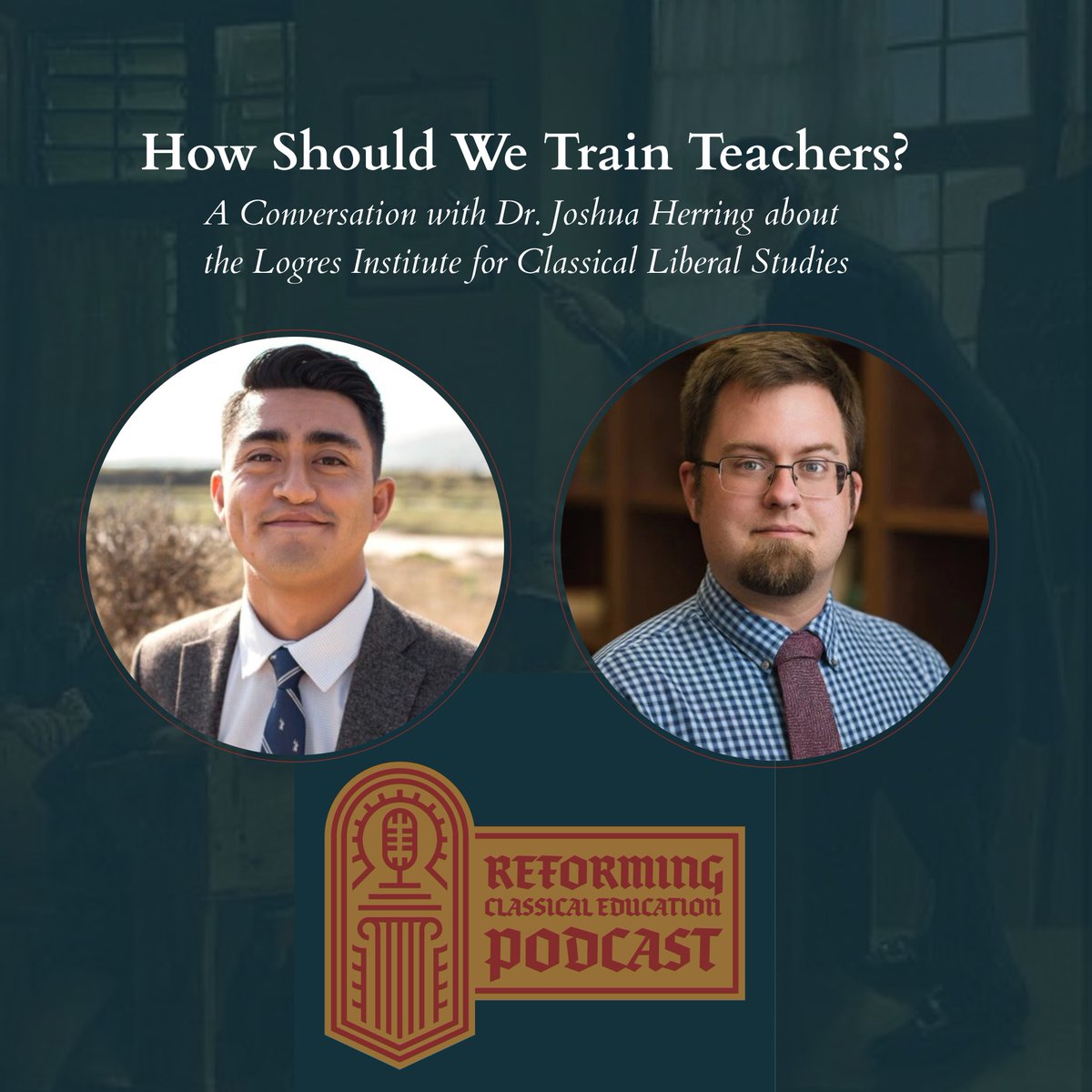
How should we train teachers?
In the most recent episode of the Reforming Classical Education Podcast, Lucas Vieira talks with Dr. Joshua Herring (@TheOptimisticC3) about the task of forming classical teachers and the new @LogresInstitute. Be sure to give it a listen!
"Education is more than the flimsy transfer of information from person to person. It is an enculturating process that invites the young to uphold an inheritance given to them as a gift by parents, teachers, mentors, and society." - @john_weichel
https://t.co/7hIMVEcUUP
How should we teach the liberal arts?
In his latest article for the Beza Institute, Jake Thompson turns to Hugh of St. Victor to recover enduring wisdom for classical Christian educators on teaching the liberal arts. Be sure to give it a read!
"Hugh encourages teachers, when teaching students any art, to teach it clearly, briefly, and simply in order to affect easy understanding and prevent distraction. Hugh writes that when 'we treat of any art—and especially in teaching it, when everything must be reduced to outline and presented for easy understanding— we should be content to set forth the matter in hand as briefly and as clearly as possible, lest by excessively piling up extraneous considerations we distract the student more than we instruct him.'"
https://t.co/EQLdYy0OAf
What might Jonathan Edwards have to teach us about enthusiasm in Classical Christian Schools? Check out Dr. David Seibel's recent article at the Beza Institute!
https://t.co/PFc0e6sEGZ
The King Arthur myth is unique in two key ways. First, it was born in a Christian world. In this way, it is not like The Iliad, The Odyssey, or The Aeneid which were created without Christian roots. Those other myths are powerful stories and offer key insights into human nature. But the Arthur myth is not from the pagan world. It is a Christian epic. It has a wide range of tales and some are more Christian than others but the basic outline of King Arthur has numerous Christian themes.
Second, the King Arthur myth is rooted in English language and culture. Other epics like the Divine Comedy are Christian but are not original to English. This means the King Arthur myth reveals something important about English that we cannot learn through those other myths. Just as the Iliad reveals Greek culture so King Arthur reveals English culture. The English language is also bound up in the myth in such a way that there is something deeply English about it. To speak English is to walk in the same world as King Arthur.
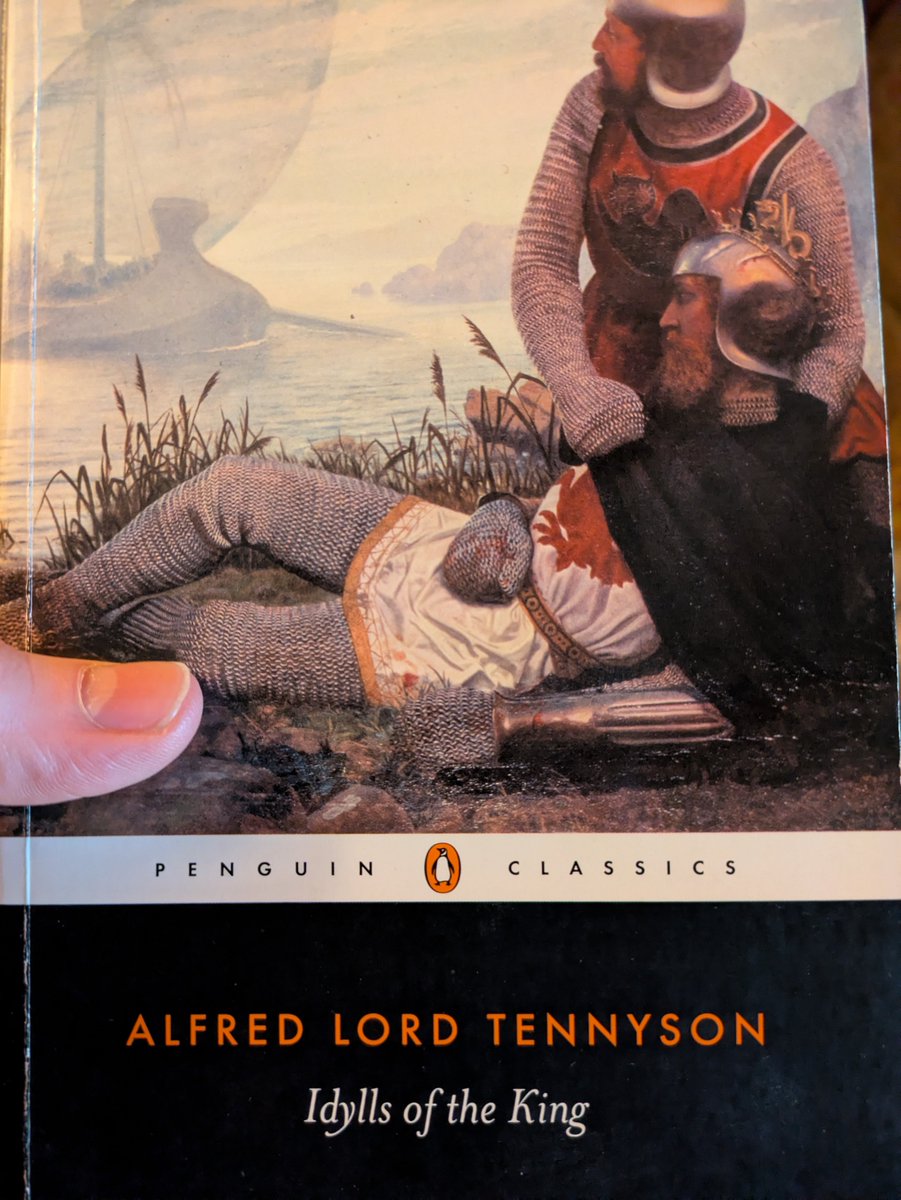
If you want to dig into this Christian myth, I highly recommend the Idylls of the King by Alfred Lord Tennyson. It is accessible and also taps into the many profound themes of Arthur: godly rulers, betrayal, forgiveness, and consolation. And it points vividly to our ultimate hope in the returning king.