Gates of Olympus Roulette 🏛️
The gods are calling. ⚡
Bet R20 or more on Gates of Olympus Roulette and take your shot at legendary wins.
👉 https://t.co/AxM7np5Aot
18+ Only. Ts & Cs Apply. Please Gamble Responsibly.
This is also why I believe our High Commissioner to India, Anil Sooklal, should not be made to carry the political fall-out from the Zuma private visit.
The South African diplomatic mission in India had an obligation to assist a former president within its jurisdiction. That does not mean the High Commissioner endorsed Jacob Zuma’s political activities, nor does it mean that the South African government endorsed whatever political or personal engagements Zuma may have undertaken during his visit.
It simply means that a former head of state was in a foreign jurisdiction under the responsibility of a South African diplomatic mission.
What would have happened if something seriously bad and unfortunate had happened to Zuma while in India? The consequences would inevitably have had diplomatic implications for South Africa, and our mission would have had to account for its handling of the situation.
Providing appropriate diplomatic assistance to a former president is therefore not necessarily political endorsement. It can simply be the responsible exercise of a diplomatic mandate.
Our diplomats must be allowed to do their jobs without being dragged into the politics of the day.
There is a broader lesson here for South Africa.
We must stop designing institutions around personalities.
Presidents come and go. Ministers come and go. Political parties rise and fall. Opposition leaders change. But institutions are supposed to outlive all of us.
If there is a genuine gap in the framework governing diplomatic support to former presidents, close it.
If disclosure requirements are necessary, introduce them.
If there are concerns about security, diplomatic protocol, state resources or the possibility of foreign governments misrepresenting the position of the South African government, regulate those matters clearly.
But do it prospectively, consistently and without targeting an individual.
Because today it may be former President Jacob Zuma. Tomorrow it may be someone else.
The real test of a democratic institution is not whether it can be used effectively against a person we dislike or disagree with. The real test is whether the same institution would still be considered fair if the political circumstances were reversed.
South Africa has worked too hard to build a constitutional democracy to allow the boundaries between party, government and state to become blurred again.
The ANC is a political party. The government is the government of the Republic. DIRCO is a state institution. Our diplomatic missions represent the Republic.
Those distinctions must remain clear.
And perhaps the most important principle of all is this: we should not be afraid of former presidents being politically active. We should be confident enough in our democracy to allow them to exercise their rights while ensuring that everyone understands who speaks for the government of the day.
That is how mature democracies operate.
The answer is not to silence or over-regulate former presidents.
The answer is to strengthen our institutions, sharpen our diplomatic communication and make the rules clear enough that nobody either foreign or domestic; can deliberately confuse a former president's private or political activities with the official position of the Republic of South Africa.
That would serve the country far better than allowing a legitimate diplomatic question to become another battlefield for domestic politics.
4/4
Otherwise, the legitimate question becomes: is this really about strengthening the institution, or is it partly about politics?
That is not an accusation against Minister Lamola. It is a governance question that deserves an honest answer.
We cannot build strong institutions by creating rules that appear neutral on paper but operate differently depending on the political identity of the person involved.
South Africa's Constitution gives citizens the right to political affiliation and association. A former president does not lose those rights simply because they once occupied the highest political office in the country.
We must therefore accept that a former president who is now associated with an opposition political party will inevitably advance political positions internationally that may not correspond with those of the ANC or the sitting government.
That is not necessarily a constitutional crisis.
It is democracy in action.
The diplomatic challenge arises when foreign governments or foreign political actors deliberately exploit that distinction. If a foreign government knows perfectly well that a former president is no longer representing the South African government, but nevertheless attempts to use that former president to create the impression of official South African endorsement, then the appropriate response must be diplomatic.
DIRCO must engage those governments.
Our diplomatic missions must clarify who officially speaks for the Republic.
Foreign governments must understand that meetings with former presidents do not automatically constitute engagements with the South African government.
That is where our diplomatic machinery should be firm.
We should not blame the private travel of former presidents for the opportunism of foreign state actors.
If another government chooses to blur the line between a former president and the sitting administration for its own political purposes, South Africa must address that government through diplomatic channels. We should not necessarily respond by restricting the constitutional freedoms of our own citizens.
3/4
We see similar realities in the United States, Kenya, Zambia and Botswana to name a few, where former presidents remain politically active, travel internationally, engage with foreign governments, institutions and political actors, and continue advancing their own political, social or philanthropic interests. Yet there remains a fundamental diplomatic understanding about one simple principle: a former president does not speak for the sitting government unless formally mandated to do so.
That is the distinction South Africa should strengthen rather than trying to regulate political activity itself.
The question therefore should not be: How do we stop a former president from travelling or pursuing interests abroad?
The question should be: How does the South African state ensure that foreign governments and foreign political actors understand exactly who represents the Republic of South Africa?
Those are two very different questions.
The state has every right to protect the integrity of its diplomatic representation. It has every right to insist that former office-bearers who receive state-funded diplomatic assistance make appropriate disclosures, particularly where there may be a genuine conflict of interest, security concern or risk of diplomatic confusion.
But that must be done institutionally, consistently and without designing policy around an individual.
We should be honest about the political reality as well.
Former presidents Thabo Mbeki and Kgalema Motlanthe continue to travel internationally and advance the interests of their respective legacy foundations and other personal initiatives. There is nothing inherently wrong with that. Former leaders remain citizens, and they retain the constitutional rights enjoyed by everyone else.
The difference, however, is that both the latter remain associated with the ANC, which remains in majority as part of the governing arrangement. That inevitably creates a perception that their international engagements are more naturally aligned with the interests of the government or, at the very least, are less politically uncomfortable for the governing establishment.
This is precisely where the proposed framework requires careful examination.
If the underlying principle is genuinely institutional, then the same rules must apply regardless of whether a former president remains within the governing party, belongs to an opposition party, supports another political formation or has withdrawn from active politics altogether.
2/4
WHEN DIPLOMACY BECOMES POLITICS: SOUTH AFRICA MUST BE CAREFUL WITH HOW IT REGULATES FORMER PRESIDENTS
There is a very important conversation that needs to be had about the proposal being advanced by our International Relations and Cooperation Minister Ronald Lamola regarding a stricter framework for former presidents and deputy presidents who require state protocol and diplomatic support when travelling abroad.
The proposal, as I understand it, seeks to require former presidents and deputy presidents to provide fuller disclosures before receiving such support. In many respects, the thinking behind this is understandable, particularly in light of the perceived controversy surrounding former President Jacob Zuma’s recent private visit to India, where he met with Ajay Gupta.
But as novel as the proposal may sound, I think the Department of International Relations and Cooperation, and Minister Lamola in particular as the executive authority responsible for the department or ministry, must tread very carefully here.
We must be careful not to make a political decision to cure what is fundamentally a diplomatic and institutional problem. That distinction matters.
If we begin creating government rules primarily in response to the conduct of a particular former president, we run the risk of politicising the state apparatus for political expediency. And that is a dangerous road for a maturing democracy like South Africa, because rules created today to deal with one political personality can easily become instruments used against another tomorrow.
Over-regulating the international travel of former presidents, who are now private citizens, is therefore a very risky line to cross.
We really do not have to look very far for lessons. Zambia’s difficult relationship between the sitting President Hakainde Hichilema and his predecessor, the now late Edgar Lungu, should serve as a reminder of how quickly the relationship between a sitting administration and a former president can become politically charged. Once the state begins treating the activities of former presidents through a political lens, the distinction between legitimate state interests and political interests can become dangerously blurred.
South Africa has also matured democratically to a point where we must accept a reality that perhaps our institutions have not fully adjusted to yet: we can now have a former president who is no longer part of the governing party and who is instead associated with, or leads, a different political formation.
That is democracy.
1/4
Champions at Play
The action is heating up. 🏉
Join Champions at Play 2026 for your chance to win a share of R100 000 in cash and Hollywoodbets betting vouchers.
👉 https://t.co/AxM7np5Aot
18+ Only. Ts & Cs Apply. Please Gamble Responsibly.
Let’s try for another BOOM 💥 💪🎾
🎾🎾🎾🎾🎾🎾🎾🎾🎾🎾🎾🎾
I just placed a bet with Betway. Tap here to copy my bet or search for this booking code in the Multi Bet betslip BW661FC088 https://t.co/qCzURyZGQn
🎾🎾🎾🎾🎾
I just placed a bet with Betway. Tap here to copy my bet or search for this booking code in the Multi Bet betslip BW65D39530 https://t.co/eDnVWLdiVT
The PSL is back. ⚽🔥🇿🇦
I just placed a bet with Hollywoodbets! Tap the link to see my bet https://t.co/M8H4ZY93by OR use 1399233938 in the betslip
👉 https://t.co/AxM7np5Aot
18+ Only. Ts & Cs Apply. Please Gamble Responsibly.
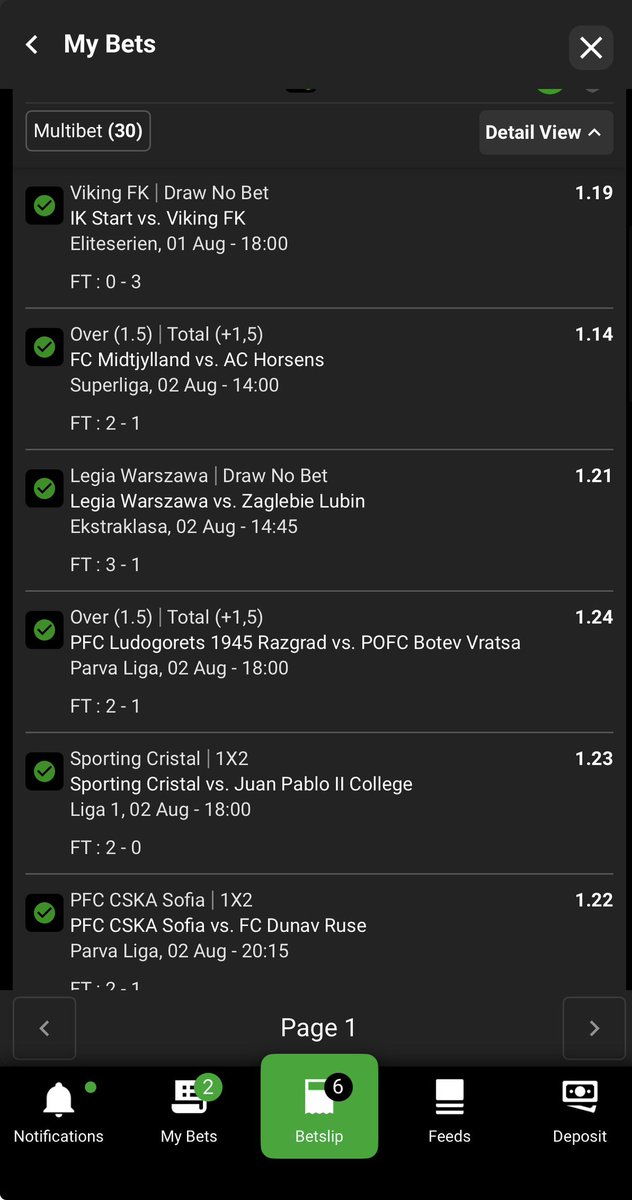
214 odds 💰 ⚽️
It is nearly time for football’s return! ⚽️💪 🔥
I just placed a bet with Betway. Tap here to copy my bet or search for this booking code in the Multi Bet betslip BW65D0FD58 https://t.co/KTGGQr7Bfy
PSL Selections ⚽️💪🔥
I just placed a bet with Betway. Tap here to copy my bet or search for this booking code in the Multi Bet betslip BW65D1642F https://t.co/6Tazg01IIM