THIS THING COMING AT YOU
Duke University had developed Argus, a 20-legged robot equipped with a camera on each leg, drawing inspiration from the visual system of the sea urchin.
Vibe coders are getting sued.
People are shipping apps with real users and skipping the boring stuff that kills them.
A 20+ year dev shared the pre-launch checklist every AI builder needs.
I added what I learned after shipping 60+ apps at the agency.
Don't skip this:
1. Protect yourself, not just your app. The moment you collect user data you're in legal territory (GDPR, CCPA). Have a privacy policy. Know where user data lives.
2. Row Level Security. Without RLS, anyone can open DevTools and read your entire database. Supabase → Auth → Policies. Zero policies means your app is naked. 5 min to fix.
3. Test the failure path, not just the happy path. Wrong password 5x. Reset for an email that doesn't exist. Verification link clicked twice. Signup with an existing email. Catches 80% of auth bugs.
4. Security baseline in 2 min. Prompt your AI: "Review my app as a security specialist and make sure I have strong security headers and a solid baseline security posture."
5. OWASP. Prompt: "Review my app against OWASP standards and highlight vulnerabilities." This is where SQL injection, XSS and auth bugs actually get caught.
6. Client-side validation is UX, not security. Attackers disable JS and hit your API directly. Validate again on the server. Every time.
7. AI code leaks data in 3 spots: .env values in the frontend, API responses returning too much, secrets in logs. Prompt: "Check my app for credential or sensitive data leaks in frontend or API routes."
8. API keys in the frontend means game over. If it's in the browser, assume it's already taken. Move it server-side or proxy it.
9. Rate limits before someone burns your API bill. Cap every endpoint hitting a paid API. I've watched a Supabase bill jump from $20 to $200 in a day.
10. CAPTCHA on public forms (Cloudflare Turnstile is free) plus CORS locked to your domain. 10 min, kills bot floods.
11. Error messages that don't leak. "User not found", not "SELECT * FROM users failed". Log full errors server-side, show users generic messages.
Build fast. Just don't ship naked.
(full breakdown in my article below)
A Stanford neuroscientist warns high cortisol wrecks memory, enlarges your fear center, and make your brain feel broken.
If I wanted to fix it naturally, I'd do these 8 things every day:
1. Walk barefoot on grass for 5–7 minutes.
Anthropic engineer:
"You're not supposed to prompt Claude. You're supposed to build a system that prompts itself."
this is one of the best workflows I've seen in a long time
in this video he breaks down exactly how most people are using Claude:
- the 14% you lose to CLAUDE.md before typing a word
- the plugins that 95% of users have never installed
- the caching setup that keeps it at 95% hit rate and almost free
- why starting every chat from zero is the slowest way to use Claude
if you've been using Claude for more than a month and never left the chat window, you've been using one project when you could be running a team of them
instead of another show tonight, watch this
make sure to bookmark it before it gets lost in your feed
full guide in the article below
India trains the engineer.
America files the patents.
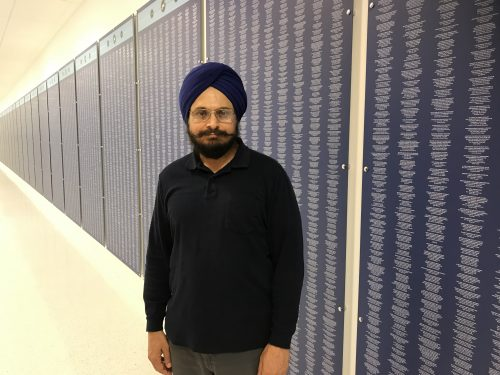
Gurtej Sandhu was raised in Amritsar and trained at IIT Delhi.
He now holds 1,299 US patents at Micron, Edison topped out at 1,093.
Sandhu is the 7th most prolific inventor in American history.
His titanium nitride deposition work is why every DRAM cell in your phone and every GPU training a foundation model actually holds charge.
Micron, Samsung, and SK Hynix own 95% of global DRAM.
None of them are Indian.
We export the inventor.
We import the chip.
the engineer who built Claude Code just dropped a 28-minute video on how to write prompts that actually work
I've seen $300 courses that don't cover what he shows in the first 10 minutes
CLAUDE.md files, memory shortcuts, parallel sessions, prompting patterns
all in one video and completely free
works whether you're a developer, a beginner, or someone who's been using Claude for months
based on this, I put together 18 things you can copy and use in Claude today
full guide in the article below
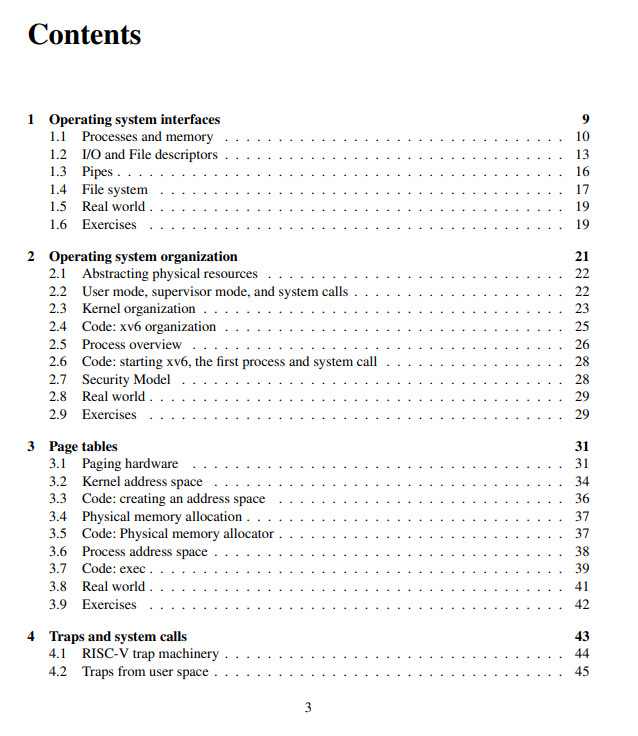
MIT teaches operating systems by giving students a complete Unix like kernel and asking them to modify it
it is called xv6 and is about 6000 lines of C a reimplementation inspired by Unix Version 6 from 1975 rewritten in modern C for x86 multiprocessor
processes system calls virtual memory and filesystem are all there and small enough to read end to end in a weekend
this is what you study to understand how operating systems actually work not just how they are described
Most people see a street. He sees $300-600 per block.
A 24-year-old from Chengdu figured out that every hotel, every apartment, every commercial space within walking distance is an untapped asset. One nobody has packaged yet.
He straps a rig to his back, walks in, spends twenty minutes scanning the space, and leaves with a file that lets anyone on earth stand inside that room from their couch.
The client pastes a link on their booking page. Guests tour the property before they arrive. Cancellations drop. Reviews go up.
He gets paid $400 for the scan. $99 every month for hosting.
The technology: 3D Gaussian Splatting. Free on GitHub since 2023. The app: Luma AI. Also free. The page he delivers: built by Claude in ten minutes.
Total tool cost: $20/month.
Month one: $3,500. Month six: $18,000.
The streets haven't changed.
He just started charging for them.
Netflix, Wikipedia, Airbnb, Dropbox ~ all run on the same web server.
One quiet Russian engineer wrote it alone. For free. 🤯
Meet Igor Sysoev 🇷🇺
> Russian software engineer. Born 1970 in Soviet Kazakhstan.
> Failed his first university entrance exam.
> Joined Rambler in 2000 as a system administrator.
> 2002 ~ started writing a new web server in his free time. Alone.
> Goal: handle 10,000 simultaneous users on one machine ~ a problem Apache (the dominant web server at the time) couldn't solve.
> 2004 ~ released nginx publicly. Free. Open source.
> Zero marketing. Zero PR. Just the code.
> 2008 ~ nginx was serving 500 million requests per day at Rambler.
> 2011 ~ founded Nginx Inc. with co-founder Maxim Konovalov.
> 2013 ~ Netflix scaled its streaming CDN to 40 Gbps per server using nginx.
> 2019 ~ F5 acquired the company for $670 million.
> December 2019 ~ Russian police raided his Moscow office over a fake copyright claim.
> The Russian tech community publicly defended him. Charges were dropped.🚀
> 2021 ~ nginx overtook Apache as the #1 web server on Earth.
> 2022 ~ left F5 quietly. No farewell tour. No book deal.
> Today nginx powers Netflix, Wikipedia, Airbnb, Dropbox, Cloudflare, WordPress.
> 33% of every website on Earth runs on his code. Apache trails at 26%. Microsoft's IIS isn't even close.
> Still 100% open-source. Still free.
One man wrote it alone, in his free time, for free.
He never sought publicity. He never asked for credit.
A third of every website on Earth still runs on his work.
Webserver GOAT. 🐐
Anthropic pays $750,000+ a year for engineers who can build LLM architectures from scratch. Stanford taught the entire thing in 1 hour lecture & released it for free.
Bookmark & watch this today before someone takes it down.
This 2 hour Stanford lecture shows exactly how Stanford trains it's engineers to build AI systems. It's more practical than every Claude tutorial & prompting threads you've seen.
Bookmark & give it 2 hours, no matter what. It'll be the most productive thing you do this weekend.
bro was right.
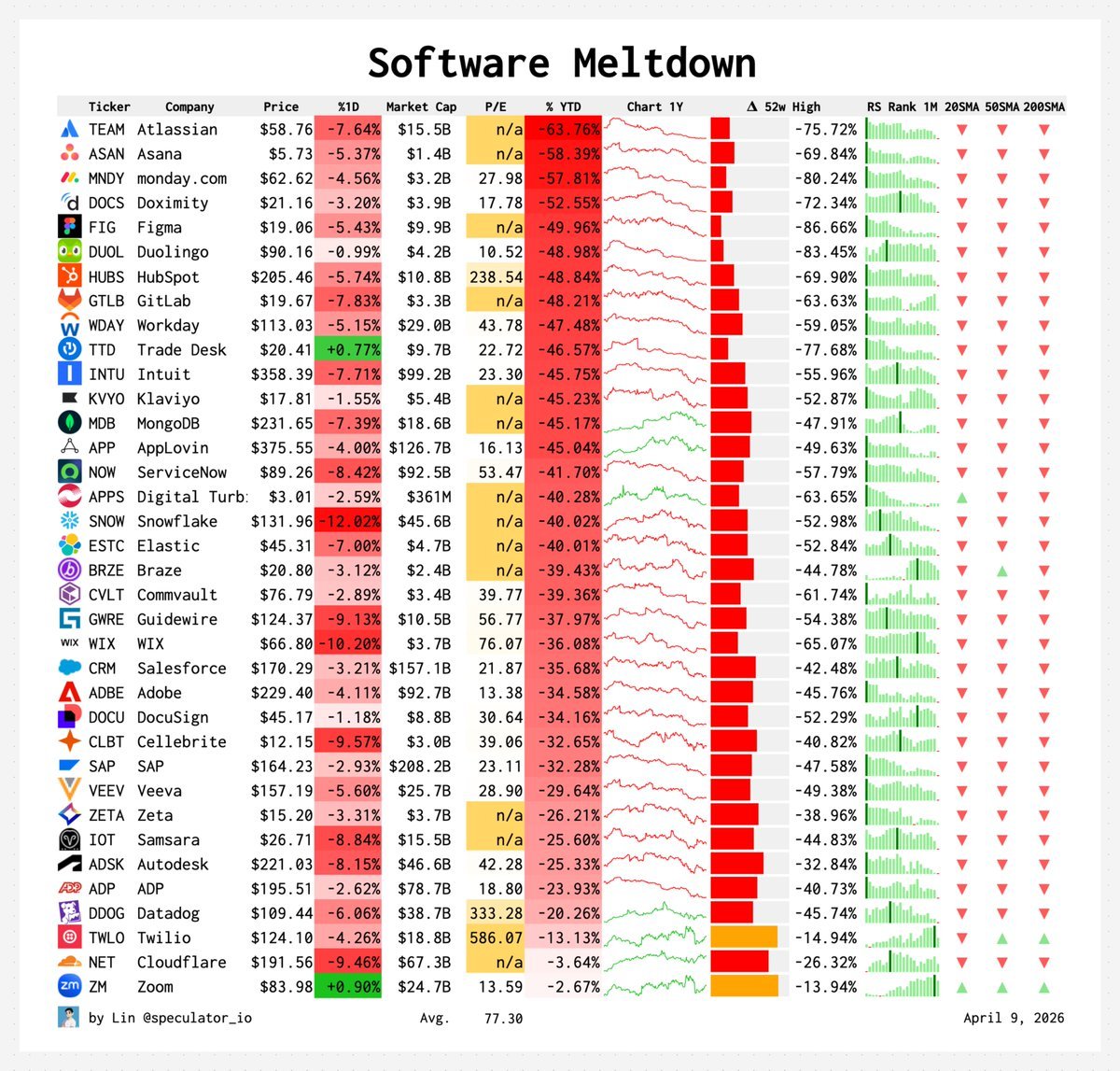
Atlassian down 75%. HubSpot down 69%. Figma down 86%.
Almost all of them down 30–70% from their 52-week highs.
AI is literally eating software alive and repricing every company in real time.
SaaS is cooked fr 😭