Enseigne l'histoire. Antilibéral nostalgique donc suspect mais inoffensif. Lubitsch, Bolívar, Marx, Guénon, Bon Scott. Le cinéma N&B comme religion. Et Murnau!
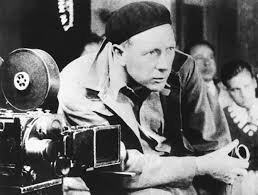
Incapable de répondre à cette sempiternelle question d’amphi : “Le plus grand cinéaste ?” Pourtant, un recoin d’ombre, un plan déchiré, un nom taillé dans la lumière oblique: Murnau! Pas le plus grand NON le plus génial.
📚 I haven’t read the book reviewed by @simonmontefiore and can’t access the review but this reminds me that in 1990, French politician Philippe Séguin published a book titled ‘Louis Napoléon le Grand’, a powerful political rehabilitation of Napoleon III.
Written by a charismatic Gaullist statesman with a strong sense of national sovereignty and social reform, the book attempted to rescue the emperor from the dark legend created by Victor Hugo, republican historiography and the memory of Sedan.
Séguin portrayed Napoleon III not as a mediocre adventurer or mere imitator of his uncle, but as a modernizing ruler.
The strongest part of the book was its insistence on the domestic achievements of the Second Empire: economic growth, railways, banking reform, industrial expansion, Haussmann’s transformation of Paris, the development of infrastructure, and early social measures such as the recognition of the right to strike.
Séguin argued that Napoleon III helped modernize France and should not be reduced to the coup of 1851 or the disaster of 1870.
But Séguin minimized repression, censorship, exile, authoritarianism and the ambiguities of “Césarisme”. He also tended to read Napoleon III through a Gaullist lens, presenting him as an early version of the strong, social, patriotic leader, even though de Gaulle did not have the same proclivities
The greatest weakness of the rehabilitation concerns foreign policy. The emperor’s diplomacy was often inconsistent and strategically fragile. The Mexican expedition was a disastrous imperial fantasy. His handling of Italian and German unification revealed deep contradictions. Above all, he failed to understand Bismarck’s rise and allowed France to become isolated, badly prepared and ultimately defeated at Sedan.
In short, Séguin was persuasive when rehabilitating Napoleon III as a domestic modernizer. He was far less convincing when trying to save his foreign policy, which produced catastrophic results, despite sometimes generous intuitions.
@LorianeLafont "Comme le MET" 😂. Rappel: le MET est financé par des milliardaires américains, des fondations privées et... des subventions publiques de la ville de New York. Exactement comme ne pas être géré par l'État. Pour les libéraux de X, la Joconde est un actif qui sous-performe.
@Docpierrot1@merlinpapin3 Sinon assez d'accord: comme Cameron, Spielberg possède grande maîtrise technique et du spectacle au service d'un simplisme pénible de mon point de vue! Sauf Duel (comme le premier Terminator pour Cameron)
@atu770 Je ne m'interroge pas sur l'indignation, elle est banalement humaine. Je m'interroge sur le moment où elle rend le désaccord impossible et cette question vaut pour toute conviction, religieuse, politique ou morale.
Thread 1/7:
Vendredi, une élève m'a reproché de recommander Le Pianiste de Polanski. En dix minutes, une discussion sur un film est devenue une accusation : soutenir l'œuvre revenait à soutenir un violeur. Je n'avais pas vu venir ça.
Thread 7/7: Ces questions, plus que le niveau en français ou en maths, me semblent au cœur de ce que nous faisons en cours chaque jour. Comment retrouver banalement ce qui nous est commun? Je suis pessimiste.
Thread 6/7:
Et derrière tout ça, je m'interroge: quels adultes seront-ils ? Quels adolescents avons-nous été ? Sommes-nous seulement dans le même monde ?
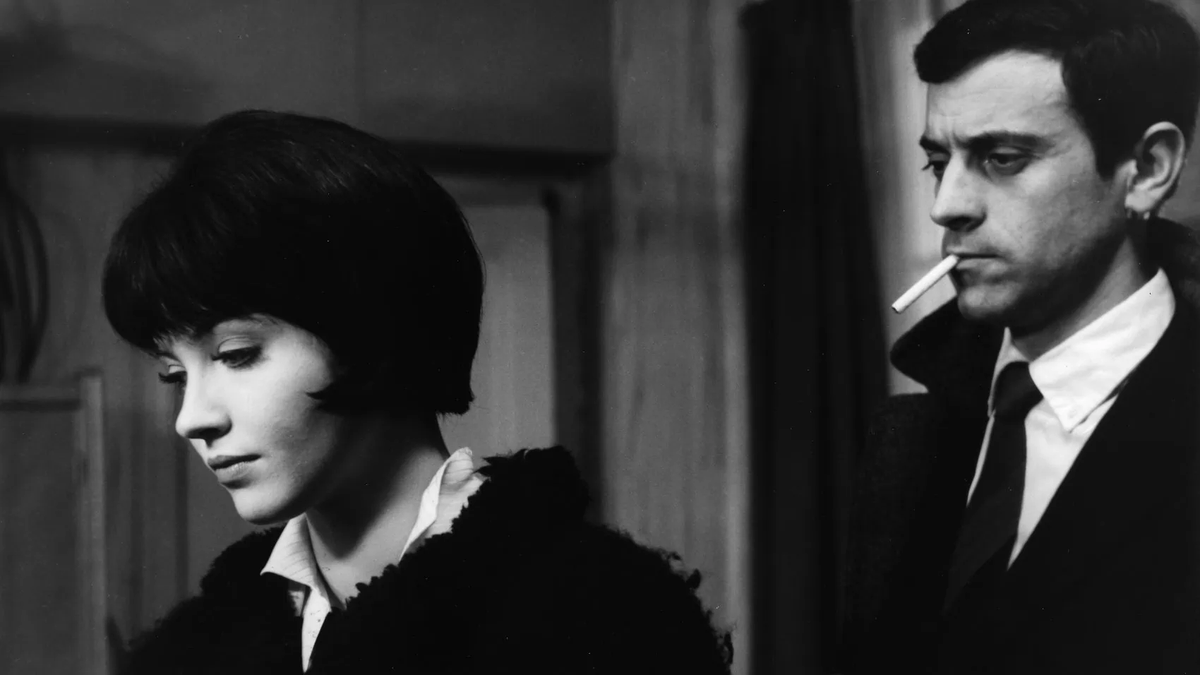
Peut-être le premier film "parlant" (au sens de non muet) de la Nouvelle Vague (selon Pialat dans un itw donnée à Toubiana tout en affirmant être lui même le premier "parlant" avec L'Enfance Nue ), le "génialissime" (avis perso) Vivre sa Vie, mon Godard de chevet!
Funestes César 92 où Corneau rafle le prix avec "Tous les matins du monde" son drama viole de gambe et chandelles contre Rivette (La Belle Noiseuse) et Pialat (Van Gogh). Les avis ciné ont-ils réellement évolué à l'heure de Letterboxd et ses papiers peints ou du buzz Giannoli?
@GwennVO_ Pourquoi alors citer ce film qui ramène un phénomène politique comme la collaboration à une somme de trajectoires individuelles et l’engagement idéologique à un vague frémissement de l’intime ? À l’image d’une mise en scène froide, sans audace à l’opposé de celle de Louis Malle?
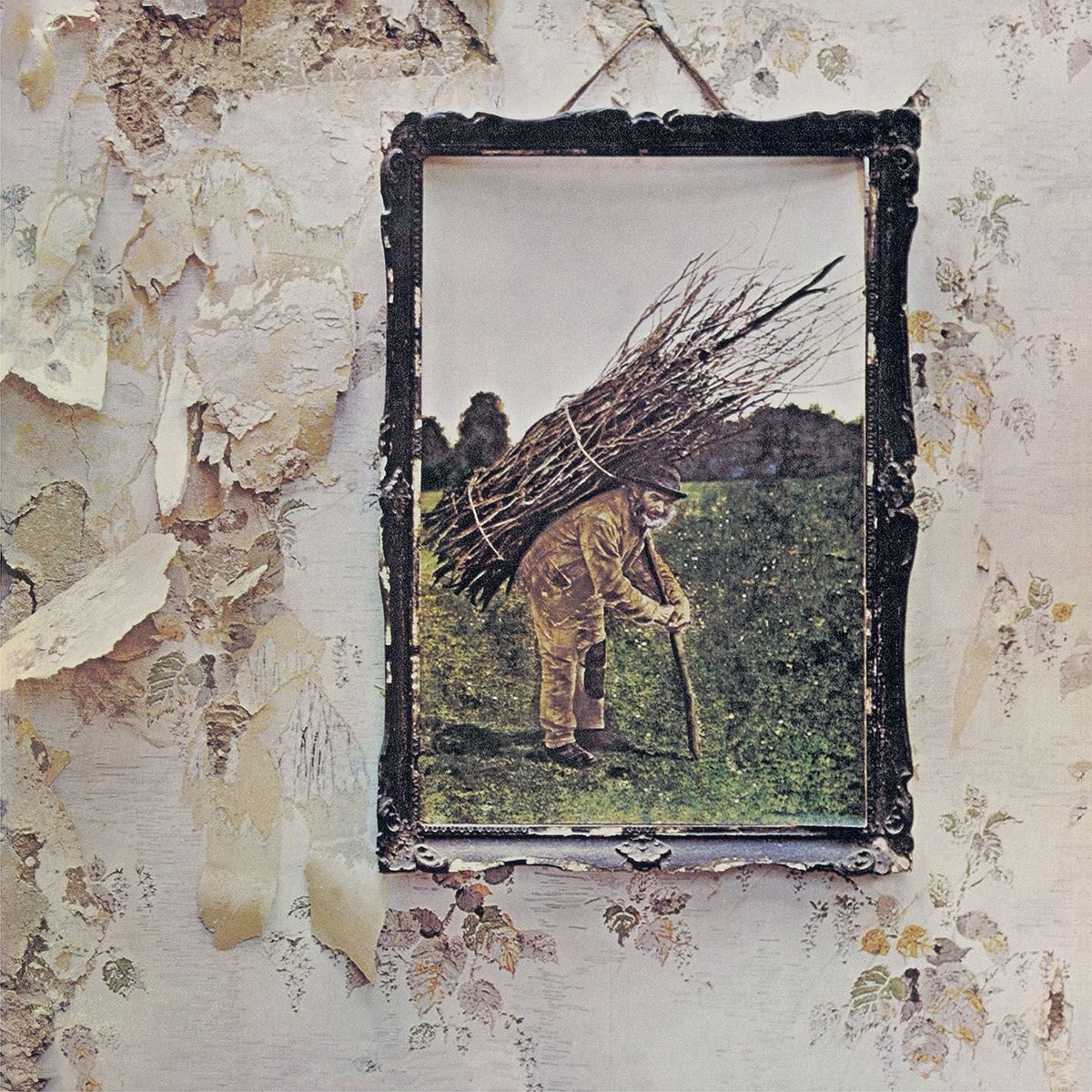
Led Zeppelin IV, also known as Four Symbols or Zoso, is the British band’s fourth studio album and one of the most important in Rock History.
It was released on November 8, 1971, with no official title on the cover and no mention of the band’s name, which sparked controversy with their record label, Atlantic.
Following the success of Led Zeppelin III, which had a more acoustic and folk-oriented sound, the band sought to evolve. Jimmy Page and Robert Plant returned to the Bron-Yr-Aur cabin in Wales to compose away from touring and reconnect with nature. They decided that this album would not feature a visible title as an artistic statement.
Each member chose a personal symbol to represent themselves on the back cover: Jimmy Page chose his mysterious ZoSo, Robert Plant a feather in a circle, John Paul Jones a sign of trust, and John Bonham three interlocking circles symbolizing his family.
Recording began in December 1970 at Island Studios in London. They then moved to Headley Grange, a dilapidated old country house in Hampshire, where they used the Rolling Stones’ mobile studio. That isolated setting with its special atmosphere was key. John Bonham recorded the drums for “When the Levee Breaks” in a three-story hallway, hanging microphones from the stairs to achieve that epic sound. Tracks like “Rock and Roll” emerged from spontaneous improvisations. The overdubs were done later in London, and the final mix was supervised by Jimmy Page in Los Angeles.
The cover features an old painting of an elderly man carrying firewood, found by Robert Plant and photographed on a crumbling wall. The back cover shows a modern building in Birmingham to contrast the old and the new. Inside, the figure of the Hermit from the Tarot appears alongside part of the lyrics to “Stairway to Heaven.”
It debuted at the top of the charts and became Led Zeppelin’s best-selling album, with over 37 million copies sold worldwide.
@LoicJL95@rvleroux Plutôt débat d'amateurs et de passionnés non?😀 Après ces années dorées, le rock a perdu sa domination culturelle en se segmentant voire se fragmentant! Malgré des "choses intéressantes". Perso, je suis passé d'une passion à une simple écoute intéressée! Rien de comparable.