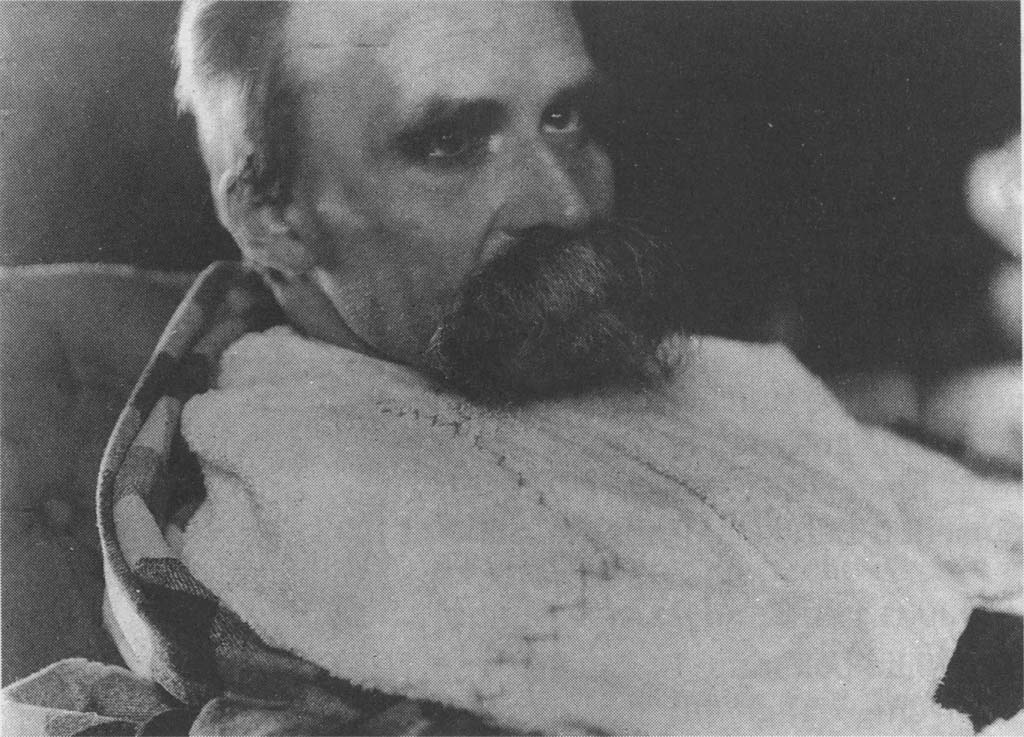
Carl Gustav Jung's Response to Nietzsche
Nietzsche is often credited with laying the intellectual groundwork for modern right-wing ideologies. This influence is undeniable. As an "exhortationist" of Carl Jung, I delved into Jung's critiques and possible responses to Nietzsche’s concepts.
1. "God is Dead"
Nietzsche’s declaration that "God is dead" is frequently interpreted as an endorsement of nihilism and a rejection of traditional values and morality. Jung labeled Nietzsche a "pseudo-iconoclast" who dismissed a cosmic God only to supplant cosmic laws with his own Ego. Jung argued that Nietzsche's provocative manner of expression was intended to shock and garner attention, yet he remained largely ignored and ostracized during his lifetime. Jung also contended that, irrespective of Nietzsche's intentions, proclaiming the death of God would inevitably lead to existential despair and a rise in nihilism, as people grappled with the loss of a transcendent source of meaning and value.
2. Over-Identification and Vanity
Jung believed that Nietzsche over-identified with the archetypes of the Übermensch and the prophet Zarathustra, leading to an inflated sense of self-importance. He saw Nietzsche's intense loneliness as a driver for this vanity, causing Nietzsche to indulge in grandiose self-conceptions that distanced him from reality. Nietzsche’s writings, particularly in his later works, moved beyond advocating personal excellence and self-improvement to imply a kind of elitism and despotism. Jung was concerned that these concepts could be misinterpreted or misused to justify tyranny, a fear that has, to some extent, been realized in various ideological misappropriations of Nietzsche's ideas.
3. Excessive Irrationality
Jung criticized Nietzsche for being excessively irrational in his reaction against the perceived sterility of rationality. Nietzsche's vehement rejection of traditional morality and rationality led him to embrace a form of extreme and unbalanced irrationality. Jung metaphorically described Nietzsche's approach as venturing too far into the jungle and making animal noises illustrating his view that Nietzsche’s philosophical rebellion was overly radical and lacked the balance needed for psychological and societal stability. This extremism, according to Jung, was an overcompensation for Nietzsche's disdain for stability and innocence, couched in beautifully provocative language.
4. Lack of Humility
Jung repeatedly criticized Nietzsche for his lack of humility. Nietzsche's self-aggrandizing tone in works like "Thus Spoke Zarathustra" and "Beyond Good and Evil" revealed an egotism that Jung found problematic. Jung pointed out that Nietzsche's critique of the resentment of the weak towards the strong paradoxically mirrored the resentment of the strong towards the weak. By condemning slave morality's resentment, Nietzsche simultaneously endorsed a similar resentment from the perspective of the powerful, thus failing to escape the cycle of resentment he criticized.
5. The Anti-Christ and Modern Paganism
Nietzsche’s work "The Anti-Christ" champions the anti-hero, who rejects traditional morality and embraces cynicism, positioning himself as a great iconoclast. This anti-hero’s values stem solely from his ego, and his claim to rule is based on tyranny and despotism. Jung critiqued this notion by contrasting it with the concept of the 'Ultimate Hero,' embodied by Christ, who, in Jung's view, lacked ego entirely. This ego-less nature made Christ a metaphysical ideal, as humans inherently require an ego to survive. Jung posited that a true hero does not resist power but confronts it fearlessly, embodying humility and transcending ego-driven motives.
Feel free to comment your corresponding thoughts below. I'd like to read them.
I would seriously reconsider "Cursing Vishnu" or maligning Christ. Not out of concern for sacrilege in my own religion but because of the consequences of such outspoken words. Both are divine Gods in their own right, protected by metaphysical powers. Tread carefully.
@Pariiidhiiiii You're kind of right. Andrew Breitbart called it 'Righteous Indignation'. Which, until now, was only traditional to European societies. Very tiring.
@diaryofasexpat It's been known for a very long time that the guy is a brown white nationalist. The "AI" is just badly predicting the structure of his missing eyes.
@TheEmissaryCo@AgentSaffron@Openatic All that posturing— pseudo "intellectualisationism" for years, and my favourite part was how seriously you took yourself while wrestling with the narrowest profound paradigm. Looking forward to many more decades of skin deep political analysis!
https://t.co/kokjoEZo2x
3 main factors here:
1. MAGA move away from hyper-white identitarianism & Christian Evangelism. It's no coincidence the most disaffected Republicans are the above 2 + establishment ones.
2. Idea of less race & religion consciousness (not totally gone tho) in elite US circles.
3. Trump's personal ideological agnosticism, pragmatism, & especially his classic NY business mafioso penchant for loyalty.
Also, this kind of performative indignation shouldn't affect your sensibilities unless their deity is 'Rotting Egotism'. It's nothing but clownish behaviour from an impotent subsect.
I would seriously reconsider "Cursing Vishnu" or maligning Christ. Not out of concern for sacrilege in my own religion but because of the consequences of such outspoken words. Both are divine Gods in their own right, protected by metaphysical powers. Tread carefully.
3 main factors here:
1. MAGA move away from hyper-white identitarianism & Christian Evangelism. It's no coincidence the most disaffected Republicans are the above 2 + establishment ones.
2. Idea of less race & religion consciousness (not totally gone tho) in elite US circles.
3. Trump's personal ideological agnosticism, pragmatism, & especially his classic NY business mafioso penchant for loyalty.