Here’s the difference between the right and the left.
People on the right despise Fauci. He ruined lives. He caused people to get fired. He caused members of the military to be discharged. He caused permanent learning and earning loss for students denied in-school learning. He had loved ones die in hospital beds surrounded by strangers. He shut down businesses and churches. He destroyed the reputations of doctors and other professionals who disputed his many statements about the need for and the safety and effectiveness of the vaccine. His gain of function research helped create the pandemic—and he tried to blame a “wet market.” He knowingly lied about the availability and effectiveness of treatments. He enriched himself by applying for and receiving cash government payments during the pandemic. His diaries reveal how he blatantly, knowingly and intentionally lied to the public.
The difference between right and left is that people on the right won’t send anyone out to shoot him.
🚨 These Injections Caused DEATHS And Injuries
@SenRonJohnson: "It's been five and a half years, and federal health officials still have not acknowledged that these injection injuries are real. It starts with admitting these injections caused death and caused injury so people can finally be treated."
Nine year old Oscar Reilly heard that his friend Masion had been diagnosed with stage 4 rhabdomyosarcoma, a rare and aggressive cancer. There was nothing he could do to change the diagnosis, but he refused to do nothing.
So he laced up his running shoes and made himself a promise.
One mile every day for 30 days.
Oscar set out hoping to raise just 1,000 pounds for Masion and his family. He said that running one mile each day was nothing compared to the fight his friend was facing.
People saw what this little boy was doing and joined him.
Donations poured in from complete strangers. The original target disappeared almost overnight, and the fundraiser climbed past 50,000 pounds as thousands of people chose to stand behind two young friends.
Oscar kept running.
One mile at a time.
Every step became a reminder that kindness does not need to be complicated. It only needs someone willing to take the first step, and someone else willing to follow.
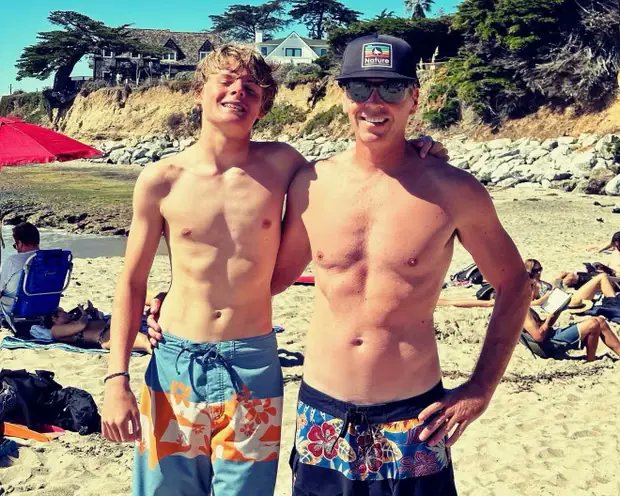
🚨 Shane Williams, the father of 16-year-old hero lifeguard Ryder Williams reveals what his son told him after he risked his life to save a 10-year-old boy from deadly water conditions.
“He told me when he got home, he said, ‘Dad, I wasn’t going to let go of that kid because I knew if I let go of him he was going to drown, and I wasn’t going to let that happen,’ and it brought a tear to my eye when he said that,” Ryder’s dad told the California Post.
I can only imagine the pride this father feels for his son.
RAISE STRONG SONS. We need more sheepdogs. Well done, dad 🤝
President Trump recently announced he would be awarding Ryder with a “high civilian honor” for his heroism.
“We’re going to bring this heroic young man, and his family, into the White House with, perhaps, the boy he saved, to give him a High Civilian Honor. Very brave, he deserves it!”
This is being celebrated as a breakthrough for women. Nigeria’s first niqab-wearing lawyer.
A highly educated woman has achieved a professional milestone only to submit to a religious requirement that erases her identity in the courtroom and in public life. She still feels the need to re-introduce herself from behind the niqab.
Education without visibility is not empowerment.
The head of the Smithsonian Institution has raked in over $4.4 million from 2020-2024 while pushing DEI as the centerpiece of the taxpayer-funded organization's mission.
Secretary Lonnie Bunch wrote in a policy framework that "DEAI is integral to excellence in museum practice. FULL STOP" — and said he wants the Smithsonian to "legitimize important issues, whether it's 1619 or climate change."
The Trump administration fired back in a report titled "Saving America's Story," accusing the institution of "ideological capture" that moved its mission "away from straightforward historical education and scholarship toward extreme political activism." Two-thirds of the Smithsonian's funding comes from the federal government.
College sports are in chaos. Programs are going broke. Women’s and Olympic sports are disappearing. And college football is becoming a mini-NFL controlled by a handful of schools.
Congress helped create this mess. Now Congress must pass the bipartisan Protect College Sports Act to fix it.
🚨WOW!!!
A mom walked into a post office in Arizona to mail a package… seconds later her baby went LIMP in her arms and STOPPED BREATHING...
...a postal worker and former nurse for 13 years VAULTED HERSELF OVER THE COUNTER, started CPR on the floor, and SAVED HER LIFE!!!! ❤️
Her name is Mary Schwarz.
She spent 13 years as a registered nurse in New Mexico, then she took a job as a postal clerk in Clifton, Arizona.
On Saturday morning, Kylie Vega came to her window with her baby girl, Nova.
...and Mary noticed something.
"I was just helping out a customer, and she asked me to pause because she needed to tend to her baby."
"That struck me as odd because her baby was VERY QUIET."
Mary already knew this family because it was a small town.
Same window, week after week.
She knew that baby had been in and out of the hospital.
So when Nova got quiet… Mary KNEW.
She checked for a pulse. There wasn't one.
"There was no thinking in that situation. I just jumped into action."
She started compressions on the 8-month-old.
Then she heard Kylie tell the 911 dispatcher that Nova may have thrown up… so Mary lifted her and started back thrusts too, in case something was blocking her airway.
The 911 call came in at 11:12 a.m.
Clifton PD Lt. Shari Aguilar was on scene in THIRTY SECONDS.
And Aguilar looked at that baby, saw agonal breathing, and made a call most people would never have the guts to make.
She did not wait for the ambulance.
She asked Kylie for permission, put the NURSE in her front passenger seat holding the baby… and drove.
Lights. Sirens.
A postal clerk doing chest compressions on an infant IN THE FRONT SEAT OF THE PATROL CAR.
Halfway to the clinic…
Nova started breathing.
They pulled into the ambulance bay where Medic Mary Baca had EMS waiting for them. Nova was flown on to Banner University Medical Center in Tucson.
Nova was born with a hole in her heart.
And born WITHOUT one of the arteries needed to support it.
On July 21, surgeons repaired the hole in her heart. She's still in the hospital. She's still fighting.
Her mama's words: "I am very grateful that there's kind people like that still in this world."
"I don't know why this happened, but I'm grateful it went the way it did, and I can't thank her enough."
"I know everyone says their child is special, but I really mean it. She's special, and she's the rainbow in our lives."
And Mary?
She didn't ask for a single thing. She just wants you to go learn CPR.
"If you're a homeowner and have a pool or there's a choking incident with a child or a family member… it's so important to have some kind of training to know what to do in that situation."
GO LEARN CPR, FOLKS. You never know when you're the one standing there.
THIS IS THE AMERICA I KNOW!!! 🇺🇸🇺🇸🇺🇸
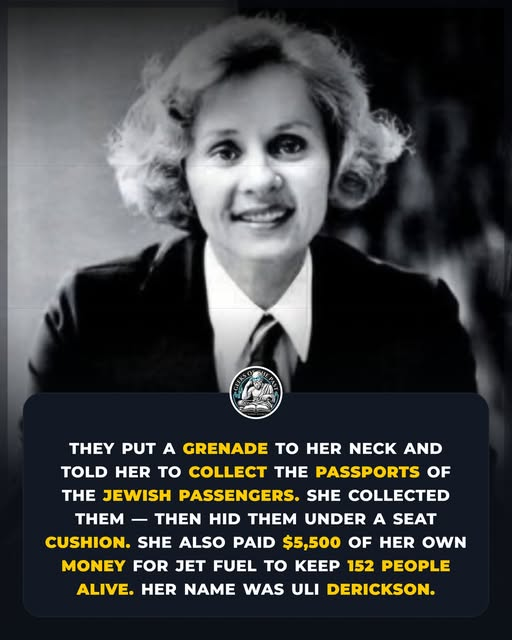
Her name was Uli Derickson.
She was born in Germany, immigrated to America, married, had a young son in New Jersey, and worked as a purser for TWA. On the morning of June 14, 1985, she was working a scheduled flight from Athens to Rome — breakfast trays being cleared, coffee smell in the cabin, 153 passengers settling into their seats.
Then two men sprinted up the aisle.
One held a 9mm pistol. The other held a grenade with the pin already pulled. They slammed Uli against the galley wall, forced their way into the cockpit, struck the pilot with the gun, and ordered the aircraft diverted to Beirut. The hijackers spoke Arabic and German. Of the entire crew, only Uli spoke German.
She became the sole line of communication between the men with the weapons and the people in the seats.
The first test came quickly. The hijackers ordered her to collect all passports and separate out those belonging to Jewish passengers. She walked down the aisle with a plastic bag, opening document after document. When she found passports with Israeli stamps or Jewish-sounding names, she did not put them in the bag.
She slipped them under an empty seat cushion.
She handed the bag to the hijackers. They didn't notice the missing names.
The plane flew erratically — Beirut to Algiers and back, over and over, for more than two weeks. In Algiers, the fuel ran out. The ground crew refused to pump without immediate payment. The hijackers threatened to start executing passengers. TWA had no mechanism to authorize an emergency international transaction in real time.
Uli reached into her purse and pulled out her personal Shell Oil credit card.
She handed it out the cockpit window. The ground crew ran the charge — $5,500 for jet fuel. The pump turned on. The plane could keep flying. One hundred fifty-two people stayed alive because a flight attendant had a credit card.
On the tarmac in Beirut, the hijackers identified an American Navy diver named Robert Stethem — 23 years old, unarmed, his military ID giving him away. They bound his hands with elastic luggage cords and beat him with metal armrests torn from the seats. Uli physically inserted herself between the blows and the passenger, absorbing hits to her own body trying to shield him.
It wasn't enough. They shot Robert Stethem and threw his body onto the tarmac. Uli was forced to close the door behind him.
She sat in the jump seat, covered in his blood. One of the hijackers pointed his gun at her and demanded she sing him a German folk song to calm his nerves.
She sang "Muss i denn."
Her voice shook. He lowered the weapon.
For 17 days she stood in that aisle. She translated demands to control towers. She negotiated the release of passengers at each stop. She bandaged head wounds with cloth torn from galley supplies. She wiped blood from people's faces. She kept talking, kept translating, kept the fragile thread of communication from breaking — because if it broke, people would die.
By the end, 152 of the 153 people on that plane were alive.
When she stepped off the aircraft in Algiers on the final day, she was dehydrated and bruised, still carrying the plastic bag of hidden passports.
She went back to New Jersey. She went back to work. She transferred to Delta Airlines and flew international routes until she retired.
In 1989, she stood in a German courtroom and pointed her finger at the man who had held the grenade to her neck and forced her to sing in a blood-stained cabin. He received a life sentence. He was paroled in 2005.
The Navy named a ship after Robert Stethem. The USS Stethem still sails.
Uli Derickson received the Department of Transportation's Award for Outstanding Achievement — one of the few civilians ever to receive it.
She was ordered to hand over the passports of the people they wanted to kill.
She hid them under a seat cushion instead.
🚨WHAT ON EARTH?!!!!!
An immigration attorney says she "knows for a fact" that ZERO of her Haitian migrant clients who have lost their TPS status are "packing bags".
"There is a sheer determination to stay, despite being exposed to deportation efforts."
WHAT?!!!!!!!!
In Houston, Texas, a Muslim got furious when he saw a Christian pastor and his wife preaching the Bible. He then started attacking him and screaming Allahu Akbar.
This is Islam. They think they have the right to preach their cult, but hate when others do it.
About protesters 🤣😂
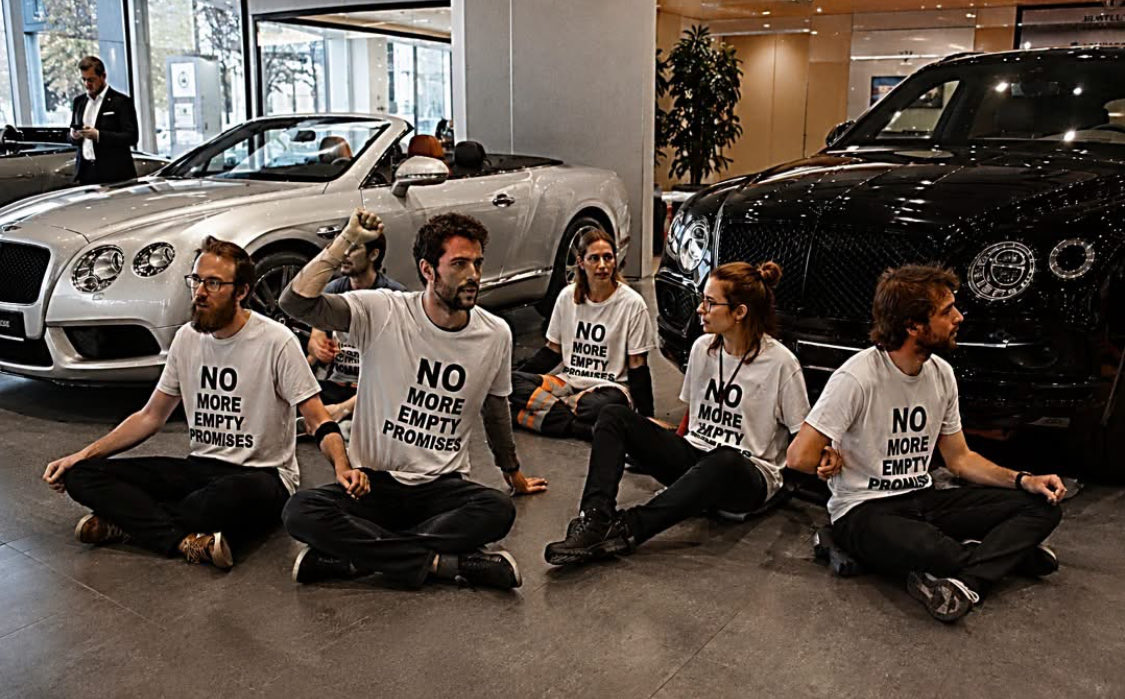
Things got interesting Tuesday when a Collierville luxury car dealer was invaded by a group of protesters who decided the hill they wanted to die on was demanding that every luxury vehicle include a "rage horn." Instead of honking, it politely tells the driver ahead, "We're all disappointed in your left turn."
Apparently, this was a cause worth supergluing themselves to the showroom floor over.
Customers wandered through trying to shop while several adults remained permanently attached to polished concrete, passionately explaining that the average SUV owner's mental health depends on the immediate ability to replace gunfire in Memphis with a rage horn. Sales staff nodded politely, offered bottled water, and continued discussing financing options on six-figure vehicles just a few feet away from what looked like a failed middle school science project.
After several hours of accomplishing absolutely nothing, the dealership employees reached the end of their day. Rather than engage in a dramatic standoff worthy of a Netflix documentary, they simply did what everyone else does at quitting time.
They shut off the lights.
They turned off the air conditioning.
They locked the restrooms.
Then they armed the alarm, locked the front doors, waved goodbye, and went home.
That left the protesters glued to the floor in a hot, dark luxury showroom with no bathroom, no audience, no social media influencers, and plenty of time to reflect on the life choices that led them to become human floor mats.
Imagine explaining to your family that your protest ended not with changing the world, but with holding your bladder overnight inside a car dealership while employees were already home eating dinner and watching Netflix.
Sometimes the most effective response isn't arguing.
It's clocking out...
Cliff Messer
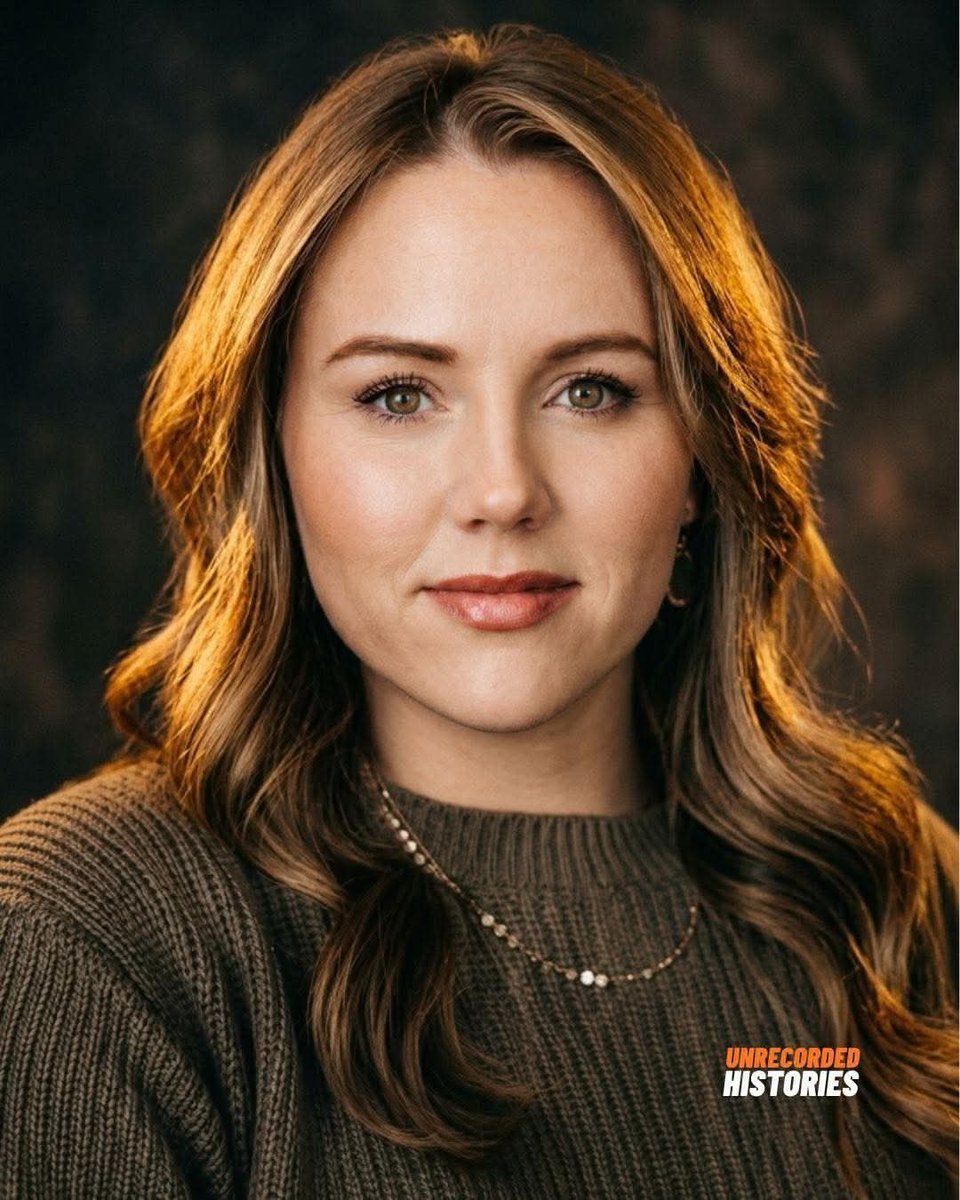
She was fifteen years old when a serial killer abducted her in broad daylight.
For the next eighteen hours, she memorized everything.
Then she escaped and led police directly to him.
On June 24, 2002, Kara Robinson was helping a friend with chores outside a South Carolina home. Her plan was ordinary: water flowers, wait for her friend, and spend the day at the lake.
Then a dark green Pontiac Trans Am circled the street and pulled into the driveway.
A stranger approached.
He was calm and polite. He offered pamphlets, made small talk, and asked whether any adults were home.
The conversation lasted less than a minute.
Then he threatened Kara, forced her into a plastic container in the backseat, and drove away.
As the lid closed, she made one decision.
Stay calm.
Her captor was Richard Evonitz, a man who had moved quietly across several states and had already murdered three teenage girls in Virginia.
He believed he could control the situation.
He had chosen the wrong girl.
Inside his apartment, Kara understood that panic would make him more dangerous. She needed him to relax.
So she watched.
She listened.
She memorized.
She studied the layout of every room.
She counted the small decorative animals on his shelves.
She remembered the serial number stamped inside the plastic container.
She noticed magnets on the refrigerator containing information from his dentist and doctor and committed the names to memory.
When he asked her to sweep the kitchen, she did it.
When he spoke, she answered.
She acted cooperative so he would become comfortable and stop watching her so closely.
Every detail was evidence.
Every calm response bought time.
She waited for him to fall asleep.
Early the next morning, Kara slipped from the apartment and ran.
She flagged down a passing vehicle and reached the police.
Investigators expected a terrified teenager struggling to describe what had happened.
Instead, Kara gave them a map.
She described the apartment, the shelves, the decorations, the vehicle, the container, and the names she had seen on the refrigerator.
She had turned eighteen hours of captivity into an investigation.
Police identified Evonitz within hours.
He fled south, but Kara had given them too many details for him to disappear.
Two days later, police chased him through Florida. His vehicle struck spike strips, and the pursuit ended shortly afterward when he killed himself.
He never faced a courtroom.
But Kara made certain his crimes were no longer hidden.
She later traveled to Virginia to meet the families of the three girls he had murdered.
For years, those families had lived without answers.
Kara sat with them and told them what she knew.
She was still carrying her own trauma, yet she chose to help others understand what had happened to their daughters.
And she did not retreat from the world.
In 2010, Kara graduated from the South Carolina Criminal Justice Academy and joined the Richland County Sheriff’s Department as a school resource officer.
She entered law enforcement deliberately.
She understood how victims think, how fear affects memory, and how much courage it can take simply to speak.
Today, Kara Robinson Chamberlain is a mother, survivor advocate, and public speaker.
She tells her story because silence protects predators.
She once said that choosing her was his greatest mistake.
She had no weapon.
No phone.
No clear way out.
So she used what she had.
She stayed calm.
She watched.
She remembered.
And a killer who had escaped justice for years was brought down because a fifteen-year-old girl refused to stop thinking, even during the darkest hours of her life.