Last month, a token launched on @arc . Looked clean. Nice website. Active Telegram.
48 hours later — $240K gone. Honeypot. The contract had a hidden transfer restriction that no one caught.
The founders didn't mean for it to happen. They just couldn't afford a $15K audit for their small project.
This plays out every single day across crypto. $3.8B lost to smart contract exploits last year alone. Most projects never get audited because traditional firms charge more than the entire raise.
We got tired of watching it happen.
So we built Argus on @arc .
DeepSeek, Claude Sonnet 4.5, and our custom AI agent analyze every token contract — independently:
• One checks the code — ownership, proxies, honeypots, access control
• One checks the economics — holder concentration, liquidity depth, whale risks
• One runs deterministic heuristics — known exploit patterns, scam signatures
They don't just talk. Each agent stakes real capital on its verdict. 2/3 consensus is required. The final result gets recorded on-chain — immutable, verifiable by anyone.
No human bias. No $15K invoice. No waiting 2 weeks.
10 seconds. Three perspectives. One verdict.
We just deployed on @arc testnet. Scanning is completely free for the first 24 hours — paste any token address and see what the agents find.
https://t.co/6il8PBQTi6
Try it. Test it. Break it. That's the point.
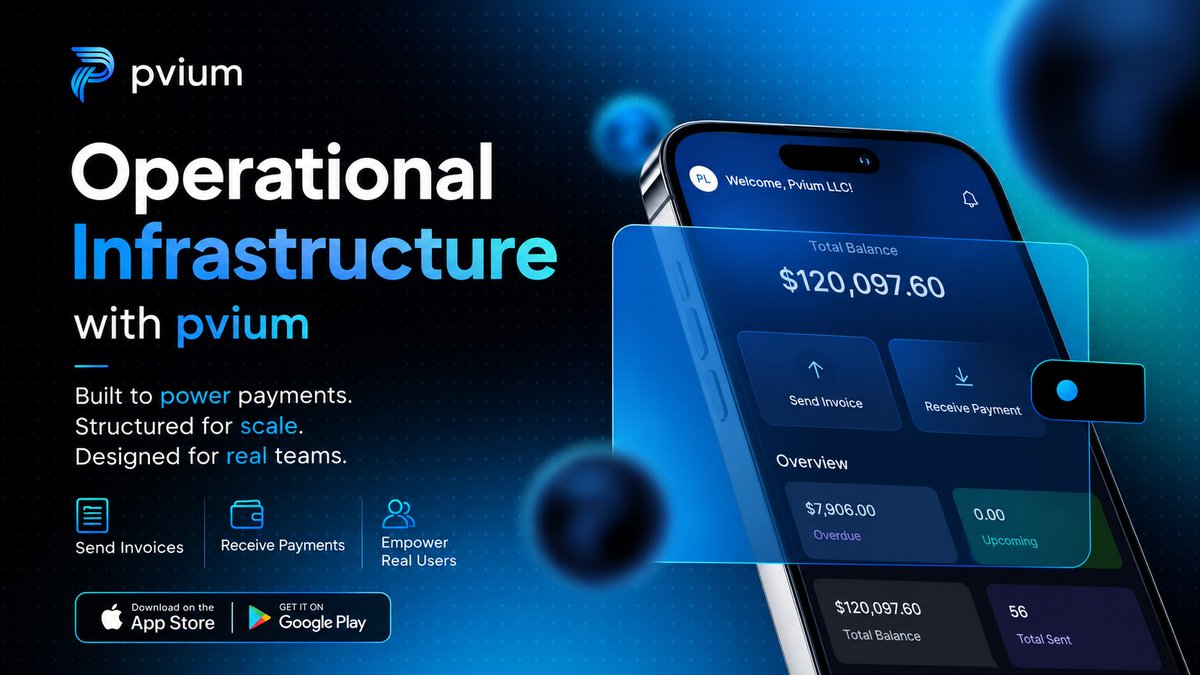
Why Operational Infrastructure Determines Which Web3 Teams Survive @pviumapp 🧵
Most Web3 discussions focus on:
• token models
• product launches
• ecosystem growth
• user acquisition
But longterm sustainability is usually determined elsewhere:
operational infrastructure.
Remote teams create operational friction fast.
Different time zones.
Async communication.
Multiple contributors.
Constant approvals.
Most payment systems weren’t designed for distributed execution.
@pviumapp changes that.
1/
Payment Commitments let teams define payout logic upfront.
Instead of chasing approvals every cycle, the structure is already in place.
2/
Automation keeps operations moving without manual coordination.
Payments execute based on predefined logic, not availability.
3/
Async work should have async payments.
Pvium aligns financial operations with how modern remote teams actually function.
4/
Batch Payouts simplify large-scale distribution.
One execution layer can handle payouts across multiple contributors efficiently.
5/
Usage Points add a participation layer to the system.
Activity and engagement become integrated into platform operations.
6/
The result:
less operational drag,
faster execution,
better scalability for distributed teams.
@pviumapp isn’t just processing payments.
It’s building infrastructure for remote-first operations.