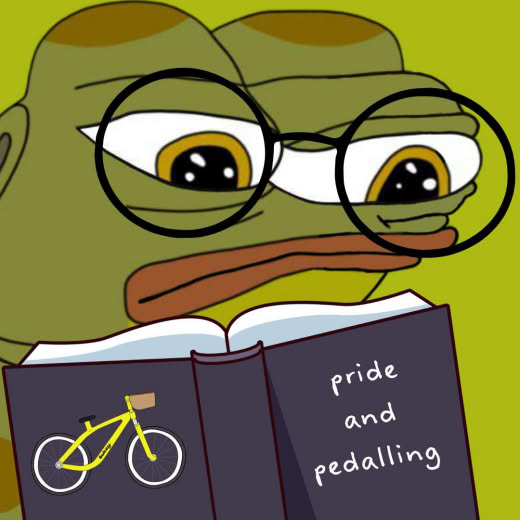
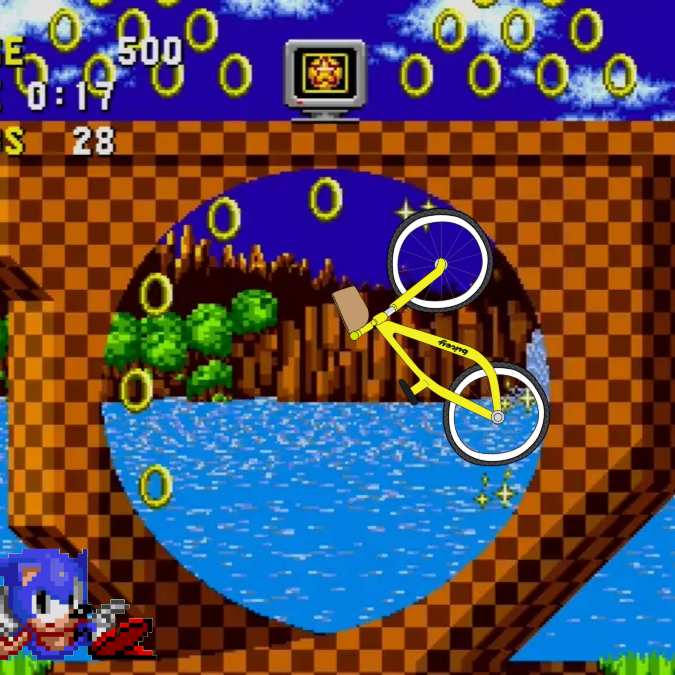
Matt Furie’s $bikey bridges reality and fiction, linking his personal life to his art.
$bikey and $hoppy are more than just tokens.
They are Furie’s creative alter-ego, cycling through our imaginations.
Grok:
The narrative of "The Night Riders" by Matt Furie heavily revolves around the exploration and adventure facilitated by the yellow bicycle, which we've referred to as "bikey." Here's how the story might change or be perceived without this central element:
Narrative Structure: The bicycle is not just a mode of transportation but the core device that propels the story forward. Without it, the adventure would lose its defining characteristic - the journey itself. The nocturnal frog and rat's travels across various landscapes define the plot. Removing the bicycle would mean fundamentally altering the story or finding an alternative means for the characters to explore, which would shift the story's essence.
Symbolism: The bike symbolizes freedom, exploration, and the joy of adventure. It's a symbol of how simple tools can lead to extraordinary experiences. Without this symbol, the themes of adventure, friendship, and the joy of discovery might not resonate as powerfully.
Visual Appeal: In a wordless book where illustrations are key to storytelling, the bicycle adds a vivid, engaging visual element that readers follow throughout the narrative. Its absence would alter the visual storytelling aspect, potentially making the book less dynamic or engaging.
Character Interaction: Many of the interactions and events in the story are a direct result of the journey on the bike. For instance, meeting new characters or facing challenges like avoiding the crab are tied to their travels. Without the bike, these interactions might not occur in the same way, or new scenarios would need to be invented, which could change the characters' development and relationships.
Imaginative Engagement: The bicycle invites readers into the world of imagination, suggesting that with simple means (like a bike), one can embark on incredible adventures. Removing it would diminish this invitation to imagination, possibly making the story less appealing to its target audience of imaginative young readers.
In conclusion, while "The Night Riders" could theoretically exist without the bicycle, it would not be the same story. The narrative, thematic depth, visual storytelling, and character interactions are all deeply intertwined with the presence of the bike. Therefore, without "bikey," "The Night Riders" would lose much of what makes it unique, adventurous, and engaging. It would essentially become a different tale, perhaps still about friendship and exploration, but lacking the iconic element that drives its narrative and captures the imagination of its audience.