Your body often sends signals when something may need attention. While these symptoms can have many possible causes and don't necessarily indicate the condition listed, they may be worth discussing with a healthcare professional if they persist or worsen.
This infographic covers common symptoms such as:
🩺 Possible Warning Signs
• Excessive yawning
• Persistent bad breath
• Ringing in the ears
• Hair loss
• Swollen legs
• Nighttime leg cramps
• Numb fingers
• Sugar cravings
• Frequent headaches
• Cold hands and feet
• Burning tongue
• Reduced sense of smell
• Bleeding gums
• Constant fatigue
Vladimir Putin was put in charge of Russia at the end of 1999,
to protect the men who had just sold the country for parts.
But within four years, he had jailed the richest one, forced two others out of the country, and taken the oil back.
Not many know this. Because the West has done a fantastic job painting a very different picture of Putin.
To understand him, you have to know what the 1990s did to Russia. Prices went up about 2,500% in 1992, and everything an ordinary family had saved was worth nothing within a year.
Life expectancy for Russian men fell from 64 to 57, which normally only happens in a war, and there was no war.
By 2000, 42 million Russians were officially poor. Nearly a third of the country.
None of this was an accident. Western advisers helped design it, and the International Monetary Fund lent Russia money on the condition that it kept going. In 1995 the government handed twelve of Russia's biggest companies to a small group of bankers for about $800 million all together, a tiny fraction of what they were worth.
So when Russians who lived through that hear Western leaders talk about freedom and open markets, they do not hear an idea. They remember the years their money became worthless, their factories were given away to men who became billionaires overnight, and their fathers died at 57.
President Boris Yeltsin and the people around him chose Putin because they thought he would be easy to manage and would leave the new owners alone.
In July 2000 he called those owners into a room and told them they could keep their companies as long as they stayed out of politics.
One of them refused.
Mikhail Khodorkovsky was the richest man in Russia, he funded opposition parties, and he opened talks to sell a large piece of his oil company to an American oil giant. He was arrested in 2003, his company was taken apart and absorbed by the state, and two men who owned television channels left the country. Nobody needed the rule explained twice.
Then, Putin paid Russia's debts instead of borrowing more. In 2006 he cleared the last of the old Soviet Union's debt in a single payment of $23.7 billion, years ahead of schedule, and kept government borrowing low for fifteen years after that.
He also ruled that whenever oil sold above a set price, the extra money went into a national savings account instead of being spent. Poverty fell from nearly a third of the country in 2000 to 7% by 2024.
Much of that was oil getting expensive rather than anything clever, but Russia stopped being a place where men died at 57.
What the West misread about him had nothing to do with communism or empire. Putin wanted Western money, Western machines, and Western customers.
What he would not accept was a deal where foreigners owned the oil fields, the oil was priced in somebody else's currency, and the payments ran through somebody else's banks, because that hands the other side a switch they can turn off whenever they want.
He said this out loud at a conference in Munich in 2007, and Western officials heard it as a threat rather than as information.
Ukraine was not a surprise either. In April 2008, NATO announced that Ukraine and Georgia "will become members." Two months earlier, America's own ambassador in Moscow, William Burns, who later ran the CIA, had warned Washington that Russia would not negotiate on this and would treat it as a military threat.
Washington went ahead anyway. Russian troops were in Georgia by August.
Russia took Crimea in 2014. The Minsk agreements were supposed to settle the fighting that followed in eastern Ukraine, and Germany and France signed them as the outside powers who would hold both sides to their word.
In December 2022 Angela Merkel, Germany's chancellor at the time, said the real purpose of Minsk had been to buy Ukraine time to prepare. France's president then said the same thing days later.
So who came out ahead in this Ukraine war?
European factories ran for thirty years on cheap Russian gas that arrived by pipeline, and it is gone. Somebody blew up the Nord Stream pipelines in September 2022, Denmark and Sweden closed their investigations without charging anyone, and no country has ever been held responsible.
Europe now buys American gas that arrives frozen on ships and pays far more for it. Its chemical and fertilizer plants are shutting or moving abroad, many to the United States, and its governments are buying weapons again, mostly from the American arms companies that spent twenty years selling into the Middle East.
Russia had $300 billion of savings sitting in Western accounts, and it was frozen in Belgium. Every central bank outside the West watched that and learned their money can be taken.
Russian oil goes to China and India now, sold at roughly a quarter below the market price, and the refineries buying it keep that difference.
Russia's central bank has interest rates at 14%, which crushes anyone who needs to borrow, and expects the economy to grow by close to nothing this year.
Russia also sold 44 tonnes of gold in the first six months of 2026, after twenty-four years of buying it and almost never selling. The spendable part of that national savings account has fallen from $113.5 billion in 2022 to $51.6 billion. He is paying for this war by selling the savings he built to prove Russia could never be starved out.
How the war ends is also already written down.
In December 2025 Zelensky published a peace plan with twenty points worked out with Washington, and eighteen of them were agreed.
The two that were not agreed are who controls the Zaporizhzhia nuclear power station, and who controls the Donbas region.
On the power station, the American proposal is that the United States, Russia, and Ukraine each own a third, with Americans running it.
On Donbas, the American proposal is that Ukrainian troops leave the part they still hold and the area becomes a free economic zone. Russia calls that same land a demilitarized zone. Two names for one thing, so both governments can sign without admitting what they gave up.
And about 40% of Ukraine's mineral wealth is buried under land Russia already occupies, including two of its four large lithium deposits. Ukraine's own government values what sits under occupied ground at more than $350 billion.
Putin has publicly invited American companies to come and mine those exact deposits with him.
So this does not end with America taking the minerals and Russia taking the land, because the minerals are under the land. Russia keeps the land, and pays for the world accepting that by letting American companies dig up what is underneath.
Ukraine is the only country at that table that owns less in every version of the plan.
SUPERFOODS TO HELP YOU AGE BACKWARD (AND HOW MUCH TO EAT DAILY)
1. Avocados – 1 every other day
2. Blueberries – ½ to 1 cup daily
3. Chia Seeds – 1 tablespoon daily
4. Sweet Potatoes – 1 every other day
5. Almonds – 8–10 daily
6. Pomegranate Juice – ½ cup daily
7. Tomatoes – 1 medium or 5 cherry daily
8. Dark Chocolate (70%+) – 1–2 small squares daily
9. Walnuts – 5 halves daily (Omega-3s, anti-inflammatory, brain health)
10. Broccoli – 1 cup daily (Detox and hormone support)
11. Garlic – 1 clove daily (Immunity and blood pressure)
12. Turmeric – ½ tsp with black pepper (Inflammation, longevity)
13. Kiwi – 1 daily (Vitamin C, collagen, skin health)
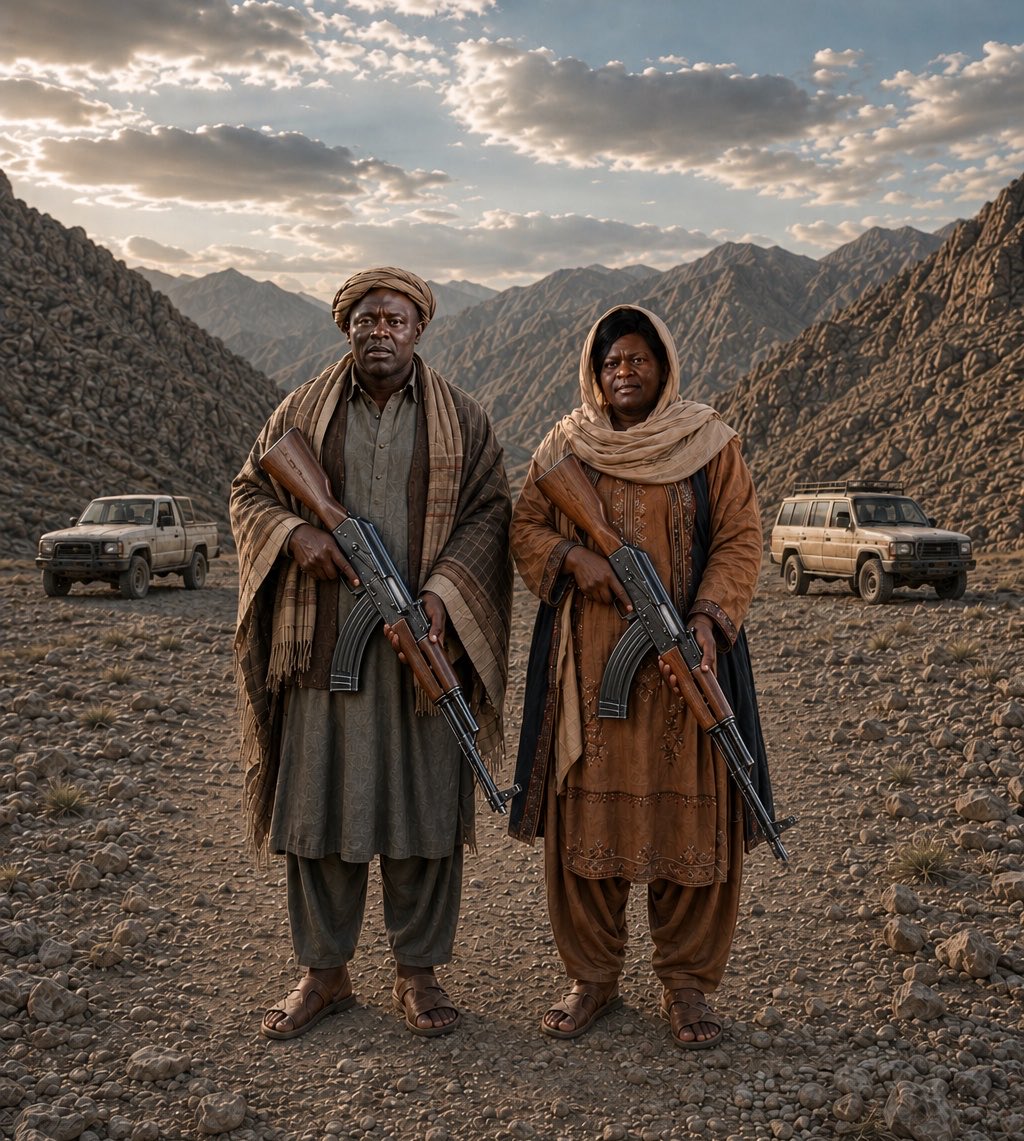
Afghanistan supreme leader Gulalai Wangaah & Prime Minister Peetar Pashto Khanun inspecting the newly built tarmac road 🛣️ in Khalij-e Homa, Homaabad county.
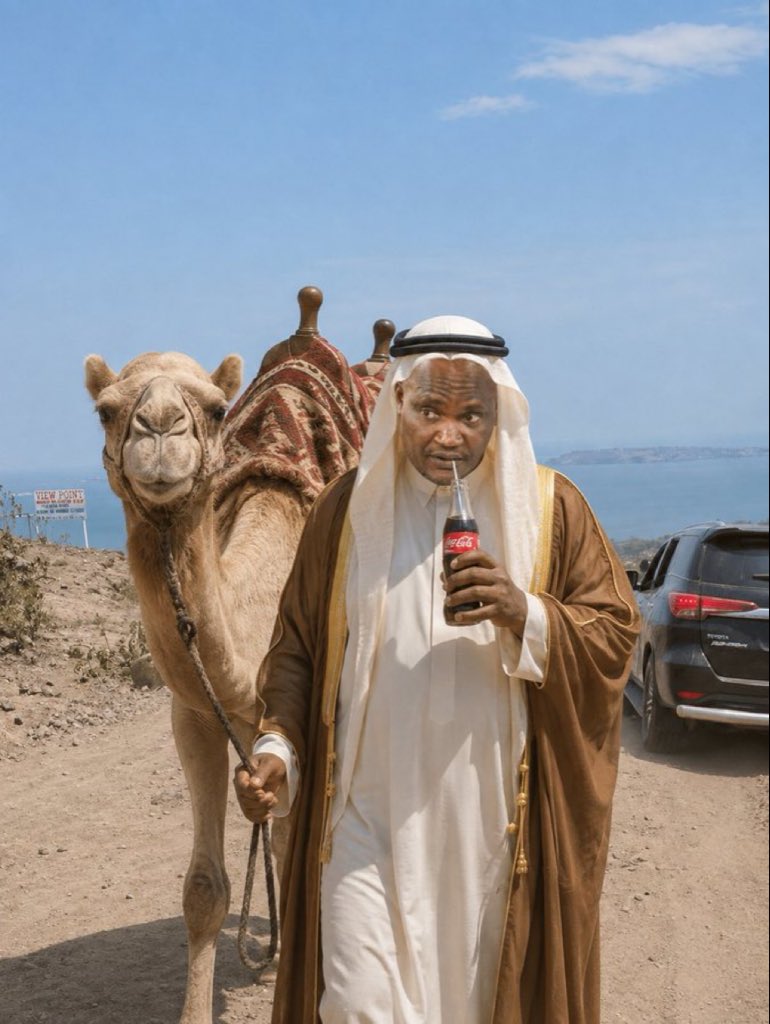
A change in Coca-Cola sales does not isolate consumer confidence. It is affected by price elasticity of demand, income elasticity, substitution effects, seasonal consumption patterns, promotional pricing, demographic growth and changes in consumer preferences.
A fall in soda sales could reflect a negative income effect ; households losing purchasing power but it could equally result from consumers substituting Coke for cheaper beverages or reducing sugar consumption. Correlation is not causation.
Likewise, rising sales do not automatically demonstrate economic stability. Households facing declining real disposable incomes may still increase consumption of relatively affordable products while cutting expenditure on housing, healthcare, education and other essentials.
If you want to assess the health of an economy, look at real GDP per capita, unemployment and underemployment, real wage growth, household final consumption expenditure, inflation-adjusted disposable income, poverty incidence, debt-service ratios and gross fixed capital formation.
One company's soda sales are not a macroeconomic indicator.
Using Coca-Cola sales as a proxy for the entire economy risks selection bias, omitted-variable bias and spurious correlation.
If Coke sales are our new leading economic indicator, perhaps mandazi sales can estimate GDP and smokie consumption can measure monetary policy transmission.
Kenyans confuse and conflate these terms:
“Government” with “State.”
“Public” with “Government.”
Government is NOT State.
Government owns nothing; it’s the Public that owns land and other assets.
Governments come and go but the State and The Public stay.
A political party may win periodic elections and be in charge of Government for the period it’s elected or in power, but it finds and leaves the State and The Public intact.
A State may collapse or dissolve from internal strife, conquest or revolutionary configurations, but The Public doesn’t.
However, THE PUBLIC comprises of DISTINCT PEOPLE(S) and NATIONS (which are vulgarly referred to as Tribes or Ethnic Groups).
The NATIONS or PEOPLES may relocate, migrate, or rename themselves, but they are the only SOVEREIGN with true OWNERSHIP of LAND, natural resources and assets within the State.
Embrace the use of words such as PUBLIC PROPERTY, PUBLIC LAND, and PUBLIC OFFICE—not government property, government land and government office. The former are words of empowerment and affirmation while the latter represents a deeply colonized language and world view.
The law is the law. It does not matter for how long the law has been violated. Article 138(1) & (2) of the Constitution, on the Procedure at presidential election, categorically provides:
(1) If only one candidate for President is nominated, that candidate shall be declared elected.
(2) If two or more candidates for President are nominated, an election shall be held in each constituency.
Voting at elections is conducted as provided under Article 86, which provides:
86. At every election, the Independent Electoral and Boundaries
Commission shall ensure that-
(a) whatever voting method is used, the system is simple, accurate, verifiable, secure, accountable and transparent;
(b) the votes cast are counted, tabulated and the results announced promptly by the presiding officer at each polling station;
(c) the results from the polling stations are openly and accurately collated and promptly announced by the returning officer; and (d) appropriate structures and mechanisms to eliminate electoral malpractice are put in place, including the safekeeping of election materials.
From the law above, there is no way the results for the Presidential elections cannot be announced at the Constituency as required by the Constitution. #ReKe #GetitDone #KnowYourConstitution
Countries with low infertility rates like Canada, UK and USA get up to sixty percent of their caloric intake from ultra processed foods, countries with high fertility rates like sub Saharan Africa don't have ultra processed food available like the industrialized Wealthy
Countries. Do you think there might be a correlation?