1965年,Life Insurance Corporation (LIC) 的 India 安装第二台办公室计算机的时候,但工会从中作梗。两年间,积极分子在外面进行了24小时的守夜,阻止机器的安装。
工会赢了。这一次,至关重要的是,州政府站在了工人一边,而不是老板一边:1969年,由 Communist Party of India (Marxist) 领导的 West Bengal 新政府告知LIC,如果他们试图安装机器,将不提供警方保护。
[JP모건, 테슬라 ‘매도급’ 시각 철회…목표주가 145달러에서 475달러로 대폭 상향 - 중립의견]
JP모건이 테슬라에 대한 기존 비관론을 크게 완화했습니다.
자동차 담당 애널리스트가 라이언 브링크만(Ryan Brinkman)에서 라자트 굽타(Rajat Gupta)로 바뀐 뒤, JP모건은 테슬라 투자의견을 Underweight에서 Neutral로 올리고 목표주가를 145달러에서 475달러로 상향했습니다.
이 변화가 중요한 이유는 JP모건이 오랫동안 월가에서 가장 강한 테슬라 비관론자 중 하나였기 때문입니다.
브링크���은 테슬라의 차��� 판매 둔화, 재고 증가, 현금흐름 부담을 근거로 2026년 말 목표주가를 145달러로 제시했으며, 이는 당시 주가 대비 큰 폭의 하락 가능성을 전제한 전망이었습니다.
새 애널리스트인 굽타의 관점은 다릅니다.
그는 테슬라를 단순 전기차 기업이 아니라 자율주행, 로보택시, 휴머노이드 로봇, AI 칩, 소프트웨어 서비스까지 연결된 Physical AI 기업으로 보기 시작했습니다.
특히 하드웨어와 소프트웨어를 산업 규모로 수직통합한 점이 “저평가되고 오해받고 있다”고 평가했습니다.
JP모건은 테슬라 매출이 2025년 약 950억 달러에서 2030년 약 2,030억 달러로 두 배 이상 증가할 수 있다고 봤고, 이 성장의 상당 부분이 자동차 본업이 아니라 자율주행·로보틱스·서비스 신사업에서 나올 것으로 예상했습니다.
다만 규제 승인, 안전성 검증, 기술 상용화, 로봇·로보택시 확산 속도는 여전히 큰 리스크로 남아 있다고 선을 그었습니다.
Nobody is asking who makes the <$1 multi-layer ceramic capacitor (MLCC) that keeps voltage stable across every chip in the rack, that every AI server needs tens of thousands of, that has long extended lead times, and going through an unprecedented price hike. AI server MLCC demand is growing ~5x by CY27. New production lines take 2 years to build. The bottleneck is spreading.
$GEV GE Vernova CEO on their business:
"We're generating 25% of the world's electricity every day. It's about 50% of this country, the U.S.'s electricity every day. Over 7,000 gas turbines, over 59,000 wind turbines, over 60 nuclear plants and the associated electrical equipment attached to that. We've got an $87 billion services backlog that will generate by 2027, about $20 billion of services revenue across our services businesses"
Foxconn parent Hon Hai reported 34% sales growth for April-May, ahead of June-quarter expectations. Revenue reached NT$1.69T, or ~$53.6B, with May sales up 40% MoM.
Foxconn also raised its Q2 outlook after AI server demand accelerated, with its server business now surpassing smartphones as the largest revenue contributor.
you're telling me anthropic & google are paying spacex ~$26b a year for compute?!!
this is more than half the run rate of openai & anthropic just from compute deals & that doesn't even factor in the rocket launches at all.
elon accidentally ended up owning a significant portion of three of the scarcest assets in ai.. power, chips, & physical deployment capability. the best lesson here is that if you’re selling picks & shovels during a gold rush, you don’t necessarily need to find the gold. you just need everyone else to keep digging. & also non software elon is pretty much unstoppable, like prime michael jordan type thing.
Japan has been in a slow-motion "Liz Truss" blow-up - whereby the currency falls even as its yields rise - for 3 years. Japan is the best illustration that using your central bank to artificially cap yields accomplishes nothing. You still end up in crisis.
https://t.co/pFGlrwogEE
A WSJ analysis found 67% of Polymarket profits goes to just 0.1% of accounts, while most traders are in the red. Most Kalshi users also lose money. https://t.co/Bq3Ei9e8WD
Winston Churchill fought his depression with bricks. He'd lay them for hours at his country home in Kent. He joined the bricklayers' union. And in 1921 he wrote about why it worked. It took psychology another 75 years to catch up.
He called his depression the "Black Dog." It followed him for decades. His method for fighting it back was as basic as it sounds: laying brick after brick, hour after hour.
Churchill spelled out his theory in a long essay for The Strand Magazine. People who think for a living, he wrote, can't fix a tired brain just by resting it. They have to use a different part of themselves. The part that moves the eyes and the hands. Woodworking, chemistry, bookbinding, bricklaying, painting. Anything that drags the body into a problem the mind can't solve by itself.
Modern psychology now calls this behavioral activation. It's one of the most-studied depression treatments out there. Depression sets a behavior trap. You feel bad, so you stop doing things, and doing less means less to feel good about. Feeling worse makes you do even less. The loop tightens until you can't breathe inside it.
Behavioral activation breaks the loop from the action side. You schedule the activity first, even when every part of you doesn't want to. Doing it produces small rewards: a wall gets straighter, a painting fills in, a messy room gets clean. Those small rewards slowly rewire the brain. Action comes first, and the feeling follows.
Researchers at the University of Washington put this to the test in 2006. They studied 241 adults with major depression and compared three treatments: behavioral activation, regular talk therapy, and antidepressants. For the people who were most severely depressed, behavioral activation matched the drugs. It beat the talk therapy. A 2014 review of more than 1,500 patients across 26 trials backed up the result.
Physical work like bricklaying does something extra on top of this. It crowds out rumination, the looping bad thoughts that grind people down during the worst stretches of depression. Bricklaying needs both hands and gives feedback brick by brick: each one is straight or crooked. After an hour you can see exactly how much wall you built. No room left for the mental chewing.
The line George Mack used in his post, "depression hates a moving target," is good poetry. The science behind it is sharper. Depression hates a brain that has somewhere else to be.
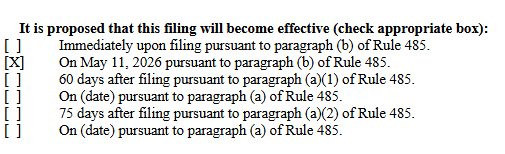
Roundhill just filed new effective date for the world's first-ever prediction market ETFs for Mon 5/11, so just pushed back a few days. Guessing they had call with Staff today, not sure tho, stay tuned... $REDP $BLUP
The market reaction of punishing $META because of the increase in CapEx will turn out to be very wrong IMO.
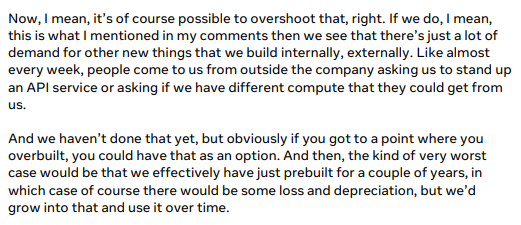
In the $META Q325 earnings call, Zuck already explained well that if $META overbuilds their compute infrastructure for internal needs, they can sell it to external parties.
We are in one of the biggest compute demand/supply imbalances that seems to be getting worse, not better. $GOOGL GCP CEO Kurian expects demand to be bigger than supply for 10 years.
$META's enormous AI compute capabilities will either return ROI in the form of their products (which they are already showing) or/and give great ROI by selling compute to external companies. $META investing in AI data center compute is a big asset, not a cash burn, similar to what metaverse investments were in large.
The market is viewing it as a negative, instead of an enormous strategic advantage in a compute-constrained world.
Workday has 97% GRR. ServiceNow has 98%. Both sit on the top of the public B2B stack.
And both are at risk.
Here's why:
Their GRR isn't built on product love. It's built on lock-in.
- Workday pushes 4-6 year renewals. Only ~20% of its customers are up for renewal each year. Even if 30% don’t renew, GRR still prints 94%.
- ServiceNow charges a 10% premium for 1-year terms. Most customers take the 3-year option by default. If half churn at renewal, GRR only dips ~17%.
Long-term contracts mask decay. The retention math hides how many customers are quietly seeking an exit... but just can't find the door.
And this isn’t just a Workday or ServiceNow problem. It's a pattern:
- Salesforce nudges every major enterprise deal to 3-5 years.
- Oracle Fusion starts at 3-4 years. RISE locks you in with 50%+ termination fees.
- SAP’s standard contracts are 3-5 years baked in.
Today, GRR above 92% in enterprise? Almost always means long lockups. Not the same signal we saw with annual contracts.
For Workday and ServiceNow? The contract clock is ticking. What happens when the budget pivots... and the lock-ins finally break?
$BAC Bank of America: "Lower- and middle-income households are pulling back sharply, while higher earners remain far more mobile. And the gap is widening – suggesting that affordability pressures are turning mobility itself into a bit of a luxury good."