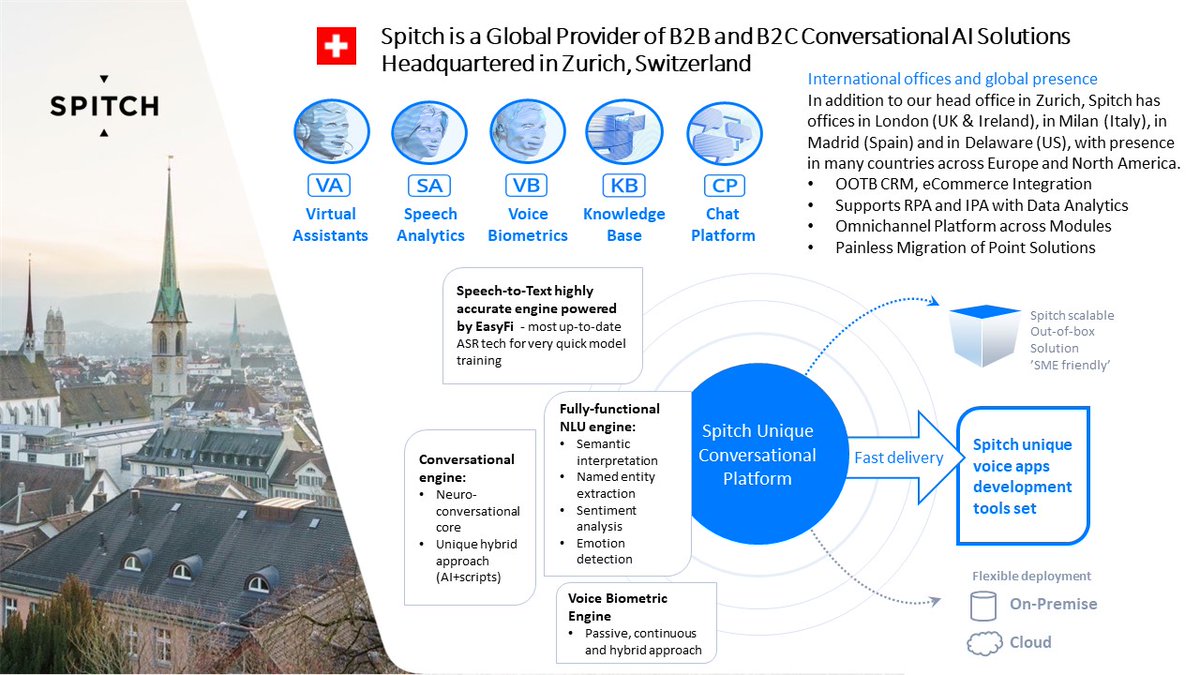
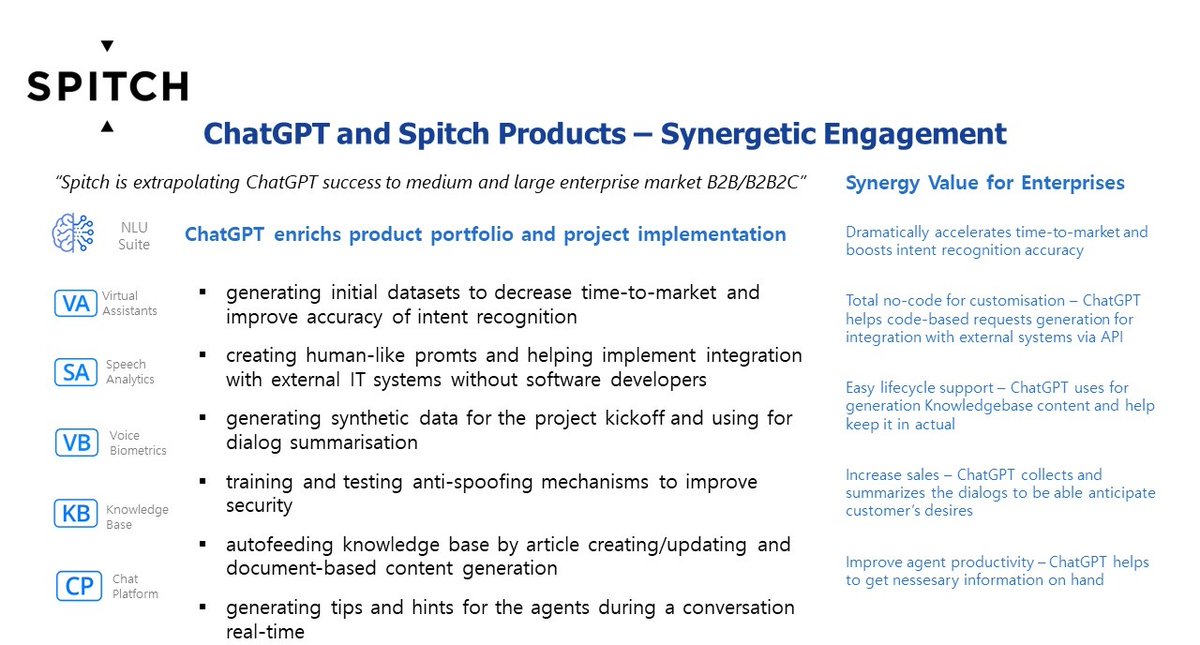
pitch + Zendesk = stronger CX. By adding AI voice solutions to Zendesk’s core platform, we help boost sales, retention, and customer lifetime value.
Visit Zendesk Marketplace: https://t.co/gV65FwVyFE
Visit Spitch and ask for a demo: https://t.co/5gV1XTtlQP
#CX#AI#Zendesk #Spitch #Partnership #AgenticAI #VirtualAssistant #VoiceBiometrics #SpeechAnalytics
Are Retailers Unknowingly Funding Their Biggest Competitor?
Many brick-and-mortar and online retailers rely on a leading cloud platform for services for storage, compute, databases, serverless apps, analytics, AI/ML, and Connect for cloud-based contact centers. These tools are widely adopted for good reason: they deliver speed, scale, and reliability.
Yet there’s a strategic question worth considering: when retailers invest heavily and rely solely on this platform and tech stack, are they indirectly strengthening the competitive position of one of the world’s largest online retailers? Even with compliance and organizational separation in place, the optics—and the financial reality—remain that these cloud and tech stack revenues ultimately support the growth of a direct competitor in the retail marketplace.
This raises important questions for retailers....... 🤔
Competitive positioning: Does it make sense to build customer engagement and analytics on infrastructure owned by a market rival?
Long-term flexibility: How can retailers avoid vendor lock-in and unexpected costs while keeping their options open?
Strategic independence: Are there advantages to diversifying providers for mission-critical and data sensitive operations?
For contact center technology in particular, alternatives such as https://t.co/oEBhdrVTGl offer a mature, agnostic, and enterprise-grade approach—delivering the benefits of AI-powered automation and compliance without the concerns of vendor entanglement.
The takeaway isn’t that this cloud and technology provider is “wrong”—it’s that strategically thoughtful retailers should weigh the value of independence alongside cost and convenience.
What’s your perspective? Should retailers continue investing heavily in this ecosystem, or consider a more conservative and balanced cloud and technology strategy?
Visit https://t.co/oEBhdrVTGl to learn more about how we can help optimize eCommerce Agentic AI Customer Engagement.
#RetailTech #CloudStrategy #DataSecurity #RetailInnovation #DigitalTransformation #contactcenter #CompetitiveAdvantage #AgnosticRetail #CX #eCommerce #SpitchAI
🔒 How Spitch Certifications Map to FedRAMP fast tracking US Public Sector Partnerships:
Baselines FedRAMP security control baselines (NIST 800-53 Rev. 5, Low/Moderate/High)
1. ISO 27001 → FedRAMP: Security Controls Framework
Overlap: ISO 27001 covers information security management, risk assessments, incident response, access control, and continuous monitoring—all core areas in FedRAMP baselines.
Alignment: Strong alignment with FedRAMP’s AC (Access Control), AU (Audit & Accountability), IR (Incident Response), and RA (Risk Assessment) control families.
Benefit to Partners: ISO 27001 certification reduces the gap analysis effort when mapping security controls to FedRAMP.
2. HIPAA → FedRAMP: Data Privacy & Safeguards
Overlap: HIPAA addresses data confidentiality, integrity, availability, and safeguards for Protected Health Information (PHI).
Alignment: Maps closely to FedRAMP’s SC (System & Communications Protection), MP (Media Protection), and SI (System Integrity) controls.
Benefit to Partners: Demonstrates maturity in handling regulated data environments, which FedRAMP agencies expect for sensitive workloads.
3. GDPR → FedRAMP: Data Protection & Governance
Overlap: GDPR enforces data minimization, consent, right-to-be-forgotten, encryption, and breach notification.
Alignment: Maps to FedRAMP controls around PL (Planning), PT (Privacy), SC (Encryption & Communication), and IR (Incident Reporting).
Benefit to Partners: Shows that Spitch has robust data subject rights and privacy governance—an increasing focus for FedRAMP Moderate & High authorizations.
4. Governed LLM / AI Models → FedRAMP: Controlled Use of Emerging Tech
Overlap: FedRAMP requires auditability, transparency, and strict boundary definitions for all components of a system, including AI/ML.
Alignment: Supports AU (Audit), CA (Assessment, Authorization & Monitoring), and SI (System Integrity) requirements.
Benefit to Partners: Spitch’s controlled, explainable LLM/RAG AI positions partners as compliant-ready for agencies concerned about AI security and data leakage.
🚀 For Tech Partners targeting the public sector, FedRAMP is essential—but costly and complex.
With ISO 27001, HIPAA, GDPR, and governed LLM/RAG AI, Spitch provides a compliance foundation mapped to FedRAMP baselines (Low, Moderate, High). That means faster control mapping, audit-ready evidence, and flexible on-prem, hybrid, or cloud deployment.
🤝 Let’s partner to accelerate secure, AI-powered CX in government.
Visit: https://t.co/oEBhdrVTGl and ask for an Introduction and demo!
#FedRAMP #GovTech #CX #AI #SpitchAI #Genesys #Zendesk
Why 32% of Contact Centers Still Operate On-Premise
In today’s cloud-first world, it may seem like every organization has already transitioned to the cloud. But the reality is that over 32% of businesses still operate on-premise contact center software, and for good reason. Whether due to security concerns, regulatory requirements, infrastructure investments, or specific operational needs, many enterprises must maintain on-premise solutions—and they are not alone.
The Cloud Isn’t the Only Option—And That’s Okay
The rush to the cloud has created a misconception that staying on-premise is outdated. In truth, many organizations—especially in regulated industries like finance, healthcare, and government—require the control, security, and customization capabilities that only an on-premise solution can provide.
At Spitch, we understand that every business is different. That’s why we empower enterprises with flexible deployment options, choosing to remain on-premise, transition to the cloud, or a hybrid model that blends the best of both worlds.
Spitch: Trusted Partner in On-Prem, Cloud, and Hybrid Contact Center AI
Unlike many Conversational Voice AI providers that only offer cloud-based solutions, Spitch is one of the few companies that fully supports on-premise, cloud, and hybrid deployments. This flexibility allows organizations to move at their own pace and in a way that aligns with their unique operational and compliance needs.
Spitch's Approach Differentiators:
1) On-Premise Excellence: AI-powered voice solutions that seamlessly integrate into existing on-premise environments while ensuring data sovereignty and regulatory compliance.
2) Hybrid Flexibility: Enable businesses to keep critical functions on-premise while leveraging the cloud for scalability, innovation, and AI-driven enhancements.
3) Cloud-Ready, When You Are: For those planning a cloud migration, Spitch offers a consultative roadmap to ensure a seamless transition without disrupting existing CX operations.
4) Governed LLM: AI must be deployed responsibly. Our LLM models can operate in a private cloud or fully on-premise, ensuring data security and compliance without sacrificing AI-driven capabilities.
Why This Matters for Your Business
Choosing the right contact center software isn’t just about technology—it’s about meeting your organization’s needs today while preparing for the future.
1) Spitch gives enterprises the ability to stay secure with full control over their data.
2) Meet industry-specific compliance requirements that prevent full cloud adoption.
3) Scale intelligently with a roadmap that supports future growth.
4) Enhance customer experience with cutting-edge AI solutions, no matter where they operate.
Let’s build a strategy that works for you. Contact us today to explore how Spitch can support your contact center’s evolution—on your own terms. https://t.co/5gV1XTsO1h
#Spitch #Zendesk #AI #ContactCenter #VoiceBiometrics #VirtualAssistant
Hey Elon, saw you're exploring ways to optimize the Social Security Administration—awesome initiative! Efficiency + innovation in government is long overdue. If automation with conversational AI is on your radar, check out https://t.co/oEBhdrVlQN—Swiss-grade security, cutting-edge AI, and a decade of expertise. Our Agentic AI handles complex workflows autonomously, and we offer the #1 voice biometrics for authentication. Might be right up your alley! @elonmusk
The Ultimate Team: Driver, Car, Pit Crew, and Conversational AI?
For seven unforgettable days, I had the privilege of living and working infield at the legendary Daytona International Speedway, fully immersed in the adrenaline-charged world of the IMSA Roar Before the 24 and the Rolex 24. Every moment was a masterclass in precision, endurance, and teamwork. I witnessed firsthand the relentless pursuit of perfection, the unbreakable bond between driver, car, and crew, and the heart-stopping intensity of endurance racing.
Racing is a Team Sport—Now with a New Member
Sports car racing—whether IMSA, NASCAR, or Formula 1—has always been about pushing the limits. Victory isn’t just about speed; it’s about a team working as one—the driver’s skill, the machine’s endurance, and the pit crew’s flawless execution.
Now, a new team member has arrived: Conversational AI, an advanced virtual pit crew member that enhances decision-making, strategy, and communication like never before.
Conversational AI: The Ultimate Pit Crew Member
Remember KITT from Knight Rider? A car that could think, talk, and strategize with its driver? That futuristic vision isn’t so far-fetched anymore.
Conversational AI is becoming a real-life race-day co-pilot, actively supporting the entire team:
Driver Assistance: Conversational AI provides live coaching, suggests braking points, warns of hazards, and recommends optimal overtaking strategies based on real-time data.
Pit Crew Coordination: AI synchronizes pit stops, predicts mechanical issues, and ensures fuel and tire efficiency, giving the team an extra edge.
Mental Endurance Monitoring: By analyzing biometrics and voice patterns, AI detects driver fatigue and stress, offering instant feedback and strategic adjustments to maintain peak performance.
Beyond the Track: AI’s All-Seeing Eye
AI-powered drones and sensors scan the track, detecting hazards before they become threats. Advanced algorithms predict weather changes down to the minute, while machine learning analyzes competitor behavior to anticipate risky moves and counter them before they happen.
The Future: AI as a Race Partner or Rival?
Will AI-powered cars eventually race independently? We are entering an era where AI can manage tire wear, fuel strategy, and racecraft with superhuman precision. Could the future hold battles between AI-driven cars and human-enhanced teams, testing the ultimate balance of man and machine?
The Road Ahead
AI is already revolutionizing IMSA, NASCAR, and Formula 1, optimizing strategy and team performance. But one thing remains unchanged—racing is, and always will be, a team effort. With human skill, mechanical precision, pit crew expertise, and Conversational AI working in perfect sync, the future of motorsports is faster, smarter, and more thrilling than ever.
The difference? This time, KITT isn’t science fiction—it's reality.
https://t.co/IJj1xCYs6z
#Spitch #ConversationalAI #Automotive #IMSA #Zendesk #Rolex24
Conversational AI is revolutionizing business operations, delivering significant ROI when effectively implemented alongside live agents. Here are the key areas where companies are experiencing the greatest impact:
1. Cost Reduction and Efficiency
Automating Customer Support: AI-powered virtual assistants handle high volumes of routine tasks (FAQs, order processing, troubleshooting), reducing the need for large customer service teams.
ROI Example: Businesses report up to 30% cost savings by minimizing reliance on human agents.
24/7 Availability: AI provides round-the-clock service, improving customer satisfaction and reducing the need for after-hours staff.
ROI Example: Companies offering 24/7 support see a 15-20% increase in customer retention.
2. Enhanced Customer Experience & Retention
Personalized Interactions: AI analyzes user behavior to deliver tailored responses, increasing satisfaction and loyalty.
ROI Example: Personalized AI interactions can boost retention by 5-10% and sales by 10-15%.
Faster Resolution: AI resolves initial queries quickly, routing complex issues to human agents, reducing wait times and improving (NPS).
ROI Example: Companies have reduced average handle times by 40-60%, enhancing both efficiency and customer experience.
3. Increased Revenue & Sales
Lead Generation & Qualification: AI engages prospects in real-time, improving lead quality and conversion rates.
ROI Example: Companies using AI see up to a 20% increase in qualified leads and faster sales cycles.
Upselling & Cross-Selling: AI chatbots recommend complementary products, increasing average order value (AOV).
ROI Example: E-commerce and retail environments see revenue growth of 10-15% from AI-driven upselling.
4. Data-Driven Insights
Actionable Analytics: Conversational AI collects data on customer preferences, enabling targeted marketing and better decision-making.
ROI Example: Businesses report up to a 30% improvement in marketing effectiveness and customer segmentation through AI insights.
5. Reduced Churn & Loyalty Improvements
Proactive Engagement: AI reaches out to at-risk customers, addressing issues before they churn.
ROI Example: Businesses see a 10-20% reduction in churn rates through proactive AI outreach.
Calculation Example: If a company saves $500,000 in support costs and generates $200,000 in upsell revenue, with a $100,000 AI investment, the ROI would be 700%.
Conclusion: Conversational AI offers substantial ROI through cost savings, increased revenue, efficiency, and better customer experiences. Depending on the scale of deployment, ROI can range from 200% to over 700%, making it a highly attractive investment for automating and personalizing customer interactions.
Visit: https://t.co/5gV1XTsO1h
#CX #Retail #GenAi #LLM #ContactCenter #Retail #eCommerce
Conversational virtual assistants (VAs) are increasingly poised to replace traditional Interactive Voice Response (IVR) systems, although the transition may vary depending on the industry and specific use cases.
Superior User Experience: Natural Language Processing (NLP): VAs use advanced NLP to understand and respond to user queries in natural language, making interactions more intuitive and less frustrating compared to traditional IVR systems, which rely on rigid menu structures and keypad inputs.
Personalization: Virtual assistants can access and utilize customer data to provide personalized experiences, remembering previous interactions and preferences, something traditional IVRs are not equipped to do.
Enhanced Efficiency and Flexibility: Faster VAs can handle more complex queries without requiring the user to navigate through multiple layers of menus, leading to quicker resolutions and higher customer satisfaction.
Omni-Channel Support: Unlike traditional IVR, which is limited to voice, VAs can operate across multiple channels, including voice, chat, SMS, and social media, offering a seamless experience regardless of how the customer chooses to interact.
Reduced Operational Costs: While traditional IVRs require significant maintenance and upgrades, VAs are often more cost-effective in the long run due to their scalability, ease of updates, and ability to handle a higher volume of interactions without needing additional human resources.
Automation of Repetitive Tasks: VAs can automate routine queries and tasks that traditionally would have been handled by live agents or through cumbersome IVR processes.
AI-Powered Insights: VAs can integrate with AI and analytics platforms to gather insights from customer interactions, helping businesses to continuously improve service quality and customer experience.
Proactive Engagement: Advanced VAs can proactively engage customers based on their sentiment behaviors and preferences, offering a level of service that traditional IVRs cannot match.
Integration with Other Systems: VAs can integrate with CRM systems, knowledge bases, eCommerce, scheduling, ticketing and other enterprise platforms, allowing them to provide more informed and context-aware responses than traditional IVRs.
Transition Period: While VAs offer many advantages, the transition from traditional IVR systems may take time, especially for industries or companies heavily invested in legacy systems.
Conclusion: Conversational VAs are well on their way to replacing traditional IVR systems due to their ability to provide a more natural, efficient, and personalized CX. While the shift may not be immediate across all sectors, the trend is clear: as businesses continue to adopt AI-driven technologies, the role of traditional IVRs will diminish, making way for more advanced and customer-friendly virtual assistants.
#Spitch.ai #CX #Innovation #GenAi hashtag#ContactCenter
The concept of AI as a virtual personal advisor with an avatar of choice, capable of integrating the latest information with your personal life experiences, is an intriguing and increasingly feasible idea.
You could choose an avatar that reflects your preferences—whether it's a human-like figure, a fictional character, or something entirely unique. The avatar would serve as the "face" of your AI advisor, making interactions more engaging and personalized.
Personal and Global Data with AI would combine your personal life experiences, preferences, and history with real-time data from various sources including news, trends, market conditions, or any other relevant information, enabling the AI to offer well-rounded and timely advice.
With advancements in natural language processing, AI could engage in conversations that feel natural and intuitive, understanding context, tone, and even emotions like talking to a trusted companion.
AI could help you navigate various aspects of life, from career and health decisions to personal relationships and hobbies. By learning, it would provide increasingly accurate and personalized advice over time.
AI could function as a "virtual organ brain extension," augmenting your cognitive abilities. This could include enhancing memory, aiding in decision-making, and providing analytical support. Over time, this AI would learn to anticipate your needs and preferences, becoming an indispensable part of your life.
This AI virtual avatar could operate in harmony with your natural brain functions, taking over tasks that require extensive data processing or memory retrieval, while allowing you to focus on creative, emotional, or strategic thinking.
The integration of AI into daily life could represent a new stage in human evolution, where our cognitive capacities are significantly enhanced. This could lead to the development of "superhuman" abilities in areas like data analysis, memory, and decision-making.
With an AI Avatar learning from your experiences and the world around you, you could become more adaptable and informed, making better decisions and navigating complex situations with greater ease.
As AI becomes more intertwined with our daily lives, we would need to address ethical questions around privacy, autonomy, and identity. Ensuring that AI remains a tool that enhances rather than controls human life would be crucial.
The possibilities are exciting, but there are also risks, such as over-reliance on AI, and the possibility of AI making decisions that don't align with your values or best interests.
Conclusion: AI has the potential to evolve into a virtual personal advisor with an avatar, integrating the latest information with your personal life experiences. This AI could act as a virtual organ brain, augmenting human cognition and representing a significant leap in our cognitive evolution. However, this advancement would require careful consideration that doesn't diminish the human experience.
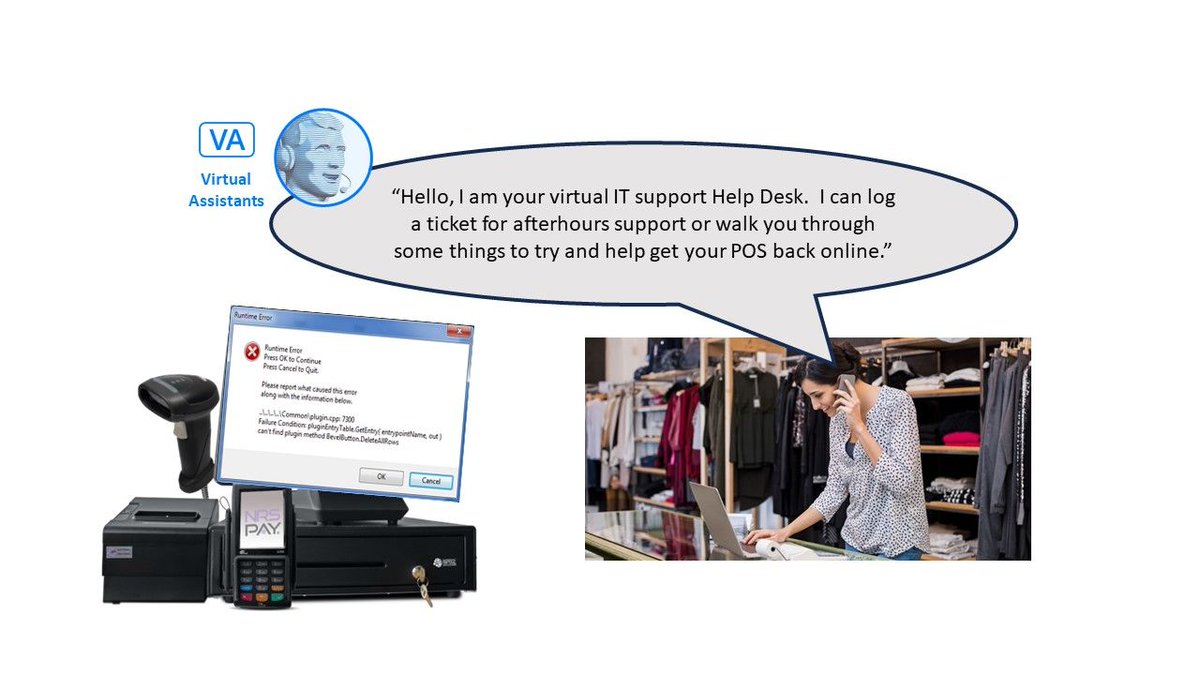
Gen AI Virtual Assistants can effectively support Retail Store ITSM ticketing processes, allowing live Help Desk Agents to focus on more complex issues. Here's how:
1. Automated Triage: Gen AI can automate the initial triage of ITSM tickets by gathering relevant information from users and categorizing tickets based on predefined criteria such as issue type, identity, severity, and location.
2. Self-Service: A Gen AI Virtual Assistant can offer self-service options to help store employees troubleshoot common IT issues. By providing guided troubleshooting steps, access to knowledge base articles, or automated resolution procedures, Gen AI Virtual Assistant can empower users to resolve minor issues without the need for live help desk support.
3. Ticket Routing/Escalation: Gen AI can automatically route tickets to the appropriate support teams or personnel based on predefined rules and criteria. Tickets are quickly assigned to the most qualified personnel for resolution, allowing live help desk agents to focus their attention on more complex issues that require their expertise.
4. Real-Time: Gen AI Virtual Assistants can provide 24x7 real-time assistance to store employees by answering questions, providing guidance, and troubleshooting tips via voice reducing the need for live help desk support. And in the event of a need for a live agent SIP integration can transfer the call to a live agent with all data that has been collected.
5. Status Updates/Notifications: Gen AI can keep store employees informed about the status of their ITSM tickets by providing updates and notifications across various channels avoiding the use of the traditional GUI interface. This includes notifications when tickets are assigned, updated, or resolved, ensuring that users are kept in the loop throughout the resolution process.
Overall, Gen AI Virtual Assistant can effectively support Retail Store ITSM ticketing processes, allowing live help desk agents to focus on more complex issues that require their expertise. By automating ticket triage,
offering self-service resolution options, facilitating ticket routing and escalation, providing real-time assistance, and delivering status updates and
notifications, Gen AI helps optimize IT support operations and enhance the overall service experience for store employees.
Highly recommend that the reader takes 12 minutes and watch this stunning comprehensive recorded example of a Virtual Assistant w/ other Channels and Speech Analytics for retail store support (automotive example) via https://t.co/oEBhdrVlQN and https://t.co/jXPg4t2jcW. Solution is ready NOW!
Demo Video: https://t.co/uqkf4nKHSY
Zendesk Marketplace: (Spitch)
https://t.co/WBe2gOS674
#zendesk #spitch #CX #ITSM #retail #HelpDesk #automotive #aftermarketautoparts #autocareservicecenters #dealerships #contactcenter #customerservice
@X Running low on battery and need a quick charge? Look no further than your personal virtual voice assistant! With just a few simple commands, your assistant can locate the nearest coffee shop, schedule a 15-minute full charge, order your coffee, and even handle payment. No more worrying about running out of juice or waiting in long lines. Stay charged and caffeinated with the help of your trusty assistant. #LoveAI (comment on vision)
How realistic is this?
https://t.co/BydtWgXm7L
@X “Electric cars are simpler than those with gas fuel engines and have significantly fewer parts. You typically find around 15,000 parts in an electric car whereas gas-driven cars will have closer to 30,000 parts.” – quoted from https://t.co/EbM8VeQnWe
Do you believe this will impact revenue overall for Dealerships, After-Market Auto Parts Retailers and Automotive Service Centers?
https://t.co/XLQKMPjRCm
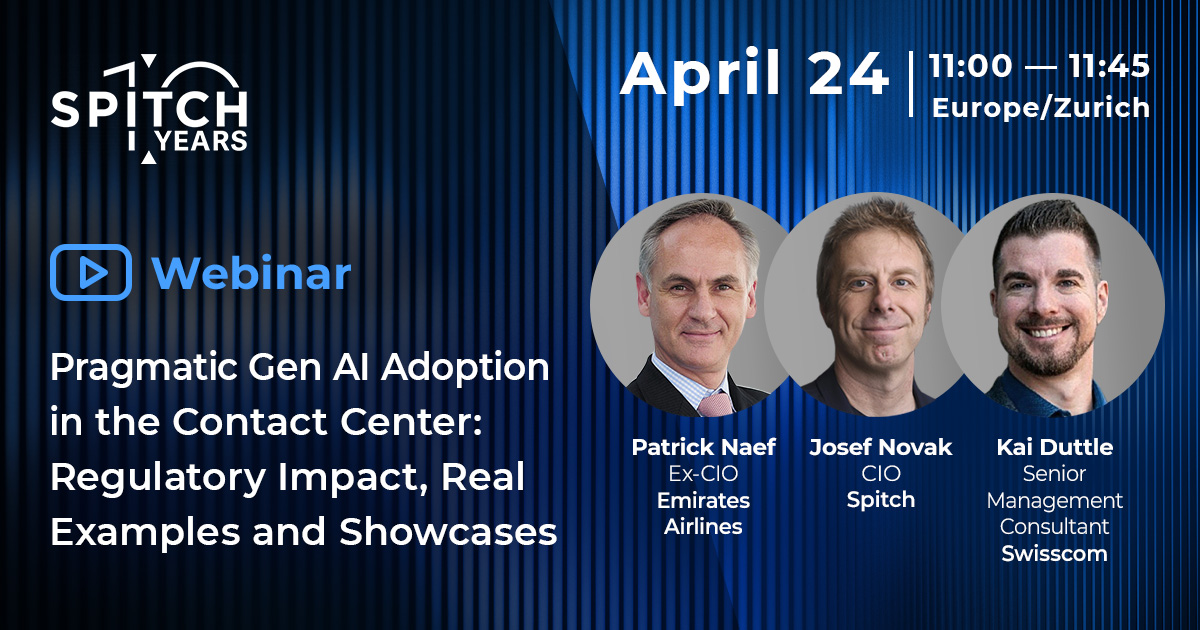
Register for our upcoming webinar "Pragmatic Gen AI Adoption in the Contact Center: Regulatory Impact, Real Examples and Showcases" on April 24, 2024 | 11.00 - 11.45 AM (CEST).
Book your spot now here - https://t.co/JHlD8fEkda