Replit CEO Amjad Masad on the “most gangster story in Silicon Valley”
In September 2021, Replit founder Amjad Masad tweeted:
“The most gangster story in Silicon Valley is Steve Jobs buying Pixar for $5m, investing $50m, operating at a loss for a decade — so much so he had to cut personal checks every month to make payroll and somehow turning it around to exit for $7B to Disney.”
He expands on this in his interview on the My First Million podcast:
“The thing I like about the Steve Jobs story is when he was lost in the desert for 10 years. He was fired from Apple, and then he created two companies that were failing the whole time. NeXT Computer and Pixar were literally failing, and he was investing more and more of his own money. At that pace he was going to go broke, but he kept going for 10 years. How do you do that?”
Eventually the success of Toy Story, the first fully computer-animated feature film, helped make Pixar’s 1995 IPO one of the the most successful of the decade. And Apple used the NeXt operating system as the foundation for macOS. But both ventures took the better part of 10 years.
Interestingly, the 12 “wilderness years” between getting fired at Apple and coming back was the most pivotal period of Steve Jobs’s life. His work with Pixar and NeXT helped him grow into the leader capable of taking Apple to unimaginable heights when he returned.
Source: @myfirstmilpod@amasad (Dec 2024)
Neuralink is planning its first Blindsight implant later this year, aiming to restore limited vision even for people who have lost both eyes, their optic nerve, or were born blind
Over time, it could potentially go beyond that and offer enhanced or even superhuman vision
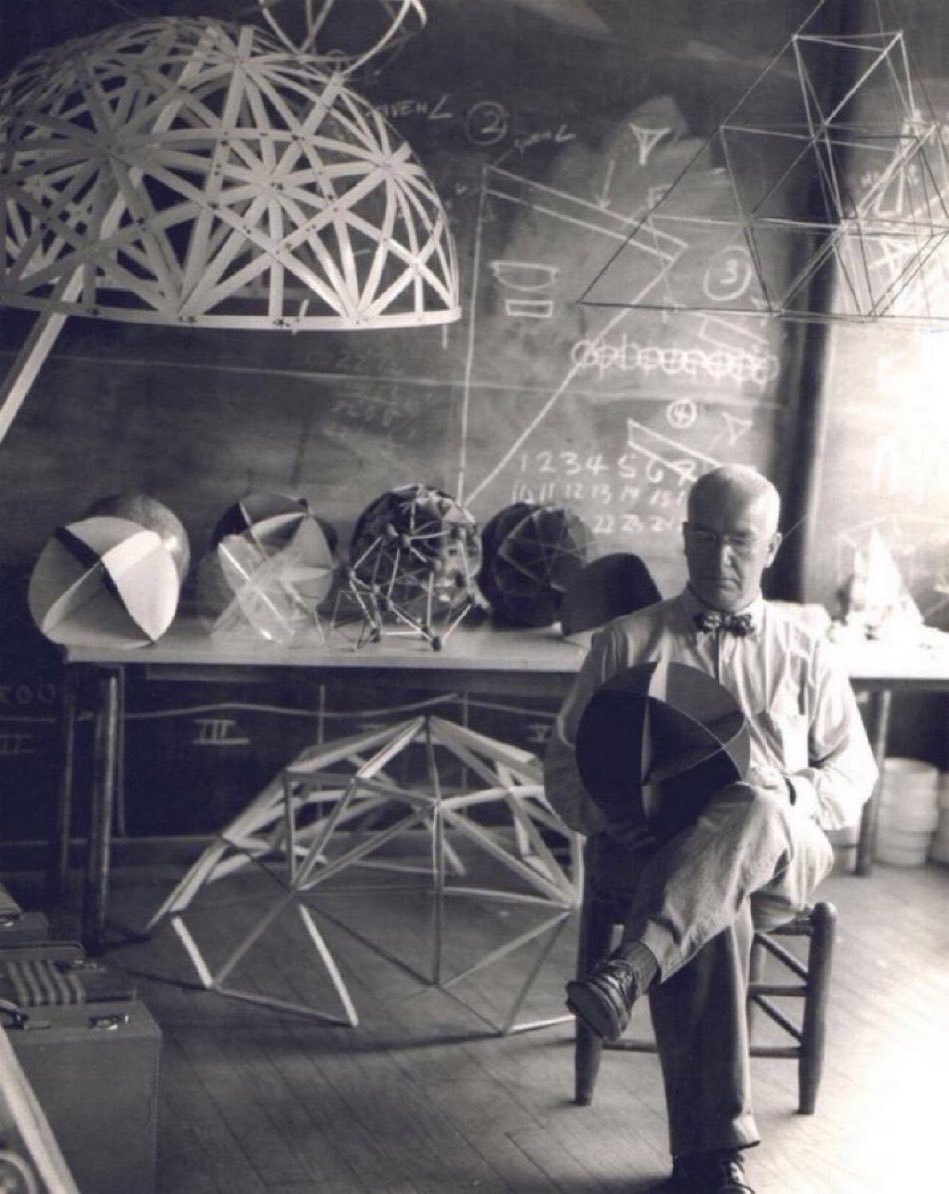
You never change things by fighting the existing reality. To change something, build a new model that makes the existing model obsolete.
—Buckminster Fuller, architect, systems theorist, designer and futurist
Elon Musk: "If you haven't thought until your brain hurts, then you haven't tried hard enough."
Asked what it takes to do things the way he does, Elon Musk (CEO of Tesla and SpaceX) points first to mastering technology.
"If you want to do things like me, you have to learn how to be good at technology. So study engineering, physics, that kind of thing. Understand how the world works, and try to be as accurate as possible about that."
But knowledge alone isn't the point. The second ingredient is creativity:
"Also try to be creative, which means just try to think of things that haven't been done before, but that would probably make the world better."
@elonmusk is candid that none of this comes easily.
Pairing technical accuracy with genuine originality demands enormous mental effort:
"It requires a lot of mental effort to do that. I don't just combo stuff willy-nilly. I mean, occasionally, but it's rare."
And that's where his standard for effort comes in. For Musk, the feeling of mental strain is the bar you're supposed to clear:
"You really have to think until your brain hurts. If you haven't thought until your brain hurts, then you haven't tried hard enough."
Naval Ravikant: “The smart and leveraged are getting richer”
“I’ve been saying this for a while, but the leverage in the system is insane,” Naval begins. “Leverage is a force-multiplier for your work. The oldest form of leverage is labor (you have people working with you or for you). Then it was capital (you’re investing money behind a problem). Then it was media (you’re writing a book and people are listening to you and your words are moving many people to do things)… Then code came along. Code is this incredible, permissionless form of leverage where you have robots and data centers cranking away for you. And now the leverage is increasing through AI, agents, robots, supply chains, 3D printing, and all the things you can do to amplify your work.”
Naval reflects on the claim that there will be 1-person, billion-dollar companies and points out that there actually already have been: Minecraft and Bitcoin were both 1-person projects.
“The leverage will just continue to increase, which means non-linear returns.” Naval explains. And he points out that this has important societal implications:
“Society is just not built to handle that. You can see all of the outcry against the rich getting richer and billionaires and all that, but it’s not really that the richer are getting richer. It’s that the smart and leveraged are getting richer. If you’re smart, and you’re highly-leveraged, you’re knowledge-creation power (earning-power is downstream of knowledge) is so much higher than your peers that you may have left behind in college and they just have no idea what’s coming. It’s going to be a kind of crazy time.”
Source: @zfellows (Aug 2025)
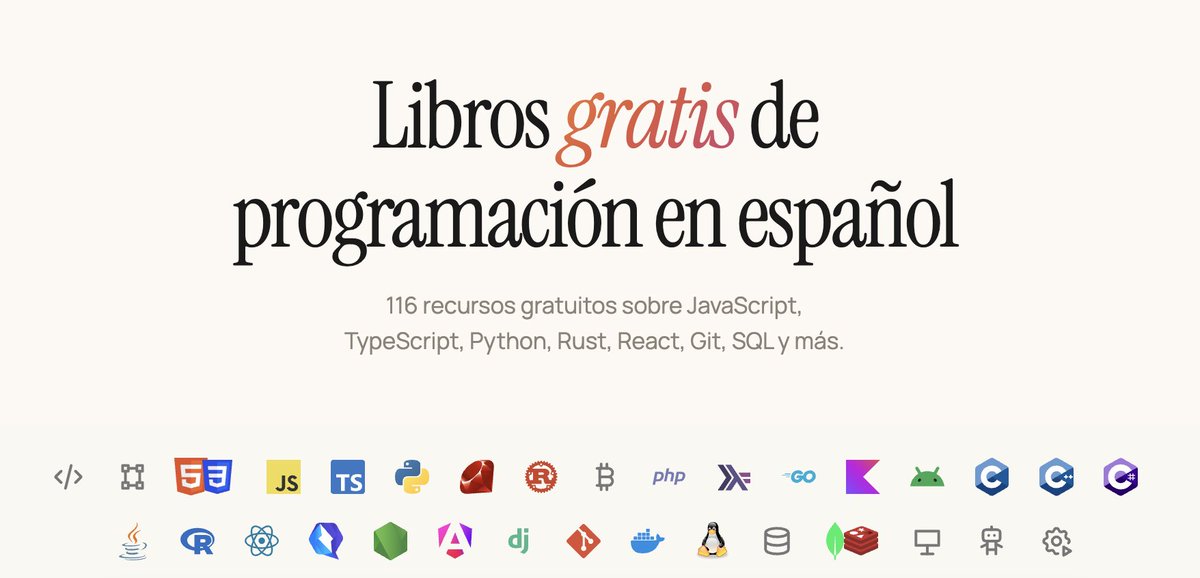
He recopilado más de 100 libros gratis de programación en español en formatos PDF, HTML y ePUB.
Hay libros y recursos de JavaScript, PHP, Java, TypeScript, Python, React, Rust, Git, SQL y mucho más.
Todo en → https://t.co/82q8JREhV0
Kevin O'Leary: "A salary is a drug they give you when they want you to forget about your dreams."
Kevin explains why the paycheck feels so seductive:
"It's very easy to stay in that world where somebody is mitigating your risk. You just have to perform certain tasks, do them well for a third of your day and they will feed you a salary and you don't have to think about anything else."
And he's clear that this path isn't wrong for everyone:
"That for a lot of people works. There's nothing wrong with that. It's very noble. Great employees are extremely valuable to build enterprises."
But the moment you step off that path, something fundamental shifts.
Kevin describes what happens when you put income you actually need to eat with on the line:
"You're going on a different journey and that fear of failure is an extremely motivating factor."
That fear is what separates those who build from those who simply perform.
@kevinolearytv continues:
"You ask any entrepreneur about the journey and they're going to tell you the dark moments when they face the abyss and they didn't know it was going to happen. And I think that gives a tremendous amount of emotional fiber to a person. And it manifests itself in a certain amount of confidence over time."
“I learned this, at least, by my experiment; that if one advances confidently in the direction of his dreams, and endeavors to live the life which he has imagined, he will meet with a success unexpected in common hours.”
― Henry David Thoreau
Jeff Bezos explains the idea of “paper cut” teams
“There are big things that are really important to manage — and by the way, it’s astonishingly hard to focus on just the big things. Even though they’re obvious, they’re really hard to focus on.
But in addition to that, there are all these tiny customer deficiencies. We call those ‘paper cuts,’ and we make long lists of them. Then we have dedicated teams that go fix paper cuts. That’s because the teams that are working on the big issues never get to the paper cuts. They never work their way down the list. They’re working on big things — as they should and as you want them to — so you need special teams who are charged with fixing paper cuts.”
Source: @lexfridman (Dec 2023)
Si arrancaste hace poco con Claude Code, hay algo que conviene tener claro pronto: cómo funciona Memory.
El problema base es simple. Abres una sesión nueva y el agente no se acuerda de nada ni del proyecto, ni de cómo te gusta trabajar, ni de la conversación de ayer. Así que terminás explicando lo mismo una y otra vez.
Memory es la respuesta a eso. Le permite a Claude Code arrastrar contexto entre sesiones: qué construye el proyecto, qué decisiones ya tomaste, qué patrones sigues.
Se maneja con dos piezas:
1) CLAUDE.md: lo que le cuentas tú.
Un archivo de instrucciones que se carga apenas abres la sesión. Puede vivir en tres lugares:
- /.claude/CLAUDE.md → tus mañas personales, sirve para todos los proyectos
- /CLAUDE.md → contexto del proyecto, lo ve todo el equipo
/CLAUDE.local.md → notas tuyas sobre el proyecto, no entra al repo
2) Auto memory: lo que aprende por su cuenta
A medida que pasan las sesiones, Claude va guardando cositas que descubre solo: comandos que funcionan, decisiones de arquitectura, cómo te gusta el código.
Vive aquí ➡️/.claude/projects/<proyecto>/memory/
Y en la terminal tienes dos comandos para gestionar todo
- /init → escanea el proyecto y arma un CLAUDE.md base
- /memory → te muestra qué cargó, abre el editor, y enciendes o apagas auto-memory
Aprende y mejora en Python con este juego.
Se llama "The Farmer Was Replaced" y tienes que programar un dron para mantener una granja.
Con valoraciones extremadamente positivas en Steam:
https://t.co/4DLrH91SKb