@Warne2Sarah@AlisonTuckett7@Jenny_1884@suecresswell01 Yes, because of folic acid I now make all our bread using a 2nd hand machine I bought and using flour from another small mill. So easy, just put the ingredients in press the button & a few hours later lovely bread. Going to try French sticks today to use for garlic bread.
Dr. Meryl Nass Vindicated...
A federal judge just ruled that Maine’s medical board had ZERO evidence when they ordered Dr. Meryl Nass to undergo a forced psychiatric evaluation — for prescribing ivermectin and speaking out against the COVID narrative.
They suspended her license. They tried to brand her mentally unfit. They wanted to silence a doctor who refused to play along.
This isn’t “discipline.” This is medical authoritarianism. If they can do this to her, they can do it to any physician who prioritizes patients over protocol.
The cartel just took a hit. The fight for medical freedom just got louder.
@su4142@A1an_M That is what I thought but Husband bought wholemeal rolls last week thinking safe, he has bought them before but I noticed they too now have folic acid added.
@A1an_M Exactly. I bought 2nd hand breadmaker last weekend because of this. Already make most meals from scratch. Now bread. Must say very pleased with machine, so much easier to use than the one I had years ago and the bread is lovely.
@JacquiDeevoy1 Sister driving home at night with her partner who was asleep. Had to swerve off road to avoid something that was overtaking her. Saw what looked like an old horse carriage and people in fancy dress for a party. She was furious. Went after them but turned corner nothing there.
@A1an_M You are not only 4 people. Many are against this. The amount of synthetic folic acid people will ingest if they buy all products made from flour from supermarkets is crazy. I make 95% of food from scratch and now sourcing FA free flour from small Mills, will make my own.
@JacquiDeevoy1 I experienced same. Sister jabbed died of cancer 3 months later, other family with appendicitis, shingles, leukemia, skin cancer, breast cancer (one friend said 3 of her other friends all had breast cancer) 2 with terrible arthritis. Heartbreaking.
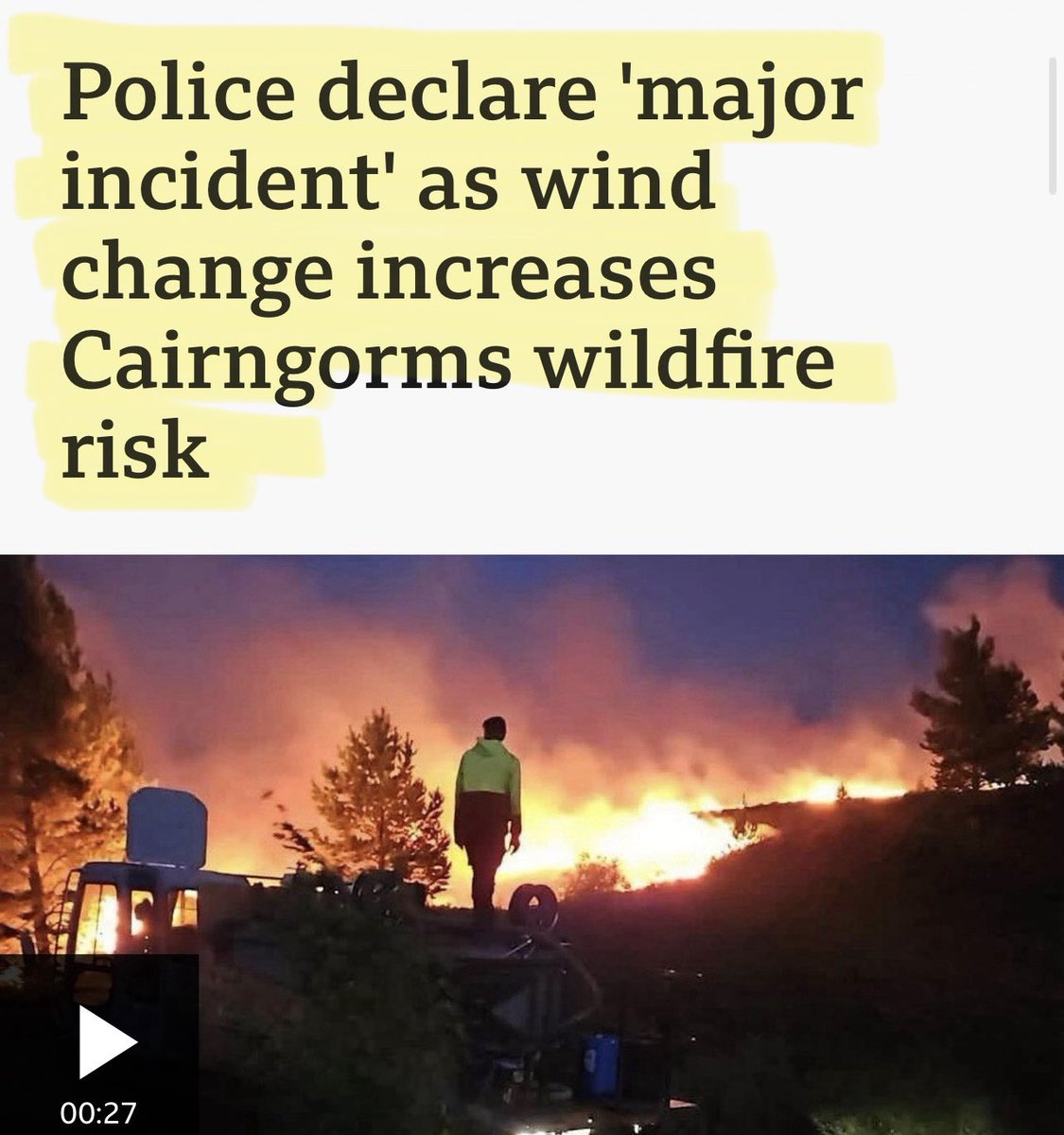
🔥Selective reporting yet again! Because it’s inconvenient for the climate change narrative. Notice there’s no mention of the land managers who warned about the wildfire in the Cairngorms.
The Park’s policies are explicitly guided by the UN Agenda 2030 Sustainable Development Goals! …. Of ‘rewilding’, less grazing, more woodland and scrub regeneration. Which means MORE fire fuel!
Its own wildfire plan admitted this would increase vegetation and fuel loads for years unless actively mitigated. They ignored that!
Gamekeepers warned it was becoming a tinderbox. They were ignored too.
The pen pushing Agenda 2030 ideologues chose not to listen.
MEET JONATHAN REYNOLDS. THE MAN NOW IN CHARGE OF THE ENTIRE BRITISH ECONOMY.
This is the UK's new Business Secretary. He has never run a business. He has never even worked for one. 🤡
He knows absolutely nothing about risk taking, entrepreneurship, or meeting a payroll.
He has never had to hire staff, remortgage his house to provide working capital, or skip his own salary so his employees could have theirs!
In fact, he could not even manage to finish his basic training to become a solicitor. Yet the Westminster elite think he is qualified to dictate how British businesses are run!
How can we expect our economy to grow when the people running it have never spent a single day in the private sector? They are career politicians who have spent their entire lives living off the taxpayer.
RT if you are completely sick of clueless career politicians running our country into the ground! 🇬🇧🔥
@JacquiDeevoy1 My husband had routine check-up. Nurse went through results and said "cholesterol is ok, oh wait I have been told to offer you statins". Husband said thank you but no. Nurse said she wouldn't take them either, but if government had its way everyone over 40 would take them!
The Netherlands is the size of Wales. It is also the second-largest agricultural exporter on the planet by value, shifting roughly €100 billion of food a year out of a country you can drive across in an afternoon. The system that built this has been running, refining itself, since the 1950s, and feeding most of northern Europe in the process.
It is also the diet that built the Dutch themselves. In 1850, the average Dutchman was 5 foot 5, among the shortest in Europe. Today he stands 6 foot, the tallest in the world. The variable, by every cross-country analysis ever run on the question, was dairy. Cheese, butter, milk, repeated every day, for six generations, on a national scale. The Netherlands grew its population upward by feeding them what the soil and the cow could produce together.
In 2019, a Dutch court ruled that the country's nitrogen emissions, principally ammonia from livestock manure, exceeded EU limits. In 2022, the government published a target: halve nitrogen emissions by 2030. According to its own modelling, this required closing roughly 11,200 farms and significantly reducing livestock numbers on a further 17,600.
€25 billion was allocated to buy farmers out. Voluntary first. Then forced, if the voluntary route did not deliver. Nitrogen minister Christianne van der Wal informed the country, in public, that there was no better offer coming.
The farmers responded by driving tractors onto motorways, blocking distribution centres, and inverting the Dutch flag. Forty thousand of them gathered in central Netherlands in a single day. The police were briefly issued with shovels because the tear gas was running low and the farmers had brought slurry.
The protest did not stop the policy. The BBB party, formed by farmers in response, briefly became the largest force in the Dutch Senate, the coalition government softened some elements, and the rest continued. The Dutch dairy farmer who built his herd in 1985 is, in 2026, either gone, going, or being offered 120% of his land's value to leave. He is being offered this because the cow that built the tallest population on Earth is, by spreadsheet, now the problem.
Meanwhile, in the same country, Schiphol airport, KLM, and the Dutch chemical industry collectively emit nitrogen oxides the dairy sector cannot match, and have been treated with significantly more diplomatic care.
The farmer is the easiest fight because the farmer is one man, on one piece of ground, with one tractor.
The chemical plant is owned by a board.
Boards do not get bought out at 120%. They get consulted.
I spent a large part of yesterday trying to explain to people who supposedly are proponents of science what a "confounding variable" is.
Rather than say the same thing again today to about 100 people in about 100 different replies, I'm going to write it all in one place, here.
When scientists do science, in the form of an experiment or study, they will ultimately write it up in a standard report format containing the same sections:
Abstract
Introduction
Method
Results
Discussion
References
One of the most important aspects of the Discussion is a critical analysis of what was done. What went well, what could have been done better, what should be done next time. In particular, the authors attempt to identify if there are any "confounders" which may have influenced the results and rendered them invalid.
Let's take the example of a medicine in a clinical trial. We might, if we are ethical scientists, want to study whether a particular medicine causes adverse effects to those taking it before letting it loose in the wild. So we might recruit some people for a trial, and divide them into two groups. The first receives the actual medicine, the second receives a placebo. We might then monitor the recruits for a few months (or, preferably, a much longer period) on a daily basis and note any illnesses suffered in both groups.
We would then do a statistical analysis on the results from the two groups. If the results of that analysis showed that there was no statistical difference in the levels and types of illness suffered in the two groups, we might then conclude that no adverse effects were caused by the medicine. If, on the other hand, there was a significant difference between the two groups, that would point towards the need for further study and might lead us to conclude that the medicine was the cause of the difference.
The key thing here with our experimental design is that we want to make sure that the two groups in the study - the experimental group who receive the medicine and the control group who do not - are, in every other way, identical. Because if they're not, those differences might have caused the effect we observed, rather than the differences we created in our experiment.
What factors might make these two groups different?
1. Age differences. If one group was older, we might expect they might suffer more illness than the younger group.
2. Gender. Dependent on the medicine, males or females might be more affected. If the groups weren't balanced for gender, this might distort the reported illness results.
3. Health differences. If one group had poorer general health than the other at the beginning of the trial, we might expect them to report more illness during the trial.
These are all examples of "confounding variables". Factors which we did not control but which might influence the outcome and render our results invalid.
So in our experimental design we would want to make sure the experimental group and the control group are closely matched for age, gender and health status.
Which brings me onto climate change.
Climate scientists contend that Carbon Dioxide created by human activity in the industrial age is causing global atmospheric temperatures to increase.
As evidence, they point to an increase in global atmospheric temperatures over the last 200 years or so.
So far so good. Temperatures have, broadly, risen during that time. There are plenty of other things to criticise about this hypothesis and about climate "science" in general but that is for another time.
Yesterday we saw, all over the media, headlines about new record May temperatures of 35 degrees at Kew and Heathrow, and below the headlines was text saying that experts were saying this was another example of evidence of how the climate is warming.
Now I don't deny that it's been hot the last couple of days - where I am it has been around 32 degrees - so I don't doubt that the May record may have been broken somewhere in the country.
But the specific problem I have is with the temperatures at Heathrow and Kew, or indeed anywhere close to London or a big urban area being used as the evidence that the May record has been broken,or that they are evidence of atmospheric warming.
Why? Because of a confounding variable.
When we say a temperature record has been broken, we need to make sure we are comparing apples with apples. So not only do we need to compare temperatures that were measured in the same site using the same type of equipment in both instances - we need to make sure that the sites themselves have not changed.
We know that modern urban areas create a "heat island" effect. The expanses of heat-retaining materials like concrete, asphalt and cement retain heat during the day and release it slowly overnight, leading to higher daytime and nighttime temperatures. Added to which are the many buildings and vehicles in urban areas generating their own heat. All of this means that temperatures in, or close to, an urban area are typically several degrees warmer than in countryside some distance away.
Given the expansion and urbanisation of London over the last century, this effect will only have grown over time.
Arup measured this effect in London and concluded that temperatures there are often 4.5 degrees hotter than in the surrounding countryside (see first comment for link).
This effect obviously varies between different parts of London, as shown on the heat map, and reduces as you move away from central London, but even at Kew, the effect is estimated to cause temperatures to be 0.9 degrees higher than would be the case if Kew was sited in the countryside.
And Heathrow clearly creates its own heat island effect given the scale of the airport and the big expanses of heat absorbing materials there.
So if we are going to use temperatures measured in, or close to, London as evidence of atmospheric warming, we have a problem. We have a significant confounding variable. The warming caused by the heat island effect is going to add to any warming in the atmosphere, and give us an exaggerated result.
You can perhaps forgive tabloid newspapers for running headlines about this, just quoting the raw temperatures measured. They want to make money and it being very hot outside is a great news story. And urban areas becoming increasingly hot in summer is an issue in its own right.
But what is unforgiveable is people who claim to be scientists using these measurements as evidence of atmospheric warming, when there's such a glaring confounding variable influencing the data.
How would a proper scientist deal with this confounder?
Well, they might say "from now on, we will only use temperatures from rural weather stations which are not subject to urban heat island effects, and we will only declare records on the basis of those measurements"
And they might say "we will not use temperature measurements from areas subject to urban heat island effects as evidence of atmospheric warming".
But the Met Office and the climate science people aren't saying that. They're going with the artificially inflated temperatures. Because they have an agenda to push, a vast Net Zero industry to sustain, research grants to chase, and any evidence, however shonky, which backs up the global warming narrative is welcome.
This isn't science!
▪️AI data centres guzzle 5 million gallons of water per day. The equivalent of daily water use for 50,000 people.
▪️A single large AI data centre can consume as much electricity as 400,000 households.
But let’s blame cow burps for destroying the environment. 🤷♂️
A farmer dies in April 2026.
His son inherits the farm. The farm has been in the family since 1847.
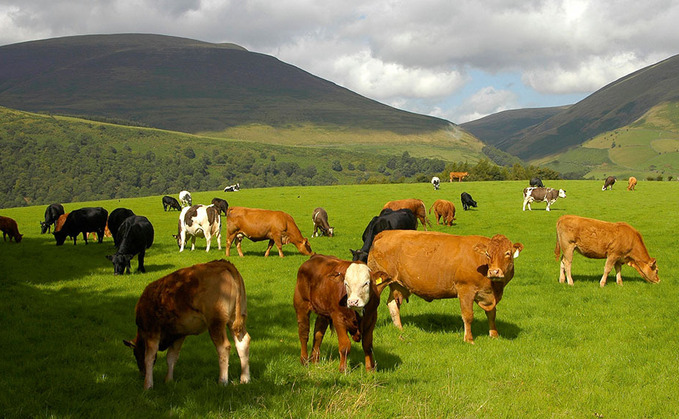
The farm consists of: 300 acres of grazing pasture, a farmhouse built in 1892, a barn, a milking parlour, two tractors of varying ages, a Land Rover that runs about 70% of the time, and a herd of 180 Hereford-cross cattle.
On paper, the farm is worth approximately £3.2 million. This is because land near him has been bought recently by a London hedge fund looking for carbon credits, which has dragged the comparable value of every field within forty miles upward to a number nobody local can justify.
In cash, the farm produces a profit of about £28,000 a year in a good year. In a bad year it loses money. The son also works as a fencing contractor three days a week to keep the operation viable.
The inheritance tax bill on a £3.2 million estate, even at the reduced 20% rate, comes to approximately £140,000 after the increased threshold is applied. The son does not have £140,000. The son has never had £140,000. The son has £4,200 in his current account and an overdraft.
The son sells 60 acres to a developer to pay the tax. The developer puts solar panels on the 60 acres. The remaining herd cannot be sustained on the reduced land. The herd is sold. The barn becomes a holiday let.
A different family eats Brazilian beef this Christmas without knowing why the price went up.
The Treasury collects £140,000.
The land never produces British food again.