Build your expertise in:
✅ Inclusive pedagogy
✅ ASN identification, planning and support
✅ Working collaboratively with families and partners
Join the ASN Teachers’ Programme.
🔗 Find out more: https://t.co/NVpaIRwfes
Closing date – Midnight Sunday 31st May 2026
Thinking about working in ASN or already in an ASN teaching role?
Our 12-month programme supports teachers to build inclusive practice and ASN expertise.
🔗 Submit your expression of interest: https://t.co/NVpaIRwfes
Closing date – Midnight Sunday 31st May 2026
After a career spent grappling with the neural underpinnings of autism, Uta Frith is unwavering in her controversial call to scrap our current view of the condition and start again https://t.co/8RJGgz0Nmg
New guidance on the national approach to promoting and managing attendance in Scottish schools was published in March 2026.
Come along to our online session from 4-5pm on 2 June to explore the key elements of this new guidance.
Sign up here 👉 https://t.co/d3t2RhcJVH
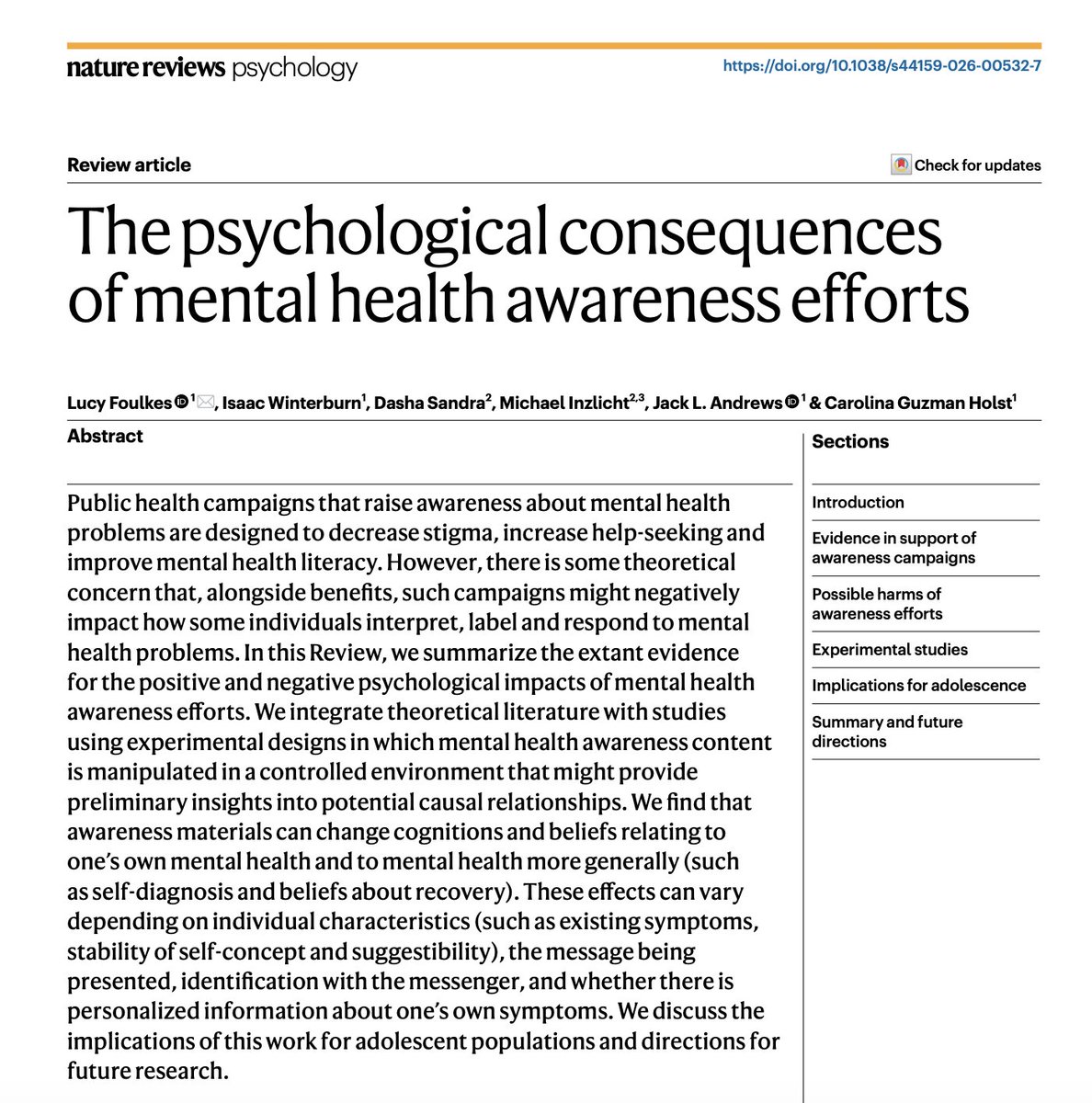
The evidence AGAINST school-based mental health continues to accumulate. Schools are literally being forced to spend money on programs that make student outcomes worse.
Join us and take part in our Anti-Bullying Live lesson for all Secondary Age S1-S3 learners, inspired by our new film series ‘Bullying – The Power of One.’
Check available dates and register now for this unique opportunity to learn. https://t.co/RVlt2q0vnn
#PowerOfOne
From the paper: "Several high-quality trials have shown that universal mental health interventions based on mindfulness, cognitive behavioural therapy, dialectical behavioural therapy and general mental health awareness can all have negative outcomes, including an increase in internalizing symptoms."
As critics have been arguing all along, individualised, medicalised and decontextualised models & narratives are not only net ineffective, but even contribute to and exacerbate social & psychological issues and distress.
We dont face a crisis of 'mental disorders' in need of medical or cognitive treatment, we face a socio-psychological crisis and a crisis of medicalisation in need of a societal rethink.
I'm running this 'pay what you can' webinar about Self-Regulation on 6th May. You can book tickets here. Very grateful for any shares. Thank you! ⬇️
https://t.co/xDL2SjRN0v
@DailyMail Here's Prof Fombonne's paper on 'masking' and autism: https://t.co/3aXJDXPeX1 In short: "Because of its association with intended deception, the term camouflage has poor fit with the autism world." Prof Frith recently said similar. Kids don't mask clinically relevant symptoms.
📢 ELC Leaders
Explore the Autism & Inclusive Practice resource. Group learning materials from the 2022–2023 leadership programme are still available to support inclusive practice in your setting.
🔗 https://t.co/Z1EFg4939y
“…vocabulary-rich children arrive at school with a hidden cognitive advantage ... They have heard “ridiculous” and “extraordinary” and “investigation” at the dinner table, in bedtime stories, in the overheard conversations of articulate adults. Their minds have been silently sketching the spellings of hundreds of words they have never read..
“Children from language-poor environments arrive without those skeletons…
“It is a gap in prediction. And it compounds: the child who reads more easily reads more, hears more words in the context of text, forms more skeletons, and reads still more easily. The child who struggles reads less, encounters fewer new words, forms fewer skeletons, and falls further behind.”
The professor who invented "growth mindset" works at Stanford, and most people have no idea what she actually discovered.
Everyone quotes the phrase. Almost nobody understands what the research behind it really showed.
Her name is Carol Dweck, and the finding that made her famous came from watching how children responded to failure in real time.
She gave kids a series of puzzles, and when the puzzles got hard, two completely different behaviors emerged. Some kids leaned in and tried harder. Others shut down and gave up. The IQ scores between the two groups were nearly identical.
The difference had nothing to do with intelligence. It had everything to do with what each child believed about intelligence itself.
Kids who believed ability was fixed treated every failure as evidence of who they were. Kids who believed ability could grow treated every failure as information about what to do next. Same puzzle. Same difficulty. Completely different outcomes.
Here is what Stanford now officially teaches its students based on her work.
The first tool is deceptively simple: add the word "yet" to any statement of failure. "I don't understand this" becomes "I don't understand this yet."
That single word shifts the brain from a closed verdict to an open investigation, and the research shows it measurably changes how long students persist on hard problems.
The second tool is reframing what effort actually means. Students with a fixed mindset interpret needing to try hard as proof they aren't talented.
Students with a growth mindset interpret effort as the mechanism through which talent is built. The same amount of struggle means two completely different things depending on the story you tell yourself about it.
The third tool is how you process criticism. A fixed mindset treats negative feedback as a personal attack to be avoided. A growth mindset treats it as the most useful data available because it points directly at the gap between where you are and where you want to be.
Dweck spent decades proving that the belief you hold about your own potential is not just a feeling. It is a self-fulfilling operating system that determines almost everything about what you're willing to attempt and how long you're willing to keep going.
The students who thrive at Stanford aren't the ones who never struggle.
They're the ones who decided that struggling means they're learning.
🛠️ Did you know the Autism Toolbox has a dedicated page for ELC practitioners?
Find strategies, examples and practical approaches to support autistic learners in early learning and childcare settings.
🔗 Start with the ELC section: https://t.co/vGWUJ1pZpk
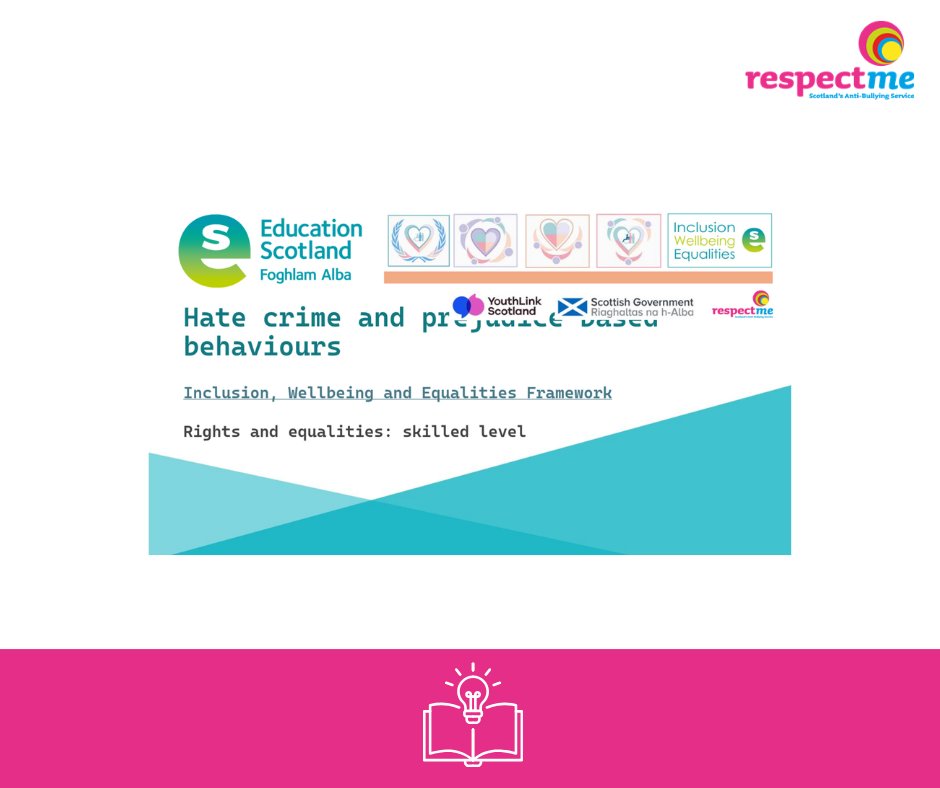
📢Professional learning : Hate Crime and Prejudice-Based Behaviours
Developed with Education Scotland, YouthLink Scotland, respectme, and the Scottish Government’s Hate Crime Strategic Partnership Group.
Download from here (bottom of page): https://t.co/lxCUzEDZcA
It's not just phonics: Schools have failed to teach reading because they ignore 50+ years of findings in cognitive psychology that reading depends on general knowledge. ED Hirsch has been banging this drum for a long time but Ed Schools shut their ears because the whole idea was unromantic & had a vaguely right-wing aroma. Now he joins with Dan Willingham to make a strong case that kids can't read if they don't have the background knowledge that makes sense of the rarer vocabulary, allusions, and understandings that allow us to read between the lines - which all reading requires. https://t.co/l1y4nkJfPO
📢 Headteachers and senior leaders: Join a session this March to learn more about our new professional learning resource designed to support high quality, play based learning.
✨ 26 March, 3.30–4.30pm - https://t.co/QYgx7JLqDg
✨ 27 March, 10–11am – https://t.co/IOoldImlB0
🎞️Watch the trailer to Film 1: Noah from our powerful new 'Bullying - The Power of One' film series created for #AntiBullyingWeek 2025
Let’s give children the tools to find their voice, use their words, own their power⚡#PowerOfOne
Find out more at➡️https://t.co/8NIaKtgqqz
Neurodiversity recognises that there’s no single ‘right’ way for a brain to think, learn or experience the world 🌈🧠
Explore support, services and practical guidance available across Lothian and the wider community on our newly launched website: https://t.co/jw3wt9oGyr