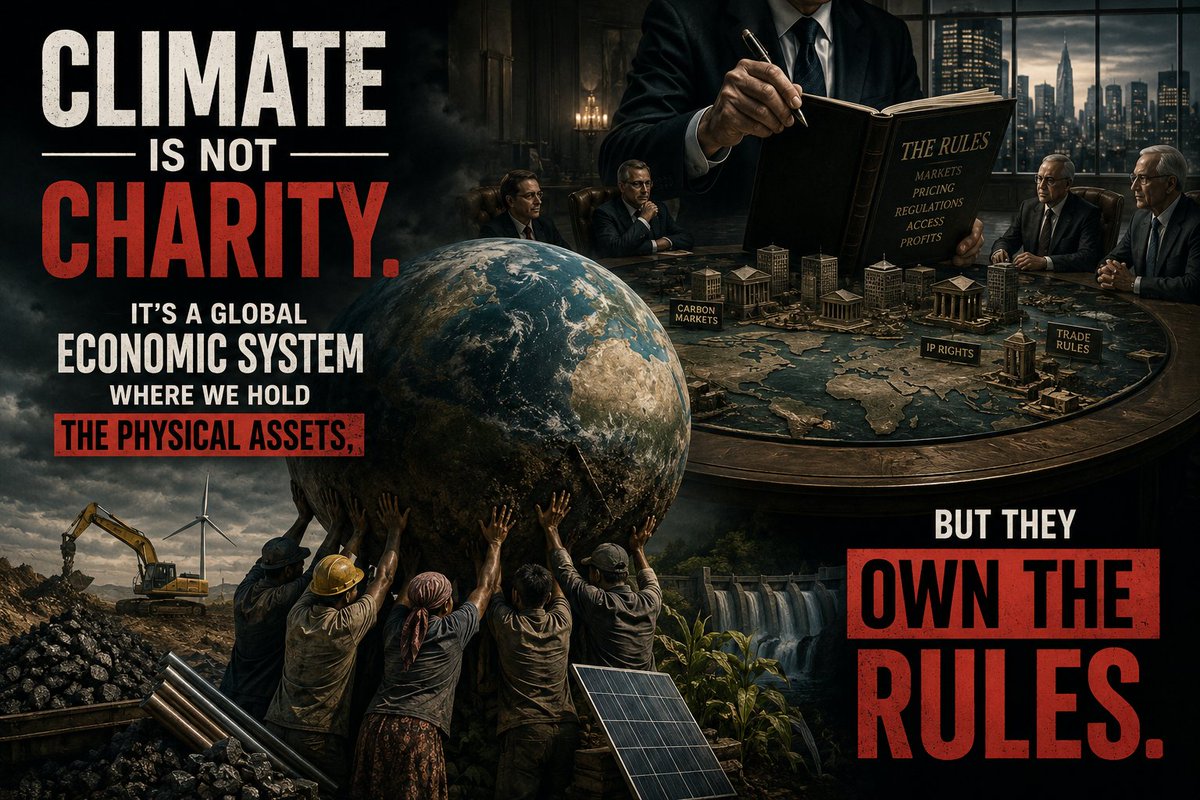
Climate is not charity.
It's a global economic system.
We hold the forests, land, sunlight, and biodiversity.
Yet too often, others define the standards, markets, and rules.
The question isn't whether we have the assets.
It's whether we can capture the value they create.
If there's no local incentive, there's no sustainable system.
Too many climate initiatives in Africa were designed around Western guilt rather than African economic leverage.
People don't adopt systems because they're virtuous.
They adopt them because they create value.
9/ The biggest wealth transfer of the next generation may not come from aid.
It may come from how environmental assets are measured, verified, and brought into global markets.
The conversation is bigger than most people think.
6/ The world is building markets around carbon, biodiversity, energy transition, and environmental data.
Those markets need assets.
Africa has many of those assets.
3/ Then there's the trust problem.
People hear about billions in climate finance, but rarely see where the money goes or who benefits.
When transparency is low, engagement follows.
2/ Many young Africans associate climate initiatives with foreign aid, NGOs, and donor programs.
As a result, climate often feels like someone else's agenda, not our opportunity.
1/ Most climate conversations are presented as a moral issue.
We're told to "save the planet."
But very few people explain how it creates economic value for ordinary Africans.
If there's no local incentive, there's no sustainable system.
Too many climate initiatives in Africa were designed around Western guilt rather than African economic leverage.
People don't adopt systems because they're virtuous.
They adopt them because they create value.