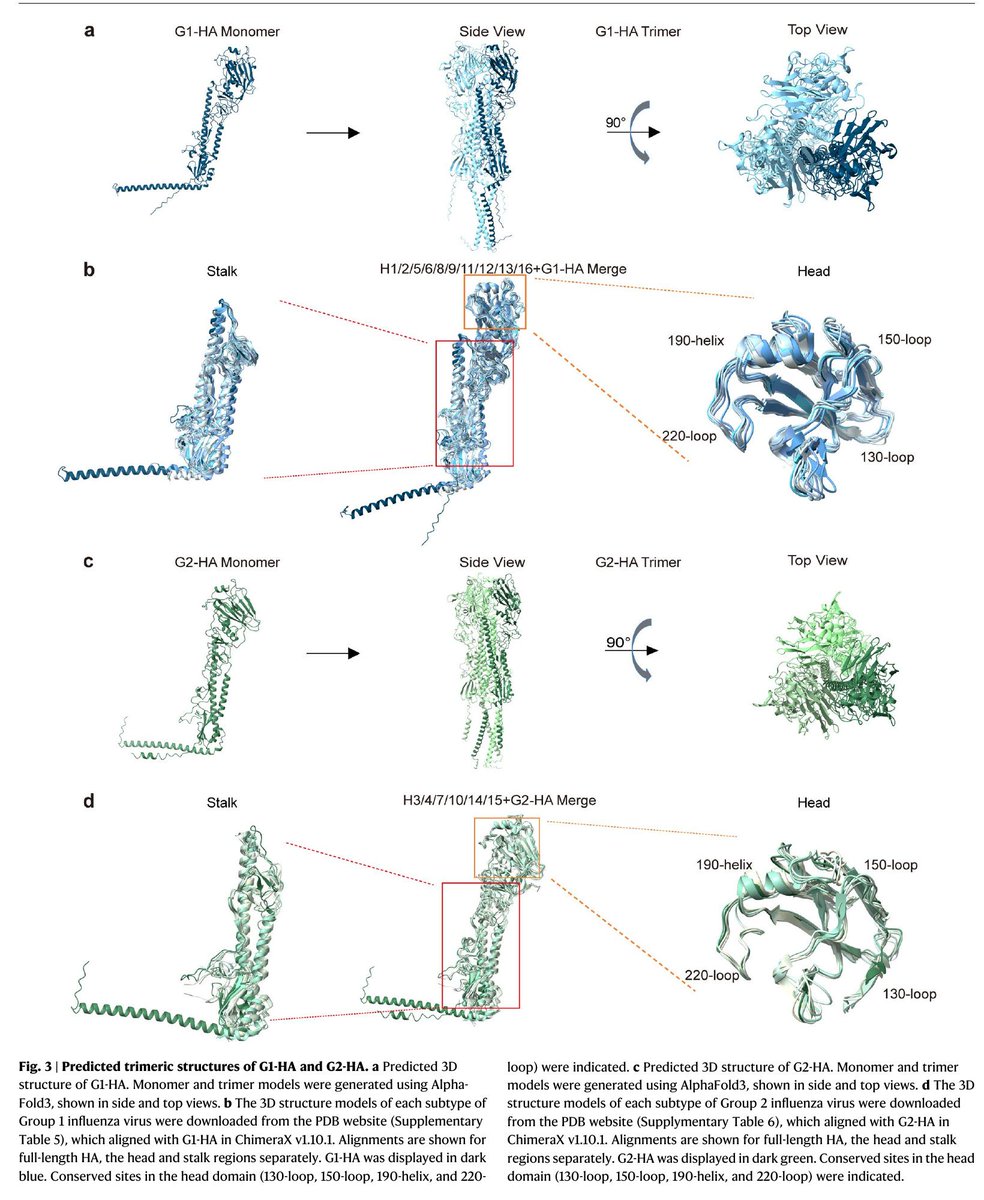
🧬 In Nature Communications, an mRNA vaccine encoding two computationally designed influenza hemagglutinins gave mice 100% survival in five of six lethal influenza challenges—and 60% survival against H10N8.
The work introduces PanFlu-IOA, a computational antigen-design toolkit built to extract shared antigenic features across influenza A Group 1 and Group 2.
🔬 The team designed two universal HA sequences:
→ G1-HA for Group 1
→ G2-HA for Group 2
The two mRNA-LNPs were mixed into the vaccine candidate panFluA. Two weeks after the booster, female BALB/c mice were challenged with 10 LD50 of six divergent viruses.
Reported survival:
→ 100%: pandemic H1N1, seasonal H1N1, PR8, H9N2, and H3N2
→ 60%: H10N8
→ Controls showed near-complete mortality by days 7–9
T-cell depletion and passive-serum-transfer experiments supported contributions from both cellular and humoral immunity. PanFluA serum alone provided about 80% protection against PR8.
Why it matters: this connects cross-group computational HA design to multi-subtype lethal-challenge protection in mice—an end-to-end design-to-challenge validation rather than a purely computational antigen study.
⚠️ This is a mouse study, not a human vaccine result. Cross-protection was not uniformly matched by classical neutralizing or hemagglutination-inhibition activity outside H1 strains, so protection cannot be attributed to those antibody readouts alone. Recent isolates from the past five years were not tested, and pre-existing human immunity was not modeled.
📄 Paper: https://t.co/MAx7oUesd4
💻 Code: https://t.co/TqEVWfYFP1
#Influenza #mRNA #VaccineDesign #ComputationalBiology #AIforScience
🧬 MDClaw found 11 AI-run MD workflows that looked successful—but had skipped minimization or equilibration, or simulated the wrong structure.
That is the failure mode this new system is designed to address: an agent can produce a trajectory and a convincing report without actually following the intended molecular-dynamics protocol.
MDClaw is not another MD foundation model. It is an auditable constraint layer for general coding agents: validating command-line tools check inputs and stage dependencies before execution, while a directed acyclic graph (DAG) records every stage in a recoverable, branchable workflow.
🔬 On MDDataBench, a 31-system benchmark scored against deposited reference simulations:
→ Without MDClaw: 21 passes in 372 independent runs, or 5.6% pass@1
→ With MDClaw tools: 81–94% pass³ across four open-weight models
→ With tools plus skills: 90–100% pass³
Here, pass³ means a system passes in all three independent runs—not merely one lucky successful attempt.
Why it matters: as agents begin to simulate atomic-scale scientific hypotheses, the important question is not only “did it produce a trajectory?” It is whether a scientist can inspect what was actually simulated, which inputs were used, and whether essential stages were skipped.
⚠️ This is a bioRxiv preprint. MDDataBench measures correct execution against predefined simulation tasks and reference outputs; it does not establish sampling convergence or biological correctness. The main results cover four specific open-weight models in one agent setup. Its no-reference applications are traceable simulation studies, not experimentally confirmed biological discoveries.
📄 Preprint: https://t.co/0ttiWiCbHP
💻 Code: https://t.co/44BJD7k10N
🧪 Benchmark: https://t.co/LQTuyFp7b6
#MolecularDynamics #AIAgents #ScientificAI #ComputationalBiology #Reproducibility
🧬 No experimental structure. About 3 million compounds screened. One AlphaFold-guided campaign produced QL07, a CLIP1–LTK inhibitor with an enzymatic IC50 of 524.27 nM.
CLIP1–LTK is an oncogenic fusion kinase without an experimentally resolved structure. In a new Acta Pharmacologica Sinica paper, researchers first benchmarked how AlphaFold2- and AlphaFold3-derived structures perform in virtual screening, then applied a hierarchical workflow to this target.
🔬 After screening approximately 3 million compounds and conducting similarity-based analog searching, they identified QL07.
The study reports that QL07:
→ inhibited downstream CLIP1–LTK signalling
→ induced apoptosis in Ba/F3 cells transformed with CLIP1–LTK
→ suppressed growth of CLIP1–LTK-positive xenografts
Why it matters: this is not only an in silico docking exercise. It is a peer-reviewed wet-lab case study showing that AlphaFold-derived structures can help start a structure-based discovery campaign when a disease target has no experimentally determined structure.
⚠️ QL07 is an early research compound, not a clinical candidate. The paper does not establish superiority over existing LTK or ALK inhibitors, and its reported xenograft activity does not demonstrate human efficacy. No public code or model-weight release was stated in the abstract.
📄 Paper: https://t.co/QIk8SRvtxy
#AlphaFold #DrugDiscovery #VirtualScreening #CancerResearch #AIforScience
🧬 Given only the sequence of the EBV protein BHRF1—no structural template—LiteFold’s LiteMol-1 selected 19 linear peptides for testing. Nine bound by BLI.
That is a 47.4% hit rate in the selected set. Two leads showed apparent KDs of 37.6 nM and 49.9 nM, lower than the natural ligand Bim at 75.6 nM in the same assay format.
🔬 LiteMol-1 is a masked diffusion language model for target-conditioned peptide generation. The workflow generated and cofolded roughly 500–600 candidates, then used Protenix v2, Boltz-2, interface scoring, and manual selection before sending 19 peptides for capture-format BLI testing at Adaptyv Bio.
Results:
→ 9 BLI-positive peptides
→ 9 BLI-negative peptides
→ 1 expression failure
→ selected peptides were 18–27 residues long
Why it matters: this is a useful early wet-lab readout for a sequence-conditioned peptide-generation model—not merely a structural prediction or in silico ranking result.
⚠️ This is a company technical report, not peer-reviewed research. The 47.4% is the hit rate after computational filtering, not the raw generation success rate. The reported values are apparent KDs from tagged capture-format BLI, not solution KDs; all nine hits carried N-terminal tags. There are no selectivity, binding-site, cellular-activity, or stability data, and no head-to-head comparison with other generators. LiteMol-1 weights and code have not been announced as public.
🔗 Technical report: https://t.co/aNHu6d2TPb
𝕏 Official post: https://t.co/Nurz61bwdk
#PeptideDesign #ProteinDesign #GenerativeAI #BLI #AIforScience
We experimentally tested 19 AI-designed peptides. 9 showed binding. 2 achieved lower apparent KD than a natural ligand.
Today, we're sharing the first wet-lab validation results of LiteMol-1, our molecular diffusion language model.
We targeted BHRF1, an anti-apoptotic protein encoded by Epstein–Barr virus, which is implicated in certain lymphomas.
LiteMol-1 generated linear peptides conditioned only on the target sequence. We then prioritized candidates using Boltz-2, Protenix along with interface scoring.
We collaborated with @adaptyv independently tested the selected peptides using biolayer interferometry (BLI).
The results:
> 9/19 candidates showed binding (47.4%).
> Peptide_010: 37.6 nM apparent KD.
> Peptide_012: 49.9 nM apparent KD.
> Natural Bim control: 75.6 nM apparent KD.
These are early, single-target biochemical results, but an important step toward connecting generative molecular design with experimental validation.
Our broader goal is to close the loop between AI-driven generation, computational evaluation, and real-world experimental feedback.
Technical report link in the comments.
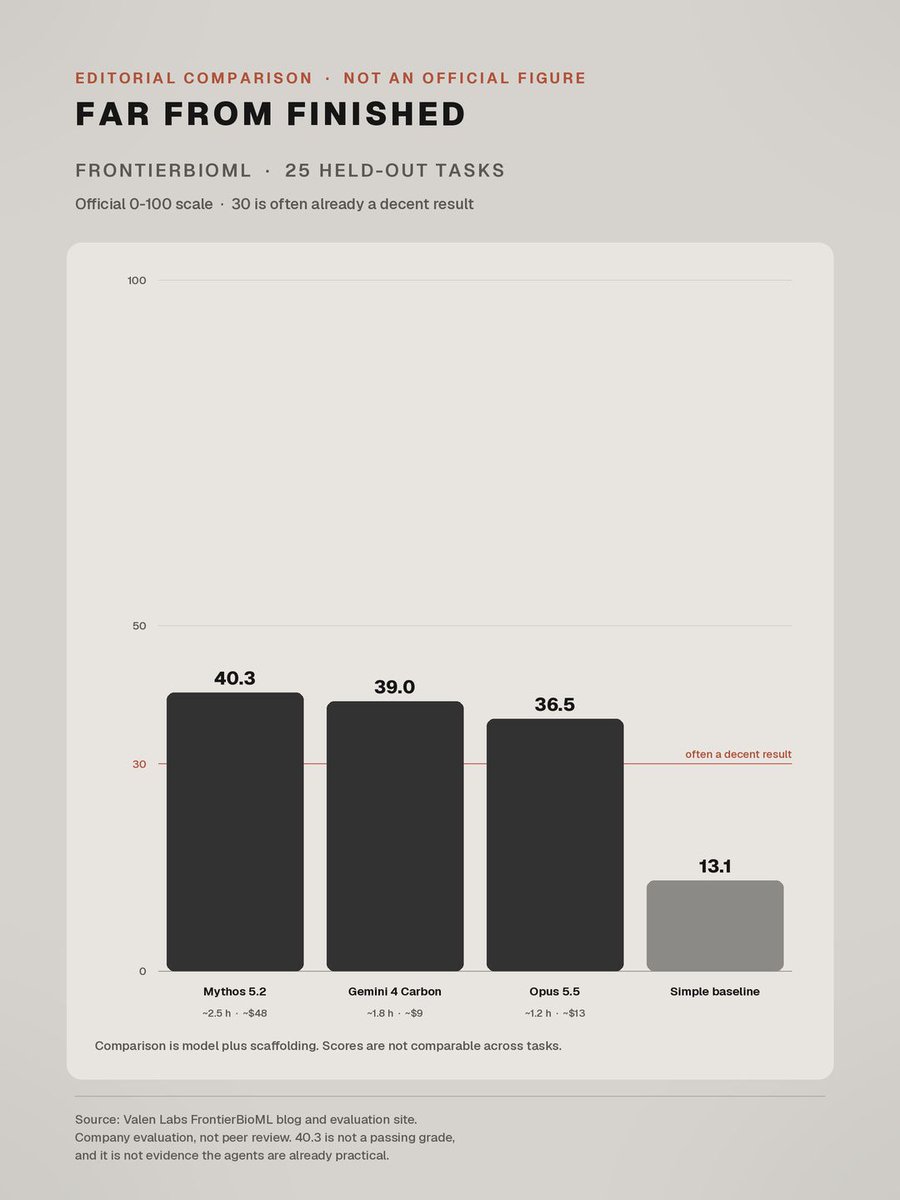
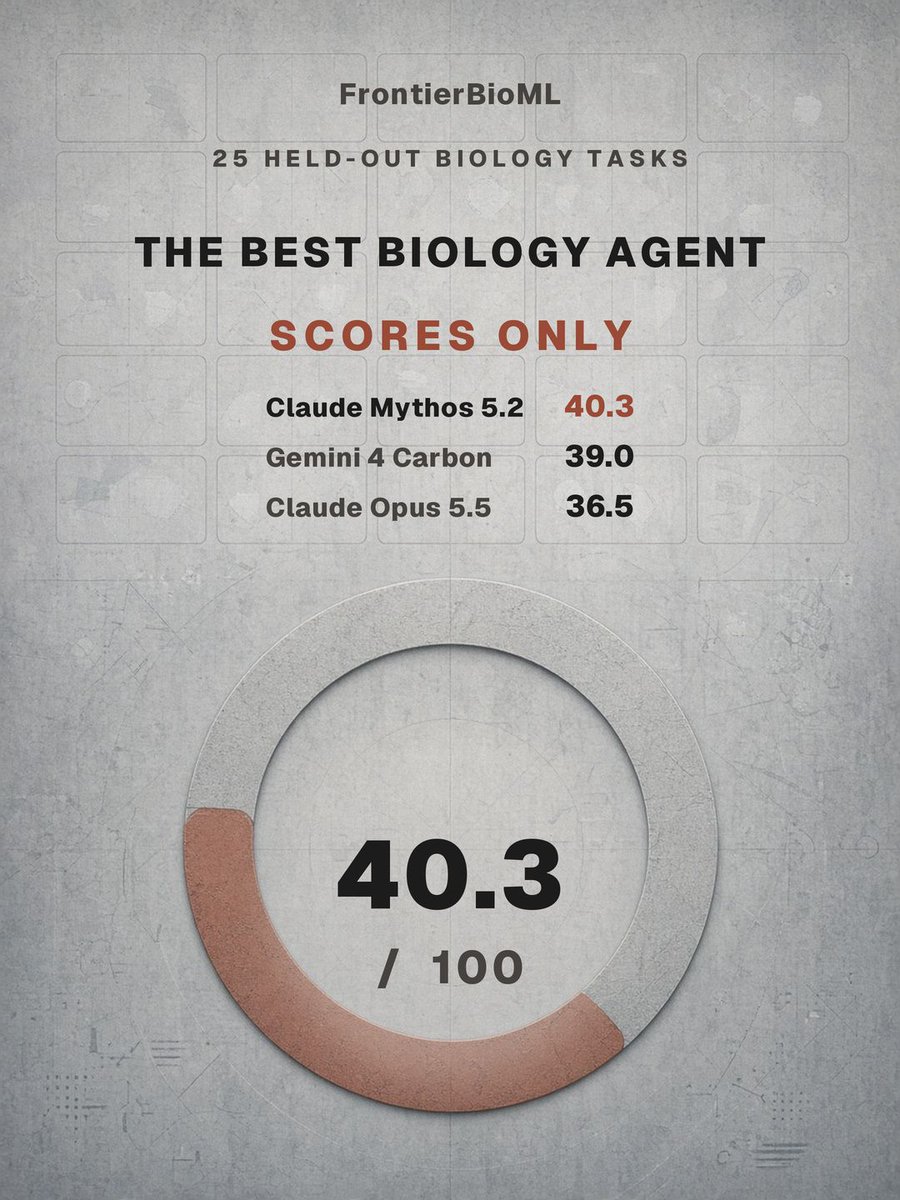
🧬 On 25 held-out computational biology tasks, the top AI agent scores just 40.3/100.
FrontierBioML, released by Valen Labs, evaluates agents across antibody engineering, protein engineering, structure, binder design, and functional genomics. Agents write prediction scripts in a GPU-free sandbox with roughly six hours of runtime; submissions are then scored on held-out data.
🏆 Current leaderboard:
→ Claude Mythos 5.2 (Claude Code): 40.3
→ Gemini 4 Carbon: 39.0
→ Claude Opus 5.5: 36.5
→ Baseline: 13.1
The important context: scores are normalized per task. The benchmark authors say 0 usually corresponds to a simple baseline, 100 to a perfect answer, and a score of 30 is often already strong. Scores therefore should not be read as a conventional “percentage correct.”
No system solves all 25 tasks. The result is less “Mythos wins again” than a useful reality check: even leading agent setups remain far from reliable general-purpose computational biologists.
⚠️ This is a company-run benchmark and compares full model-plus-scaffolding systems, not base models in isolation. Results are not peer reviewed, and task scores are not directly comparable across tasks. Two GPT systems were also affected by biosecurity filtering: zero-scored blocked runs lower their overall averages, while their scored-only runs were reportedly closer to the leading group.
🔗 Benchmark: https://t.co/INXvEOXeCm
📄 Details: https://t.co/SIy0q0Klig
#AIforScience #ComputationalBiology #ProteinEngineering #AIAgents #Bioinformatics
A 35-million-parameter model has moved ahead of ESM2-3B on protein stability prediction.
On 66 ProteinGym stability assays, DynamicsPLM reached a mean Spearman ρ of 0.528 — ahead of ESM2-3B at 0.509, and second only to the 3-billion-parameter VespaG at 0.533.
The model, from the University of South Florida and George Mason University, adds molecular-dynamics heads to an ESM2-35M encoder and scores mutations zero-shot from sequence alone.
Across 201 ProteinGym substitution sets, it posted a mean ρ of 0.398: 19th of 47 sequence models, and first among models with 100 million parameters or fewer.
Why it matters: for stability engineering, a smaller model with explicit dynamics supervision can compete with sequence models many times its size. Bigger is not automatically better.
⚠️ This is a bioRxiv preprint, not a peer-reviewed paper, and it reports no new wet-lab experiments. The authors found no statistically significant advantage on the 12 Binding assays. Eleven of 201 wild-type sequences (5.5%) are identical to training sequences, and the paper does not report a full recalculation after removing them.
📄 https://t.co/lz7nAoDO9f
💻 https://t.co/sYAGc1Sco5
📦 Weights: https://t.co/G6IfQtvX8s
#ProteinLanguageModels #ProteinEngineering #ProteinGym #AIforScience
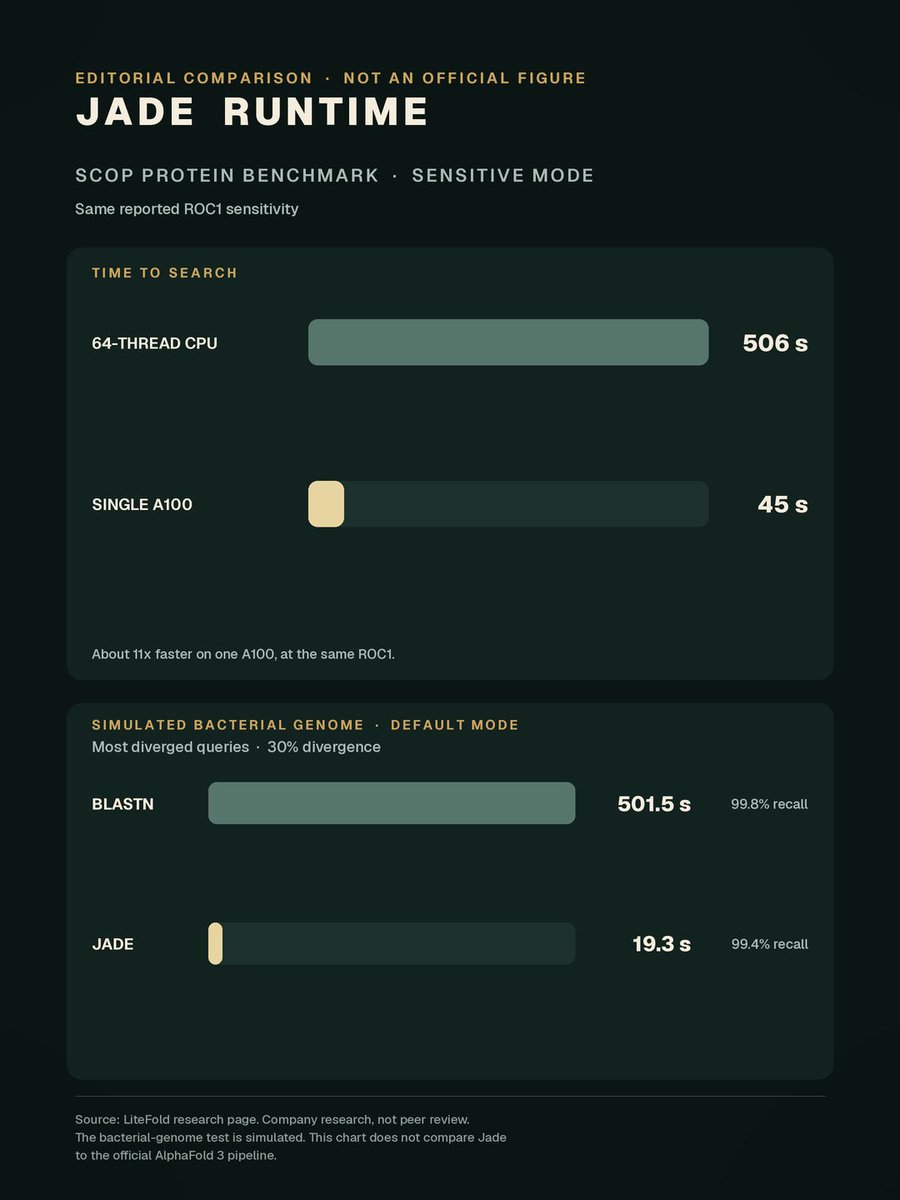
⚡ LiteFold has released Jade, a GPU-accelerated homology search engine that builds co-folding-ready alignments for proteins, DNA, and RNA without a prebuilt index.
In sensitive mode on the SCOP protein benchmark, Jade reportedly cut runtime from 506 seconds on 64 CPU threads to 45 seconds on a single A100 — about 11× faster, at the same ROC1 sensitivity.
On a simulated bacterial-genome test, default mode reached 99.4% recall in 19.3 seconds, versus BLASTN at 99.8% in 501.5 seconds.
Why it matters: cheap, repeatable MSA search means a design loop need not wait on a prebuilt database.
⚠️ This is a company research page, not peer review. The DNA test is simulated. Jade is already used on the LiteFold platform; an API and SDK are described as coming soon.
🔗 https://t.co/CIWi67ugXn
#HomologySearch #ProteinDesign #MSA #AIforScience
🧬 University of Michigan researchers introduced Perturb-Tags, a CRISPR-screening method that measures how a perturbation changes both the edited cell and its unedited neighbours—inside intact tissue.
From the same spatially barcoded nucleus, it reads the CRISPR guide, gene expression, chromatin accessibility, and spatial position at single-cell resolution.
🔬 The team applied Perturb-Tags in human embryoid bodies, systematically perturbing ligands, receptors, and all expressed kinases.
They report that ligand knockdowns produced distance-dependent loss of signalling, compensatory activation of alternative pathways, and changes in neighbouring cells’ gene expression. Receptor and kinase knockdowns also produced responses that depended on the local microenvironment and altered spatial cell-state organization.
🧠 A graph-attention network then jointly modeled the spatial effects of perturbations on RNA and chromatin accessibility, including counterfactual guide substitutions in held-out embryoid bodies.
Why it matters: conventional Perturb-seq is powerful for cell-autonomous effects, but dissociating tissue removes the neighbourhood where many ligand–receptor effects actually happen. Perturb-Tags brings perturbation biology closer to an in situ, multiomic “virtual tissue” setting.
⚠️ This is a bioRxiv preprint. The reported biological effects are from embryoid bodies, not patient tissue or clinical models. The authors claim higher sensitivity than previous spatial perturbation methods, but the full numerical comparison still needs careful review.
💻 Code: https://t.co/rXJF3LnYh6
📄 Preprint: bioRxiv, posted Nov 13, 2026
#SpatialOmics #CRISPR #PerturbSeq #SingleCell #AIforScience
🧬 Deep Genomics has published DeepRNAi, a model designed to predict both siRNA potency and transcriptome-wide off-target knockdown before experiments.
In an author-reported genome-wide scan of 24.4 million siRNAs across 7,946 genes, 90.1% of the top 100 most potent candidates carried at least one predicted off-target liability.
🔬 DeepRNAi predicts RISC-mediated knockdown for any siRNA–transcript pair—not just fully complementary on-targets, but also near-perfect and seed-mediated matches. It uses transcript-context representations from biological foundation models rather than relying only on sequence-matching or thermodynamic heuristics.
The preprint was trained on 2,031 siRNAs and 16 million siRNA–transcript pairs. The authors say they will release a 1.84-million-pair training and benchmark dataset spanning 240 siRNAs.
Why it matters: siRNA discovery is not only about finding the strongest silencer. It is about finding one that silences the intended transcript without unintentionally silencing many others.
⚠️ This is a company-authored bioRxiv preprint. The definition of an “off-target liability” behind the 90.1% result needs full-method review; no public code repository was identified. The model’s prior company announcement is not independent validation or clinical evidence.
📄 Preprint: https://t.co/ZYRtiVO3N2
🔗 Background: https://t.co/thmpxan8Sc
#RNAi #siRNA #RNAtherapeutics #AIforScience
🧬 Researchers at Stanford and the Arc Institute introduced Germinal Multi, an AI method that jointly optimizes one antibody paratope against multiple antigen variants.
In two experimental campaigns, the authors report successful binders and neutralizers after screening only 57–60 designs per campaign.
🔬 A de novo antibody, R50, neutralized the historically distinct SARS-CoV-2 variants BA.2 and KP.3, with IC₅₀ values of 230 and 120 ng/mL. It also bound held-out evolutionary intermediates and the later variant PG.3.1, with a reported apparent Kᴅ of 26 nM.
For EGFR, 4 of 60 designs bound wild-type EGFR; collectively, those hits also recognized all 6 tested cetuximab-resistance variants.
🎯 The team also redesigned the broadly neutralizing antibody BD55-1205 against XFG-Next, an engineered escape variant guided by viral-evolution forecasts. Lead X51 neutralized both parental XFG and XFG-Next, at IC₅₀ values of 2.1 and 6.3 ng/mL.
Why it matters: instead of separately optimizing antibodies against one antigen at a time, multi-target design may offer a route to breadth across specified—and even held-out—variants.
⚠️ bioRxiv preprint only. Kᴅ values are apparent BLI measurements; neutralization used pseudovirus, not authentic virus or clinical studies. XFG-Next is an engineered challenge variant, and the linked Germinal Multi repository is currently empty.
📄 Paper: https://t.co/0mHUrTof4W
#AntibodyDesign #SARSCoV2 #ComputationalBiology #AIforScience
🧬 Nature Cancer reports Hist2Prot: a model that turns a routine H&E pathology slide into a virtual single-cell spatial protein map.
Trained on ~51 million paired cells, Hist2Prot improved biomarker, prognosis, and immunotherapy-response prediction beyond H&E morphology alone across 7 independent cohorts comprising 1,774 patients.
🔬 Spatial proteomics can reveal where immune, stromal, and tumour cells sit—and which proteins they express—but it is costly and difficult to deploy at scale.
Hist2Prot learns the relationship between cell appearance in standard H&E images and measured spatial protein expression. From an ordinary slide, it infers “virtual proteins” cell by cell, preserving immune, stromal, and tumour phenotypes as well as aspects of tumour-microenvironment organization.
Why it matters: if this generalizes prospectively, routine pathology slides could yield molecular and spatial readouts without requiring every patient sample to undergo dedicated spatial-proteomics assays.
⚠️ This is retrospective validation, not a prospective clinical diagnostic study. The model infers protein profiles rather than directly measuring them; performance will depend on pathology workflows, tissue context, and external validation.
📄 Paper: https://t.co/XB6Wyd273K
💻 Code: https://t.co/vGXE6UXjy0
#NatureCancer #SpatialProteomics #ComputationalPathology #AIinHealthcare
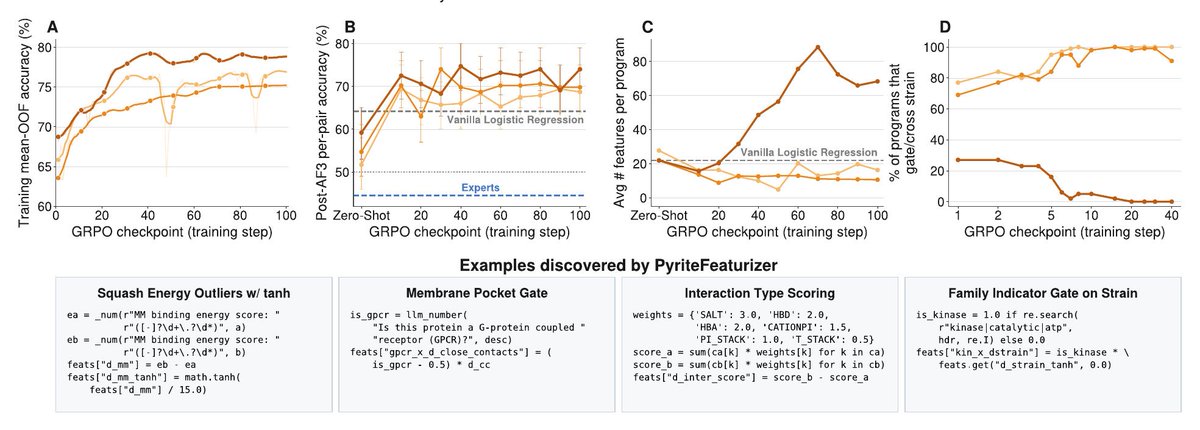
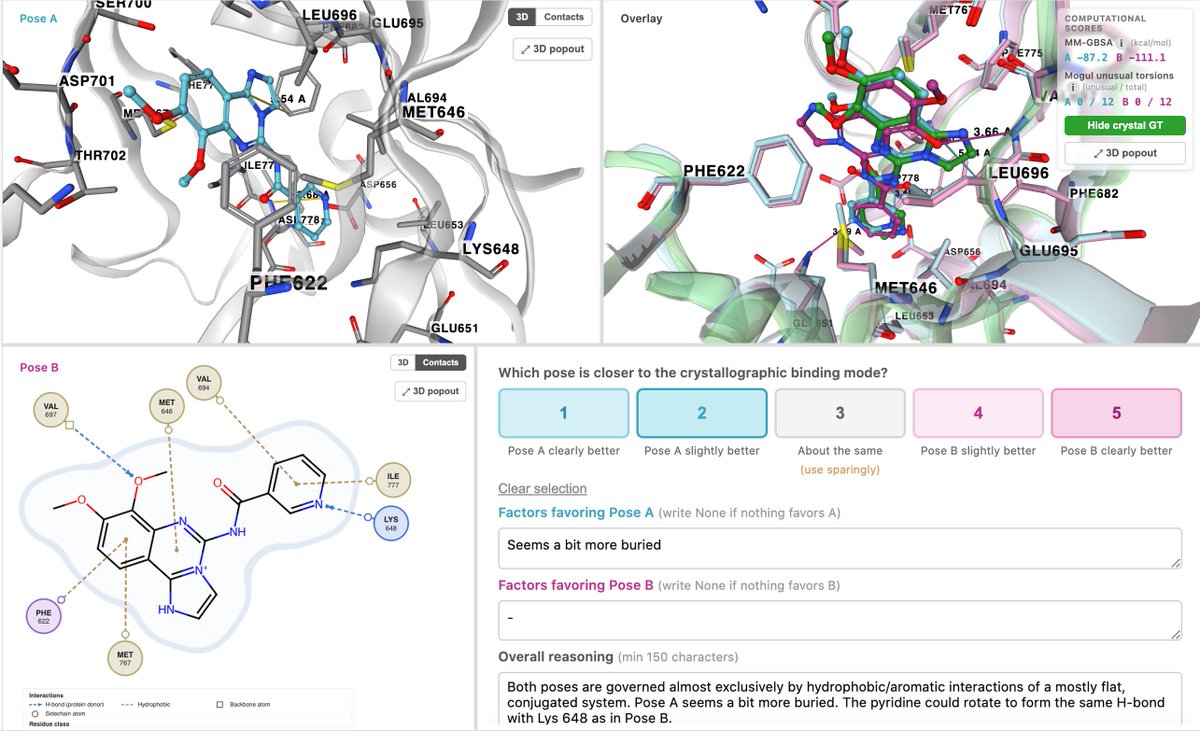
🧬 An LLM does not necessarily have to judge protein–ligand poses the way a chemist would. A new preprint from Genesis Molecular AI and Stanford researchers finds it can be more effective at discovering computable features that humans have not explicitly defined, then letting a simple model decide.
They built Pyrite, a pairwise benchmark of 1,500 pose pairs across 285 protein–ligand complexes. Five chemists with more than ten years of average experience were given 3D visualizations, contact maps, and physics-based scores, yet still performed near chance. After answers marked “about the same” were excluded, accuracy was about 51% on one curated split and 57% on the other.
🔬 PyriteReasoner, which compares poses through text-based reasoning, reached up to 67% accuracy. PyriteFeaturizer, which writes code to discover features for logistic regression, reached up to 74%. Letting the model find computable features generally worked better than asking it to judge the poses directly.
Why it matters: when several binding poses already look reasonable, the bottleneck is no longer generation — and the more useful job for an LLM may be feature discovery, not chemist-like judgment.
⚠️ This is an arXiv preprint, listed for the NeurIPS 2026 Agentic AI for Biological Discovery Workshop, not a main-conference Oral. It is a pairwise pose-ranking benchmark on poses from the authors’ cofolding model, with no new drug or wet-lab result. The expert scores and the top 74% AI result are not a head-to-head on the same split, and should not be read as “humans 51%, AI 74%.”
📄 Paper: https://t.co/RVITMdWQIq
💻 Code: https://t.co/g3I4ASd1Dt
🗂️ Data: https://t.co/1PcrQ4cwwk
#PoseRanking #DrugDiscovery #StructuralBiology #CADD
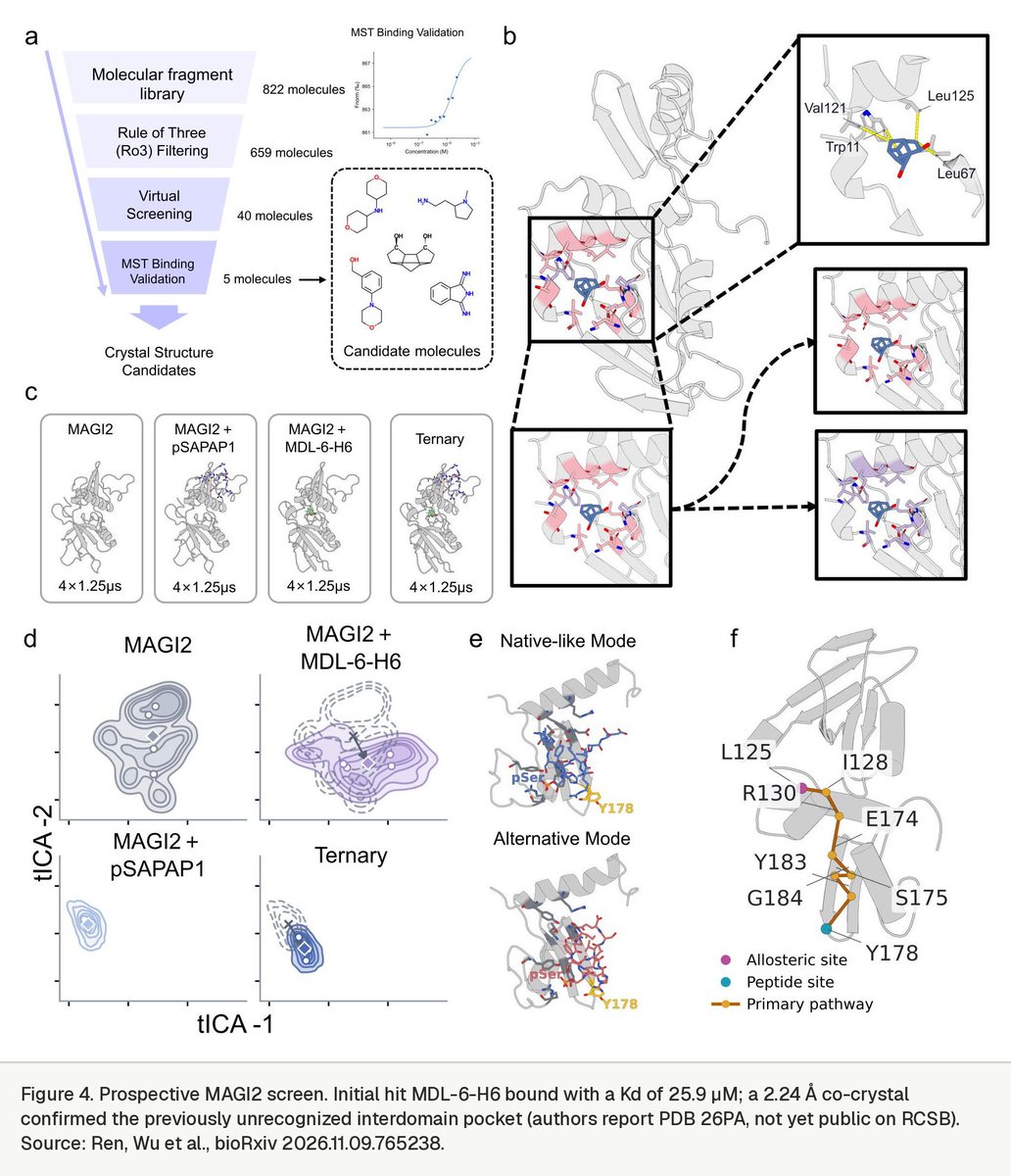
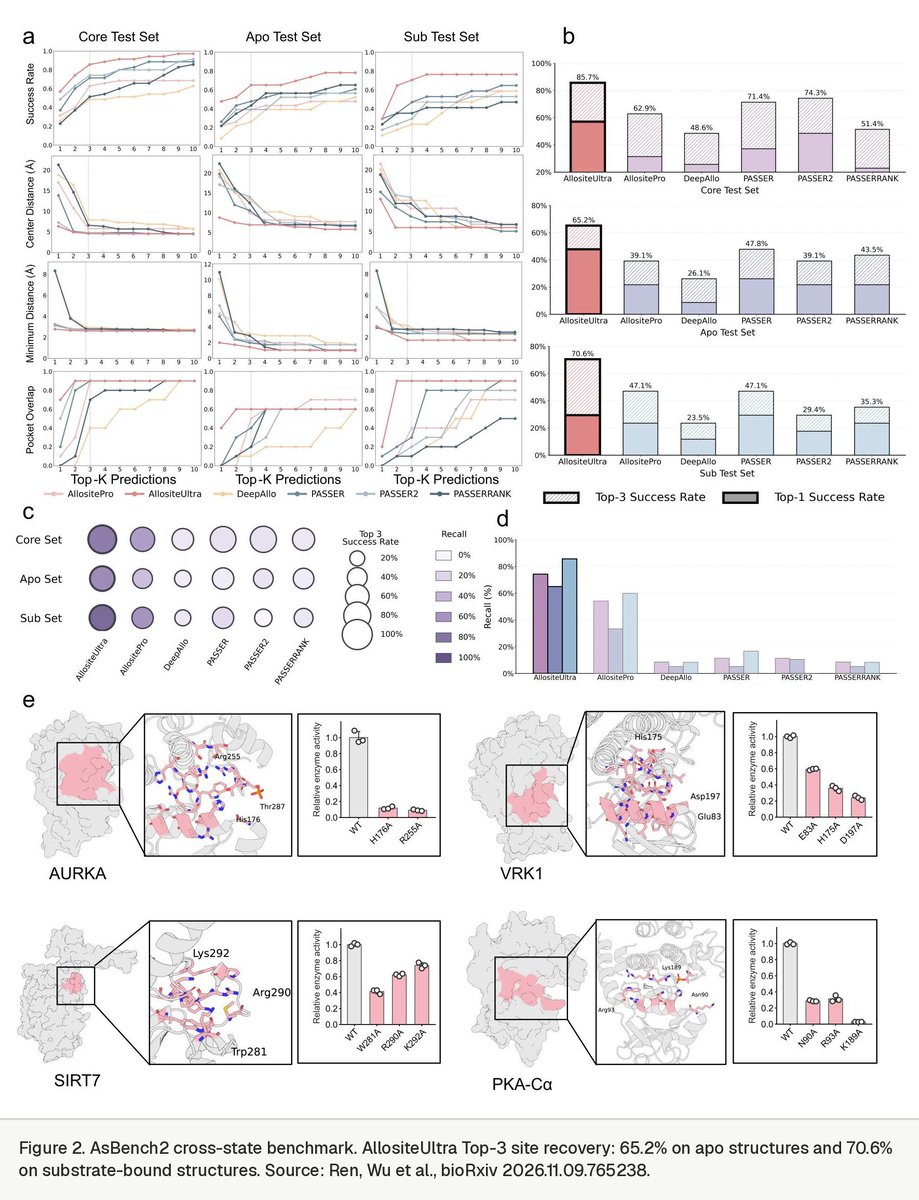
🧬 A computational method flagged a previously unrecognized candidate allosteric pocket in MAGI2—and a 2.24 Å co-crystal structure showed a screened small molecule binding in that predicted site.
The hit, MDL-6-H6, bound the new domain-interface pocket with a Kd of 25.9 μM.
🔬 AllositeUltra searches for candidate allosteric pockets across multiple protein conformational states, rather than treating a target as one static structure. In MAGI2, it proposed a pocket not previously recognized from available structures.
Why it matters: the key result is prospective validation. A computationally proposed pocket yielded a physical hit, and crystallography located that hit in the proposed site.
⚠️ This is a bioRxiv preprint. MDL-6-H6 is a micromolar starting hit, not an optimized drug candidate; the study has not yet shown that binding this pocket changes MAGI2 function, cellular biology, or disease outcomes.
📄 Preprint: https://t.co/B04D6GSoXH
🧱 Structure: PDB 26PA
#Allostery #DrugDiscovery #ProteinDesign #StructuralBiology
🧬 AlphaFold 3, Boltz-2, ESMFold2, OpenFold3, and Protenix-v2 all got the dominant RNA state backwards in a designed HIV-1 TAR mutant, a new preprint reports.
Experiments show its excited state, ES2, is dominant. But the authors report that every tested sequence-based prediction clustered near the ground state instead.
🔬 To address this, the authors introduce REVEAL: a workflow that begins with diverse RNA secondary-structure seeds, builds 3D structures, then runs unbiased molecular dynamics and Markov-state modeling.
Across 34 seeds and 6.8 μs of simulation, REVEAL recovered ES2 as the most populated state (π = 0.589), together with reversible routes toward the ground state.
Why it matters: a plausible structure—or even a predicted ensemble—does not guarantee the right population ordering. For RNA dynamics, structural diversity at the starting line may matter more than simply simulating longer from one experimental structure.
⚠️ This is an author evaluation in one engineered TAR mutant, not a general ranking of the five models across RNA ensemble tasks. The work is a bioRxiv preprint; code is public.
📄 Paper: https://t.co/UbekNOSOrN
💻 Code: https://t.co/F5DArEvPvF
#RNA #RNAstructure #AlphaFold3 #MolecularDynamics
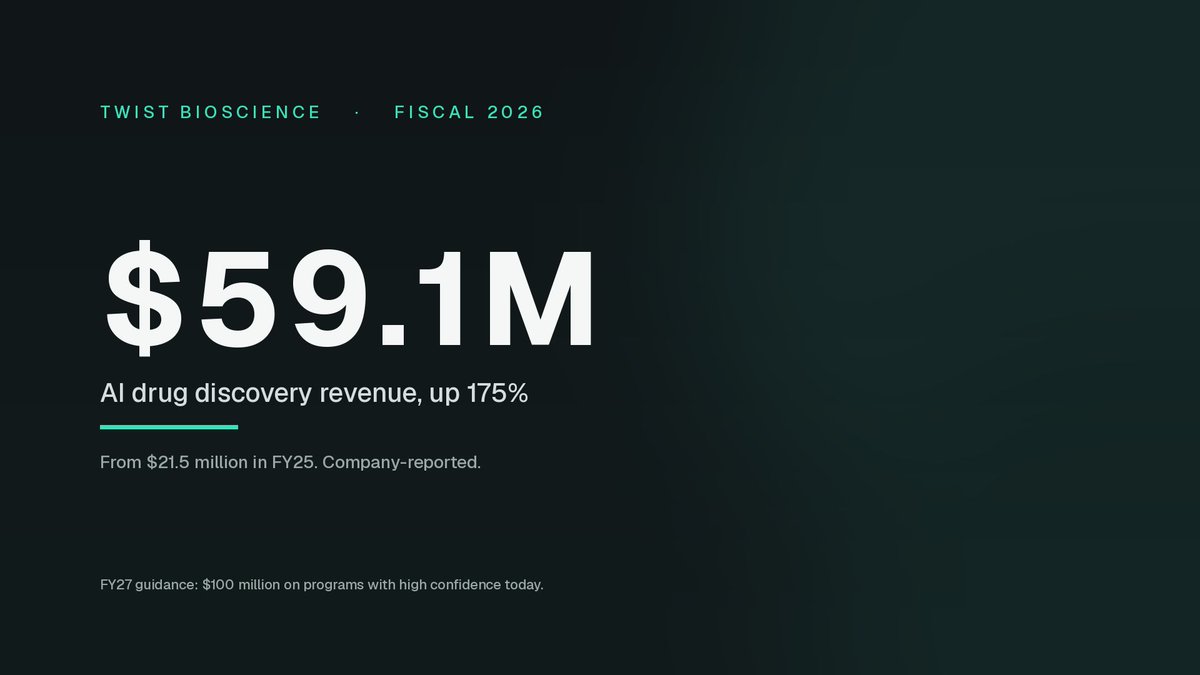
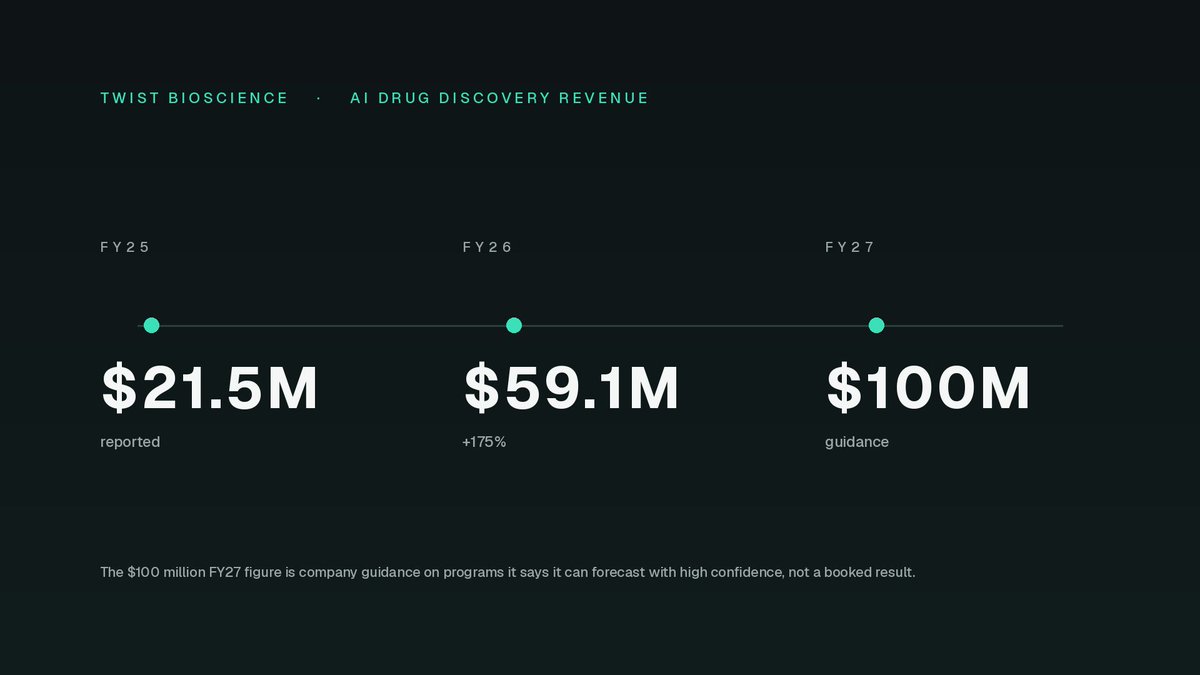
🧬 A commercial milestone for AI drug discovery: Twist Bioscience reported $59.1M in FY2026 AI drug discovery revenue, up 175% year over year.
It is already guiding $100M for FY2027—based on programs management says it can forecast with high confidence.
🔬 Twist is monetizing the design–build–test layer behind AI drug discovery: genes, proteins, characterization data, and discovery services that help customers turn computational designs into experiments.
Its customer path typically starts with $10K–$100K pilot orders, then can expand into multi-million-dollar model-building programs and recurring discovery work.
Why it matters: this is not another claim that AI may transform drug discovery. A public biotech company is now reporting a distinct and rapidly growing revenue line tied to AI drug-discovery demand.
⚠️ “AI drug discovery revenue” is Twist’s own classification of customers it can clearly identify as AI-focused; it may miss AI programs inside traditional pharma accounts. The $100M figure is FY2027 guidance, not realized revenue.
📄 Official results: https://t.co/xUEuHm238s
#TwistBioscience #AIDrugDiscovery #Biotech #SyntheticBiology
🧬 Claude helped design an antibody arm that does what omalizumab does not efficiently do: pull IgE off its high-affinity FcεRI receptor.
In human-run BLI dose-titration assays, 3 of 91 lab-tested designs removed more receptor-bound IgE than omalizumab at 25–400 nM.
🔬 Rather than only neutralizing free IgE, the team targeted the pre-formed IgE–FcεRI complex—the receptor-bound state that can persist on allergy effector cells and sustain sensitivity.
The proposed final molecule is biparatopic: a disruptor arm displaces IgE from FcεRI, while a non-competing anchor arm is intended to hold the molecule on IgE. Of 91 disruptor designs, 20 showed competitive BLI activity.
Why it matters: this moves AI-assisted antibody design beyond optimizing binding toward deliberately dismantling an existing protein–receptor complex.
⚠️ This is a bioRxiv preprint. The outperforming molecules are standalone disruptor arms, not yet a complete biparatopic antibody; no in-vivo or clinical evidence has been reported.
📄 Preprint: https://t.co/2um71OdMHV
#AntibodyDesign #AIforScience #AllergyResearch #ClaudeAI
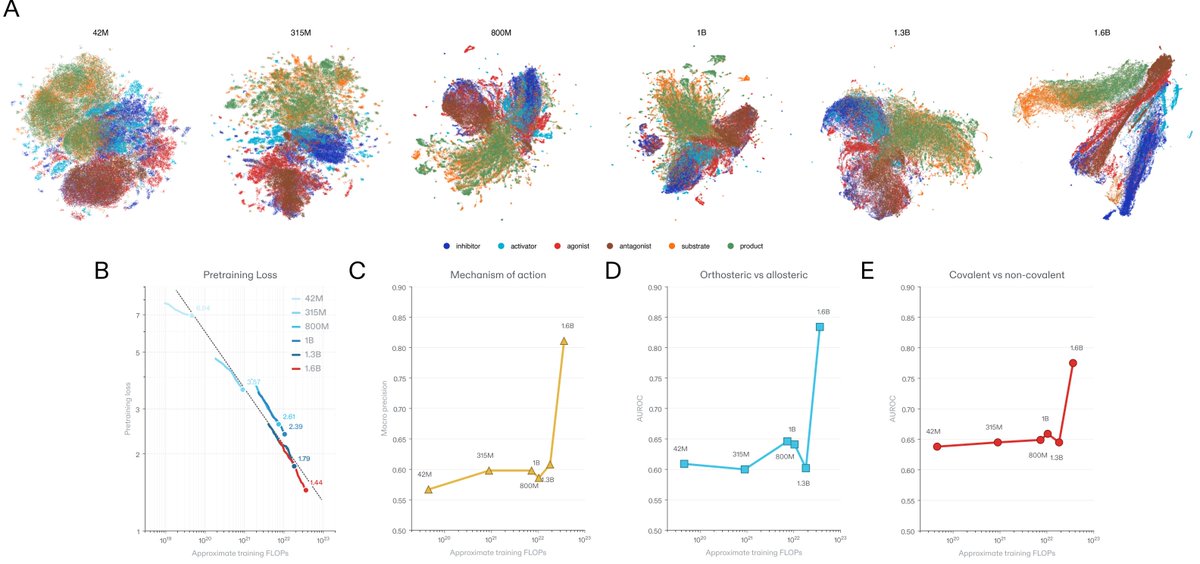
🧬 NeurIPS 2026 Oral: Bonbon is a 1.6B protein–ligand foundation model trained only on paired protein and ligand sequences—no structural coordinates, no task labels. Its authors report 131 dose–response-confirmed hits from 213 high-ranked de novo compounds across nine disease targets: a 61.5% confirmation rate.
🔬 At 1.6B parameters, the paper reports a sharp emergence of zero-shot signals for mechanism of action, binding-site localization—including orthosteric versus allosteric binding—and covalent engagement. These capabilities did not rise smoothly with pretraining loss across six model scales.
⚡ Bonbon uses one frozen interaction representation rather than a separate supervised model for each task. The central claim is that interaction-level biology can emerge from protein–ligand sequence-pair learning before a 3D structure is predicted.
Why it matters: if independently reproduced, this could expand early screening beyond structure-dependent or co-folding-first workflows.
⚠️ The 61.5% is the confirmation rate for model-selected compounds that entered synthesis and testing—not a random-library hit rate. Wet-lab results remain author-reported; weights, training data, and raw assay curves are not public.
📄 Paper: https://t.co/HMtrbkVKPR
#AIDrugDiscovery #ProteinLigand #FoundationModels #NeurIPS
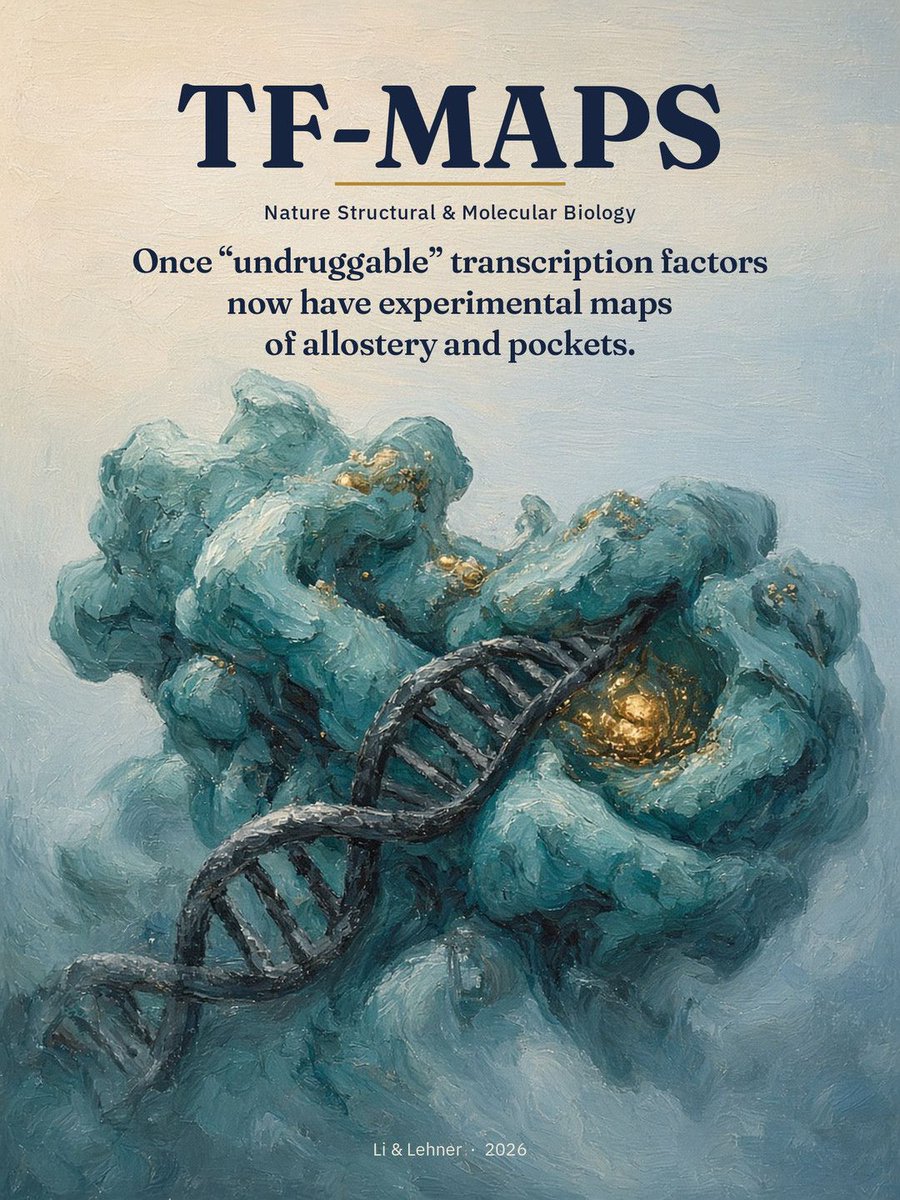
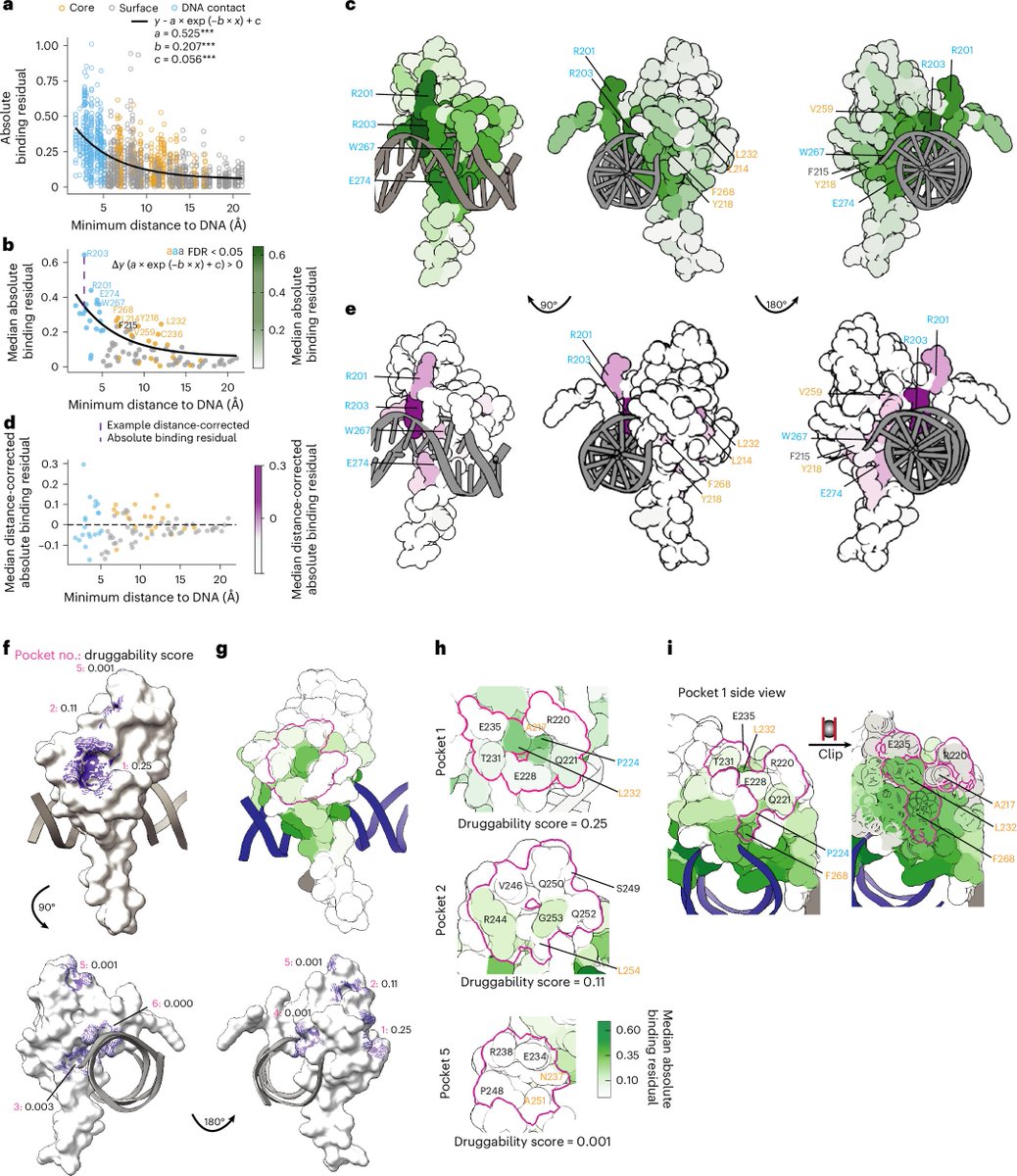
🧬 New in Nature Structural & Molecular Biology: TF-MAPS turns disease-linked transcription-factor mutations into functional and allosteric maps—highlighting pockets where small molecules could potentially tune DNA binding.
📊 In HNF1A, all 23 ClinVar variants annotated as likely pathogenic reduced DNA binding. Across 1,163 missense variants that lost DNA binding, 20.0% acted allosterically; the largest share lowered protein abundance, not the DNA-binding interface.
🔬 TF-MAPS combines bacterial DNA-binding and folded-protein-abundance assays, separating variants that impair folding from those that alter binding through direct contacts or distant allostery. Li and Lehner applied it to the DNA-binding domains of HNF1A, FOXG1 and FOXP1, not the full-length proteins.
🧱 Structural analysis integrated AlphaFold 3 with experimental structures to identify mutation-sensitive surface pockets. For HNF1A, a distal Pocket 1 stood out; for FOXG1 and FOXP1, the highest-scoring pockets sit in the DNA-binding interface.
Why it matters: “undruggable” TFs now have experimental maps showing where mutations can weaken—or sometimes enhance—DNA binding, making therapeutic modulation a more testable idea.
⚠️ These are mutation-sensitive pocket hypotheses, not proof that a small molecule can bind, modulate a TF, or work in cells. The assays were run in bacteria, on DNA without human chromatin.
📄 Paper: https://t.co/iuhvRvOPhK
💻 Code: https://t.co/23s38qlRDe
🗂️ Data: https://t.co/Eueo8xmvK4
#TranscriptionFactors #FunctionalGenomics #ProteinEngineering #AIforScience
🎉 Baker Lab just reported an exciting new advance in de novo enzyme design!
🧬 Using RFdiffusion3, the team built a site-selective ubiquitin ligase from scratch. On a PCNA trimer containing 45 competing lysines, it directed ubiquitin to K164 and achieved ~90% PCNA ubiquitination.
This is a new wet-lab application of RFdiffusion3—not a recap of the model’s earlier release. The preprint shows that all-atom generative protein design can build a complex enzyme that controls not only whether ubiquitin is transferred, but where it goes.
🔬 A strong first experimental screen
The team designed ligases around a cysteine-based catalytic triad. Of 48 designs tested, 35 transferred ubiquitin to a model peptide.
🎯 Selectivity on a difficult protein substrate
PCNA is a homotrimer with many possible lysine acceptors. Rather than modifying the most accessible residue, the selected designs preferentially placed ubiquitin at K164—a key regulatory site in DNA-damage tolerance.
⚡ ~90% conversion with unactivated ubiquitin
After adding an activity-enhancing mutation and coupling the system to E1 activation, the best design reached ~90% PCNA ubiquitination using unactivated ubiquitin. It also showed better site selectivity than the engineered E2 control.
⛓️ Programmable polyubiquitin installation
The same cascade installed polyubiquitin chains of defined length onto K164 through native isopeptide bonds. That is a meaningful step beyond one-off protein labeling.
🧱 The designed fold was experimentally realized
An apo crystal structure reached 1.6 Å resolution and closely matched the computational design, with a Cα RMSD of 0.91 Å.
⚠️ Important boundary: this is a bioRxiv preprint. The experiments use in-vitro activated donor chemistry or E1 + MESNa—not a demonstrated intracellular E1–E2–E3 ubiquitination pathway. The manuscript does not provide a verified official code repository or PDB accession.
📄 Preprint: https://t.co/3yBisF8Wfz
#BakerLab #RFdiffusion3 #ProteinDesign #EnzymeDesign #Ubiquitin #AIforScience