We apply our expertise in #Statistics and #ML to help answer principal questions in #microbiology and #microbiome.
Part of @LMU_Muenchen and @HelmholtzMunich.
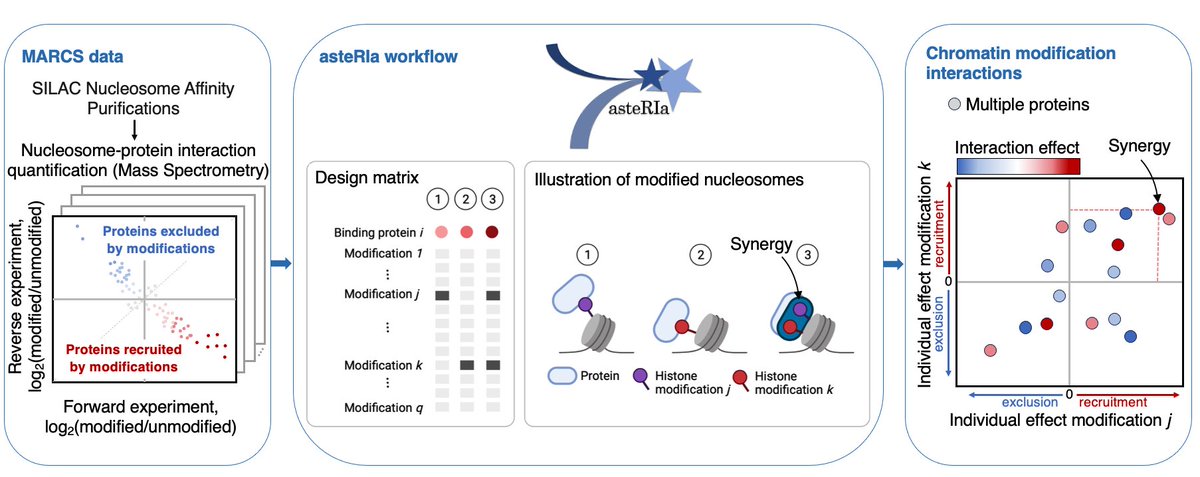
I'm excited to share that our paper, 'asteRIa enables robust interaction modeling between chromatin modifications and epigenetic readers,' is now out in NAR!
https://t.co/XTevhDgxwD
Through statistics and large-scale proteomics data, we disentangle combinatorial epigenetics 👇
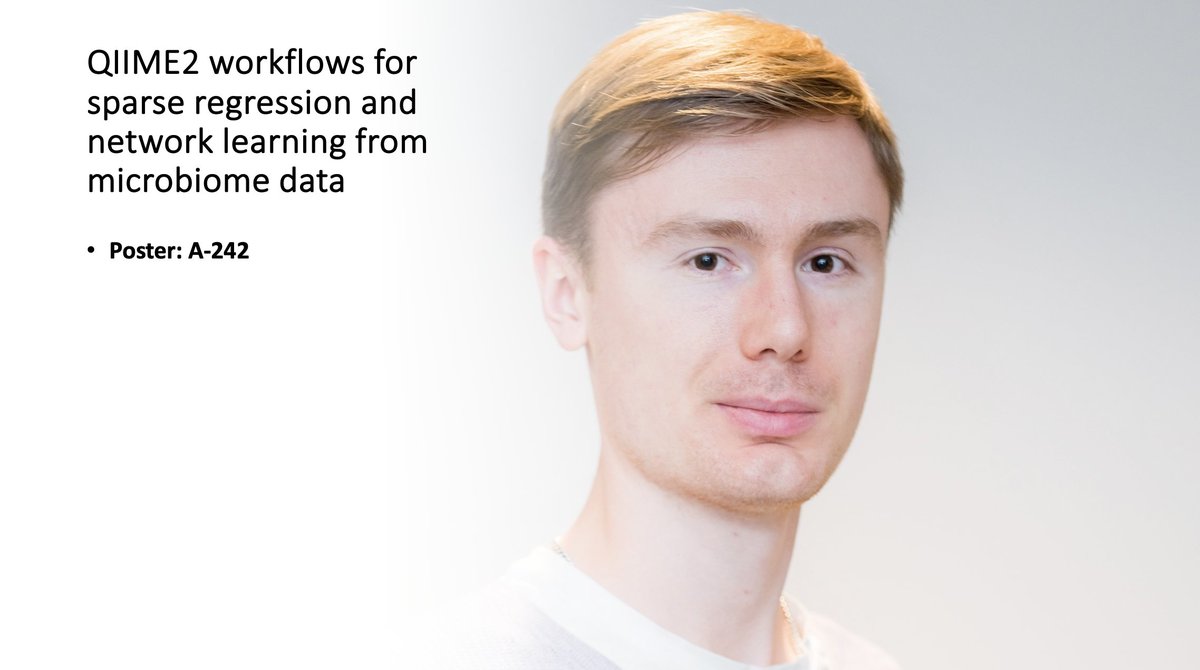
Considering microbial interactions in prediction tasks is crucial! 🦠📊 Excited about our collaboration with @microbionaut and Jacob Bien. Check out our pre-print: https://t.co/XkBY2bBaql
Excited to share our work "asteRIa enables robust interaction modeling between chromatin modifications and epigenetic readers", where we utilize the MARCS data for deeper insights into combinatorial epigenetics. Great collab between Bartke lab and @BioDataSc at @HelmholtzMunich
Check out this amazing data resource to study how chromatin modifications regulate protein binding behavior by Bartke lab and @robert_ife 🧬 I'm very proud to be part of this project 👇
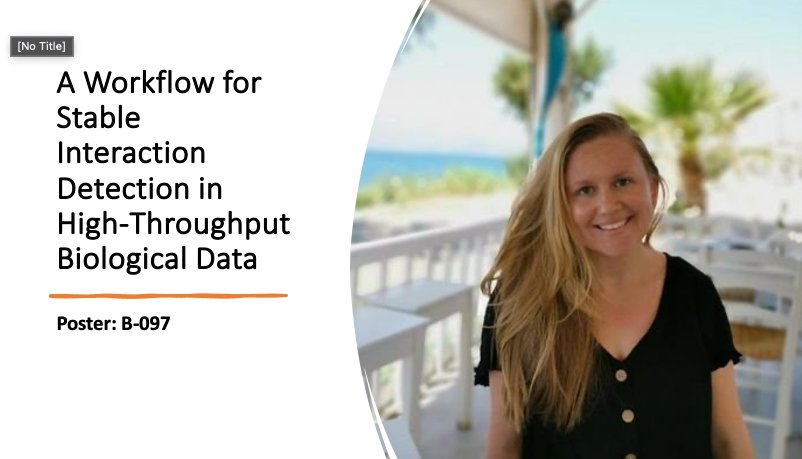
📊 Unveiling Stable Interactions in High-Throughput data!
💡@StadlerMara introduce #robust#statistical workflow:
🔗 Application to interaction effects between chromatin modifications
🧬 Lasso model for hierarchical interactions
🔎 Stability-based model selection
#ISMBECCB2023
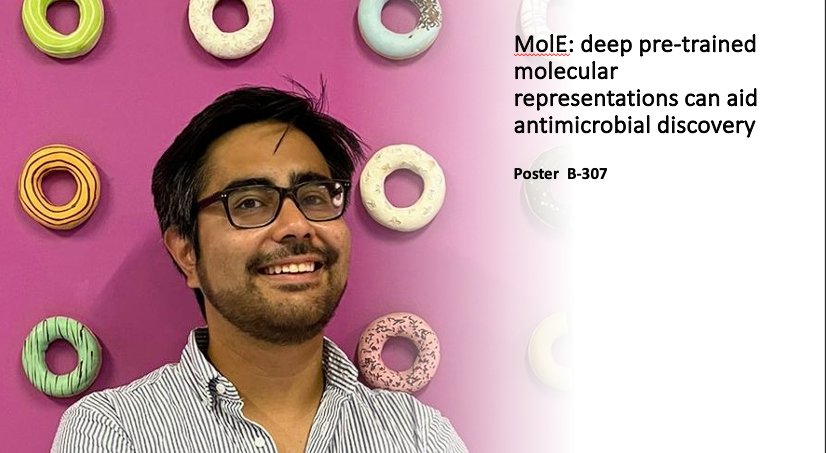
🔬✨ Introducing MolE!
Join @Scietwas to witness MolE's empowering chemical compound #analysis 🌐🌟
⚙️ Molecular representation learned through embedding decorrelation
✨ Predicted growth-inhibitory effects against human gut pathogens
#ML#antimicrobial#resistance#ISMBECCB2023
🔍Discover the power of PIMs (compositional power interaction models) in handling @HiTSeq data! 🧬
@JohannesOstner showcases PIMs' capabilities in DA testing with correlated features while respecting zero inflation and compositional constraints 📈🎯 #ISMBECCB2023
🌐Join Viet Tran in Overcoming Statistical Challenges in Microbiome and Single Cell Research! 🏆🧪
📈Innovative Two-Stage Workflow:
1️⃣Hierarchical grouping of microbial or cell-type features
2️⃣Explicit handling of non-compositional covariates
#microbiome#singlecell#ISMBECCB2023
🦠Unlocking Hierarchical Relationships in Viral #Metagenomic Data with #VirNest! 🧬
1️⃣ Virus gene-sharing network estimation by leveraging hierarchical protein association
2️⃣ Hierarchical partitions through nested stochastic block model
Join @DanielePugno in unveiling #microbiome
Discover the power of #NetCoMi, the #R package disentangling microbial association #networks! 📊🔬
🦠 Understand complex #microbial interactions
🌱 Statistical network estimation made easy
🔍 Unveil the differences between groups
Don't miss a showcase made by @stefpeschel ⭐
🚴♀️ In addition to our conference participation, a part of our lab is also joining the climate initiative!
🌍 On the way back, we'll cover the distance (~300km, ~1.5km elevation) from Geneva to Basel BY BIKE! 🚲
#GreenTravel2ISMB
🔬 Exciting news!
Our lab is thrilled to be heading to #ISMBECCB2023 next week!
🌟Get ready for a week packed with fascinating talks, knowledge-sharing and networking🤝
We promise to keep you updated on all the latest happenings 📢
@HelmholtzMunich@HIDAdigital@LMU_Muenchen
That went by quickly! Already starting the last week of my three-month research stay at @USCMarshall. Together with Jacob Bien and @microbionaut, we explored how to model compositional high-throughput sequencing data in a meaningful way. Stay tuned!
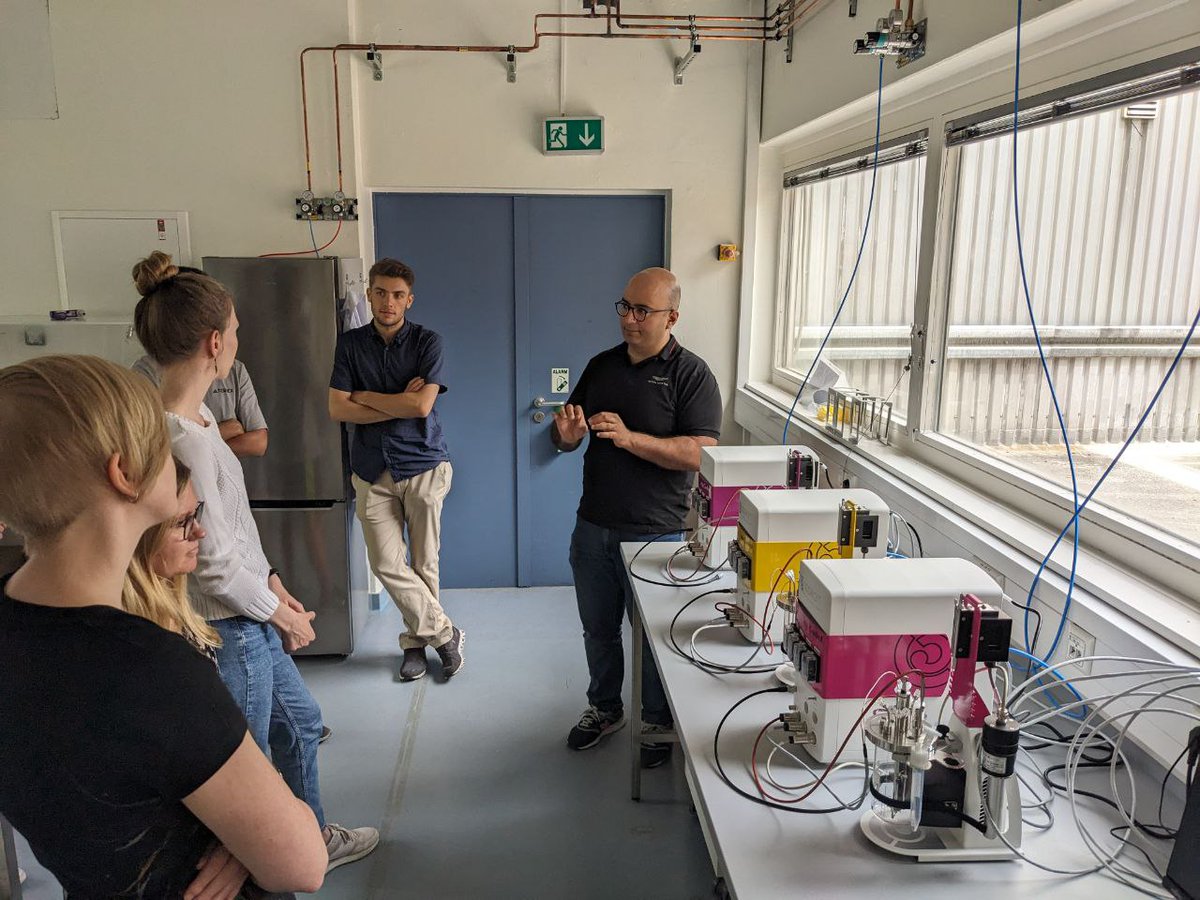
Our lab @IEM_Augsburg in Universität Klinikum #Augsburg. We SAW where skin #microbiome data comes from, and now will think twice before "df.dropna()" any samples🙀. Big thanks to @amedeodetomassi for an amazing lab tour, Luise Rauer and their colleagues for making it possible😎👍