D-Day in Color: Reinforcements Secure the Beachhead 🇺🇸🇬🇧
The Normandy beachhead is now firmly in Allied hands as supply convoys, DUKWs, and fresh troops continue moving inland after the initial assault.
German prisoners are gathered under guard while Coast Guard rescue boats and hospital ships work offshore to recover survivors and evacuate the wounded.
A sweeping panoramic view reveals the massive scale of the secured beachhead, now packed with ships, vehicles, supply depots, and the wreckage left behind by the invasion.
The largest amphibious invasion in history was now firmly underway.
The Jaws of Death. So reads the caption on this National Archives image of A Company 16th Inf. landing on Easy Red Sector of Omaha Beach. 2/3rds will become casualties. The American graveyard is today above the bluffs. See here https://t.co/EEg00P06y6
Some 7000 vessels involved in the D Day landings now crowd the English Channel. Pilots look down in awe as they glimpse a vast armada through gaps in clouds. See more at Substack. https://t.co/EEg00P0EnE
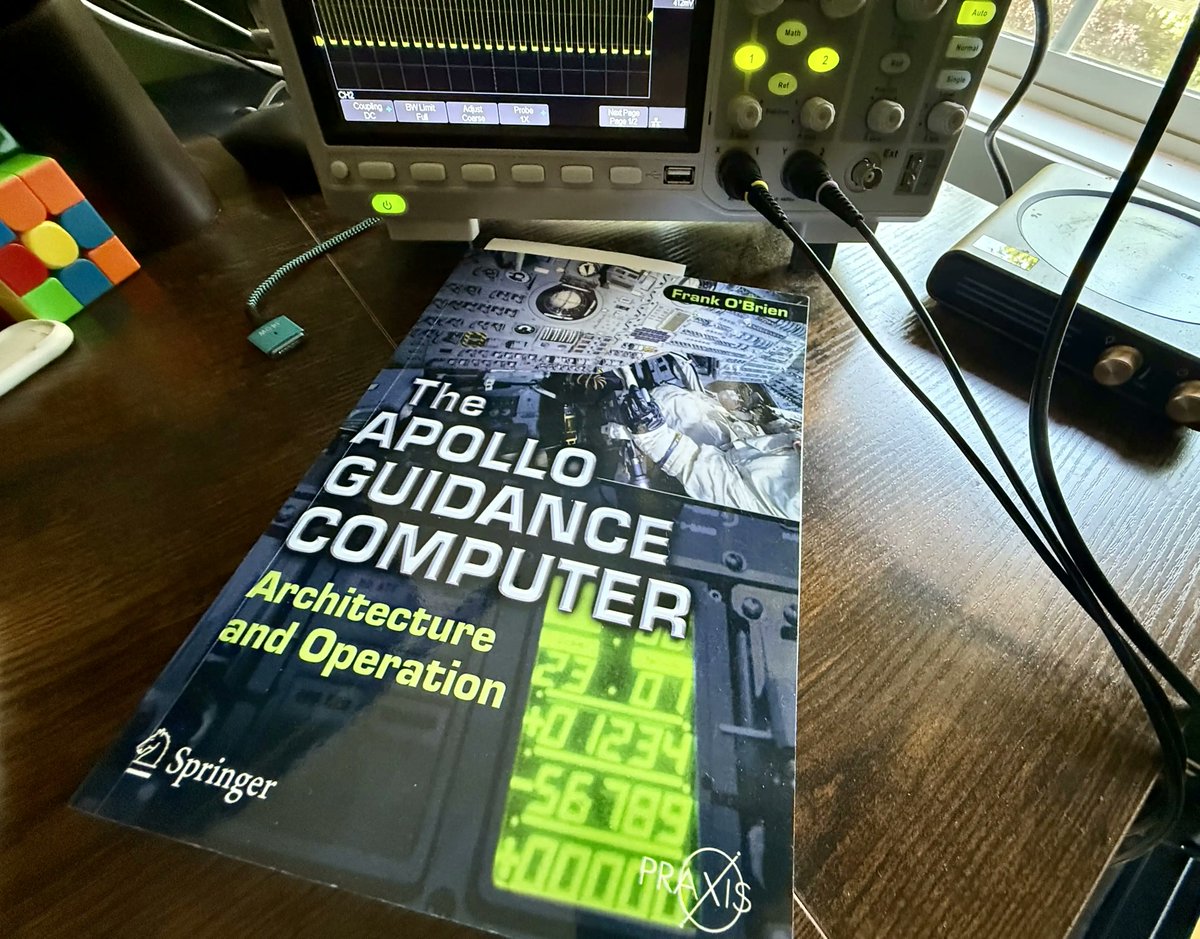
Somewhere around episode 8 of Curious Marc's (and Mike's) Apollo Guidance Computer series (like 7 years ago), I decided to try to understand the system better. I've been writing code to implement the internals (Block II), with help from Frank O'Brien's book and a ton of work by others on preserving the AGC and explaining how some more obscure components work.
I suspect I have some parts of it wrong, but to better visualize and push my understanding further, I realized that the TUI from my CROSSWOZ multi-vintage CPU interface would be a good way to figure out where I might be going wrong in my understanding of the internals.
So after a couple of weeks of wiring up my old AGC code to the TUI, I have a pretty good way to watch the whole thing run.
There's a TUI DSKY, Rope loader, real-time visualizer of registers and memory locations, built-in help, single step and breakpoint modes, real-time disassembly of running code, and more.
I borrowed a lot of my own code, so it was nice not to have to start the TUI from scratch. The speed is simulated (ish) as it's running on a Mac terminal.
As this is intended entirely for me to understand how the AGC works, zero lines of this were done by an LLM (didn't exist when I started the project anyway).
There's still a lot of work to do. I don't think some of my CPU internals are correct. I should probably start writing tests... (sigh)
And before you ask, I won't be releasing this. This is a learning project for me. A sort of document for myself by implementing a project. Some of it is spaghetti code, and that's fine with me. If you want to be a good engineer, there are no shortcuts. Do. The. Reps.
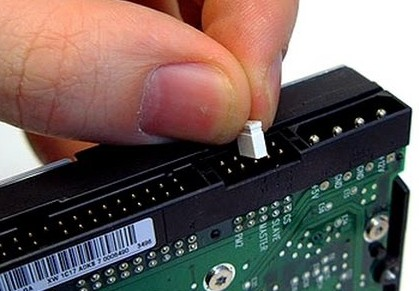
Back in the early 90s, before the Internet, we had "Defrag and Chill". You'd start Disk Defragmenter on your 540MB hard drive, dim the lights, crack open a Surge, and just vibe while the little blue bars crawled across the screen like they were solving world peace. Forty-five minutes of pure, unfiltered anticipation. No notifications. No algorithms. Just the two of you, the gentle grinding of the hard drive, and the sacred promise that your Solitaire games were about to feel 3% snappier.
This is MS_DOS 6.22, which I worked on, but I honestly have no idea who wrote defrag. Iconic utility though!
For the last few weeks, I've been writing a multi-CPU single-board computer like explorer. I'm calling it CROSSWOZ (Hat tip to Woz and the WOZMON).
Seven vintage CPU cores (6502, 65C02, Z80, 8080, 8085, 6809, 1802) share a 64K memory bus and the same WOZMON-style monitor.
I can swap CPUs in place. It's got a mini-assembler per CPU, JMON-style debug, and animated paper-tape I/O.
I'm pretty pleased with how it's turning out.
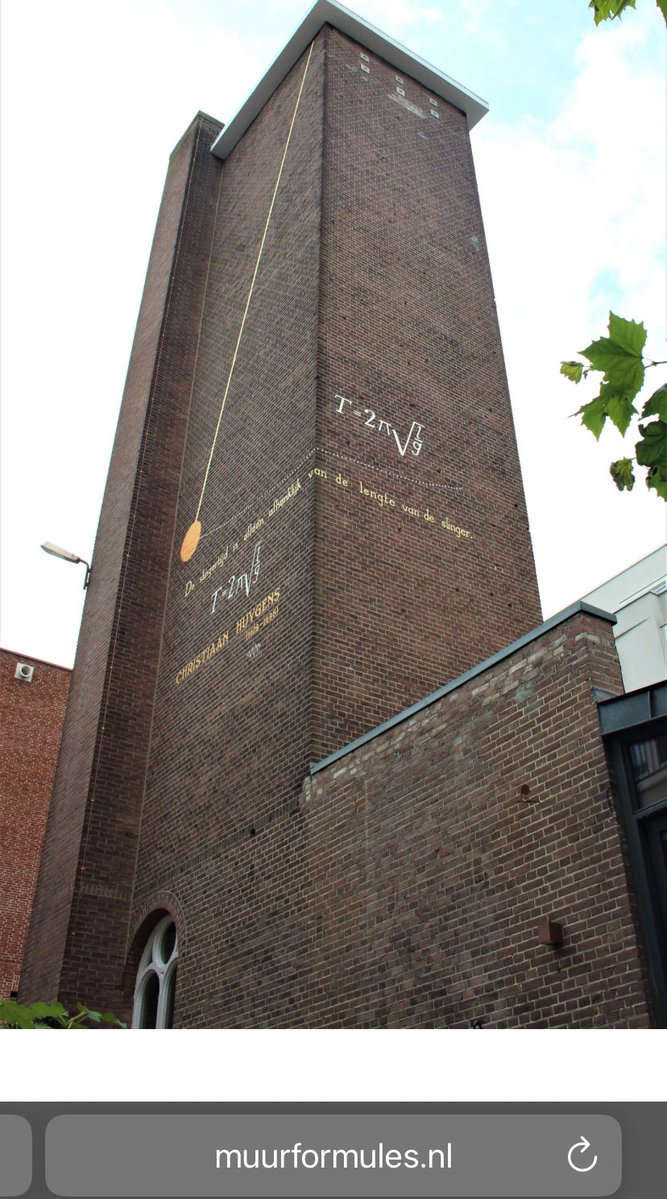
Muurformules: Samen met @IvovanVulpen en TEGEN-BEELD werk ik aan het verrijken van de stad Leiden met lokaal beta-erfgoed. Doel: aan iedere voorbijganger laten zien welke belangrijke ontdekkingen hier zijn gedaan. Op de foto de slingerformule van Huygens.
https://t.co/vAHAdfHN37
OH HEC… GUESS WHO’S BACK? 💻
After a year away, the legendary HEC 1 has returned !
The prototype for the UK’s first best-selling business computers (BTM), it’s a true heavyweight of tech history.
Come see it alongside Colossus and The Bombe
#ComputingHistory#HEC1#BTM
La petite info mignonne du jour : aujourd'hui le 05/05, le circuit intégré le plus célèbre de l'histoire de l'électronique, le NE 555, fête ses 55 ans.
Voilà c'est tout, vous pouvez continuer à faire ce que vous faisiez 😊
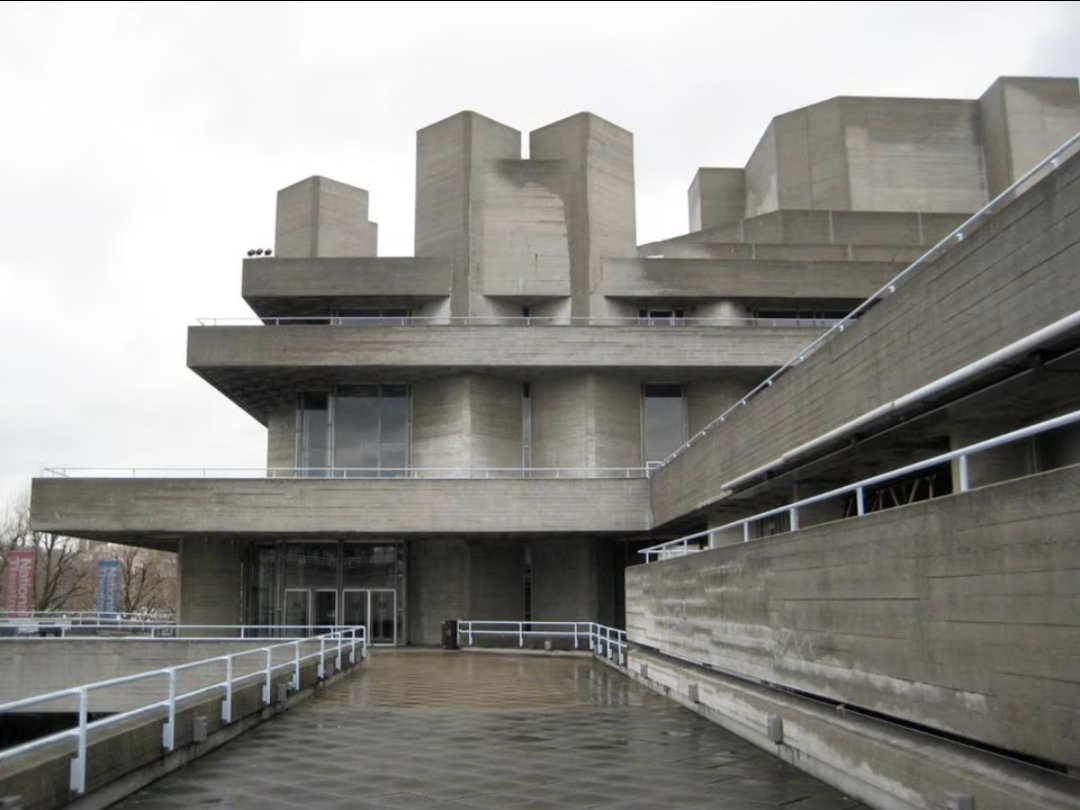
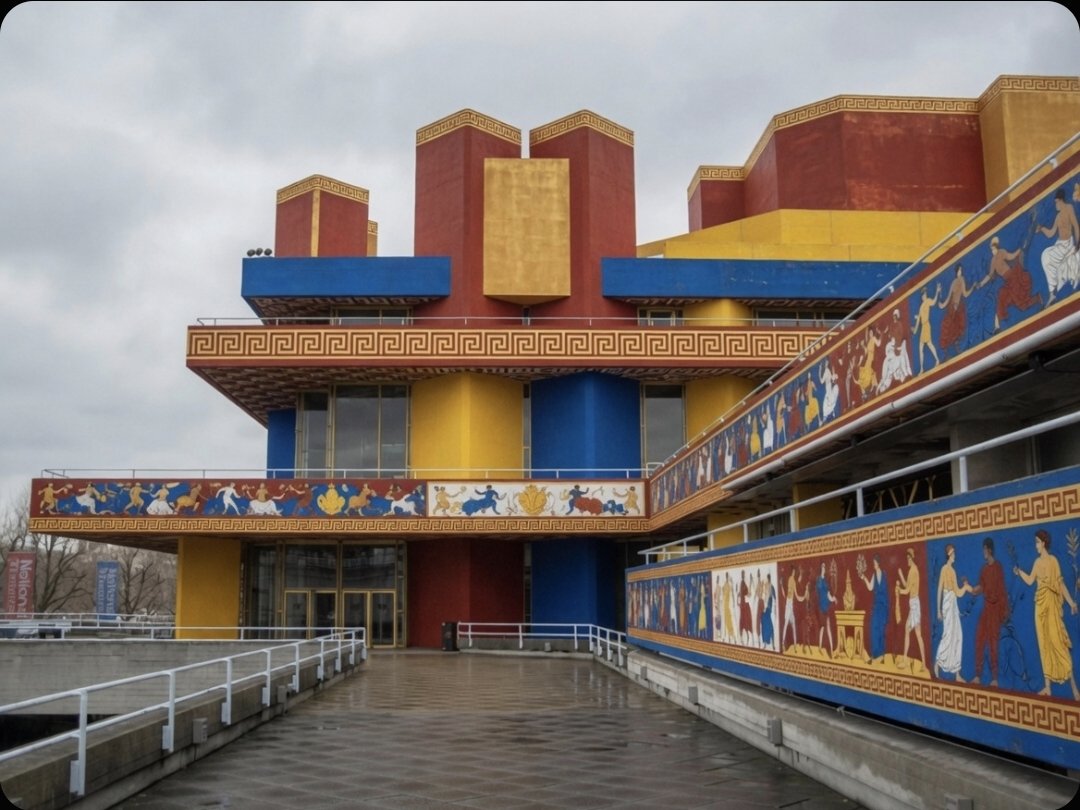
There's a common misconception that Brutalist buildings were unpainted, but thanks to microscopic analysis of the exteriors we can now recreate what they looked like in their prime.
Umberto Eco, who owned 50,000 books, had this to say about home libraries:
“It is foolish to think that you have to read all the books you buy, as it is foolish to criticize those who buy more books than they will ever be able to read. It would be like saying that you should use all the cutlery or glasses or screwdrivers or drill bits you bought before buying new ones.
“There are things in life that we need to always have plenty of supplies, even if we will only use a small portion.
“If, for example, we consider books as medicine, we understand that it is good to have many at home rather than a few: when you want to feel better, then you go to the ‘medicine closet’ and choose a book. Not a random one, but the right book for that moment. That’s why you should always have a nutrition choice!
“Those who buy only one book, read only that one and then get rid of it. They simply apply the consumer mentality to books, that is, they consider them a consumer product, a good. Those who love books know that a book is anything but a commodity.”