Finally biologists can also use numpy (array programming). Handling e.g. DNA and protein sequences with convenience and speed, like physicists and machine learners for decades have worked with numerical data: https://t.co/06MjAmBINx (1/3)
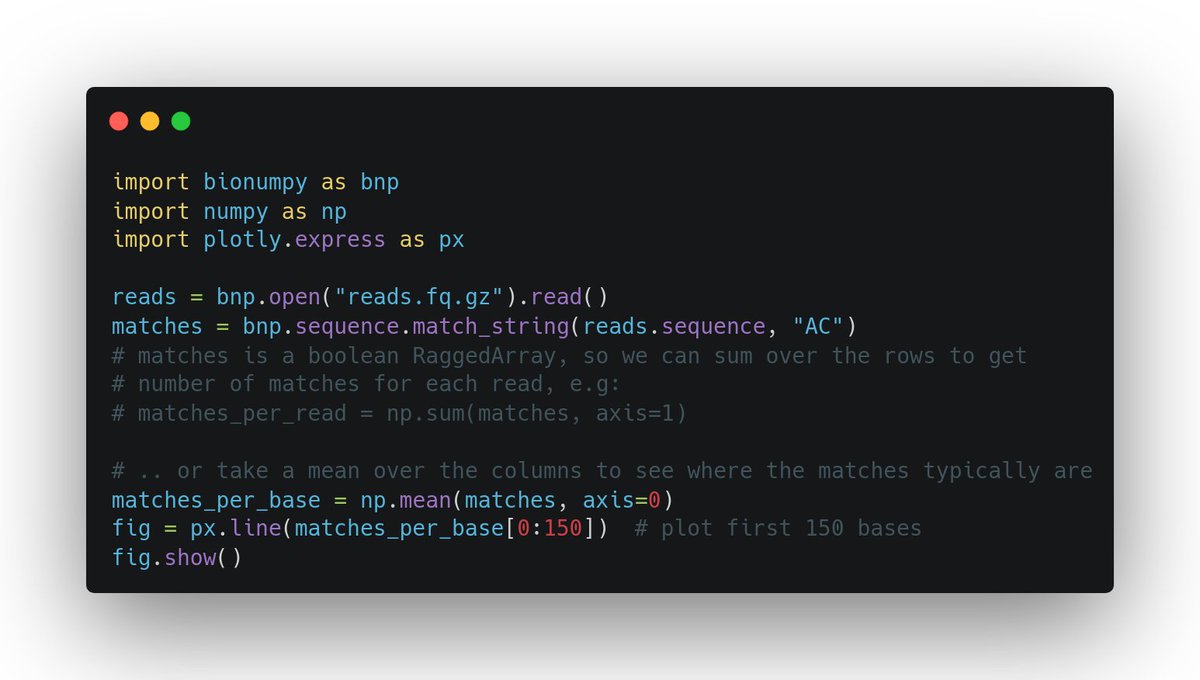
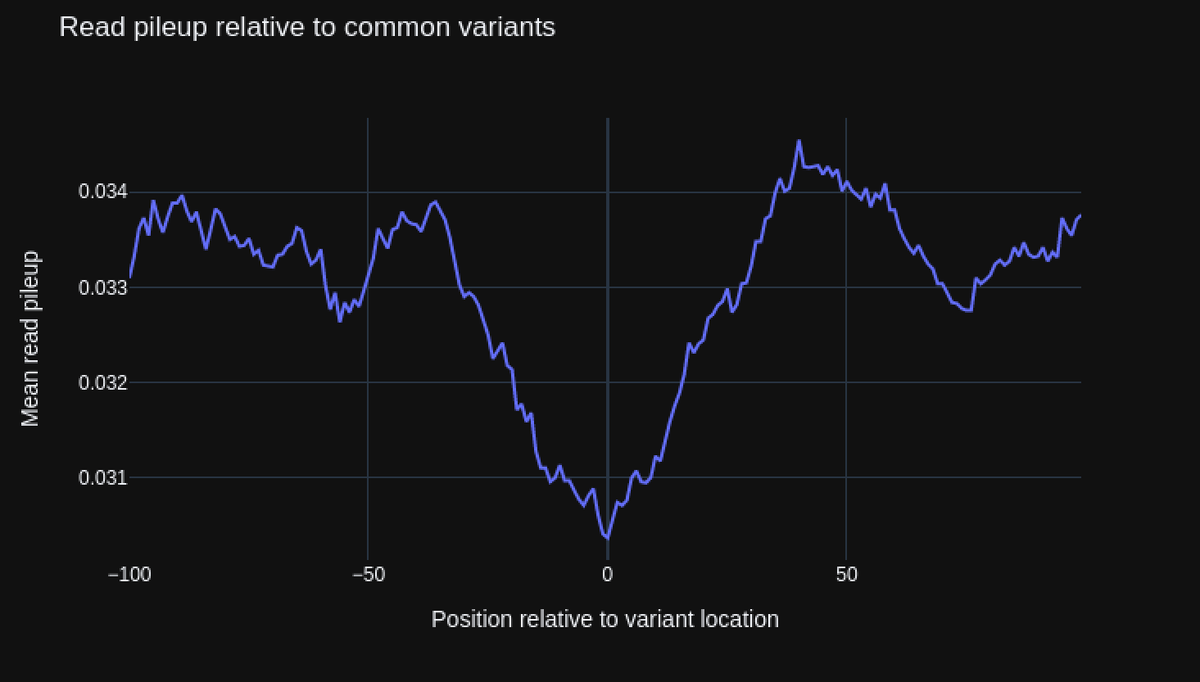
Finally, a cool example showing that there are fewer mapped reads on average around genomic variants. Check out this colab if you want to try out the examples: https://t.co/wOG7g5GLIP
BioNumPy has been updated with changes that make it a lot easier to work with genomic intervals and data on a reference genome 😀
Here are a few cool examples to illustrate the new stuff:
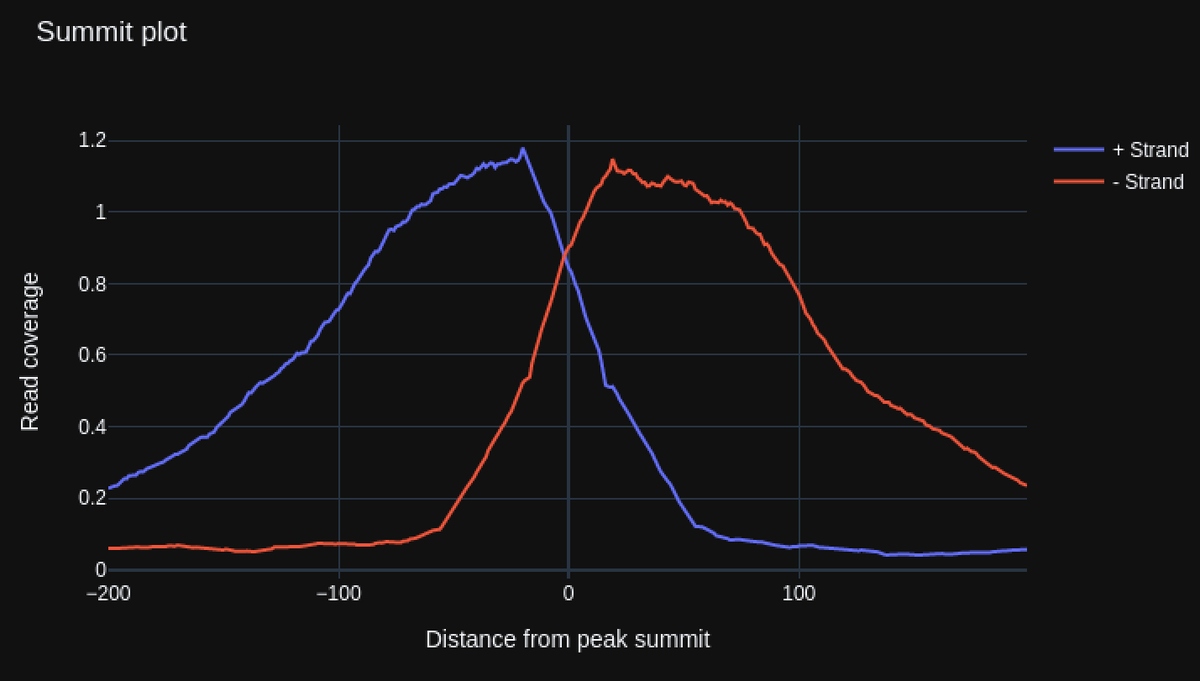
.. or around transcription factor peak summits. Here we plot the pileup for reads on the positive and negative strand, and clearly see the pileups we expect around the summit.
@vsbuffalo BioNumPy has some support for gtf files, but have not yet defined a complete set of abstractions for them. Would love suggestions for useful methods!
@vsbuffalo BioNumPy tries to give a uniform interface for parsing common bioinformatics formats. Keeping the header information from input through analysis to output is under progress and will be in place for BioNumPy 0.3 https://t.co/WFKcM41wfA
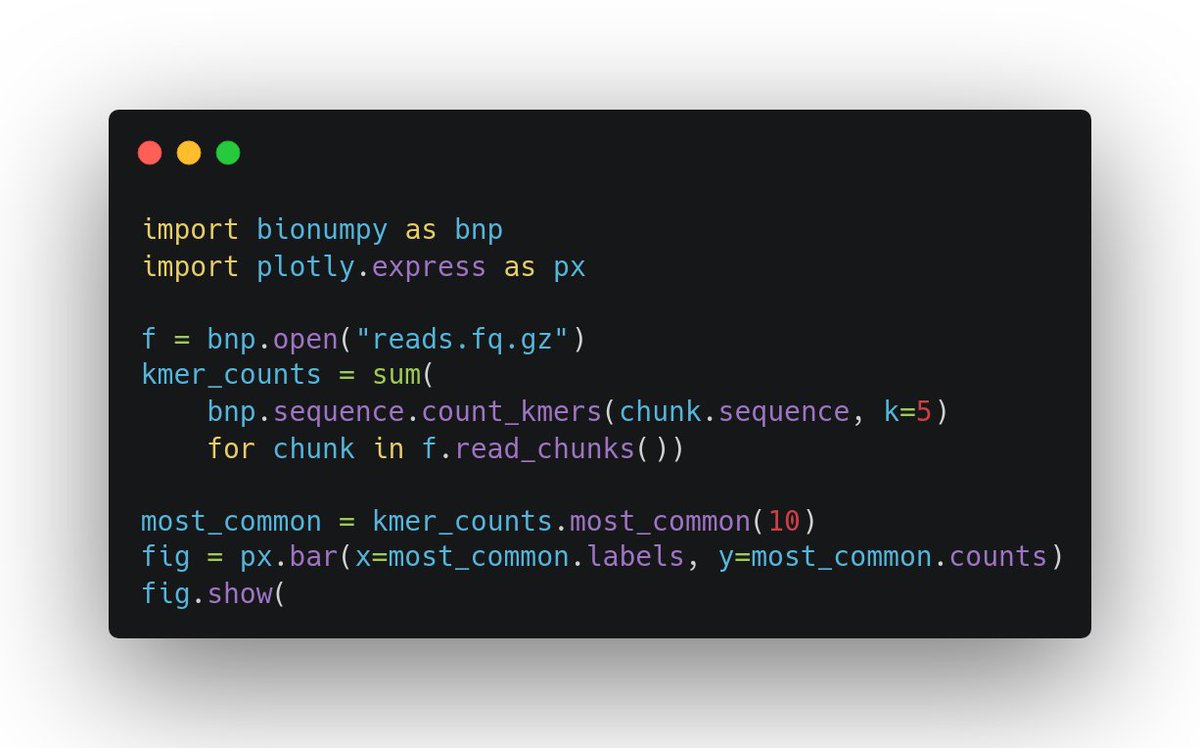
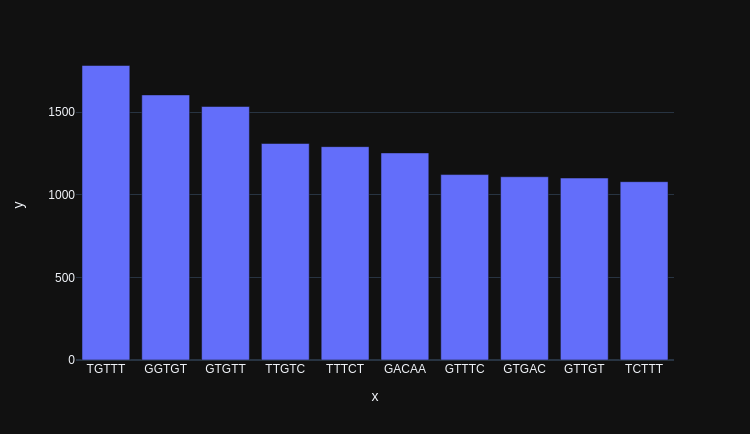
Day 5/5 of short BioNumPy examples: Finding the most common kmers in a FASTQ-file.
Try out the code here: https://t.co/rdpLLUVoQh
Check out our documentation for more cool examples: https://t.co/sgcXIUI6OX🤠
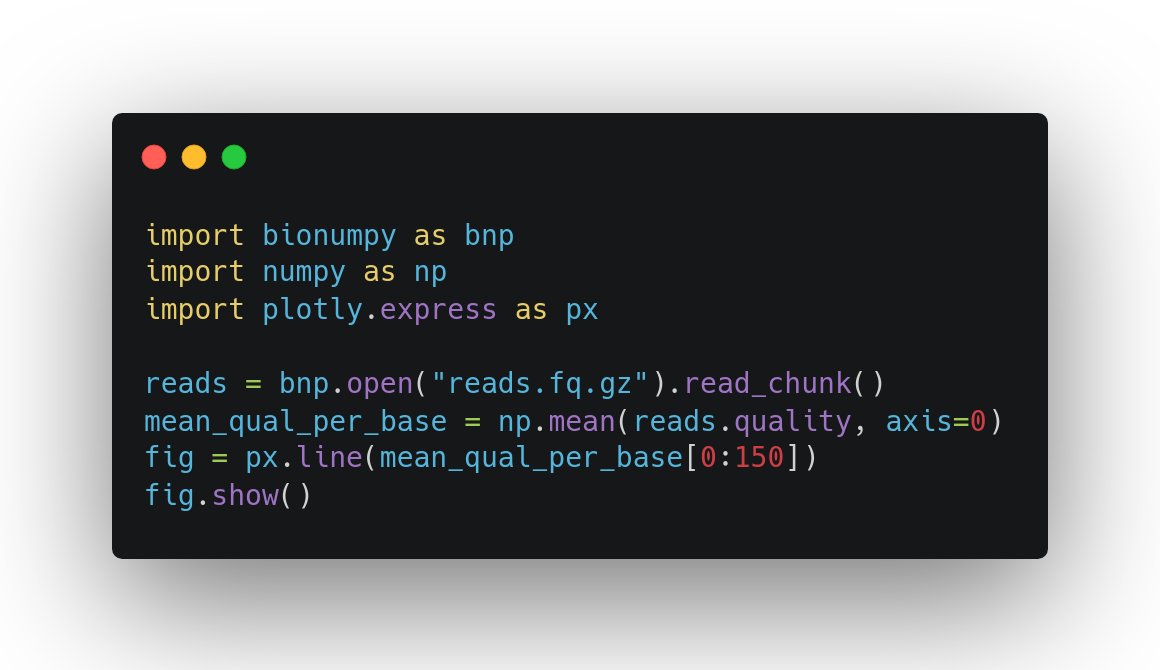
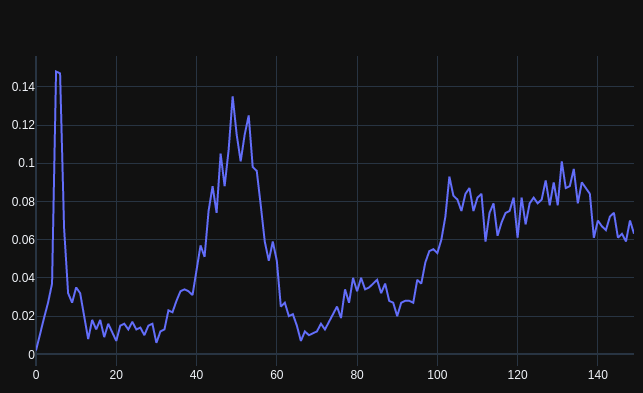
Day 3 of small BioNumPy examples: Plotting the mean base qualities across reads.
Try out the code here: https://t.co/7IEzYwcqlY
.. and remember to follow us for daily examples😋
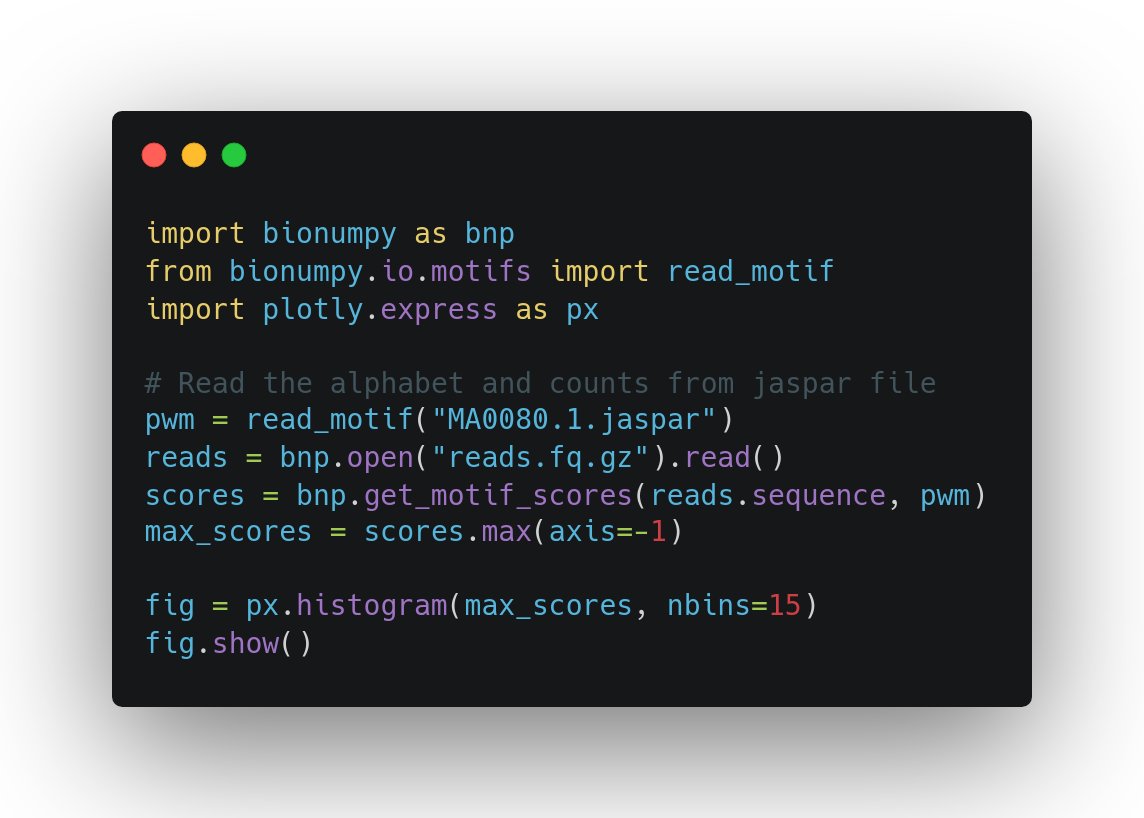
Day 2/5 of small BioNumPy examples: Motif matching.
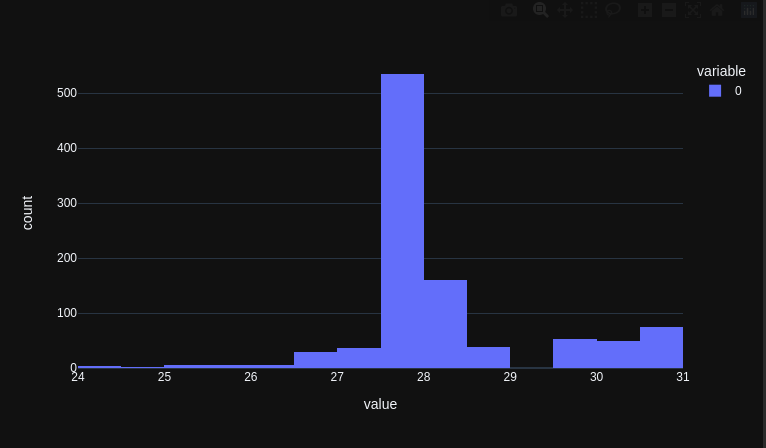
We download a motif from Jaspar, compute max motif score per read in a FASTQ file and plot a histogram of the scores.
Run the code here: https://t.co/1eOe5bee2c
Every day this week, we'll share a small example of how BioNumPy can be used.
First out: FASTQ filtering
(try out the code yourself here: https://t.co/s0fVxmoWub)
.. and remember to follow us for daily updates ☺️