Our journal publishes research on biochar preparation, processing, and multifunctional applications, including bioenergy, environmental materials, soil improvement, climate mitigation, remediation, water purification, analytics, life cycle assessment, and regional development.
Biochar can act as a “rhizosphere interface engineer”, reshaping soil structure, chemistry, microbes, and nutrient cycling around roots. 🌱
A new review highlights up to 41.6% higher porosity, 20% more root-derived C retention, and 10.9% less N leaching.
https://t.co/GAVzUt4nSI
Five days of science, conversations, and new connections at #ACSFall2026 in Chicago. 🧪🌎
For the second year in a row, Biochar joined researchers from around the world for face-to-face discussions on biochar, carbon science, environment, energy, and more.
#ACSFall
Biochar fixes acidic soils, but AI predicts it better when we separate organic from inorganic alkalinity.
Random Forest leads the way. Multi‑source data fusion boosts accuracy. Moving from correlation to mechanism‑guided AI.
🔗:
https://t.co/ENTeK3TGbE
Biochar acts as an electron bridge to supercharge anammox wastewater treatment.
EPS redox enrichment, DIET via conductive networks, and MIET via quinone groups work together. Machine learning now guides biochar design for smarter nitrogen removal.
https://t.co/HgdseRJJQS
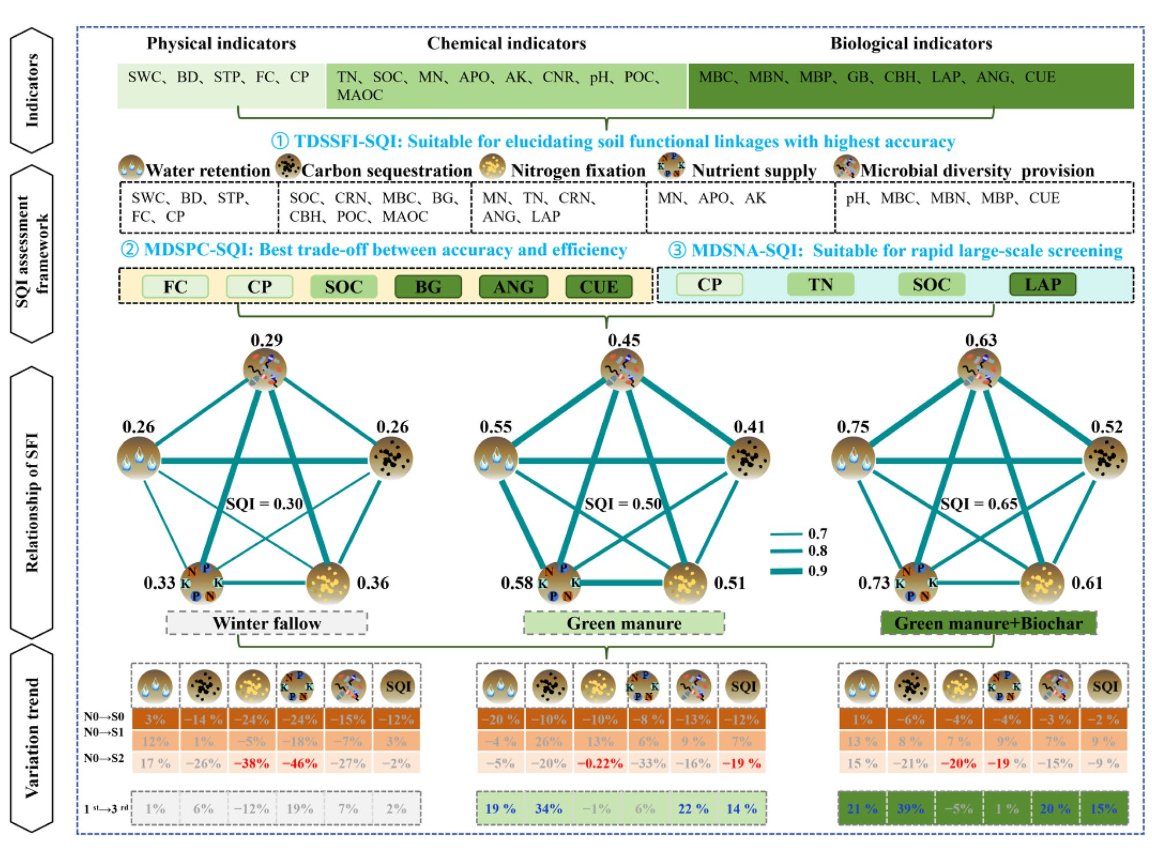
Less fertilizer, healthier soil.
A field study found that combining green manure with biochar allowed a 30% reduction in controlled-release N fertilizer while maintaining maize yield and improving soil health.
Microbial diversity emerged as a key driver.
https://t.co/dlPEMpfDPx
🍺 From brewery waste to cleaner water.
Biochar made from malt spent rootlets boosted E. coli removal from 17.8% to 94.1% in sand columns. The biochar also shifted bacterial retention toward direct attachment.
#WaterTreatment#CircularEconomy
🔗: https://t.co/sODk64TwiL
30 years of biochar research, distilled into one talk.
Prof. Stephen Joseph reviews how biochar changes in soil, supports nutrient and water retention, reduces contaminants and emissions, and can increase crop yields by 10–42%.
Watch the full recording:
https://t.co/ROTwM2QxF0
Waste cotton stalks and eggshells can become a biochar adsorbent for antibiotic removal.
The material captured tetracycline up to 161.9 mg g⁻¹, retained 84–86% capacity after five cycles, and was validated by ML, DFT, and life-cycle assessment.
🔗:
https://t.co/93YKQSTJp3
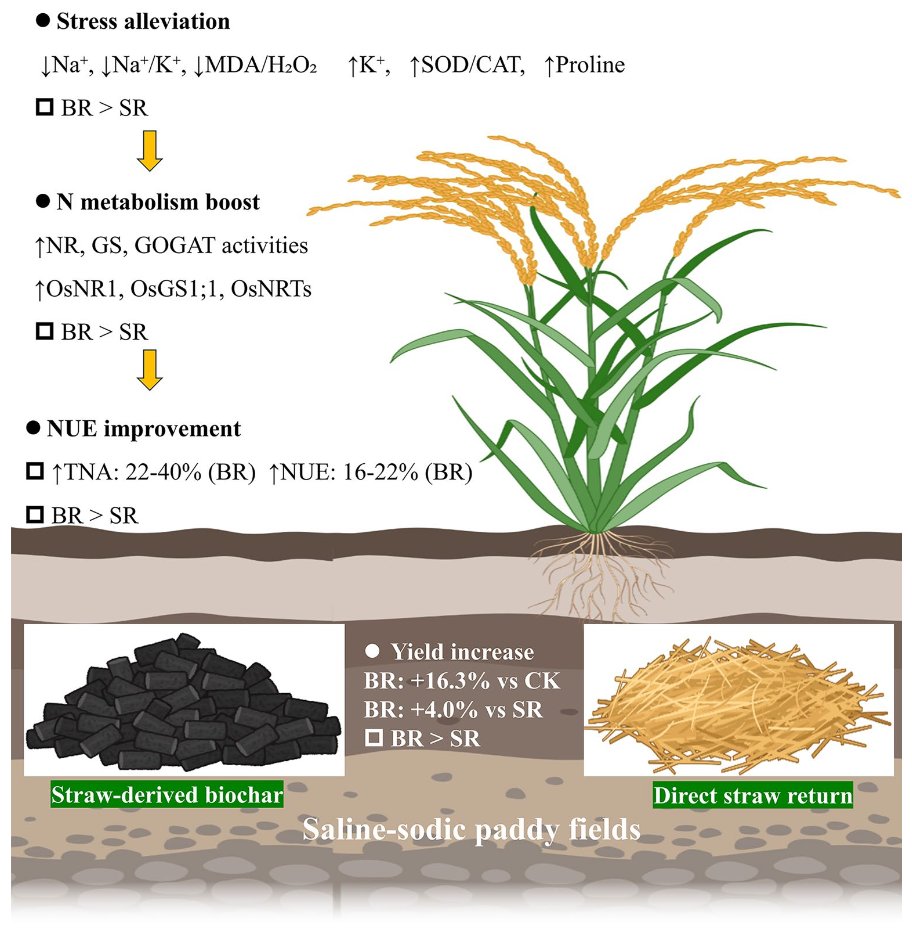
Turning rice straw into biochar may work better than returning it directly to saline-sodic fields.
A two-year field study found lower salt stress, stronger nitrogen metabolism, higher nitrogen use efficiency, and up to 16.25% greater rice yield.
📖:
https://t.co/whOHsUT9Pt
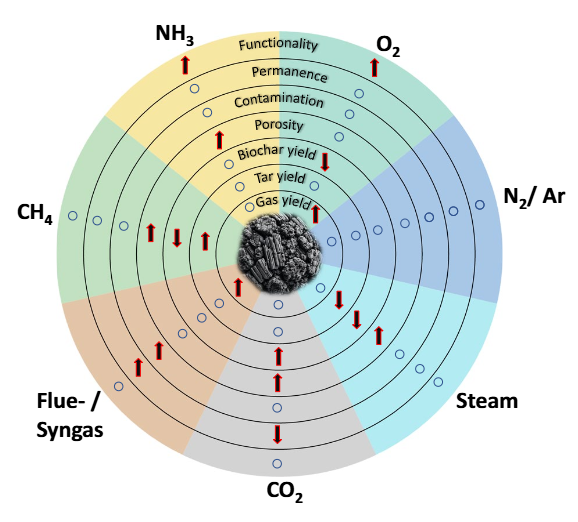
The atmosphere around biomass is more than a background condition.
CO₂, steam, O₂ and NH₃ can tune biochar porosity, surface chemistry and product yields during pyrolysis.
This review maps how process gases can enable one-step biochar engineering.
https://t.co/IUP7Hn78MW
Liquid biochar fertiliser could offer a practical path to higher yields.
An N-enriched biochar mineral complex produced 42.20 t ha⁻¹ of pasture and maintained positive N and P balances. The benefit-cost ratio reached 2.54. 🌱
#Biochar#Fertiliser
🔗:
https://t.co/4152GmHKKv
Coffee waste can do more than fuel your morning!
Researchers turned spent coffee grounds into porous biochar for a biodegradable insulation composite with a thermal conductivity of just 0.04 W m⁻¹ K⁻¹, comparable to commercial EPS. ☕🏠
🔗:
https://t.co/KejWhNIYUg
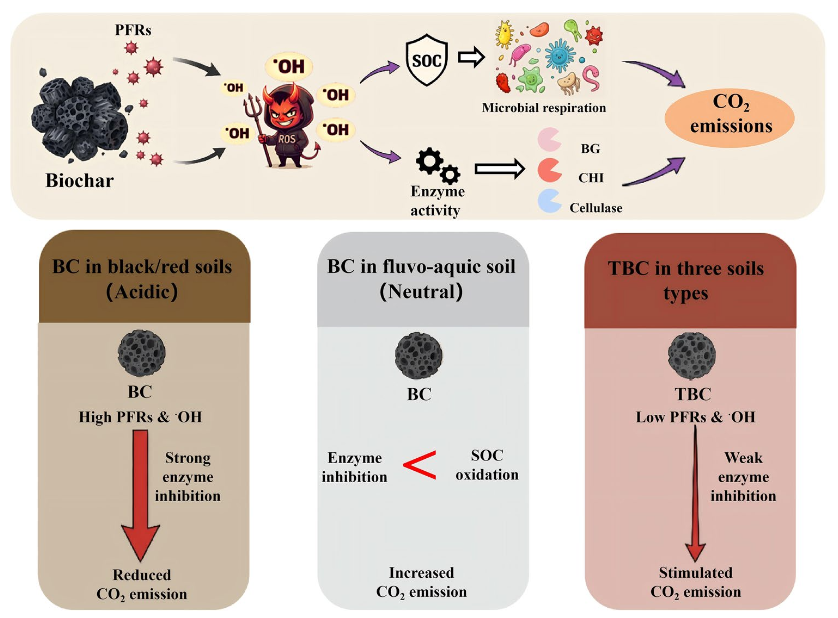
Biochar’s hidden radicals may help protect soil carbon, but the effect depends on soil type.
Biochar-derived •OH suppressed carbon-degrading enzymes and reduced CO₂ emissions in acidic soils, while priming dominated in calcareous soil.
Learn more 🔗:
https://t.co/sgeNluW0qh
NEW Community made its debut at #Goldschmidt2026 in Montréal, connecting researchers across geochemistry, environmental science, AI, carbon removal, and sustainability.
We are building a more open, inclusive, and interdisciplinary scholarly community. #OpenScience
Soil nitrogen decides how biochar stores carbon.
A global meta-analysis of 932 observations found stronger gains in low-N soils: SOC +47.9%, microbial biomass C +37.4%, and necromass C +14.0%.
Read more🔗:
https://t.co/x6vIzqR3TI
Chitosan-functionalized biochar reduced soil-available arsenic by 21% and arsenic in rice grains by 43%.
Even after natural aging, it continued to limit arsenic uptake, support root growth, and promote Fe-mediated sequestration.🌾
#FoodSafety
🔗: https://t.co/3PefPuJu9b
Hydrochar can strengthen soil while storing more carbon.
In microcosm trials, stalk-derived hydrochar increased soil aggregate stability by 70–100% and SOC by 143–149%, outperforming straw and biochar. Feedstock choice helps tailor benefits.
#SoilHealth
https://t.co/6iqkzLhcN6
Not all biochar is created equal.
A new Perspective in Biochar explains the trade-off between long-term carbon stability and soil co-benefits, calling for clearer reporting and purpose-designed biochar for credible carbon markets.
🔗: https://t.co/7wD18LlNc3