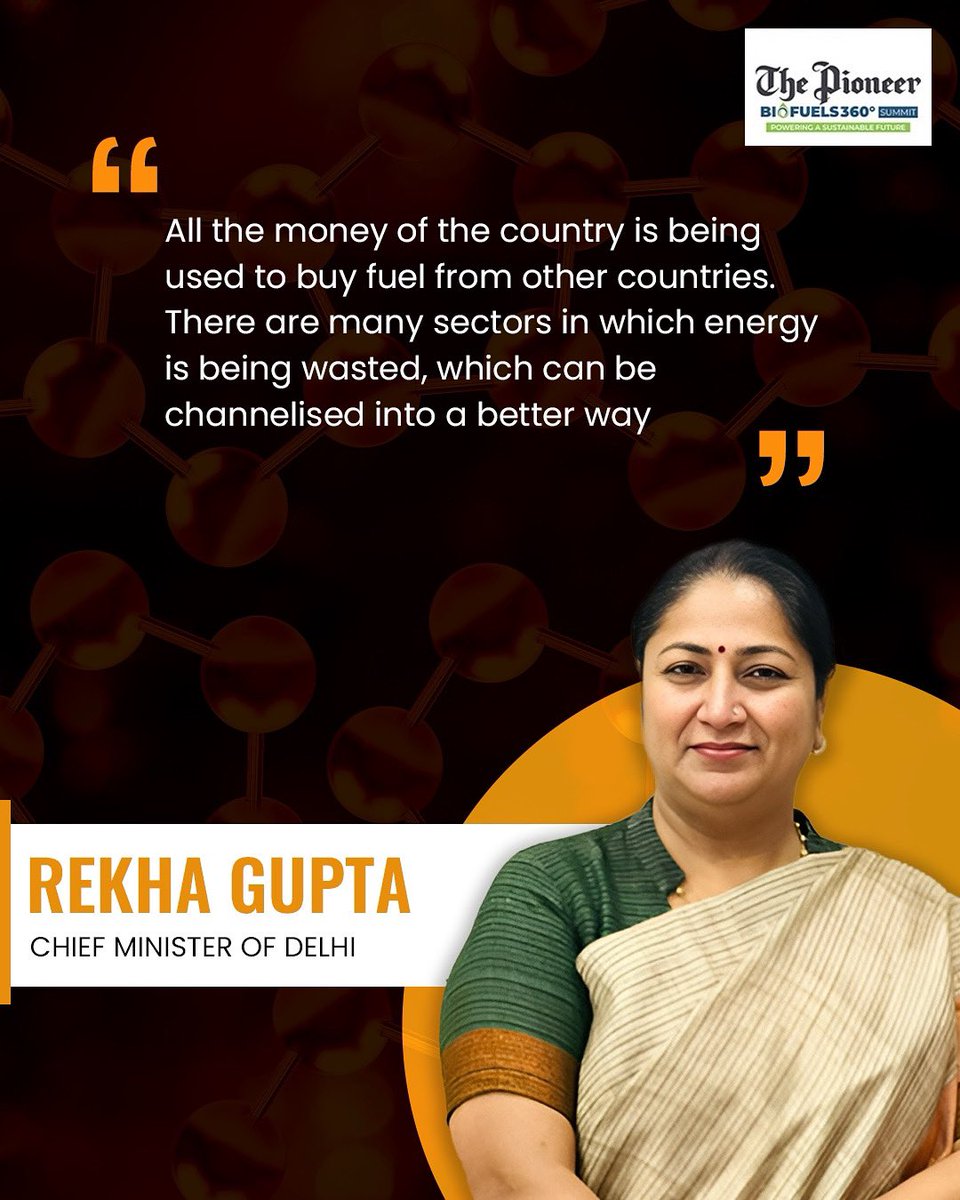
All the money of the country is being used to buy fuel from other countries. There are many sectors in which energy is being wasted, which can be channelised into a better way.
- Rekha Gupta, Chief Minister of Delhi
#indiabioenergytechexpo#CleanEnergy#Sustainablefuel
Today, ethanol is no longer just a by-product — it is the future of the sugar industry and a pillar of India’s energy transition.
#sugarcane#sugar#ethanol
The availability of feedstock is not so much of a hurdle in the Global South; it’s availability at a certain price point and the cost competitiveness which makes it difficult for downstream suppliers to do that.
Biomass-based green hydrogen in India, particularly in Uttar Pradesh, offers a cheaper and strategically important alternative to electrolyzer-based hydrogen, with potential to reduce import dependence and eventually enable exports.
Key challenges include ensuring long-term biomass supply through 5–10 year contracts, managing price fluctuations, and addressing feedstock availability as demand grows.
From the technology point of view, if you see the total cost of production, which is currently for the sustainable aviation fuel, the biggest cost is the cost of carbon.
-Gaurav Goyal, Business Head at Praj Industries
#indiabioenergytechexpo#CleanEnergy#Sustainablefuel
We are at a critical juncture where the strong demand for Sustainable Aviation Fuel (SAF) is colliding with a profound policy and economic uncertainty, fundamentally stalling commitment and growth.
While regions like the EU and U.S. are injecting massive capital to support SAF uptake, the reality is that the industry is facing a chaotic global landscape.
The National Institute of Bio Energy under MNRE maps biomass availability, provides training on biogas and pellet plants, and certifies biogas, biomass, and cookstove standards.
From an perspective of shaping the future of aviation, we have looked into 11 different ways of what technological certified asset pathways are and out of which five have been totally been acceptable within the global context under the ASTM.
There are examples of the kind of different diesel, even coal is one of the feedstock which has been utilized by different companies. So, we have looked into all of those different pathways that are there and another three are getting approved as we speak.
India’s ethanol blending program is a 360-degree win-win ,boosting farmer incomes, reducing oil imports, stabilizing fuel prices, extending engine life, and cutting carbon emissions. Every stakeholder gains, from government to consumers to the environment.