My cholesterol is normal, my calcium score is zero, and I feel great."
In traditional medicine, you'd be told you have very low cardiovascular risk.
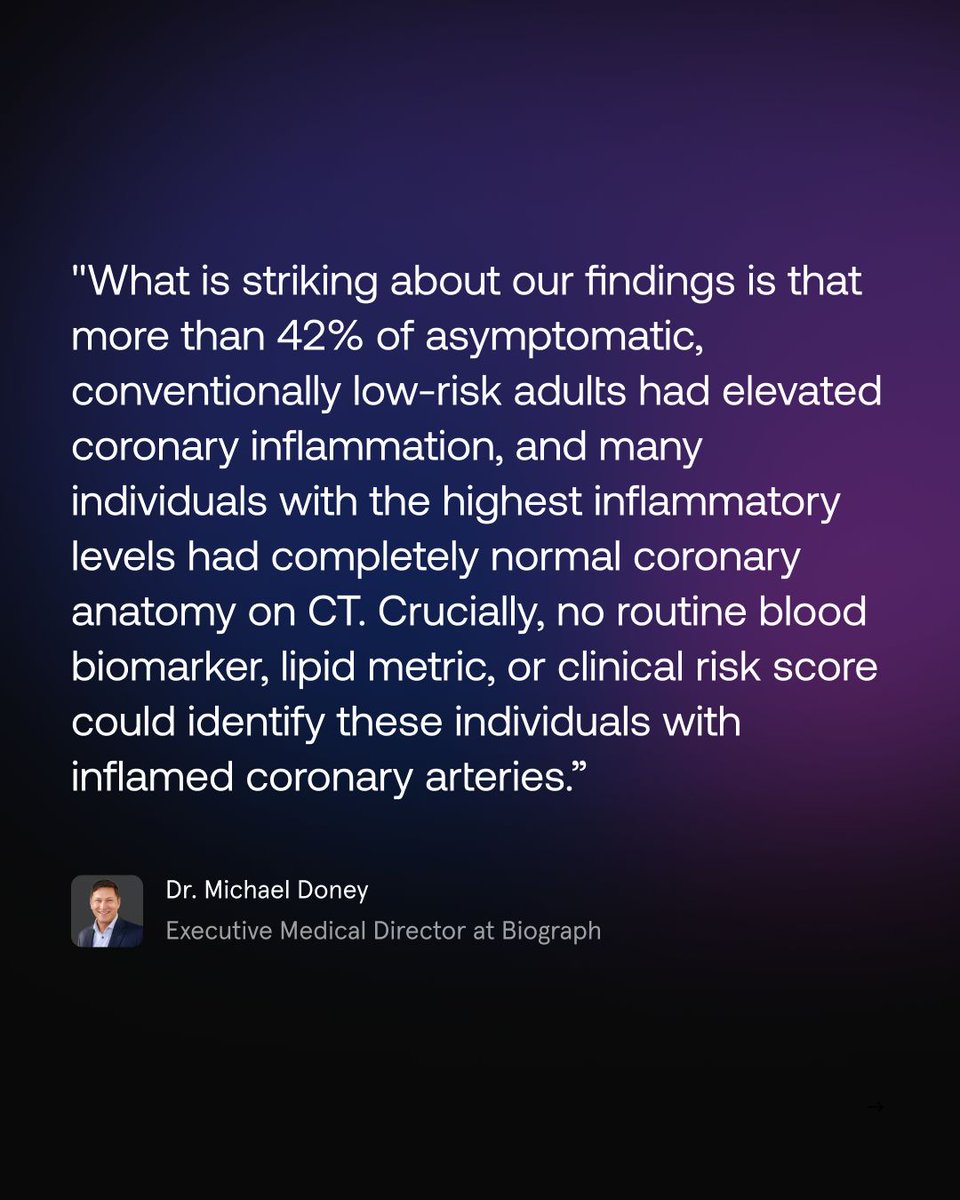
But our latest clinical study with @CaristoHeart revealed a potential limitation in standard risk assessment: 42.9% of conventionally low-risk, asymptomatic adults had elevated coronary inflammation, and of participants in the study with no discernable coronary plaque on CT angiography, 47% demonstrated elevated coronary inflammation.
What does this mean? And how can your coronary vessels be actively inflamed if your standard blood tests and scans look promising?
Swipe through to see what our latest study found.
🔗 Learn more in our latest press release: https://t.co/jOlvdZqjRW
🔗 To review the clinical study manuscript, you can access the published preprint here: https://t.co/wcIh5OuYm1
@Heart_BMJ Important finding from SCOT-HEART. In our U.S. study with @CaristoHeart using AI-enabled CCTA in asymptomatic, low-risk adults, we saw a similar gap: 42.9% had elevated coronary inflammation, including ~47% with no detectable plaque, that labs and risk scores missed.
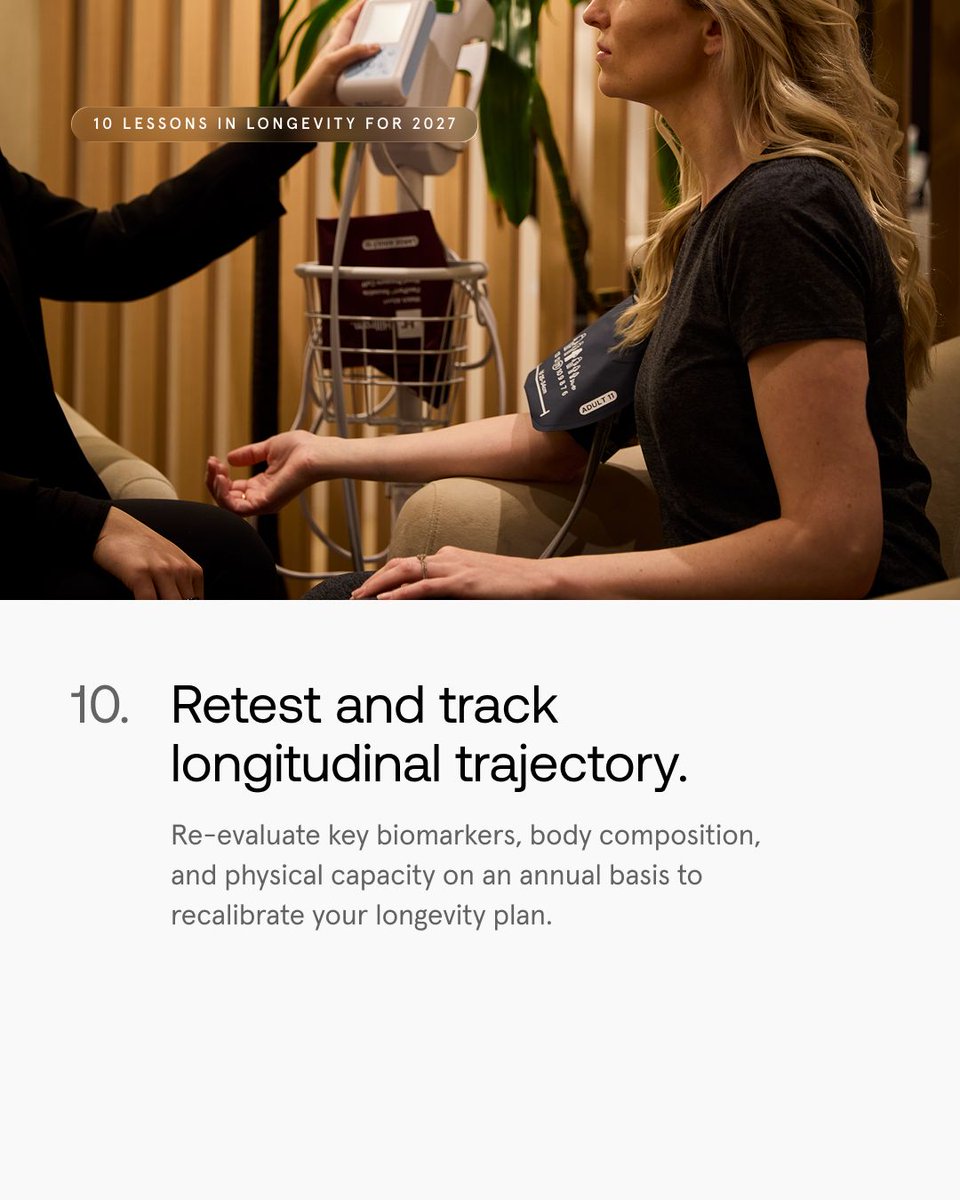
10. Measure longitudinally.
Health isn't a one-and-done event; it's a trajectory. Re-test your biomarkers and physical metrics annually to adjust your protocol as your body changes.
Stop guessing with your #healthspan. Join the Biograph waitlist to build your comprehensive baseline today: https://t.co/yJHL1msTVs
Most health advice focuses on short-term fixes: quick resets, random supplements, and trial-and-error routines.
True #longevity isn't about guessing. It's about execution, strategy, and tracking the right variables over decades.
🧵 10 smart moves for playing the long game ↓
9. Keep gut inflammation low.
Systemic health starts in the gut. A diverse, plant-rich dietary pattern supports microflora diversity and helps keep chronic inflammation in check.
The future of medicine is identifying early vulnerability and actively protecting cognitive resilience. Two critical takeaways here: Functional brain connectivity may change long before structural or cognitive decline, and as Dr. Zhang notes: early brain activity is a snapshot, not destiny.
Strong muscles don’t automatically guarantee strong bones.
Biograph's Dr. Yihan Chen recently sat down with @JosephArangio at @MensJournal to discuss a critical, often-overlooked pillar of longevity: preserving bone health after 50.
Osteoporosis is known as “the silent disease” because bone loss typically causes zero symptoms until a fracture occurs. While progressive resistance training is essential, bone tissue responds to mechanical loading differently than muscle.
Read the full article: https://t.co/u7QsKt0PRB
Your annual physical is an important starting point, but it may not tell the whole story.
Beyond traditional measurements like blood pressure, cholesterol, and fasting glucose, additional metrics can provide valuable insight into cardiovascular risk, metabolic health, physical fitness, and long-term function.
From ApoB and visceral fat to VO2 max, bone density, and grip strength, understanding how these measurements work together can help reveal a more complete picture of your health.
Read more on our blog: https://t.co/fGuM0C3rdB
The future of healthcare isn't about replacing doctors with AI. It's about upgrading medicine from static maps to real-time dynamic GPS.
From tracking organ-specific aging with blood proteomics to catching multi-system signals before symptoms show, AI is turning reactive treatment into proactive navigation.
We broke down the top 2027 healthcare trends and how we're applying them today in our 2-part blog series:
🔗 How we use AI at Biograph: https://t.co/XwJfw5Ecnm
In our latest study with @CaristoHeart, we found that coronary inflammation is common (42.9%) in asymptomatic adults without known heart disease – and is undetected by standard blood tests and other traditional cardiovascular risk factors.
Read more in @LongevityTech:
https://t.co/d6GPIgptz6
Conventional risk scores consistently miss the mark in younger women because they overlook reproductive history, pregnancy complications, and endocrine shifts. Recognizing these signals is step one; moving earlier with advanced biomarkers and non-invasive imaging to catch disease is how we turn recognition into real, proactive care.
Can your coronary arteries be actively inflamed if your cholesterol is normal and your calcium score is zero?
According to our latest research, the answer may be yes.
Biograph and @CaristoHeart have completed the first U.S. study evaluating AI-powered coronary inflammation detection in asymptomatic, low-risk adults. The findings reveal a potential limitation in conventional cardiovascular care:
🫀 42.9% of asymptomatic adults exhibited elevated coronary inflammation.
🫀 47% of participants with no evidence of coronary atherosclerosis showed elevated coronary inflammation.
🫀 Standard blood tests, including ApoB, non-HDL, and hs-CRP, failed to detect or predict the presence of this inflammation.
By detecting coronary inflammation non-invasively, we may gain a window to intervene when coronary heart disease is preventable.
🔗 Learn more in our latest press release: https://t.co/psffrsSgk6