Can Ozempic prevent cancer? Several large studies suggest it might. But the excitement is running ahead of the evidence.
In @ConversationUS, I explain what the evidence actually shows and why these studies are so easy to misread.
https://t.co/a9HMPM7CzG
Do GLP-1 drugs increase the risk of vision loss?
Specifically, a condition called NAION: a sudden loss of blood flow to the optic nerve that can cause vision loss.
We looked at this in 588,000 people.
The answer, in our new @JAMANetworkOpen paper, is yes. 🧵
https://t.co/Fdedf4bLbK
Do GLP-1 drugs cause pancreatitis? Trials have not shown a clear increase. Reports from patients say yes. Observational studies are split.
We looked at this in 333,000 people.
The answer, in our new @BMJMedicine, is more interesting than yes or no.
https://t.co/QY2Jo2NkMY
🧵
Many people don't realize that environmental stressors like air pollution, extreme temperatures, and wildfire smoke increase the risk of kidney diseases.
Here is a terrific review in @NatRevNeph led by my mentee turned collaborator Whanhee Lee.
https://t.co/ZNuvv4W15M
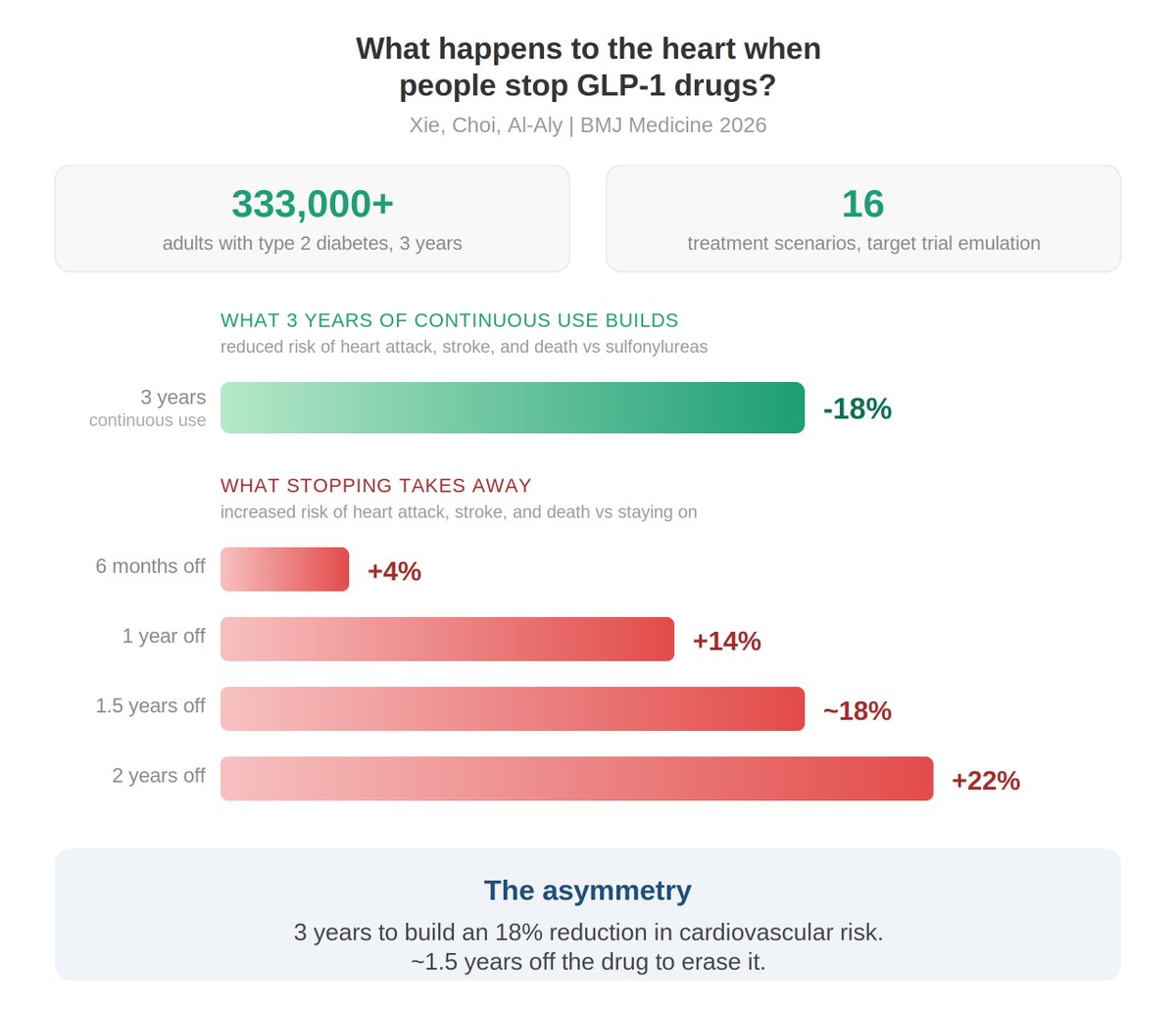
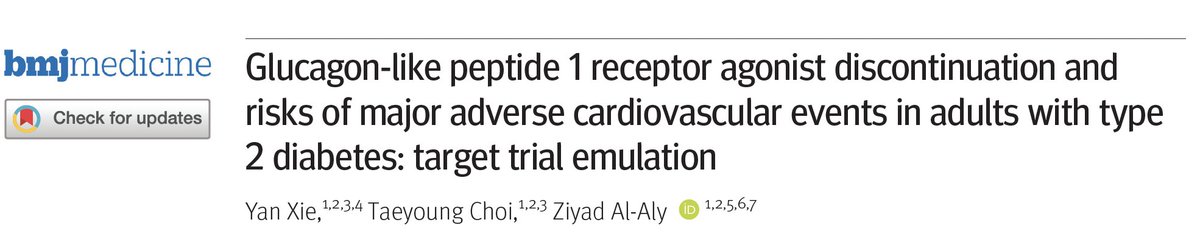
A new finding after stopping GLP-1 drugs in a large cohort with Type 2 diabetes: rapid erosion of CV benefit/protection
New @bmj_latest by @zalaly@Biostayan
https://t.co/JG6yB8wTJJ
See thread: https://t.co/6JvfIIjVBw
What happens to the heart when people stop GLP-1 drugs?
The short answer: nothing good.
New from our team: a study of 330,000+ people in @BMJMedicine
🧵
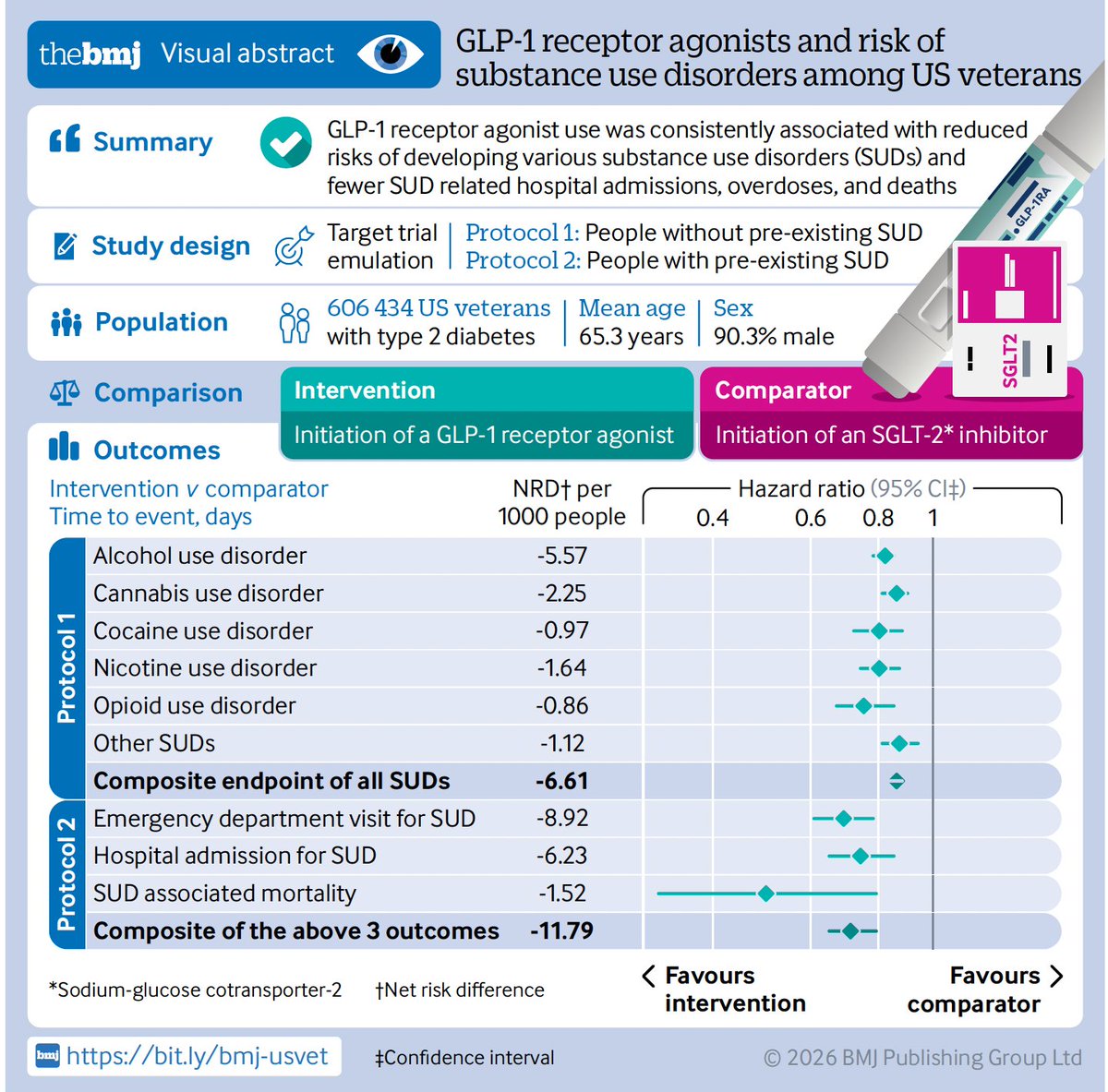
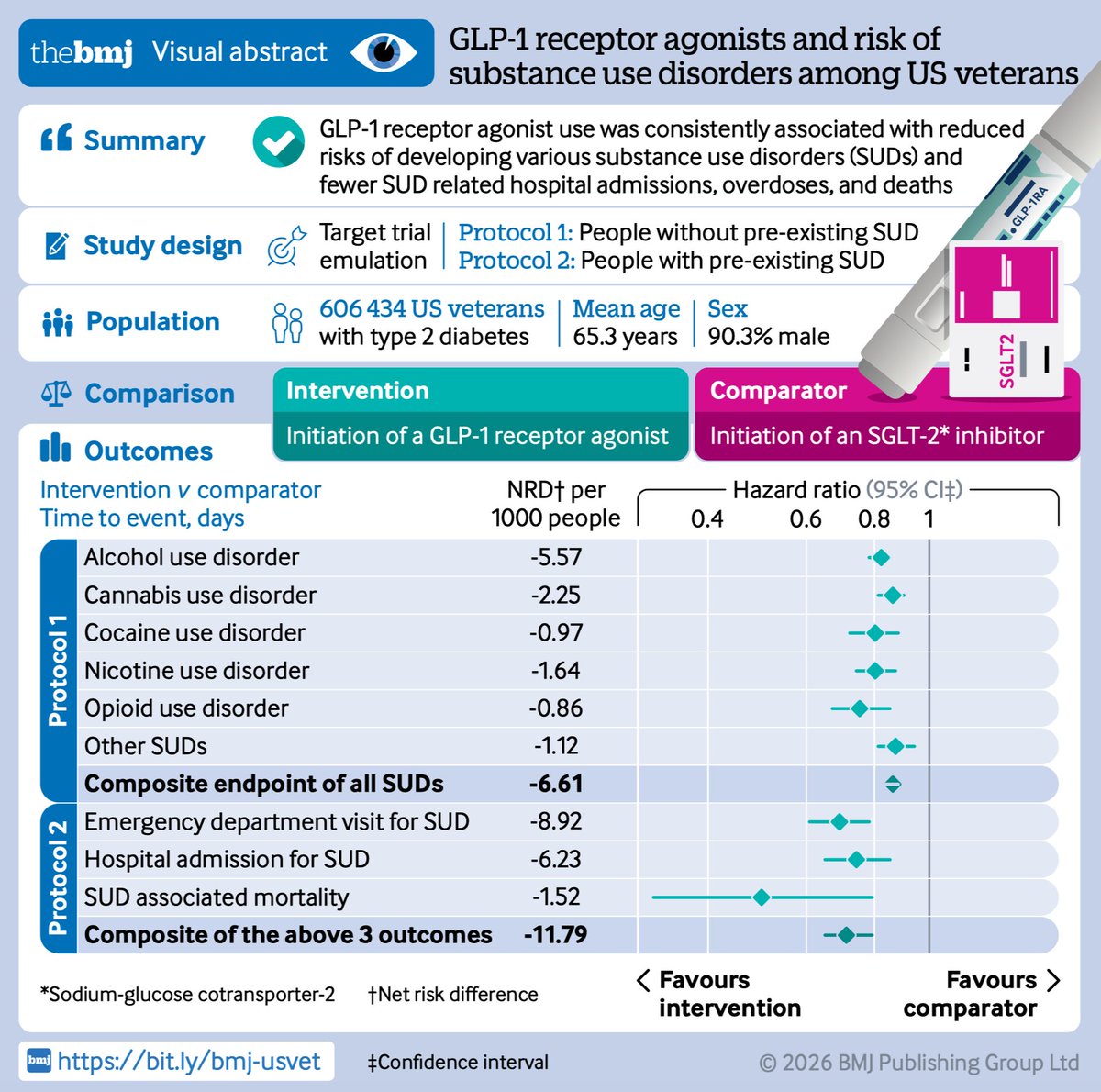
Best evidence yet that GLP-1 drugs reduce the risk of substance abuse, from >600,00 US Veterans across alcohol, nicotine, opioid, cocaine, cannabis @bmj_latest@zalaly@Miao_Cai_SLU
https://t.co/rcqUt0kY77
📢NEW: In a study of 600,000 people published today in @bmj_latest, we found GLP-1 drugs (Ozempic, Wegovy, Mounjaro) associated with reduced risk of addiction across alcohol, opioids, cocaine, cannabis, nicotine—and 50% fewer substance-related deaths.
🧵
https://t.co/SfurAFkzgT
We have a big paper dropping at 23:30 GMT/6:30 PM ET. It's not about Long Covid, but I think it is one of the most important studies our team has done.
For my Long Covid community: we are working very hard, we have a pipeline of projects, and new work is coming. My team and I are committed to this and will always show up for you.
More at 6:30 ET.
We’re recruiting Postdoctoral Fellows (Clinical Epidemiology & Pharmacoepidemiology)
➡️ Details and application via Indeed: https://t.co/s4oyl1lWCh
These positions are hired through our non-profit foundation.
🚨 We're hiring Postdoctoral Fellows!
📷Join a high-performing team to tackle high-consequence public health questions — Long COVID, long-term health effects of acute infections, and more — using large-scale, high-quality databases + cutting-edge causal inference.
Two exciting tracks:
🔹 Clinical Epidemiology
🔹 Pharmacoepidemiology
Who's ready to make real-world impact? Details and application in link below📷 #EpiTwitter #Postdoc
👇
Honored to speak at @Harvard’s Radcliffe Institute workshop on #LongCOVID. I am energized by our 2 days of brainstorming about the road ahead. The challenges are real, but I’m leaving hopeful. Millions living with Long Covid are counting on our progress—we must keep keep pushing forward. @AzolaAlba@meghanor
For decades, the junk food industry has deliberately engineered foods to be addictive. Ozempic and other GLP-1 drugs have helped people break free from this cycle. In response, the industry is now searching for ways to counteract the effects of these medications, aiming to design foods that remain addictive even for those on GLP-1.
Wild but true. Fascinating piece in NYTimes Magazine. https://t.co/VjH8VqyKDP
I talked to Dani Blum from @nytimes about the potential role of GLP-1 drugs on Alzheimer’s disease.
They seem promising, but more data is needed for sure.
https://t.co/eX2afPQdHb
🚨 ICYMI: Our latest study shows that the popular GLP-1 weight loss drugs (e.g. Ozempic) have broad health benefits — reducing risks of 42 health conditions. They are not without risks — increasing risks of of 19 health conditions.
https://t.co/cJR8t1fZU8