This Budget supports British science and technology with Research and Development spending rising to a record level of over £20 billion.
The Department of Science, Innovation and Technology’s R&D budget rises by 8.5% in real terms to £13.9 billion.
Today’s Budget is a clear indication that the government sees life sciences at the heart of its growth mission.
We welcome @RachelReevesMP measures to improve UK life sciences competitiveness & look forward to working together to boost our research health and life sciences ecosystem.
https://t.co/UF9Ka1XtbG
As well as improving our daily lives, university research contributes £54 BILLION to the UK economy and supports 121k jobs across the UK📈
If we want to be a country fit for the future, the government must make research funding more sustainable👇
https://t.co/W8d5vxiXDx
Great point - some forms of innovation (S&T based) attract all the attention while other important innovations remain hidden, and under-invested in.
@lhenryli An informative report but seems UK’s PLCs are not taking any responsibility here. US firms generate very high returns + so encourage investors to re-invest in US. Biotech is a prime example. Performance drives expectations - we need some bigger successes and less early sellouts.
Higher education contributes £265 BILLION to the UK economy.
For every £1 of public money invested, £14 gets put back into the economy.
Universities can help get the UK get back on track for growth. See how👇
https://t.co/W8d5vxiXDx
I don’t think @elonmusk is really following Milton Friedman’s advice. Friedman saw firms as purely focused on shareholder returns so he saw a role for government in setting and enforcing the rules for all to live by: i.e. regulation. Elon doesn’t like regulation, Friedman did.
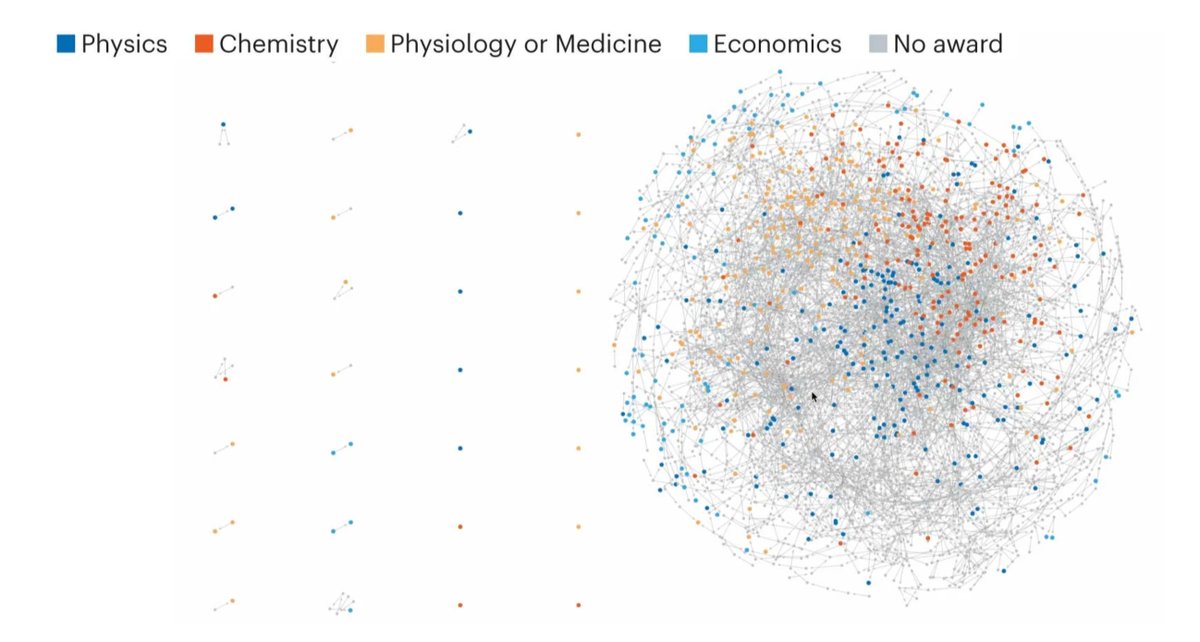
An absolutely bonkers stat from this Nature article on Nobel Prize winners.
"702 out of 736 researchers who have won science and economics prizes up to 2023 are part of the same academic family"
https://t.co/qC3AeqwnSM
@wi_john Taking equity in tech firms instead of giving grants raises a lot of problems, starting with the hole it leaves in the grants ecosystem for risky industry r&d. Ask American tech entrepreneurs if the US should scrap SBIR. Nope? We shouldn’t either.
Passing the #PASTEUR Act “is the single most important thing our government can do this year to transform #antibiotic research and development and help meet the global goal of reducing AMR deaths by 10%,” @IDSAInfo President-Elect Tina Tan says. https://t.co/mgtACaUZEv
"Simply put, the AMR brain drain threatens every part of the drug development process, from basic discovery research through clinical testing all the way to regulatory approval and life-cycle management," @IFPMA's James Anderson writes. https://t.co/C5NTTa79wo
The #AMR field has been steadily losing vital scientific and research talent for more than two decades as a result of the broken #AMR market, @IFPMA's James Anderson writes. https://t.co/C5NTTa79wo
Antimicrobial resistance (#AMR) is serious. It's a threat to people, animals, plants & the environment, so we need to treat #antibiotics with respect.
Simple actions can help to reduce infections, and if we follow good practices we can keep them working
https://t.co/7pMfJpA2kt
“Mission-driven government” won’t work, for three reasons. First, JFK’s mission was relatively simple compared with any of Starmer’s. Putting a man on the moon required the building of a rocket, for which almost limitless cash was available.”
https://t.co/buWf7bogQe
Fantastic to see @peterkyle and Patrick Vallance speaking together about their priorities for UK science. It’s striking how aligned they are when asked about their aims for @SciTechgovuk. Both place huge importance on transforming the relationship between public and science.
Vallance said “success is that the electorate care about science”. Kyle said “success is that the relationship between citizen and public services will be transformed”. #Lab24