There's a specific type of conversation I have sometimes that's different from all the others. It's with a security leader whose company had an incident.
Not a theoretical risk discussion. Not a "what if" scenario. An actual breach. Data exposed. Board involved. Customers notified. The whole thing.
These conversations are quieter. More honest. The pretense of having it all figured out is gone. And the priorities are completely reshuffled.
Before the incident, it was "we'll consolidate eventually." After, it's "we consolidated in 60 days." Before, it was "we can't justify the budget." After, the budget appeared overnight.
I don't share this to scare anyone. I share it because the pattern is so consistent that it's worth naming. The teams that move fastest on security infrastructure are almost always the ones that learned the hard way.
The question I keep sitting with: why does it take an incident to unlock the urgency that was always warranted?
Something I think about a lot: security teams never get credit for the things that don't happen.
Nobody sends a company-wide Slack message saying "Hey, great work everyone, we didn't get breached this quarter." No one gets a bonus for the incident that was prevented because the detection rule caught it at 2am.
The best outcome for a security team is silence. Nothing happened. Everything worked. And that's incredibly hard to celebrate or even communicate upward.
I've started noticing which security leaders are good at making the invisible visible. They don't wait for incidents to justify their value. They build dashboards that show what was caught, what was triaged, what was prevented. They translate "nothing happened" into "here's the 847 things we stopped before they became your problem."
That skill, translating prevention into a narrative, might be the most underrated skill in security leadership.
One of the most interesting things I encounter in conversations with security teams is the amount of internal tooling they've built to fill gaps between their vendors.
Custom scripts that normalize alert formats across platforms. Homegrown dashboards that pull data from four different APIs. Spreadsheets that track coverage gaps because no single tool shows the full picture.
This work is impressive - but it's also a sign that the tools aren't doing their job.
When a team is spending engineering hours building glue between security products, that's not innovation. That's compensating for a fragmented stack, and it's fragile. It breaks when vendors update their APIs, when team members leave and take the context with them, or when the org scales faster than the scripts can handle.
The teams that recognize this tend to reach the same conclusion: the energy going into maintaining duct tape could go into actual security work if the platform handled the integration layer.
Something has shifted in how security teams evaluate vendors over the past year, and I think it's worth naming.
Two years ago, most conversations started with a feature checklist. "Do you do SAST? Do you do secrets detection? What about container scanning?"
Now, the conversation starts differently. "How many of our current tools can this replace?" - teams aren't trying to fill gaps anymore, they're trying to shrink the stack.
They want to know will this make my week simpler or more complex? Will my team spend less time managing tools and more time on actual security?
This shift is real and it's accelerating.
AI bots like @openclaw's Clawdbot surface 1000s of vulnerabilities every day.
So we had to act. 🦞
Introducing https://t.co/DRHJXMgFkP: a free terminal skill to analyze any ClawdBot build, derived from our AI security expertise protecting the most complex production systems.
See how it works:
We’re proud to announce @Coinbase as a core collaborator on the Web3SOC framework. Their team’s contributions have helped strengthen the shared commitment to security, integrity and trust in decentralized finance that the framework aims to facilitate.
Details below.
A landmark moment in onchain security.
@Coinbase has launched a $5M bug bounty on Cantina, a new program focusing exclusively on all its onchain products and @base’s smart contracts. It sets a new standard for securing Web3 organizations at scale. Details below.
@cormacdaly_@cantinaxyz It was an absolute joy and privilege to work with @cormacdaly_ and the Nashpoint team. So thrilled to see this announcement after all of their hard work and dedication to make this happen!
@cantinaxyz were incredible. @bitbugshar & Marc onboarded us and made sure everything was perfect. They gave me incredible confidence in the team and process, going above and beyond to make sure we got everything we needed.
The Internet capital markets are broken.
Snipers, MEV bots, and early whales dominate most token launches, leaving real supporters behind.
@longdotxyz is rethinking token sales from the ground up.
Let’s break down how 🧵👇
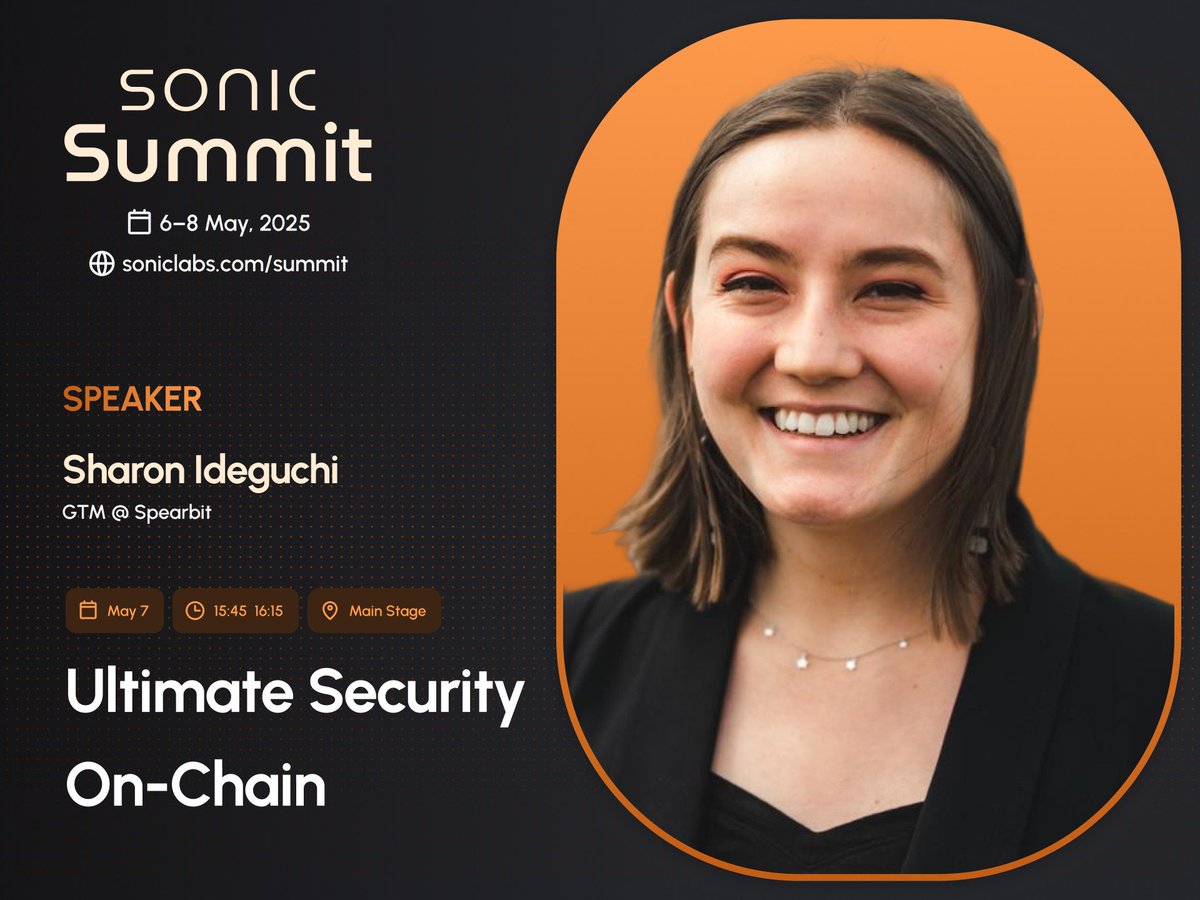
Announcing Sonic Summit.
📍 Vienna, Austria
📆 May 6–8, 2025
City-wide Sonic takeover of historic venues for three days of events, networking, coffee, cake, and more.
Get your early bird ticket now:
🎟️ https://t.co/APQ05zMgQe