Breakdown of What Actually Happened (from public analyses and on-chain data shared on X)
The victim/user swapped ~$50.4M in wrapped USDT (aEthUSDT) for AAVE via the Aave interface → routed through CoW Protocol.
Due to insane slippage (liquidity on the path was nowhere near deep enough), they received only 324–331 AAVE ($36k–$37k at the time).
This created a huge price dislocation across DEX pools (primarily Uniswap/SushiSwap for the relevant pairs).
An MEV searcher/bot immediately spotted it and executed atomic backruns/arbitrage to correct the price:One major backrun involved reversing the direction (e.g., selling AAVE back to ETH/USDT to capture the mispricing).
Additional smaller arbs and related txs also profited.
Where the ~$50M "value" flowed
User received: ~$36k–$37k in AAVE → ~99.9% loss.
CoW Swap solver fee: ~$619k (normal protocol cut).
DEX fees + minor arbs: ~$3–4M scattered.
MEV bot profit: ~$10M–$12.5M net (after paying for inclusion).
Titan Builder received from the bot: 16,927 ETH
($34.8M at the time)
this was the block bid/tip the bot paid to get its bundle included.Titan forwarded 568 ETH ($1.2M) to the actual block proposer (a Lido validator).
Titan kept: ~$33.6M (builder's net take).
Total MEV extracted in that block: ~$44–$45M+ (almost the entire misplaced value, minus small protocol/DEX fees).
Why this shows maximizationIn MEV-Boost/PBS, builders like Titan compete by submitting the highest-bidding block to relays. The bot had to outbid everyone else to include its profitable bundle → it paid the absolute top dollar Titan could demand for that slot.
@titanbuilderxyz didn't leave money on the table they extracted ~73% of the total MEV value created by the mispriced order (builders typically take 60–80% in big MEV events, bots keep the rest after costs).
If the bot had paid less, another searcher could have outbid and taken the arb → so the payment was pushed to the economic maximum the opportunity supported.
Insane story...
Some guy tried to buy $50M of $AAVE on his phone, like 3% of the total supply, tapped through <INSANE SLIPPAGE AHEAD> warnings, ended up with only $40K of AAVE. Block builder made off with ~$40M, Aave refunds $600K of fees.
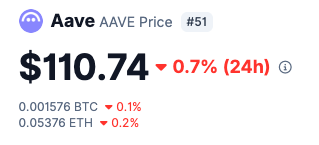
Net result, AAVE token is down. 💀
I am okay with Kimi 3.1 deliberately leaving out top-end offensive cyber capabilities from their training data.
Discriminating against use cases is MUCH less bad than discriminating against users. And the world does need all the time it can get to prepare, harden, check old code, (properly) formally verify new code, etc before the full weight of very powerful cyber attacks is upon us.
And if this first big wave of AI risk is not handled well, then we may well get a dystopia of highly locked down models, KYC gating on everything, highly intrusive surveillance on everything, a society where you may be a second or third or fourth-class citizen in terms of model access based on your credentials and nationality.
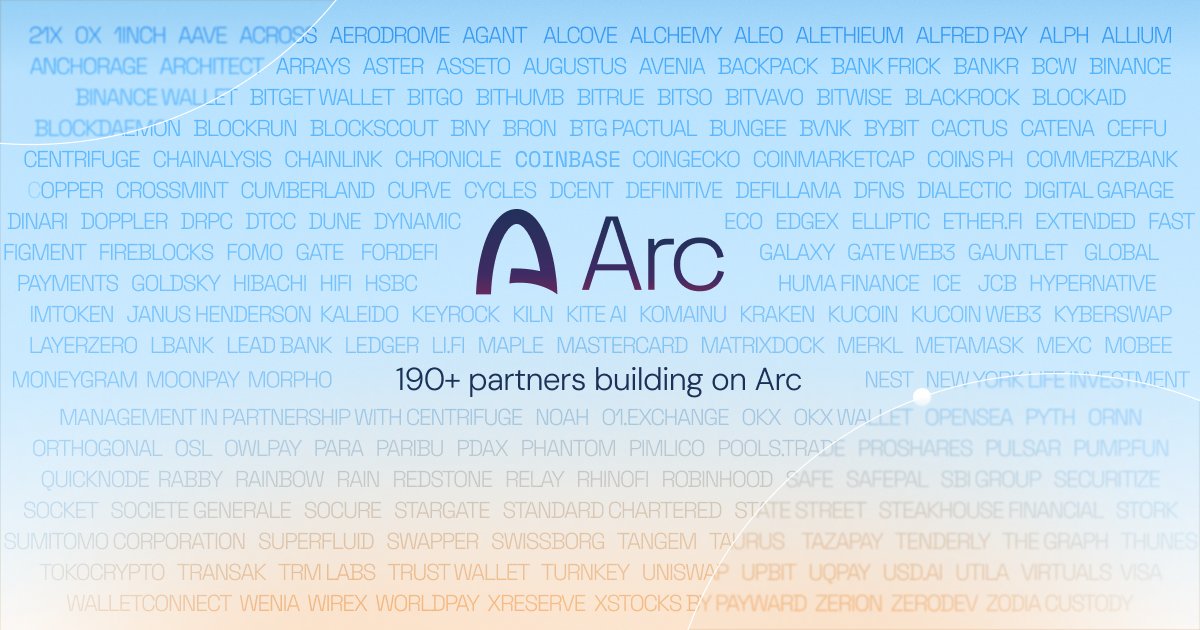
Arc Mainnet is live.
Arc launches as the Economic OS for the internet: an open platform for global markets, real-time value movement, tokenized assets, and agentic economic activity.
Arc is more than a blockchain.
It launches as a full-stack financial platform with assets, applications, interoperability, developer infrastructure, and Circle platform services live from day one.
Arc delivers USDC as native gas, deterministic sub-second finality, EVM compatibility, and institutional validators.
It integrates with Arc Studio, App Kits, Arc Portal, Circle Agent Stack, CCTP, Gateway, CPN, and StableFX.
A complete economic platform at genesis.
Arc launches with infrastructure for:
→ Agentic economic workflows
→ Lending and borrowing
→ Trading and liquidity
→ Onchain FX
→ Payments and settlement
→ Tokenized assets
→ Exchanges, wallets, custody, compliance, data, and developer tooling
190+ institutional and ecosystem builders are building across Arc.
I've been thinking a lot about the regulatory considerations of vaults, so I put together this chart that has a high-level overview of how typical vaults are structured and the three core regulatory issues
Would be interested in feedback from the braintrust