Quante volte avete sentito dire che protestare non serve a niente? Che tanto non cambierà mai nulla? Che i politici fanno quello che vogliono, che i potenti sono intoccabili, che l'establishment è troppo forte e noi cittadini non contiamo assolutamente niente? TUTTE BALLE ‼️
Protestare non serve a niente? La storia dimostra il contrario 🎥
Guardia il mio nuovo video: https://t.co/HgyFdb5YQt
No alcohol. No hangover. No smoke. Just 250mg of fast-acting hemp-derived THC in a 750mL bottle — 10mg per pour, 25 servings of the smoothest good time this side of the law.
Not your keys, not your coins?
Apparently, it's now:
Your keys, our RPC. Your coins, our permission.
A scammer sends 0.0001 dust to your wallet without your consent.
You didn't approve anything. You didn't interact with the scammer. You simply received an unsolicited transaction on a public blockchain.
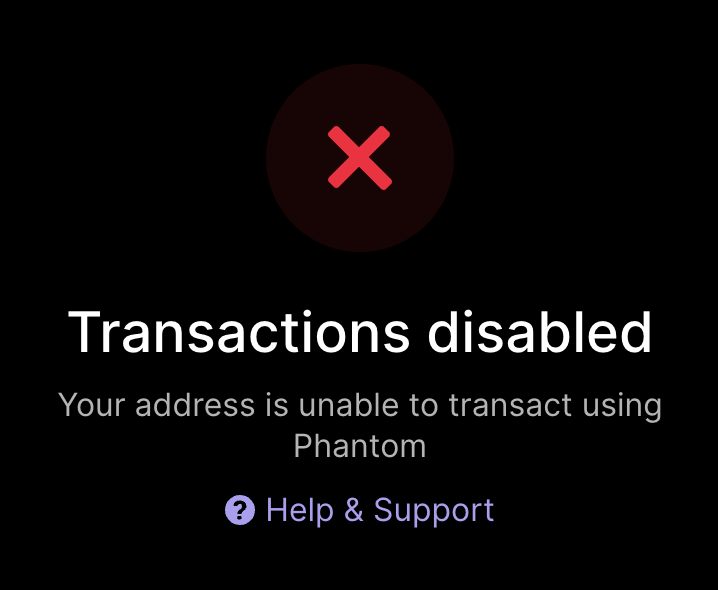
Then Phantom's compliance filter kicks in:
"Your address has interacted with a flagged malicious entity. Transactions disabled."
Wait. WHAT?
So a random scammer can poison my wallet address with dust, trigger your automated risk detection, and suddenly I can't use your wallet interface to move my own assets?
Welcome to self-custody, where you own the keys but apparently need corporate permission to use them.
The blockchain didn't freeze my account.
The centralized frontend did.
The irony is almost too good.
We built crypto to escape banks freezing our money, only to end up with fintech apps wearing a decentralization costume.
If a wallet can unilaterally disable your ability to transact because some random third party sent you dust, maybe it's time to rethink what "self-custody" actually means.
Not your keys, not your coins?
More like:
Your keys. Their rules. Their permission.
Peak Web3 UX. 🤡